LAMDRE
5.0/5
25 Reviews
No. 4 of Fine Dining in Beijing
Highlights: An internationally renowned vegetarian restaurant with an elegant, Zen-like atmosphere
More
Open Now|11:30-13:30Show more
+861085978888
工体北路四号院(机电院内)14幢1—04
 饭醉分子闫涛Su Xin
How to show respect to the elders?
Zhang Dai, a Ming Dynasty writer, wrote a scene in "Night Boat". Because the boat was narrow, everyone had difficulty walking. But if someone spoke eloquently, the people around him would consciously retract their feet. If they encountered someone who was just a slouch, the most classic response was "Let me stretch my legs."
I heard another similar story.
Brother Qian, who already owns two Michelin-starred restaurants in Beijing, rushed to a conference site to participate in an event. When he sat down and looked around, he found that someone was still standing. Brother Qian jumped up immediately, "He is standing, how dare I sit down?"
The "he" Brother Qian was talking about was Master Dai Jun, the owner of Lanzhai.
There are numerous reports about Lanzhai and Master Dai Jun on the Internet. This vegetarian restaurant has won one Michelin star and two Black Pearl diamonds for many years and has been shortlisted in the top 50 in Asia. It is praised by many vegetarian lovers as the best in China. The humble and elegant Master Dai Jun often performs with top chefs from all over the world who come to exchange skills, which can be regarded as a good story in the culinary world.
Many cities have vegetarian restaurants with retro decorations, but most of them are "chaotic canteens" that do not distinguish between vegetarian and vegetarian, or "vulgar places" filled with various imitation meats made of soy protein. What are the best vegetarian restaurants?
I have never met Master Dai. Not long ago, I was invited to attend the Black Pearl VIP dinner. I saw Master Dai Jun on the seat card next to me. I was thinking about asking this senior who just won the "Black Pearl Chef of the Year" for advice, but Master Dai was the host of the dinner that day. He was busy from beginning to end, and I didn't even get to say a word.
Finally, with the introduction of Brother Qian, I met Lanzhai at noon after leaving Beijing, and had a chat with Master Dai.
Unexpectedly, Master Dai did not learn from any great master, and the "natural cuisine" he developed was all thought and exploration from the heart. What was even more surprising was that a native Beijinger actually learned Chaozhou cuisine when he started his career.
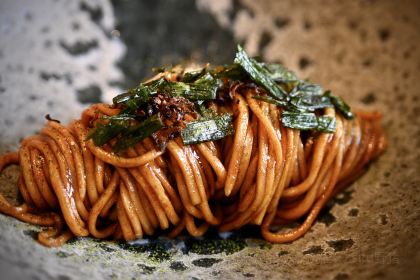
Lanzhai does not have a menu, only two sets of cooking options: "Classic Set Meal" and "Seasonal Set Meal". The classic set meal I tried is called "The Power of Nature". I think it is difficult to apply the conventional framework of "color, aroma, taste, meaning and shape" to evaluate the taste of Lanzhai. We need to understand more about the subtle expression of Master Dai's ideas.
The appetizer "Corn Cactus Seaweed" reminds people of the desert in Mexico, and the intention is to awaken people to cherish and protect water resources.
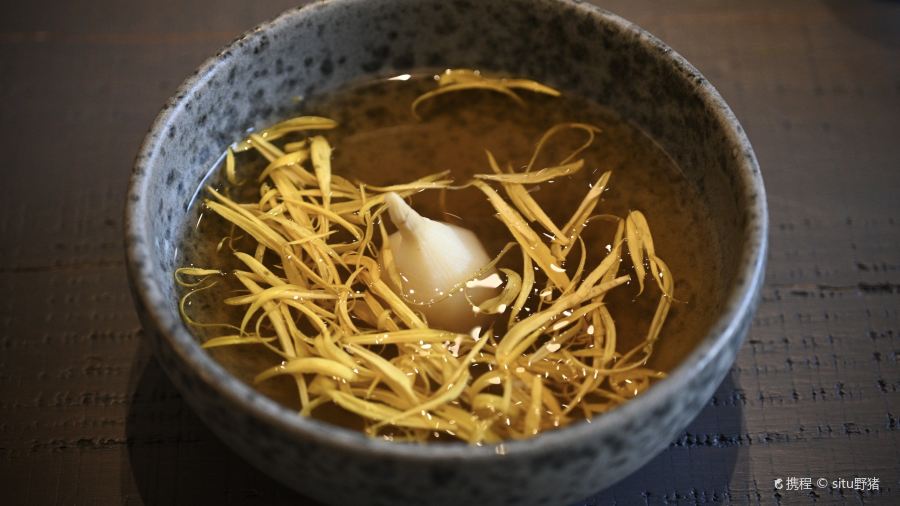
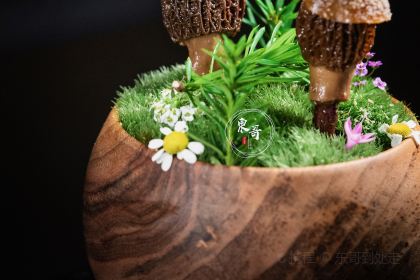
The matcha-style soup is called "Pine Buds, Pine Needles, Pine Nuts and Matsutake". The soup is gently stirred with pine needles, and a faint fragrance from the pine forest spreads.
When cooking porcini from Yunnan, Master Dai roasted the porcini on charcoal fire on the spot. Suddenly, it tasted as delicious as stir-frying in my hometown.
The final dessert was "Seaweed Kelp Sea Salt", and the salty sorbet interpreted a marine theme.
It is recommended to order a set of tea when dining at Lanzhai. The ancient tree Pu'er tea is cooked on charcoal fire, and the snow chrysanthemum tea is flavored with shaved mountain pepper roots, which shows the care.
If a person likes something or a person from the bottom of his heart, he does not need to hide or cover up deliberately. Even if he does it casually, you can read a sincerity from his eyes and handwriting.
The vegetarian food at Lanzhai is good, and the good thing is that it comes from a
饭醉分子闫涛Su Xin
How to show respect to the elders?
Zhang Dai, a Ming Dynasty writer, wrote a scene in "Night Boat". Because the boat was narrow, everyone had difficulty walking. But if someone spoke eloquently, the people around him would consciously retract their feet. If they encountered someone who was just a slouch, the most classic response was "Let me stretch my legs."
I heard another similar story.
Brother Qian, who already owns two Michelin-starred restaurants in Beijing, rushed to a conference site to participate in an event. When he sat down and looked around, he found that someone was still standing. Brother Qian jumped up immediately, "He is standing, how dare I sit down?"
The "he" Brother Qian was talking about was Master Dai Jun, the owner of Lanzhai.
There are numerous reports about Lanzhai and Master Dai Jun on the Internet. This vegetarian restaurant has won one Michelin star and two Black Pearl diamonds for many years and has been shortlisted in the top 50 in Asia. It is praised by many vegetarian lovers as the best in China. The humble and elegant Master Dai Jun often performs with top chefs from all over the world who come to exchange skills, which can be regarded as a good story in the culinary world.
Many cities have vegetarian restaurants with retro decorations, but most of them are "chaotic canteens" that do not distinguish between vegetarian and vegetarian, or "vulgar places" filled with various imitation meats made of soy protein. What are the best vegetarian restaurants?
I have never met Master Dai. Not long ago, I was invited to attend the Black Pearl VIP dinner. I saw Master Dai Jun on the seat card next to me. I was thinking about asking this senior who just won the "Black Pearl Chef of the Year" for advice, but Master Dai was the host of the dinner that day. He was busy from beginning to end, and I didn't even get to say a word.
Finally, with the introduction of Brother Qian, I met Lanzhai at noon after leaving Beijing, and had a chat with Master Dai.
Unexpectedly, Master Dai did not learn from any great master, and the "natural cuisine" he developed was all thought and exploration from the heart. What was even more surprising was that a native Beijinger actually learned Chaozhou cuisine when he started his career.
Lanzhai does not have a menu, only two sets of cooking options: "Classic Set Meal" and "Seasonal Set Meal". The classic set meal I tried is called "The Power of Nature". I think it is difficult to apply the conventional framework of "color, aroma, taste, meaning and shape" to evaluate the taste of Lanzhai. We need to understand more about the subtle expression of Master Dai's ideas.
The appetizer "Corn Cactus Seaweed" reminds people of the desert in Mexico, and the intention is to awaken people to cherish and protect water resources.
The matcha-style soup is called "Pine Buds, Pine Needles, Pine Nuts and Matsutake". The soup is gently stirred with pine needles, and a faint fragrance from the pine forest spreads.
When cooking porcini from Yunnan, Master Dai roasted the porcini on charcoal fire on the spot. Suddenly, it tasted as delicious as stir-frying in my hometown.
The final dessert was "Seaweed Kelp Sea Salt", and the salty sorbet interpreted a marine theme.
It is recommended to order a set of tea when dining at Lanzhai. The ancient tree Pu'er tea is cooked on charcoal fire, and the snow chrysanthemum tea is flavored with shaved mountain pepper roots, which shows the care.
If a person likes something or a person from the bottom of his heart, he does not need to hide or cover up deliberately. Even if he does it casually, you can read a sincerity from his eyes and handwriting.
The vegetarian food at Lanzhai is good, and the good thing is that it comes from aReviews of LAMDRE
Some reviews may have been translated by Google Translate
5/5Outstanding
All (25)
Latest
Photo reviews (22)
Positive reviews (2)
Su Xin How to show respect to the elders? Zhang Dai, a Ming Dynasty writer, wrote a scene in "Night Boat". Because the boat was narrow, everyone had difficulty walking. But if someone spoke eloquently, the people around him would consciously retract their feet. If they encountered someone who was just a slouch, the most classic response was "Let me stretch my legs." I heard another similar story. Brother Qian, who already owns two Michelin-starred restaurants in Beijing, rushed to a conference site to participate in an event. When he sat down and looked around, he found that someone was still standing. Brother Qian jumped up immediately, "He is standing, how dare I sit down?" The "he" Brother Qian was talking about was Master Dai Jun, the owner of Lanzhai. There are numerous reports about Lanzhai and Master Dai Jun on the Internet. This vegetarian restaurant has won one Michelin star and two Black Pearl diamonds for many years and has been shortlisted in the top 50 in Asia. It is praised by many vegetarian lovers as the best in China. The humble and elegant Master Dai Jun often performs with top chefs from all over the world who come to exchange skills, which can be regarded as a good story in the culinary world. Many cities have vegetarian restaurants with retro decorations, but most of them are "chaotic canteens" that do not distinguish between vegetarian and vegetarian, or "vulgar places" filled with various imitation meats made of soy protein. What are the best vegetarian restaurants? I have never met Master Dai. Not long ago, I was invited to attend the Black Pearl VIP dinner. I saw Master Dai Jun on the seat card next to me. I was thinking about asking this senior who just won the "Black Pearl Chef of the Year" for advice, but Master Dai was the host of the dinner that day. He was busy from beginning to end, and I didn't even get to say a word. Finally, with the introduction of Brother Qian, I met Lanzhai at noon after leaving Beijing, and had a chat with Master Dai. Unexpectedly, Master Dai did not learn from any great master, and the "natural cuisine" he developed was all thought and exploration from the heart. What was even more surprising was that a native Beijinger actually learned Chaozhou cuisine when he started his career. Lanzhai does not have a menu, only two sets of cooking options: "Classic Set Meal" and "Seasonal Set Meal". The classic set meal I tried is called "The Power of Nature". I think it is difficult to apply the conventional framework of "color, aroma, taste, meaning and shape" to evaluate the taste of Lanzhai. We need to understand more about the subtle expression of Master Dai's ideas. The appetizer "Corn Cactus Seaweed" reminds people of the desert in Mexico, and the intention is to awaken people to cherish and protect water resources. The matcha-style soup is called "Pine Buds, Pine Needles, Pine Nuts and Matsutake". The soup is gently stirred with pine needles, and a faint fragrance from the pine forest spreads. When cooking porcini from Yunnan, Master Dai roasted the porcini on charcoal fire on the spot. Suddenly, it tasted as delicious as stir-frying in my hometown. The final dessert was "Seaweed Kelp Sea Salt", and the salty sorbet interpreted a marine theme. It is recommended to order a set of tea when dining at Lanzhai. The ancient tree Pu'er tea is cooked on charcoal fire, and the snow chrysanthemum tea is flavored with shaved mountain pepper roots, which shows the care. If a person likes something or a person from the bottom of his heart, he does not need to hide or cover up deliberately. Even if he does it casually, you can read a sincerity from his eyes and handwriting. The vegetarian food at Lanzhai is good, and the good thing is that it comes from a
This restaurant specializes in vegetarian food, the taste is good, and the environment is also very good~
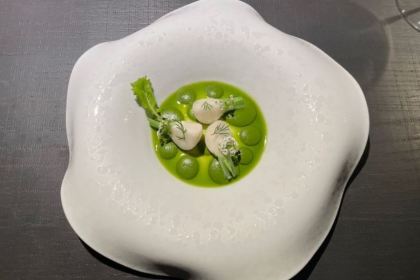
#Lamdre (兰斋) Newly awarded two Michelin stars, ranked 50th in Asia’s 50 Best Restaurants. To be honest, after eating there, it truly deserves its reputation. Here's a written review: Located in Beijing, it's a 600-square-meter standalone building, three stories, with only four private rooms and 66 seats. The sloping roof has a skylight, letting in direct sunlight. Outside, there's a locust tree and a magnolia tree; the locust tree is over 100 years old. Like two immortals who have seen all the world's vicissitudes, guarding a tranquil courtyard, unmoved, steadfastly. Before the meal, I looked up at the sunlight, and in that instant, the city's hustle and bustle seemed to be cut off. Quietly, my mood relaxed. The new season's menu returns to its roots. "Fruits return to their roots, plants return to the earth. People, too, should look back on their journey." This season, Lamdre pays homage to the land and memories of Beijing with the flavors of autumn and winter. Lan Zhai's philosophy has always been simple—to let food grow at its natural pace. Most of the paper in the shop is made from recycled milk cartons, tea leaves, and paper cups. Recyclable and reusable. The entire menu consists of ten dishes, taking two hours. The first course was seaweed, hazel mushrooms, and chestnuts. The aroma of pine needles mingled with the damp fragrance of mushrooms, like walking in the mountains, sunlight filtering through the leaves into my mouth. That feeling— was like tasting the forest. The second course was corn, perilla seeds, and hawthorn. It was light and creamy, with a smooth, flowing texture. It was served as a sunflower in a pot, and you had to pick the stamens yourself. I laughed, feeling like a "flower picker." The third course was celery root. Both the soup and the celery were sour. The sour soup had a hint of spiciness, a flavor I really love: a refreshing gentleness. The fourth course was palm heart. Marigold oil is used for seasoning. Lemon zest adds a touch of numbing sensation. This dish is sophisticated, not intensely pungent, but rather a gently delightful experience. Fifth dish: Straw mushrooms. The aroma is pure, like an old friend, nothing fancy, but I've always loved straw mushrooms. They're infused with broth, bursting with delicious flavor. Sixth dish: Lily bulbs. From Lanzhou, with a hint of spiciness, served in a coconut shell. This combination is wonderful—the earthy aroma and the texture of the sea coexist harmoniously. Seventh dish: Eggplant. Served with black bean chili pancakes. The fermented aroma elevates the dish to two levels. It's the kind of "elegant dish that goes perfectly with rice," making you want a bowl of rice. Eighth dish: Tofu. Homemade tofu, air-dried for 48 hours, soaked in tree tomato broth. Added with mountain fern leaves, lettuce, and seaweed. The aroma is complex and layered. One sip is like drinking sour soup in the mountains of Guizhou, or breathing in the sea air. Served in a stone container, it retains that "primitive" feel. The ninth course, radish. Simmered in kelp broth, five colors of radish, the broth slightly sour. The tenth course, the main dish—Chaozhou pickled vegetables. A refreshingly salty finish. After the softness of the entire plant-based experience, this bowl is a return to the warmth of everyday life. The plating is undeniably "elegantly aesthetic," and the use of plant "containers" is truly inspiring. Coincidentally, the restaurant is exhibiting the work of artist Tian Congmei, titled "Plant Veins." She uses crystal to create plant shapes, the translucent veins of the leaves are truly beautiful. A two-hour meal, ten dishes, from forest to field, from mountain to coast. Not a single word wasted, not a single flavor superfluous. The seasoning is perfectly balanced; the sour, salty, sweet, and spicy flavors are all subtly present, like a gentle breeze and light rain on the tongue—unforced, non-aggressive, and effortless. It's soft and gentle. I think this is what makes it so appealing to discerning gourmets. Lan Zhai, as a world-renowned restaurant, has no doubt about its technical prowess. What it truly offers is a dining experience that "activates the guest's thinking," which is exceptionally rare.
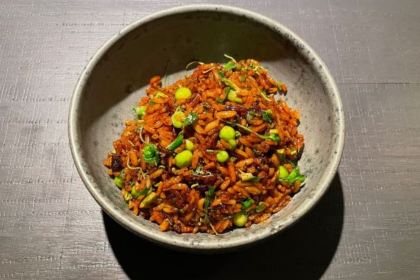
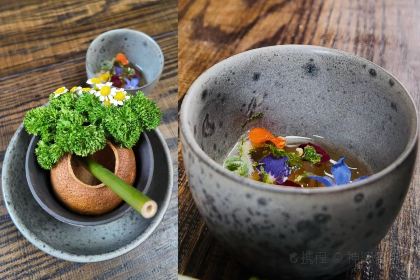
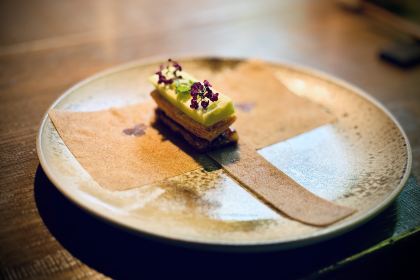
Lanzhai's autumn/winter menu tells the story of "the earth is the most silent poet." Chef Dai Jun's inspiration for this dish comes primarily from the "red soil" of southern China. I like his approach of exploring Yunnan's "vertical climate zones" to unlock flavor. The four appetizers, in sequence, explore the ecological layers of polar ice and snow, alpine meadows, mountain forests, and dry, hot river valleys. The first course, avocado wrapped in wasabi leaves and freshly ground wasabi, garnished with corn, cucumber, and green apple, is as refreshing as the first clearing of snow. Next, green papaya with Yunnan fragrant willow and lime juice, served in a homemade rice crispy shell, garnished with golden lotus petals, adds a light herbal aroma. Followed by Yunnan's unique tree flowers, their crispy skin is infused with dragon mushrooms and Litsea cubeba, creating a lingering aroma. Mile fermented black beans and wrinkled chilies add a depth of flavor. The final course, a palm heart-wrapped dish, containing sour bean skin and milk mushrooms, is soft and glutinous with a hint of spiciness. Did you know? As I ate, I replayed the "scenery" I'd seen on my work and travels. Chef Dai's spicy seasonings are exceptionally mellow, never overpowering the natural flavors of the vegetables. The main course, artichokes, sourced from the red soil of Xishuangbanna, consist solely of the heart, served with roasted plantains, pomelo, and a sweet pepper sauce. The vegetable platter resembles a multi-flavored "jade pendant," a rich blend of vegetable frozen essences, delicately interwoven with a subtle blend of pickled pepper brine and fermented broth. The crispy, sweet lotus root, sourced from Baoying, Jiangsu, is pickled with magnolia and kumquat, then lightly grilled and balanced with satay sauce. Beneath the lotus leaves lies a rich, creamy base of lotus seed puree and coconut milk. It's truly satisfying. A delicious broth, made from plants nurtured by Guangdong's red soil, combines sugarcane, water chestnuts, sweet bamboo shoots, longan, and tea, then is served in the shell of a Xinhui large red tangerine. Sipping it through a bamboo straw, I feel like a dragonfly absorbing the essence of the sun and moon. For the main course, Chef Dai once again expressed gratitude for the bounty of the soil, presenting three varieties of rice: germ-grown rice, germ-grown red soft rice, and Wuchang rice. Paired with Yunnan mushrooms and pickled mustard greens, they showcased the full flavors of the plant life. A cup of aged Shoumei white tea blended the rich aroma of fruity wood with the gentle warmth of the rice. Jia Jia's words, after finishing the meal, truly struck a chord with me: "This is an all-plant menu, without eggs or dairy, because we're confident in the flavors of the plants themselves."
Fortunately, I came to Beijing during Mid-Autumn Festival. The Forbidden City happened to see the Qing Dynasty fasting signs; they were so special and beautiful. The autumn breeze picked up, and although my sensitive throat trembled with the falling leaves, it was nothing. At night, under this moonlight, I couldn't help but think of Matsuo Basho's famous haiku: "Deep in autumn, my neighbors are my neighbors." The meaning deepened, and what were the neighbors busy with? So beautiful. Florilège X Lamdre's full moon menu brought us together again with old friends. Lanzhai's host, Jia Jia, said that both the East and the West have their own ways of entertaining distinguished guests: tea in the East, wine in the West. Hence, this tea and wine menu, unfolding a story based on the moonlight. "Osmanthus flowers fall in the moonlight, their heavenly fragrance drifts beyond the clouds." Mr. Yuanxiao led the tea menu with a glass of osmanthus aged oolong. Sommelier Wayne wisely used the wine to complement the tea's color and enhance the menu. Florilège's French cuisine holds an unshakable place in the hearts of countless gourmets. Chef Hiroyasu Kawate's sustainable development philosophy, in particular, is worthy of emulation by many restaurants, and his menus have recently expanded to include more vegetarian options. Daikon radish, combined with water celery oil, watercress, and Kochia scoparia, delivers a rich, savory and umami-rich flavor. This dish is paired with a tabletop cocktail (tea) made with cinnamon bark, created by Mori Shuzoba and Guangxi Liubao. Japanese crepes made with Amazonian cocoa perfectly blend the two cultures. Chef Dai unfolds a panorama of Chinese terroir, incorporating over 50 ingredients into his all-plant-based menu. He utilizes advanced emulsification techniques and a healthy caramelization process to create a beautiful connection between heaven and earth, achieving a lighter, yet still rich, texture. His tofu, freeze-dried for 48 hours and then immersed in a hot and sour broth, instantly absorbs the juices, creating a marvelous texture somewhere between frozen and firm tofu. His straw mushrooms are bursting with life, his Gansu lilies are imbued with the soul of Yunnan coconuts, and his curry boasts an unusually smooth texture. He says the new season's menu will push the boundaries of ingredients. A full moon brings a reunion.
Beijing 3-Day Food and Beverage Guide | This Vegetarian Restaurant is So Beautiful It Has My Heart Struck 💕 For those visiting Beijing, check this out! I discovered a hidden gem this time: "LAMDRE." From the ambiance to the food, it's absolutely amazing! Let me start with my must-try list! ✨ 📍LAMDRE (Building 14, 1-04, Yard 4, Gongti North Road) - Sichuan Peppercorn Wrap: Crispy crust wrapped with fragrant wild vegetables - Corn and Seaweed Combo: Amazingly creative combination - Summer Seasonal Vegetables: The freshness and sweetness of each ingredient is palpable Other Itineraries: Day 1️⃣ Morning: In-depth tour of the Forbidden City Afternoon: Panoramic views of Jingshan Park Evening: Wangfujing Night Market for food and drinks Day 2️⃣ Morning: Stroll through the Summer Palace Afternoon: Old Summer Palace Ruins Evening: Dine at LAMDRE (remember to make reservations in advance) Day 3️⃣ All day: Explore the 798 Art District Evening: Explore trendy shops in Sanlitun Tips: 1. I recommend Lanzhai for dinner; the spot by the floor-to-ceiling windows is perfect for photos. 2. The Gongti area is incredibly lively at night, so you can enjoy a stroll after dinner to digest your food. 3. Beijing has been experiencing significant temperature fluctuations lately, so it's recommended to bring a light jacket. 🍽️Food Tip: In addition to Lanzhai, there's also a great craft beer place called "Jing A" nearby, within walking distance. #BeijingFood #VegetarianRestaurant #BeijingTravel #InfluenceRestaurantCheck-In #GongtiFood