Spend your football off-days exploring areas surrounding New Mexico, the perfect break between matches.
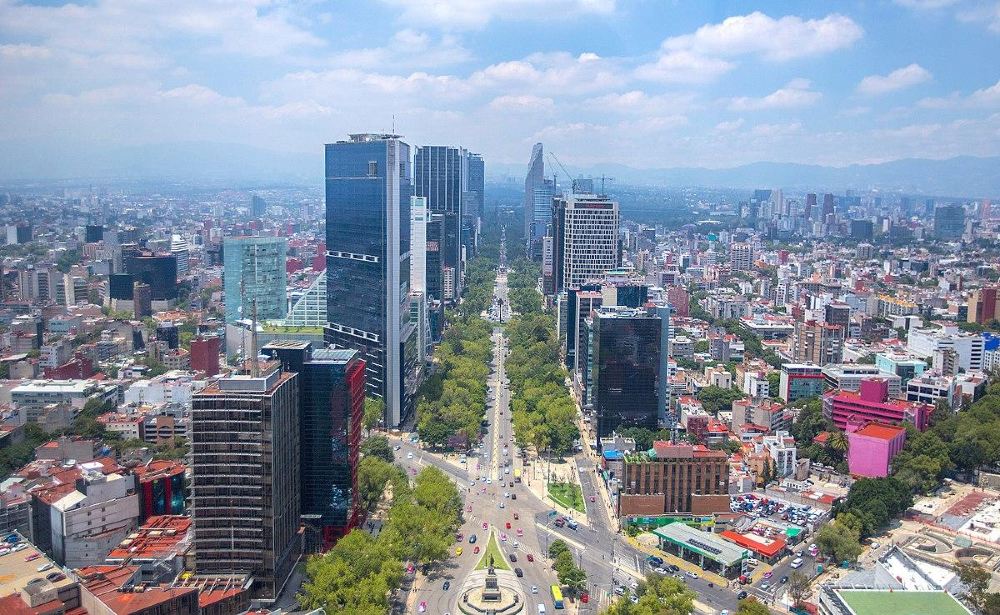
Begin your day with a stroll along Paseo de la Reforma, a grand avenue lined with monuments that reflect Mexico's history.
Continue to Teotihuacán, the ancient “City of the Gods.” Climb the Pyramid of the Sun for sweeping views of the Avenue of the Dead and the Pyramid of the Moon.
In the afternoon, visit the Basílica de Nuestra Señora de Guadalupe, a major pilgrimage site. Then stop at the Palace of Fine Arts for a photo of its iconic architecture.
End at Plaza de la Constitución, the historic heart of Mexico City, surrounded by landmarks including the Metropolitan Cathedral, National Palace (exterior), and the Templo Mayor ruins (exterior).
Itinerary:
Paseo de la Reforma -- Monumento a la Independencia (photo stop) -- Piramide de la Serpiente Emplumada (120 min) -- Basílica de Nuestra Señora de Guadalupe (60 min) -- Palacio de Bellas Artes (exterior, 20 min) -- Plaza de la Constitución (2 hrs, incl. Cathedral exterior, National Palace exterior, Templo Mayor exterior)
Paseo de la Reforma
Paseo de la Reforma is a 12-kilometer-long avenue in Mexico City. Built by King Maximilian I and named Avenida Regina in honor of his consort, Queen Carlota, upon its inauguration, it now bears the name in commemoration of the liberalizing reforms of 19th-century Mexican President Benito Juárez. It is modeled after European boulevards, such as Vienna's Ringstrasse and Paris's Champs-Élysées. Along the Paseo de la Reforma are numerous monuments honoring figures and events in Mexican and American history, including Cuauhtémoc, Simón Bolívar, José de San Martín, and Christopher Columbus, as well as a fountain commemorating the nationalization of Mexican oil. The most notable of these is the Angel of Independence Monument.
Teotihuacán
Teotihuacan, located approximately 50 kilometers from Mexico City, is a remnant of an ancient civilization. Also known as the City of the Gods, it was designated a UNESCO World Heritage Site in 1987. Two pyramids stand side by side, separated by a 2-kilometer-long avenue known as the Way of the Dead. The north-south, 2-kilometer-long Avenue of the Dead is the heart of this ancient city. The most striking features of the avenue are the Pyramid of the Sun and the Pyramid of the Moon, flanking them. The Pyramid of the Sun, located to the east, is the third largest pyramid in the world and is surrounded by numerous altars used for sacrifice. The Pyramid of the Moon, located at the northern end of the Avenue of the Dead, is flanked by the Plaza de la Luna, a complex of 12 temples and altars. Climb the massive Pyramid of the Sun and gaze out over the Way of the Dead and the Pyramid of the Moon, offering breathtaking views of the entire ruins.
Basilica of Our Lady of Guadalupe
A cult developed around this site after a Christian convert named Juan Diego claimed in December 1531 that the Virgin Mary appeared before him on the Cerro del Tepeyac (Tepeyac Hill). After numerous sightings, so the story goes, the lady's image was miraculously emblazoned on Diego's cloak, causing a bishop to believe the story and build a shrine in her honor. To this day the basílica remains a place of pilgrimage and worship.
Palace of Fine Arts
Construction on the iconic building began in 1905 under Italian architect Adamo Boari, who favored neoclassical and art nouveau styles. Complications arose as the heavy marble shell sank into the spongy subsoil, and then the Mexican Revolution intervened. Architect Federico Mariscal eventually finished the interior in the 1930s, utilizing the more modern art deco style. With art nouveau on the outside and art deco on the inside, the Palacio de Bellas Artes (Palace of Fine Arts) is considered one of the most spectacular buildings from this era.