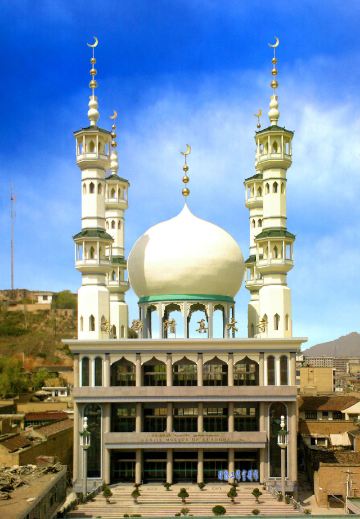
Guanghe

Things to do in Guanghe

Search attractions or local attractions & tours
Search

Explore top experiences

Top 10 attractions in Guanghe

View all Attractions
Lanzhou Danxia Geological Park
No. 1 of Family-friendly Attractions in Gansu

Lanzhou Danxia Geological Park

8.1
4.5/5
3.7k reviews
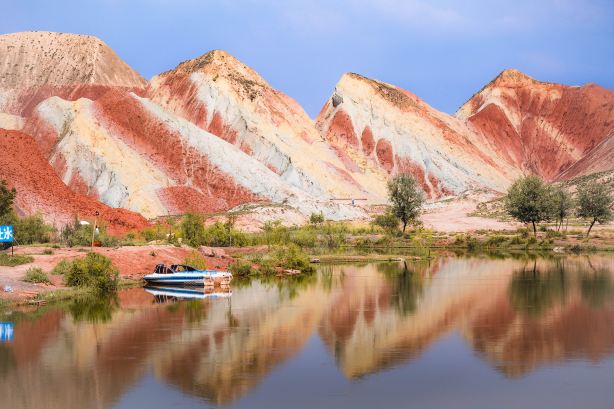
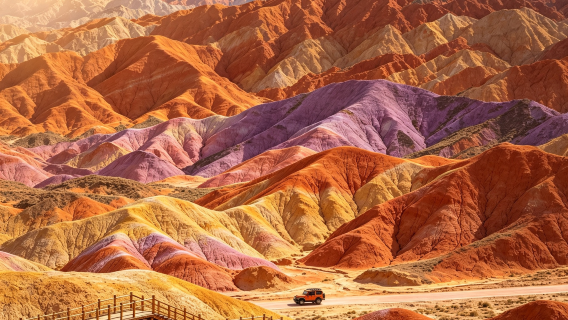
Lanzhou Danxia Geological Park is a key cultural tourism project in Gansu Province and a comprehensive cultural tourism initiative prioritized by the Lanzhou Municipal Committee and Government. Located by the Yellow River, the park is just 13 km from downtown Lanzhou and 30 km from Lanzhou Zhongchuan International Airport, making it one of the closest Danxia landform clusters to a major urban center in China. With a total planned area of 400 sq km and a core visiting area of 25 sq km in its first phase, it ranks among the largest discovered landscapes of its kind in the country. The park primarily features red mountain bay formations, along with spectacular Danxia cliffs, isolated peaks, secluded valleys, narrow gorges, and balancing rocks. Its colorful mountains set against winding waterways create a masterpiece of Danxia landform scenery. The attraction features seven viewing platforms showcasing the Danxia landforms: Silk Road Glow, Silk Road Eagle, Flying Apsaras Exploration, Nine-Colored Danxia, Danxia Reflecting Sky, Emerald Peaks Rippling Sky, and Danxia Summit Scenic View. It also includes the Ancient Silk Road Gateway, Shajing Tribe Cultural Square, Desert Bells Scenic Boulevard, and a 2,550m Danxia boardwalk viewing area. As a key cultural tourism project in the province, Lanzhou Danxia Geological Park adheres to the principles of "ecological protection, green development, preserving original features, and moderate development." Leveraging Lanzhou's unique resource advantages and focusing on the domestic tourism market, it aims to cultivate new growth drivers for Lanzhou's cultural tourism industry and establish a new highland for cultural tourism in the city.Yongdeng · 87.3 km from Guanghe
Gansu Provincial Museum
No. 2 of Family-friendly Attractions in Gansu

Gansu Provincial Museum

7.6
4.6/5
4k reviews
Gansu Provincial Museum is a large comprehensive museum centered on the civilization of the Silk Road. Located at a strategic point along the Silk Road and a convergence zone of Han and Tibetan cultures, its collections embody the diverse characteristics of the Central Plains, Western Regions, and the Tibetan Plateau. The three treasured artifacts—the Galloping Bronze Horse, the mural brick of a courier, and the painted pottery vase with a human-head-shaped mouth—serve as iconic representations of the museum. The museum has three floors, featuring permanent exhibitions on themes such as the civilization of the Silk Road, Buddhist art of Gansu, painted pottery of Gansu, paleontological fossils, and revolutionary Gansu. The Silk Road civilization exhibition on the second floor is the museum's centerpiece: the bronze galloping horse unearthed in 1969 from the Leitai Han tomb in Wuwei is displayed here. The horse has three hooves in the air and one stepping on a flying bird, standing steadily on a single hoof. Its image is now the symbol of Chinese tourism. In the same hall, the mural brick depicting a courier from the Wei-Jin tombs in Jiayuguan shows a messenger galloping on horseback, notably without a mouth, symbolizing the need for couriers to "keep their mouths shut." This pattern was later adopted as the emblem of China Post. The exhibition also features a procession of chariots and horses excavated from the same tomb as the bronze horse, along with Han and Tang dynasty silk textiles, gold and silver artifacts, making the prosperity of Silk Road trade vividly tangible. The Buddhist art exhibition hall on the third floor features replicas of caves from the Mogao Grottoes and Maijishan Grottoes, alongside statues, ritual objects, white pagodas, and prayer wheels from both Han and Tibetan Buddhism. Stepping into the hall feels like entering a temple, and this harmonious blend of Han and Tibetan styles is rarely seen elsewhere. On the same floor, the painted pottery exhibition showcases ceramics from cultures such as Dadiwan, Yangshao, and Majiayao, with intricate and fluid patterns like spiral and sawtooth designs. Among them, the painted pottery bottle with a human-head-shaped spout unearthed at Dadiwan in Qin'an, which integrates facial sculpture with the pottery vessel, is a highly popular exhibit. If you're interested in natural history, the paleontological fossils exhibition hall features the impressive skeleton of the Yellow River ancient elephant unearthed in Heshui, and the dinosaur fossils and reconstructed models are also popular with children. The revolutionary Gansu exhibition hall showcases historical artifacts and materials from periods such as the Nanliang base area and the Shaan-Gan-Ning border region, narrating the modern history of this land. The museum houses a large quantity of exhibits, and even a quick tour would take half a day. It's recommended to start with the Silk Road exhibition on the second floor, then proceed to the third floor for Buddhist art and painted pottery, following a logical route. In the exhibition halls, you can scan to listen to the audio guide, and at certain times, volunteers also provide guided explanations.Lanzhou · 66.8 km from Guanghe
Shapotou Scenic Area
No. 1 of Best Things to Do in Ningxia

Shapotou Scenic Area

8.3
4.8/5
38.9k reviews
The scenic spot is located 16 kilometers west of Zhongwei City, Ningxia, on the southeastern edge of the Tengger Desert. The scenic spot has successively won honors such as "the first batch of national 5A-level tourist attractions", "the top 500 global environmental protection units", and "the first batch of national tourism standardization demonstration units". The three major cultural elements of the scenic area include the "Yellow River Culture" based on the intangible cultural heritage sheepskin rafts, the "Desert Culture" based on straw grids and Desert Legend Park, and the "Starry Sky Culture" based on the Desert Star Hotel. The tourism resources of these three elements have created a unique and magnificent landscape of "sunset over the long river and starry sky in the desert". The "six major ways to play" are highly praised and loved by tourists. Among them, the Yellow River projects include sheepskin rafting, Huangtengda, Yellow River speedboat, drift boat, passionate sandboarding and high-altitude bungee jumping, etc. The desert projects include Desert Camel, Desert Flying (Stepping into the Blue Clouds), and Sand Sea. Surfing, etc., starry sky projects include stargazing lectures, meteor feasts, sand therapy experiences, star cakes and other special products. In addition, there are also privately customized products for hiking, desert expansion, and educational and entertaining study experiences. The scenic area not only has diverse cultural elements and fun project experiences, but also multi-level accommodation experiences waiting for you: the butler-style Diamond Hotel, the quiet Desert Star Hotel for stargazing, the quiet Yellow River Courtyard in the bustling city, and finally the economical and affordable business-style Tourist Service Center Hotel and other differentiated tourist accommodations for you to choose from.China · Zhongwei
Qinghai Tibetan Culture Museum
No. 2 of Best Things to Do in Qinghai

Qinghai Tibetan Culture Museum

8.2
4.8/5
10.2k reviews
Qinghai Tibetan Culture MuseumIt is a comprehensive museum themed on Tibetan medicine culture and featuring Tibetan culture.Qinghai Tibetan Culture Museum(also known as Qinghai Tibetan Culture Museum) is located in Xining, the capital of Qinghai Province in the eastern part of the Qinghai-Tibet Plateau. It officially opened in September 2006. The museum has basically formed a "one museum with two halls" layout, featuring 16 exhibition halls including the Silk Road and Tibetan civilization, the grand view of Chinese Tibetan art painting, and the history of Tibetan medicine.Qinghai Tibetan Culture MuseumThe collection is rich, historic, and diverse, possessing high historical, scientific, and artistic value. The museum houses the Guinness World Record-holding thangka masterpiece, "The Grand Thangka of Tibetan Culture and Art," which is 618 m long. It was planned by renowned thangka master Zongzhe Lajie and completed by 400 painters over four years. Its content encompasses the Tibetan understanding of the universe, the formation of the Qinghai-Tibet Plateau, history, religion, medicine, culture, art, and folklore. With its intricate details and brilliant colors, it is a magnificent sight and can be called an encyclopedia of Tibetan culture, hailed as a "contemporary national treasure." Through four major series—ancient books and documents, Tibetan medical thangkas, ancient Tibetan medical instruments, and Tibetan material specimens—the museum comprehensively displays the long history, profound theoretical system, clinical practice, and unique preparation techniques of Tibetan medicine, with four ancient books included in the National Catalogue of Precious Ancient Books. The Silk Road and Qinghai-Tibet Civilization exhibition hall uses history as its temporal dimension and the vast plateau landscape as its geographical dimension. Through thousands of precious cultural relics such as silk, gold and silver ware, and coffin paintings, it highlights Tibetan cultural elements and showcases the origin, inheritance, rise, and prosperity of the Qinghai-Tibet Plateau civilization throughout the long river of history. The Tibetan carpet exhibition hall is one of the largest exhibitions of ancient carpets in China, displaying more than 400 Tibetan carpet artifacts from different periods and eras, featuring magnificent patterns, intense colors, and unique ethnic styles and local characteristics. At the same time, there are also Tibetan-style architectural exhibition halls, Tibetan calligraphy art exhibition halls, as well as temporary exhibition halls, multimedia screening rooms, academic lecture halls, and cultural relic storage rooms, providing strong capabilities for inheritance, protection, and research, as well as conditions for cultural exchange.Qinghai Tibetan Culture MuseumIt will continuously improve the level of cultural relic preservation, exhibition design, scientific research, and management operations, becoming a platform for promoting ethnic unity and social development, a broad stage for cultural dissemination and academic exchange, a research center for cultural relic protection and Tibetan studies, and an exhibition center for treasured literature and collections, showcasing the splendid civilization and culture of the Tibetan Plateau to the world.China · Xining
Kumbum Monastery
No. 3 of Best Things to Do in Qinghai

Kumbum Monastery

8.2
4.7/5
18.7k reviews
Kumbum Monastery is one of the important monasteries of the Gelug (Yellow Hat) sect of Tibetan Buddhism and the birthplace of Tsongkhapa, the founder of the Yellow Hat sect. The monastery features magnificent architecture, abundant treasures, and a strong religious atmosphere, making it one of the more popular travel destinations in Xining. Overview of the visit It has distinct differences in architectural layout compared to Han Chinese Buddhist temples in inland China: the complex here is not symmetrically arranged along a central axis. The monastery is an ancient architectural complex composed of numerous halls, scripture halls, stupas, and colleges, with each sutra hall, main hall, and stupa irregularly distributed on a small hill. Travelers can explore the site in a relatively free manner rather than following a straight path along a central axis. The Great Golden Roof Hall of Kumbum Monastery is the center of the entire architectural complex. It is said that Master Tsongkhapa was born here, and when he was born, his umbilical cord blood dripped on this spot, from which a bodhi tree grew. Later, a stupa was built around the tree, and a monastery was constructed, hence the name. Believers hold that this tree and stupa are the embodiment of the master. The three unique features of the attraction: butter sculptures, murals, and appliqué embroidery. Butter sculptures are made by mixing butter with various pigments to mold and carve into figures of Buddhas, people, flowers, birds, animals, and pavilions. Travelers can admire exquisite butter sculptures at the butter sculpture hall inside the temple (located far from the main gate). Vibrant centuries-old murals can be appreciated in the main halls, corridors, and front galleries of the temple. Appliqué embroidery involves cutting colored satin into desired shapes, such as Buddha figures or animals, stuffing them with wool or cotton, and embroidering them onto cloth hangings. In the temple's great sutra hall, two rare large appliqué embroidery pieces—"Sixteen Arhats Displaying Divine Powers" and "Eight Immortals Crossing the Sea"—hang on either side. The four major religious festivals (based on the lunar calendar): 1. Cham dance (14th day of the first month) and butter sculpture exhibition (15th day of the first month); 2. Cham dance (14th day of the fourth month), Buddha unveiling, and Cham dance (15th day of the fourth month); 3. Buddha unveiling, Cham dance (6th day of the sixth month), and golden Buddha procession (8th day of the sixth month); 4. Full-day Buddha unveiling (22nd day of the ninth month) and Cham dance (23rd day of the ninth month). During these festivals, activities like Buddha unveiling and ritual dances take place, attracting large crowds of devotees and travelers, creating a lively atmosphere.China · Xining
Bafang Shisanxiang
No. 19 of Night Attractions in Gansu

Bafang Shisanxiang

5.1
4.7/5
74 reviews
Bafang Shisanxiang is a historic Hui ethnic district preserved in the old town of Linxia. In ancient times, people established religious quarters around eight mosques, gradually forming a settlement pattern of "living around the mosque and trading around the quarter." "Bafang" (Eight Quarters) thus became the synonym for the Hui residential area in Hezhou. With its blue-brick alleys, brick-carved gate towers, and bustling daily life intertwined, walking inside feels like unfolding a long scroll of life in an old Northwest city. On the wall of Dagaxa Lane, there is a large brick carving titled "Panoramic View of Bafang Shisanxiang" that captures the entire district. The Dagongguan old residence restores the old scenes of Bafang families drinking Gaiwan tea, receiving guests, and the historical scenes of the Tea Horse Road trade and merchant caravans. In the Handicraft Museum, you can see intangible cultural heritage crafts such as carved gourds, copper fire pots, Hezhou clay sculptures, and egg carvings. The "Dragon and Phoenix" brick-carved screen wall in front of the Beixiang Mosque, dating back to the Qianlong reign of the Qing Dynasty, is also worth stopping to admire. Themed alleys like Hezhou Suyuan Lane, Silk Road Hui Merchant Lane, and Tongqu Lane, as well as the Gaiwan Tea Square and the Hongshui River area, are all perfect for strolling and exploring at a leisurely pace. If you get tired of walking, why not sit down for some "Gua Wanzis" (tea scraping)? Learn from the locals how to use the lid to scrape the tea leaves, then blow and sip a cup of Gaiwan tea, paired with Youguoguo (fried dough) and Sanzi (fried dough twists). In Bafang Weidao Lane, you can also find local snacks such as beef offal soup, sugar oil cakes, Liangpi (cold skin noodles), and sweet wheat.Linxia · 35 km from Guanghe

Experiences you can't miss in Guanghe

Featured Day tours in Guanghe

View all Day tours
One-Day Group Tour from Lanzhou: Ink Danxia, Liujiaxia, and Bingling Cave-Temple
󱌍
4.3/5
· 7 reviews· 79 booked
Duration: 5.5 hrs
English
Free cancellation
Instant confirmation
Book now for tomorrow
From€64.65
Lanzhou ink danxia half-day tour 'small group of up to 8 people for genuine fun, door-to-door pickup, optional time slot'
󱌍
4.9/5
· 62 reviews· 353 booked
Duration: 4.8 hrs
English
Free cancellation
Book now for today
96.8% of travelers recommend
From€15.47
[Private group] Liujiaxia 1-day tour + Bingling Cave-Temple Complex + Yellow River-Tao River confluence viewing platform + Liujiaxia Bridge
󱌍
5.0/5
· 10 reviews· 56 booked
Duration: 7.1 hrs
English
Free cancellation
Book now for tomorrow
From€45.46
[Departing from Lanzhou] Yellow River Stone Forest & Danxia Landform Day Tour
󱌍
5.0/5
· 5 reviews· 22 booked
Duration: 6 hrs
English
Free cancellation
Instant confirmation
Book now for tomorrow
From€68.01
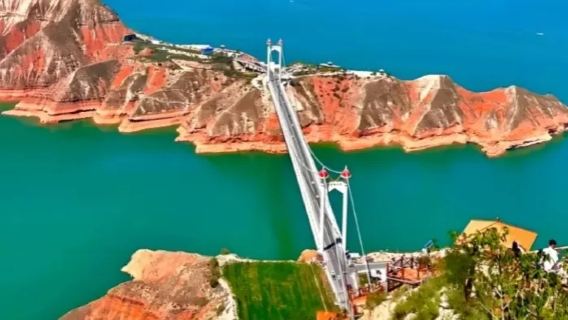
Liujia Gorge + Water-ink Danxia (private charter) 1-day tour [Danxia + Yellow River-Tao River confluence + Bingling Cave-Temple Complex]
󱌍
5.0/5
· 16 reviews· 95 booked
Duration: 7.5 hrs
English
Free cancellation
Instant confirmation
Book now for tomorrow
77 travelers saved
From€56.22
Lanzhou Water-ink Danxia half-day tour [pure play, door-to-door pickup, 2-8-person group]
󱌍
4.9/5
· 80 reviews· 494 booked
Duration: 4 hrs
English
Free cancellation
Instant confirmation
Book now for today
97.5% of travelers recommend
From€49.49
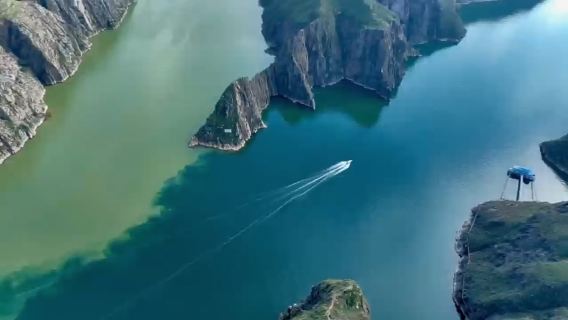
1-day private chartered tour to Liujiaxia (Binglin Temple Grottoes + Huangtao Viewing Platform + Liujiaxia Bridge)
󱌍
5.0/5
· 9 reviews· 29 booked
Duration: 5.5 hrs
English
Free cancellation
Instant confirmation
Book now for tomorrow
From€46.53

Featured Culture & history in Guanghe

View all Culture & history
[Depart from Lanzhou] Liujiaxia and Bingling Temple Day Tour: Private Transfer Service
󱌍
Duration: 5 hrs
English
Instant confirmation
Book now for tomorrow
From€149.42
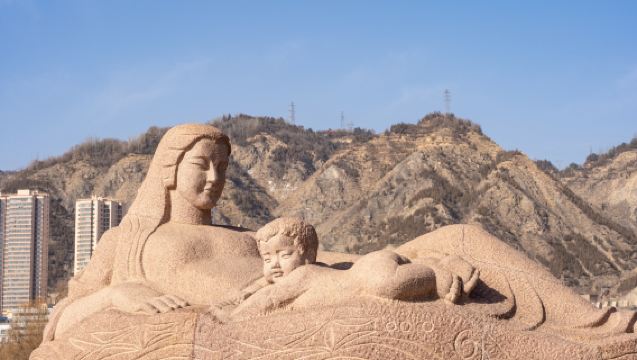
Lanzhou Highlights Day Tour | Statue of Mother Yellow River, White Pagoda Mountain, Zhongshan Bridge (Private Service)
󱌍
Duration: 6 hrs
English
Free cancellation
Instant confirmation
Book now for tomorrow
From€28.73
Private tour of Lanzhou's top attractions with an English-speaking guide
󱌍
Duration: 6.5 hrs
English
Free cancellation
Instant confirmation
Book now for tomorrow
9% off
Limited-time sale
From€33.41€37.12
Pick-up service | Lanzhou ink danxia + Bingling Cave-Temple + Yellow and Tao rivers confluence 1-day tour
󱌍
5.0/5
· 3 reviews
Duration: 12 hrs
English
Free cancellation
Instant confirmation
From€134.48

Guanghe Today's weatherOvercast 2-18℃
Guanghe weather for the next 2 days10/31: 0-14℃, 11/1: 0-12℃

Free things to do in Guanghe

What travelers say about Guanghe

user-avatar
Anonymous user29 October 2026
5.0
Beautiful lakes and parks. Worth to visit in once a life time.

Jiuzhaigou National Park

user-avatar
Patrick Woodbourne Clarke22 October 2026
5.0
Lanzhou Danxia Geological Park is fabulous. One of the top three things I have done on this tour. I used Trip.com to get out to the park and that was very easy. Shuttle buses are necessary to get between the various vantage points. I would come for longer next time and do the zip line. I got an 8am bus from Xiaoxihu Subway Station and it leaves the Park at 12pm to return back to the city.

Lanzhou Danxia Geological Park

user-avatar
M14***996 October 2026
5.0
Lina, the lecturer at the Gambo Museum, is exceptionally skilled. During the two-hour learning experience, she demonstrated a thorough understanding of the chronological order and comparative analysis of the artifacts, meticulously integrating historical evolution with everyday life. I look forward to the completion of the new Gambo Museum and visiting it again next time.

Gansu Provincial Museum

user-avatar
M2e***xp28 October 2026
5.0
Family, anyone understand?! This trip was absolutely amazing! The scenery was breathtaking, every corner a surprise and a moment of romance. The staff were incredibly welcoming, and the value for money was incredible. I wanted to go crazy for it!

Shapotou Scenic Area

user-avatar
不安分的人呀12 December 2022
5.0
Zhuzigou in Luming Township, Kangle, Linxia is part of the Taizi Mountain series and is a great place to escape the summer heat. There is a gully sandwiched between two mountains. On one side is a meadow like a green carpet, on the other side is a pine forest, with a small river in the middle. You can camp and ride horses deep in the scenic area. It is truly a Feng Shui treasure land.

Zhuzigou Scenic Area

user-avatar
M33***4630 October 2026
5.0
The flying apsaras of Purang were truly stunning, their magnificent attire exuding an aura of wealth. The various monks' robes also offered explanations for what I had seen in Qinghai, Gansu, and Tibet, providing clarity. The Thangka exhibit was particularly photogenic; I took pictures along the way, and the extended design of the exhibition booth was also excellent. I didn't have time to delve into the deeper meanings of the Thangka paintings. The display of Thangka pigments was also exceptionally exquisite and not to be missed.

Qinghai Tibetan Culture Museum

user-avatar
Anonymous user29 October 2026
5.0
Kumbum Monastery is also a monastery with distinctive Tibetan Buddhist characteristics. The Lotus Pagoda was built by Tsongkhapa's mother according to her son's request to "build a stupa at his birthplace," thus marking the origin of Kumbum Monastery. Later, because "the stupa came first, then the monastery," it acquired the Chinese name "Kumbum Monastery." It is one of the six major monasteries of the Gelug school of Tibetan Buddhism and the birthplace of Tsongkhapa, the founder of the Gelug school. It holds a high position among believers and is an important religious activity and pilgrimage site in Northwest China.

Kumbum Monastery

user-avatar
依然30 September 2026
5.0
Everything was great, except the main entrance to the scenic area was incredibly hard to find. I drove around for ages, finally getting out of the car to look for it before I saw the underground passage across the street. The exhibits inside were excellent, but the elevator was hidden very well. I had to ask a staff member to find it, and there were no signs either. I didn't even see the underground level. When I was about to leave, I realized I hadn't seen the world's most amazing attraction, and I had to ask a staff member to find out where to go down. I almost missed the most worthwhile world's most amazing attraction! Everything else was absolutely worth it. I never imagined such a small county town would have so many world's most amazing attractions. If I hadn't checked Gaode Maps, I would have completely missed it.

Hezheng Paleozoological Museum

user-avatar
M37***455 September 2026
4.0
Hidden within the Eight Squares and Thirteen Lanes is China's first museum dedicated to covered bowl tea—the Hezhou Mingyuan Covered Bowl Tea Culture Museum! The entire museum is housed in an ancient Qing Dynasty residence in Northwest China, preserving the "style of the Tang and Song Dynasties and the layout of the Ming and Qing Dynasties." Even the walls are decorated with blue and white porcelain covered bowls—it's incredibly unique! A leisurely stroll through it is so relaxing!

Bafang Shisanxiang

user-avatar
Anonymous user29 October 2026
5.0
I stayed an extra day in Xining specifically to visit the zoo. The staff's dedication to rescuing wild animals was evident, and you could feel their love and care for the animals. The ticket price is reasonable, and I highly recommend visiting the zoo when in Xining.

Qinghai-Tibet Plateau Wildlife Park

Trip Moments in Guanghe

Popular cities near Guanghe

Frequently asked questions

When choosing a tour, start with how much time you have and the kind of experience you're looking for. Trending options right now include One-Day Group Tour from Lanzhou: Ink Danxia, Liujiaxia, and Bingling Cave-Temple, Lanzhou ink danxia half-day tour 'small group of up to 8 people for genuine fun, door-to-door pickup, optional time slot', and [Private group] Liujiaxia 1-day tour + Bingling Cave-Temple Complex + Yellow River-Tao River confluence viewing platform + Liujiaxia Bridge. Check the real-time availability and itinerary before you book.

As of 31 October 2026, the reference price for day tours and activities in Guanghe is around EUR 15.47 – EUR 68.01. Rates vary by duration, group size, transportation, tickets, meals, and any special admission requirements. Before you book, please confirm the billing currency and whether the price is quoted per person or per group.

Get help anytime, anywhere within 30 secondsContact customer support

Change and cancellation policies vary by attractions and tours. Please check the product details page for more information.

Ticket prices may vary between weekdays and weekends, as well as during peak and off-peak seasons. When booking with Trip.com, you can also use Trip Coins to get extra savings. For more tips on booking discounted tickets, please visit Trip.com for the latest information.