Things to do in Habahe
Explore top experiences
Top 10 attractions in Habahe


Kanas Scenic Area
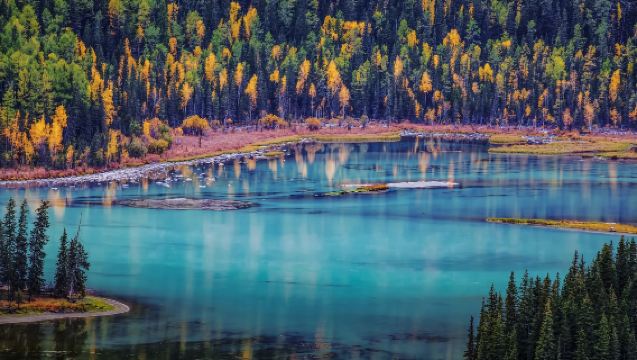
The Kanas Scenic Area is located in the dense forests of Burqin County in the Altay region,It is one of the renowned scenic areas in Xinjiang. The renowned three bays in the attraction — Shenxian Bay, Moon Bay, and Wolong Bay — are must-see core views. Shenxian Bay is famous for its morning mist spectacle, Moon Bay features a graceful S-shaped curve, and Wolong Bay offers tranquil and serene waters. By this beautiful, fertile, and mysterious lake (the meaning of "Kanasi" in Mongolian), you can see the clear and tranquil water that often changes color with the seasons and weather. The lakeshore is surrounded by primeval forests of spruce, fir, and Siberian larch, while the sunny slopes are covered with dense grass. Distinct layers of different plant communities create a stunning display in fall, with golden yellow, crimson, and dark green hues each shining in their own way. When visiting the attraction, you can also climb the fish-watching platform with a relative height of 600 m, where you can overlook the lake and the distant layers of green mountains shrouded in mist as well as the snow-capped peaks. You can also take a cruise to enjoy the lake scenery. There are also many ancient legends here, the most famous being the "lake monster." Over the past few decades, numerous travelers and scientists have reported sightings of "giant strange fish." Some claim it to be a massive taimen (a type of fish), while others believe it to be a prehistoric creature. Stay To protect the natural environment here, the attraction closed many lakeside hotels. There are mountain villas within the attraction, as well as local Tuvan houses and tents available for stay. Many visitors also choose to stay on the outskirts of the attraction for easier access to the next day's tour. If you want to get up early to see the morning mist at Fairy Bay, staying within the attraction is a good choice. Diet The attraction is located in a remote border area with sparse population and high logistics costs. The food in the attraction is mainly halal, with more beef and mutton and fewer vegetables. Some visitors from inland areas may find it unaccustomed, so they can prepare some dry food and drinking water by themselves.Burqin · 71.4 km from Habahe

Baihaba Scenic Area
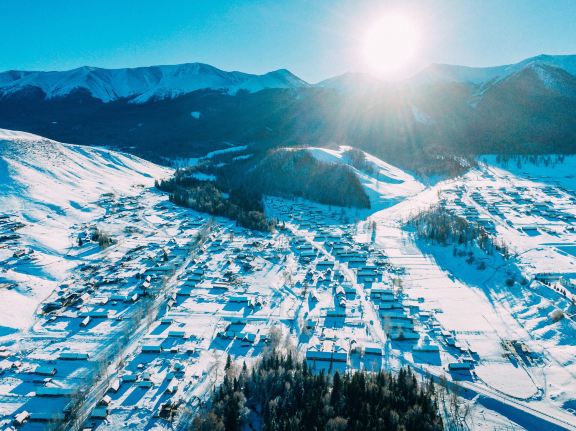
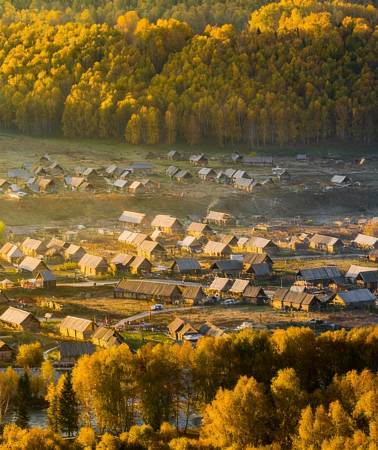
Baihaba is located in Habahe County, Altay Prefecture, northern Xinjiang, adjacent to the Kanas attraction. It is a small village inhabited by Kazakh and Tuva people. The village features quaint log cabins, with rivers and trees nearby and several seasonal snow-capped mountains in the background, creating a stunning landscape. In fall, the golden leaves transform the village into a fairy-tale world, making it an ideal spot to enjoy autumn colors. At sunset, the snow-capped mountains glow red, offering a perfect photography opportunity. Additionally, Baihaba borders the frontier, with nearby attractions like the China-Kazakhstan boundary monument and Zhonghua Forest, both rare and photogenic locations. To visit Baihaba, you can enter from two directions: Habahe County or Kanas Attraction, which also offers two different travel experiences. If entering from Kanas Attraction, you'll need to purchase admission tickets and shuttle bus tickets at the visitor center, where you'll also board the shuttle. The shuttle only sells round-trip tickets (during non-peak seasons with fewer visitors, one-way tickets may occasionally be sold if seats are available, with varying prices). Departure and return times depend on the attraction's schedule. Typically, during peak season, the shuttle departs from Kanas Attraction around 4:00 PM on the first day, heading to Baihaba, with stops at scenic spots like Narenxia Pasture, China Forest, and the China-Kazakhstan Border Monument for photography, arriving in Baihaba before sunset. On the second morning, after sunrise photography, visitors return on the same shuttle at 10:00 AM. This itinerary is somewhat rushed but is currently the primary way to explore Baihaba as it connects seamlessly with Kanas Attraction. If you wish to stay in Baihaba for a couple of extra days without returning on the shuttle, the ticket will not be refunded, and you'll need to arrange your own transportation back to Kanas, such as hiring a motorcycle from the village. Alternatively, you can hike or rent a horse—the 18-kilometer hiking route offers stunning scenery. Another option is to enter from Habahe County. There is a daily bus from Habahe Bus Station to Baihaba (private vehicles are not allowed). After arriving in Baihaba, if you wish to visit the Kanas attraction, you'll need to arrange for a motorcycle from the village or travel on foot or horseback. You can also take the bus back to Habahe County, though few visitors choose this return option. This route is ideal for visitors with ample time who prefer a leisurely trip and want to explore the White Sand Lake area near Habahe before visiting Baihaba. Baihaba is quite similar to Kanas Tuva Village and Hemu scenic area in northern Xinjiang, featuring villages composed of golden leaves covering the mountains and small log cabins, along with clear rivers. However, this village has its own unique charm—the stunning sunrises and sunsets. During this time, the soft light in Baihaba turns the snow-capped peaks of the small mountains red, making it perfect for photography. The best spot for photos is on the hillside by the road at the village entrance, where the Baihaba stone monument is easy to find. Along the way to Baihaba, you'll pass by several viewpoints like Zhonghua Forest and the China-Kazakhstan border monument, right on the border line. Here, you can clearly see the iron fences along the border, as well as the forests and rivers on the Kazakhstan side. The area boasts breathtaking scenery, including canyons and golden leaves. Visitors to Baihaba typically stay overnight in the village, where accommodations consist of homestays run by local Kazakh herders. The wooden cabins and courtyards offer charming surroundings, and the hosts are mostly warm and hospitable. In recent years, village amenities have improved, with standard rooms and multi-bed dormitories now available. Guests can enjoy freshly squeezed milk and local delicacies like bauyrsaq at these homestays—though slightly pricier, they're still more affordable than dining options in nearby attractions like Kanas or Hemu. The village has only one or two small shops with limited goods, but they sell unique Russian and Kazakh products like honey and cigarettes at reasonable prices, making them worth a visit.Habahe · 75.6 km from downtown

Xinjiang Kanas Lake
Located deep in the Altai Mountains in Xinjiang, China, Kanas Lake is a high mountain lake known for its mystery and beauty. The lake presents a charming blue-green color, which changes color with the seasons and weather, like a gem inlaid between the mountains. The virgin forests and magnificent peaks surrounding the lake add endless charm to it, making it a paradise for photography enthusiasts. Kanas Lake not only attracts tourists with its natural beauty, but also adds a bit of mystery because of the legendary "lake monster". Whether boating on the lake or hiking by the lake, tourists can feel the tranquility and magnificence of nature here. It is an ideal place to get away from the hustle and bustle and relax.Burqin · 96.1 km from Habahe

Baisha Lake
Baisha Lake is located in the 185th Regiment's 3rd Company on the northwest side of Habahe County (in Xinjiang Production and Construction Corps, a regiment and company refer to specific areas, with a company being roughly equivalent to a village). It is about 70 kilometers from Habahe County and 160 kilometers from Buerjin County. Surrounded by desert, Baisha Lake is a tranquil oasis with lush trees along its shores and shimmering waters, creating a striking contrast. Autumn is the peak season for visiting Baisha Lake, with vibrant red and yellow foliage perfect for photography. Summer is also a good time to visit, as you can see rare lotus flowers in the lake. However, it is very cold in winter and early spring, with the lake frozen over, making it unsuitable for visits. The entrance to Baisha Lake Scenic Area is located along the Z840 road, about 2 kilometers from the lake. Visitors can walk or take a round-trip electric shuttle for 10 RMB (the shuttle runs continuously, and you can take any available one for the return trip). Once at the lake, you can stroll along the wooden boardwalk, which is about 1 kilometer long, offering scenic views of the lake and its surroundings. The boardwalk ends at a viewing platform with a broad view of the lake and a sand dune reflected in the water, making it an ideal spot for photography. On the way back to the entrance, it is recommended to walk, as there is a sand dune with a pavilion at the top, offering panoramic views of the nearby Kazakhstani landscape. The pavilion is about a 15-minute walk from the road. Near the entrance, there is also a small birch forest, perfect for a leisurely walk and photos. Visiting Baisha Lake typically takes about 3 hours. After the tour, visitors usually dine near the scenic area. Opposite the entrance is the 3rd Company of the 185th Regiment, where residents, originally from inland China, grow vegetables and run small restaurants. The authentic, mildly flavored Han Chinese farmhouse dishes offer a welcome change from the heavily spiced local cuisine, and the meals are affordable and delicious. In summer and autumn, you can even pick fresh vegetables directly from the garden.Habahe · 52.7 km from downtown

Birch Forest Sightseeing in Altay Prefecture
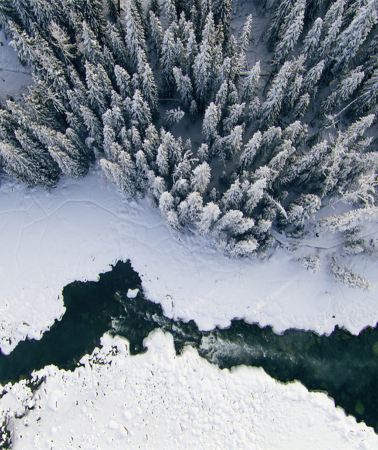
The birch forest in Altay is a flowing natural painting, with unique poetry and romance hidden in the changing seasons. In early spring, tender green buds quietly climb up the branches, stretching their bodies in the chilly mountain breeze, injecting vitality into the sleeping earth; in midsummer, the lush birch forest turns into a green ocean, the sun shines through the layers of leaves, casting mottled light and shadows in the forest, and walking in it is full of coolness and comfort. The most intoxicating season is the golden autumn season, when the birch trees shed their green clothes and put on dazzling gold. The trunks are as white as jade, and the golden leaves set off each other, which is breathtakingly beautiful under the blue sky. When the autumn wind blows, the golden leaves fall down, like golden butterflies flying all over the sky, covering the winding paths. In winter, the birch forest is covered with silver, and the branches are covered with crystal rime, flashing tiny lights in the sun, quiet and holy. Whenever you step into the birch forest of Altay, you can encounter a deep embrace with nature and feel the agility and grandeur of life.China · Habahe

Habahe Birch Forest
The Habahe birch forest is located 4 kilometers west of Habahe County, near the Kanas Attraction. This birch forest is about 28 kilometers long and 1.5 kilometers wide. It is the largest naturally grown birch forest in Northwest China and is known as the "No. 1 birch forest in Northwest China". The birch tree, scientifically known as Betula sibiricum, is 20-40 meters tall in the Habahe birch forest and is of great ornamental value. The birch trees grow in patches around the Habahe River. The graceful white trunks look noble and refined from a distance, and simple and noble from a close distance. In spring, the grass is green and the flowers are blooming; in summer, the forest is lush and the bees and butterflies are flying; the beauty is in autumn, when the birch trees turn yellow and red, and the forest is covered with reddish-yellow fallen leaves, which complement the silver-white trunks and the blue sky, just like a European-style oil painting; in winter, it is covered in silver, forming a white magical world, which has become a good place for people to explore the snow.Habahe · 6.7 km from downtown

China-Kazakhstan Border Grand Canyon
China-Kazakhstan Border Grand Canyon is located on the border between China and Kazakhstan, and the canyon features many spectacular natural views, such as towering cliffs, unique rock formations, crystal-clear rivers, and waterfalls.Habahe · 67.5 km from downtown

Rainbow Brac
Habahe · 11.7 km from downtown

Naren Ranch
Habahe · 85.7 km from downtown

Tuvinians Village
Tuvinians Village is composed of wooden houses and fences that are simple yet practical, surrounded by beautiful mountains and clear waters in a picturesque setting. With blue skies, white clouds, herds of cattle and sheep, and vast birch forests, it is a great place for a relaxing getaway.Burqin · 86.1 km from Habahe
Experiences you can't miss in Habahe
Featured Cultural experiences in Habahe
View all Cultural experiences
FromCAD 609.16
FromCAD 166.90


More things to do
Group Tours in Habahe
View More Group Tours in Habahe


What travelers say about Habahe

_CF***3424 October 2026
5.0
Kanas is the most beautiful scenic area I've visited in recent years, bar none! The misty Fairy Bay in the early morning is like a fairyland, the S-shaped bay of Moon Bay is photogenic from every angle, and the forest reflections in Sleeping Dragon Bay are unrealistically beautiful. The scenery changes constantly as you ride the shuttle bus, and climbing the 1068 steps to the Fish Viewing Platform is tiring but absolutely worth it; the view overlooking the entire Kanas Lake makes it all worthwhile. The Tuva people's log cabins, milk curds, and milk tea are also very unique. I recommend staying overnight to explore at your own pace, rather than rushing through a day trip. Five stars, highly recommended!
Kanas Scenic Area

110***6810 October 2026
4.0
Baihaba: You can easily get there directly from the Kanas Scenic Area by shuttle bus. Very convenient.
It's a village similar to Hemu. The scenery is slightly inferior to Hemu, but the village has a more border feel, with a sentry post (the first sentry post in Northwest China). Drones are also prohibited [smug face].
There's no such thing as a more authentic village; they all have the same commercial atmosphere.
In fact, prices are higher than in Hemu.
Overall, Kanas is the cheapest, Baihaba is the most expensive, and Hemu is in the middle.
Baihaba Scenic Area

YoYo_9H7U5N1A1 August 2026
5.0
The waters of Kanas Lake change colors with the light and shadow, surrounded by pristine taiga forests, possessing both beauty and mystery. The Fish Viewing Platform offers the best panoramic view. The scenic area is quite extensive, and shuttle buses often have long wait times during peak season.
Xinjiang Kanas Lake

姑苏霞客金19 October 2026
4.0
White Sand Lake in Habahe, Altay, is a blue lake surrounded by Gobi sand dunes. Birch and reeds line its banks, the sand doesn't encroach on the lake, and the still water reflects the mountains. Hidden on the border of the 185th Regiment, its scenery and stories of border defense coexist, making it a worthwhile destination on the western frontier of northern Xinjiang. During the National Day holiday, you can also see desert flames and European aspen.
Baisha Lake

阿咪糖12345627 September 2024
4.0
It's pretty good, it's not tiring to walk around here, there are not many people, it feels very fresh, you can come and have a look when you have time. It's pretty good, it's not tiring to walk around here, there are not many people, it feels very fresh, you can come and have a look when you have time. It's pretty good, it's not tiring to walk around here, there are not many people, it feels very fresh, you can come and have a look when you have time.
Habahe Birch Forest

137***9918 October 2023
5.0
From Baihaba Village, along National Highway 219, to the China-Kazakhstan border Grand Canyon, passing through Tierekti Township, the beautiful scenery along the way, snow-capped mountains, grasslands, golden pine and cypress trees, all the way to Habahe County, I was amazed. The road conditions are good, there are few cars and beautiful scenery, which is suitable for self-driving.
China-Kazakhstan Border Grand Canyon

方人二a8 October 2024
5.0
I checked in at the filming location of "My Altay". The road to get in has not been repaired yet. It takes more than ten minutes to walk on the dirt road, but the scenery is beautiful. There are people all over the crooked tree, haha
Rainbow Brac

不胖的胖妹妹2 July 2020
5.0
The ranch is located on the southern foot of the Altai Mountains, at a relatively high altitude. It is the summer pasture of local Kazakh herdsmen. Here, the mountains are winding, forests and grasslands alternate, cattle and sheep stroll leisurely on the grass, and eagles soar in the sky. The scenery is endless.
Naren Ranch

M2b***7x31 August 2025
5.0
The highlights of Tuva villages are primarily reflected in the following aspects:
Unique Architectural Style:
Traditional Tuva villages are characterized by wooden cabins and domed tents (yurts). Constructed using natural materials such as wood and wool felt, they possess strong ethnic characteristics and practical features, adapting to the cold, dry northern climate.
Rich Cultural Heritage:
The villages preserve the rich traditional Tuva culture, including unique music, dance, handicrafts, traditional religious beliefs, and customs, creating a rich ethnic cultural atmosphere.
A Fusion of Nature and Humanity:
Located across the grasslands and valleys of the Mongolian Plateau, Siberia, and the Altay region of Xinjiang, my country, Tuva villages embrace abundant natural resources. These beautiful environments showcase a lifestyle characterized by harmonious coexistence between humans and nature.
Traditional Lifestyle:
The Tuva people maintain a nomadic or semi-nomadic lifestyle, engaging in horseback riding, herding, hunting, and fishing, offering a living example of ancient nomadic culture.
Scenery and Ecology:
The villages are located in areas dominated by vast grasslands, lakes, and forests, offering magnificent scenery and providing an ideal location for experiencing the natural beauty and ecological environment of northern ethnic groups.
Ethnic Festivals and Customs:
Traditional festivals such as the Nalan Festival feature traditional sacrificial ceremonies, singing and dancing, and competitive sports, showcasing the rich and diverse cultural life of these peoples.
In short, Tuva villages, with their unique architecture, rich cultural traditions, natural environment, and lifestyle, offer a valuable window into nomadic culture and the natural beauty of northern China.
Tuvinians Village


