Overview of the Nanjing day tour Nanjing is one of the four ancient capitals of China. Since the 3rd century AD, ten dynasties or regimes have established Nanjing as their capital, leaving behind a rich cultural heritage.
Highlights Dr. Sun Yat-sen is revered as the father of the nation by the Chinese people and a great pioneer of the democratic revolution. He founded the Kuomintang and served as the first president of the Republic of China. He led the famous 1911 Revolution, overthrowing the Qing dynasty, and established the Republic of China in 1912, ending China's over 2,000-year feudal monarchy. In 2003, the Ming Xiaoling Mausoleum in Nanjing and the Ming Tombs in Beijing were inscribed as UNESCO World Heritage Sites. The Ming Xiaoling Mausoleum, located at the foot of Purple Mountain, is the burial site of Zhu Yuanzhang, the founding emperor of the Ming dynasty. Subsequent Ming emperors followed this practice in constructing their mausoleums.
Itinerary experience (product details)
First, visit Dr. Sun Yat-sen's Mausoleum, located at the southern foot of Purple Mountain. It is the burial place of Dr. Sun Yat-sen (1866–1925), the first president of the Republic of China. He led the 1911 Revolution to overthrow the Qing dynasty, ending China's over 2,000-year feudal monarchy, and founded the Republic of China in 1912.
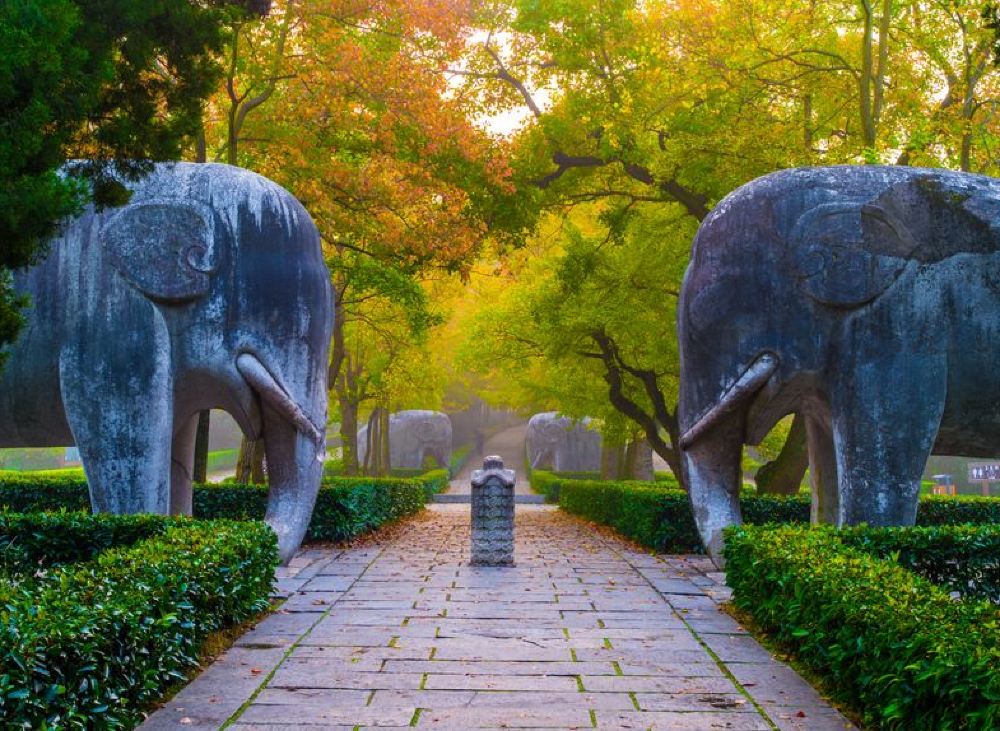
Then visit the Ming Xiaoling Mausoleum. The Ming Xiaoling Mausoleum in Nanjing and the Ming Tombs in Beijing are both UNESCO World Heritage Sites. At the foot of Purple Mountain lies the burial site of Zhu Yuanzhang, the founding Hongwu Emperor of the Ming dynasty. The mausoleum is named "Xiaoling," which is said to symbolize the emperor's governance of the world with filial piety.
After lunch, visit Zhonghua Gate. Built 600 years ago, this gate is one of the largest existing city gates in China and among the world's largest ancient gates, representing an outstanding example of ancient defensive architecture. The gate complex consists of 1 main gate, 3 barbicans, and 27 troop shelters, with wide horse ramps on both sides. The seven troop shelters on the second level could accommodate 3,000 soldiers simultaneously. It holds significant importance in the history of global wall architecture and remains one of the world's best-preserved, most structurally complex, and largest fortress barbicans.
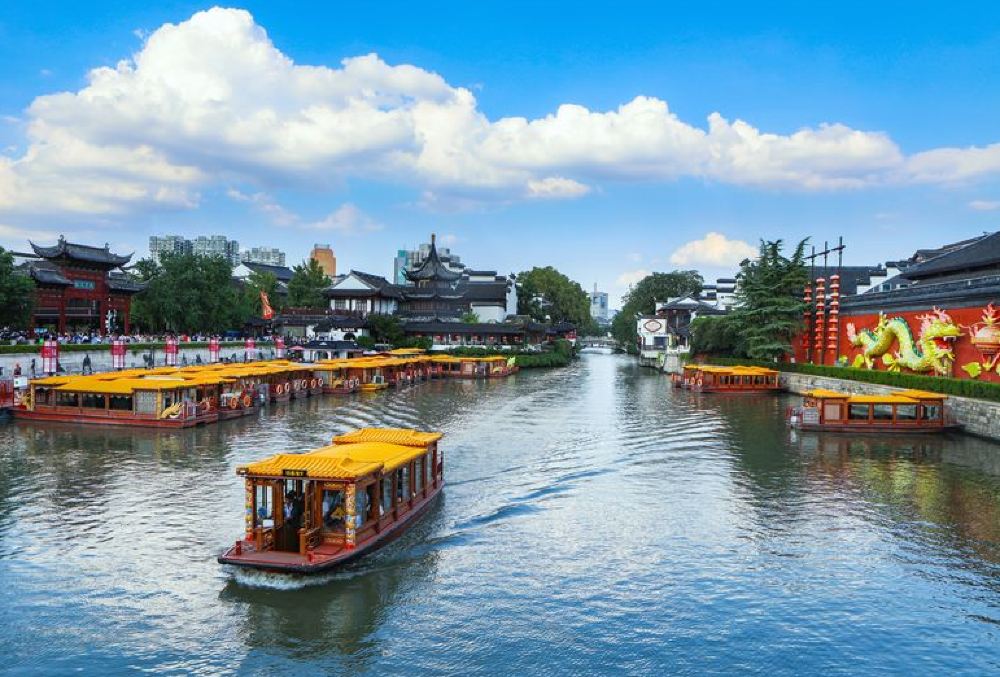
Afterwards, head to the Confucius Temple. Almost every ancient city in China has a Confucius Temple, but few are as bustling with visitors as the one in Nanjing. The temple was first built in 1034. The surrounding area is a lively leisure hub, especially vibrant during the Spring Festival, Lantern Festival, and Mid-Autumn Festival. The streets are lined with various vendors selling delicious food and travel souvenirs, making it a great place to hunt for antiques and unique finds.