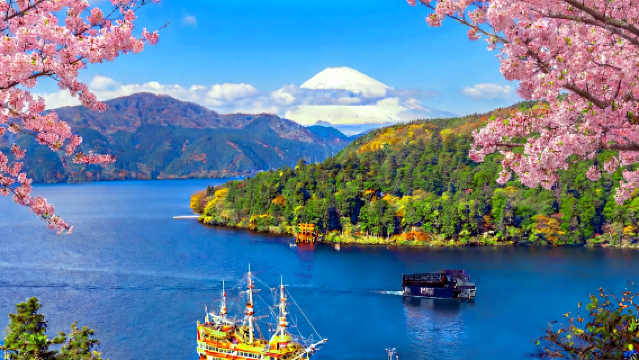
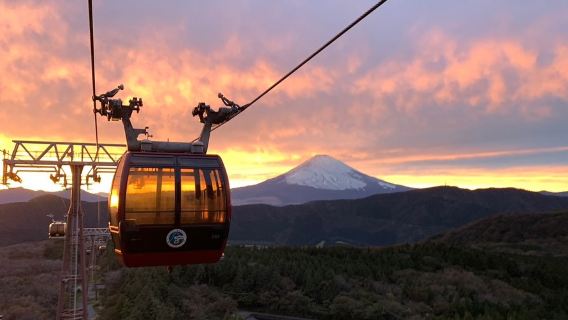
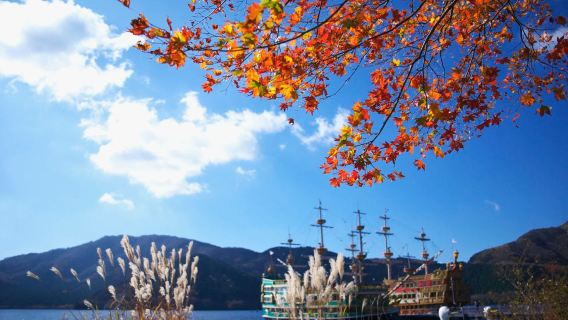
▲ The mountain forms an almost perfect cone, with its summit covered in snow year-round (except in summer), making it a recurring theme in Japanese art and literature. Viewed from different angles and seasons, the view varies: Spring: Cherry blossoms frame Mount Fuji, creating a classic Japanese landscape. Summer: The official climbing season is from early July to early September, when you can reach the summit to see the sunrise ("Goraikō"). Fall: The red leaves contrast beautifully with Mount Fuji, especially around Lake Kawaguchi. Winter: The snow on the mountaintop is at its thickest, the air is clear, and the distant views are excellent.

▲ The remains of an active volcanic crater formed by an eruption approx. 3000 years ago, where white smoke still lingers and the smell of sulfur permeates, creating a breathtaking sight. The experience here includes tasting "black jade eggs" (black eggs) boiled in sulfur springs, with a legend claiming that eating one can extend life by seven years. On clear days, this is also a great spot to view Mount Fuji in the distance.

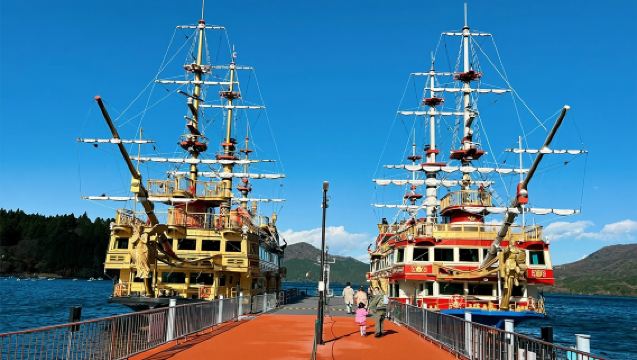
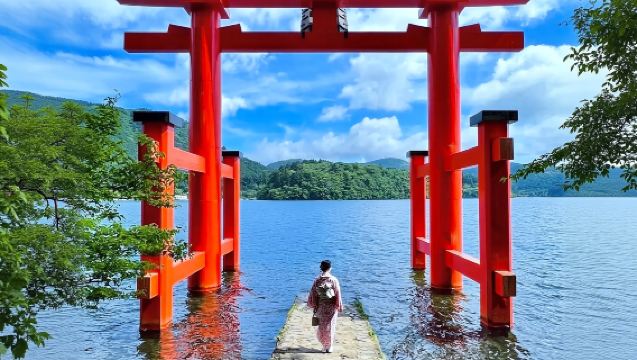
▲ It is a signature view of Hakone, formed by volcanic activity. The best way to explore it is by boarding the retro-styled Hakone pirate sightseeing ships to enjoy the scenery along both shores from the lake. If the weather cooperates, you can also capture the classic shot of Mount Fuji framed by the lake waters from the ship.