


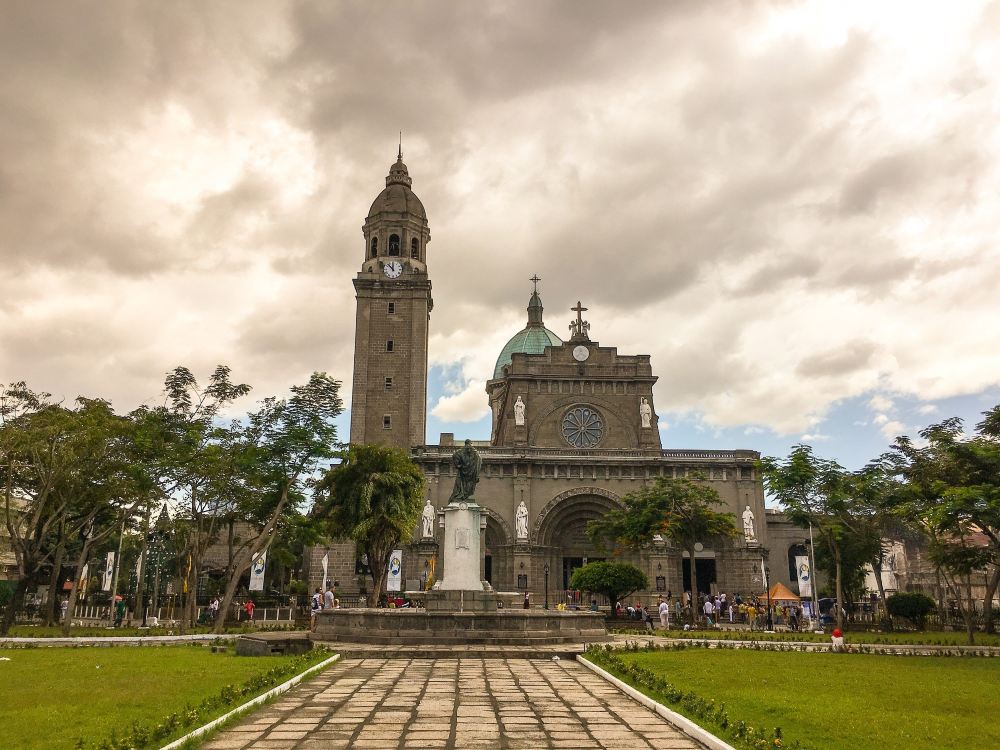
▲ Plaza de Roma – formerly known as Manila's main square, this is the heart of Intramuros. Every time the cathedral was damaged, believers held open-air masses on this grassy plaza, witnessing four centuries of unwavering faith.

▲ Full view of the cathedral facade – standing at Plaza de Roma, face the magnificent neo-Romanesque stone facade of Manila Cathedral. Admire the three tiers of grand arches, stone carvings of saints, and the iconic bell tower, while listening to the legendary tale of eight destructions and reconstructions over 400 years behind the eight bronze doors.


▲ Stroll through the cathedral's main nave. For four hundred years, no matter how many times the building collapsed, the layout of this worship space remained unchanged. Listen to the moving story of how believers persisted in worship for 26 years in a thatched shelter on the original site after the 1645 earthquake.


▲ Pause to admire the replicated stained glass. The original windows were shipped from Spain across the ocean but were damaged in a typhoon during transit and ultimately destroyed in the artillery fire of World War II. Today, the stained glass recreated by local artisans transforms biblical stories into a kaleidoscope of light and color.


▲ Step into the sacred core of the main altar, gaze up at the magnificent vaulted ceiling and dazzling stained glass windows. Discover the story of Saint Lorenzo Ruiz, the first Filipino saint, and learn about the arduous process of restoring the old altar—destroyed in World War II—based on historical records.

▲ Look up at the cathedral dome. The dome collapsed twice during a major earthquake and World War II. After the 1880 earthquake, due to Manila's high seismic risk, the architect decided not to rebuild a standalone bell tower. The modern reinforced concrete structure recreates the retro aesthetic of the dome.