


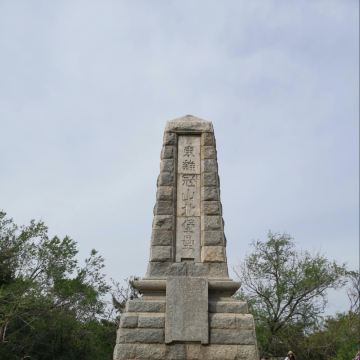

▲ The fortress beneath our feet has a perimeter of 496 m, is pentagonal, and contains not a single piece of rebar; the cement was shipped by sea from Russia and carried up the mountain on donkeys. Its firing ports open in the opposite direction—not a design flaw, but intentional. You charge into the trench, look up, and only then realize the muzzle is aimed at your chest. This is called "shutting the door to beat the dog." Finally, please look down at the foot of the mountain. That village originally had over eighty houses; after the war, only five remained. The battle lasted four months, with two countries fighting over a piece of land that belonged to neither of them. We stand here today not to see who won, but to see what war actually looks like.
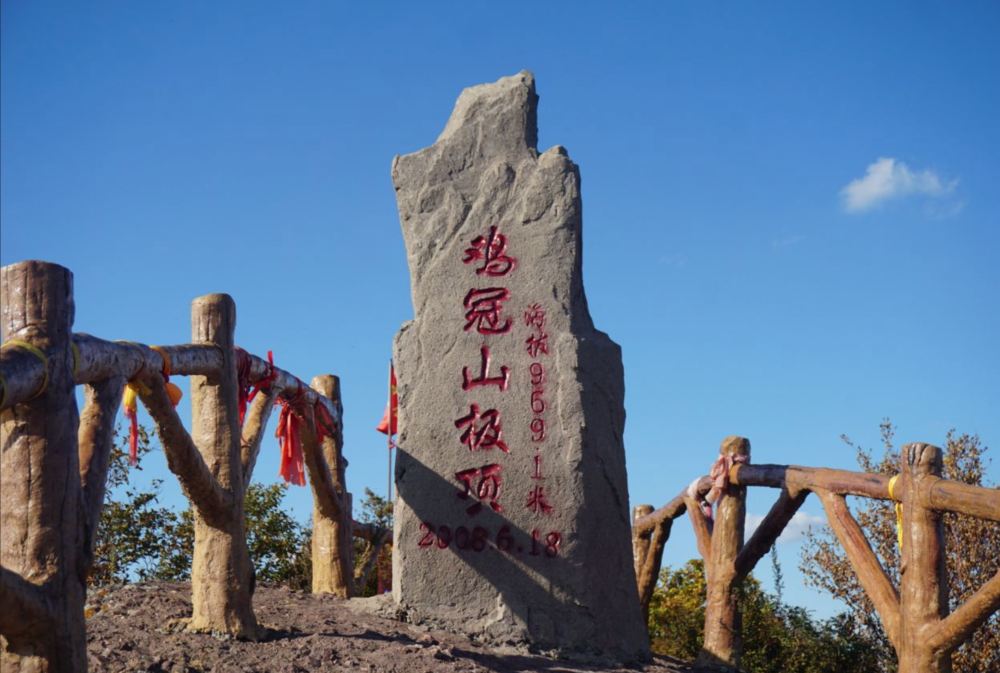
▲ Dongjiguan Mountain Scenic Area, a national 4A-rated attraction, is called an "open-air history museum" by locals. First, remember one thing: this is not a single fortress, but a defensive line. The North Fortress guards the front, the lookout battery serves as the eyes, and Erlong Mountain is the flank. If any one of the three is missing, the line is broken. So the route we're taking today follows a sequence—starting from the one that took the beating, moving to the one with the far view, and then to the one from long ago. After these three stops, you'll understand that battle in 1904 without even opening a book.
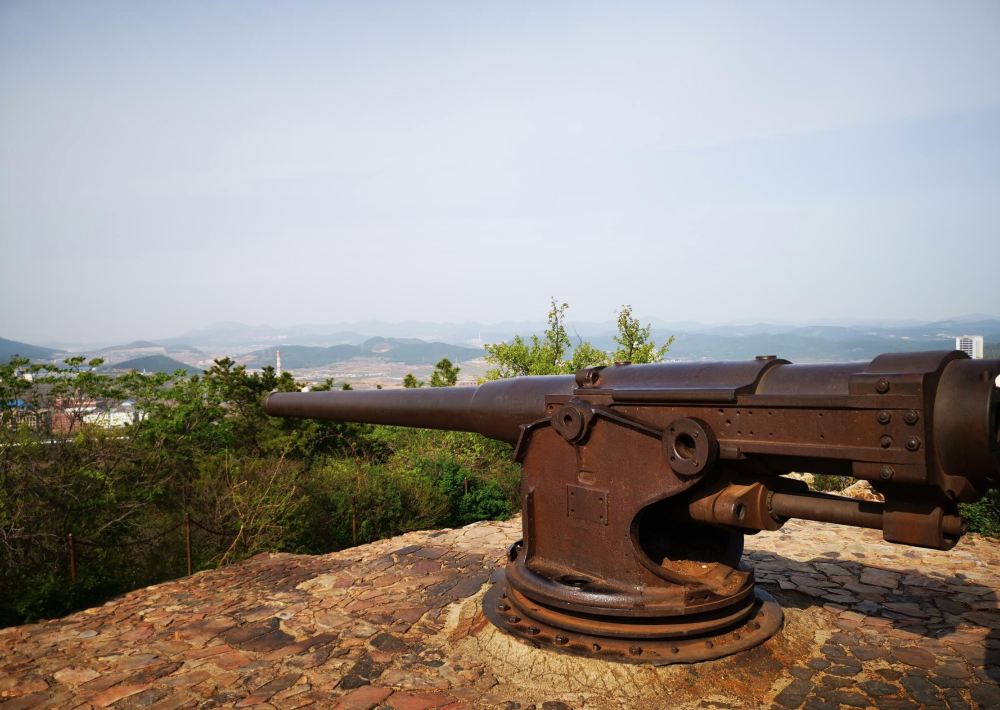
▲ The two cannons on the hilltop are called "two guns" by the locals. They are not from this mountain—they are from the warship. The warship was blocked in the harbor and couldn't get out, so the cannons were dismantled. Two thousand Chinese laborers, pulling and carrying by hand and shoulder, spent half a month dragging them from the foot of the mountain to here. The gun was made in 1899 in St. Petersburg, Russia, with a caliber of 150 mm and a range of 10 km. Positioned here, the entire city of Port Arthur and the naval port are within its range. On January 1, 1905, the Japanese army attacked, and the Russian soldiers on the hill abandoned their cannons and retreated. These two cannons—one of them never even got a proper chance to fire—and the land battle for Port Arthur was over. Now they are still standing here, silent. They are not souvenirs; they are witnesses.
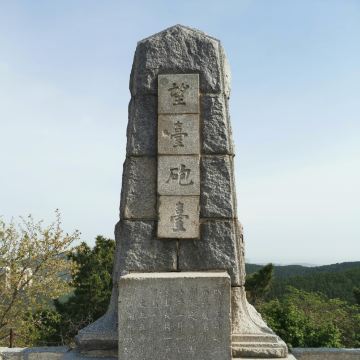

▲ This is the highest point of Dongjiguan Mountain Scenic Area, at an elevation of 182 m. The people of the Qing Dynasty called it General's Terrace, the Russians called it the Great Eagle's Nest, and the Japanese called it the Observation Post. Three names, one meaning: whoever stands here can see all of Lüshun. Below the hill is the city, and to the southeast is a naval port. In August 1904, Japanese troops charged up from two sides but were driven back by the hilltop artillery fire; after four months of fighting, they finally took this place on New Year's Day 1905. The defenders withdrew in great haste, leaving both cannons on the hill. This hill isn't tall, less than 200 m. But it was the last vantage point of that battle—once it fell, the land battle of Port Arthur was over.
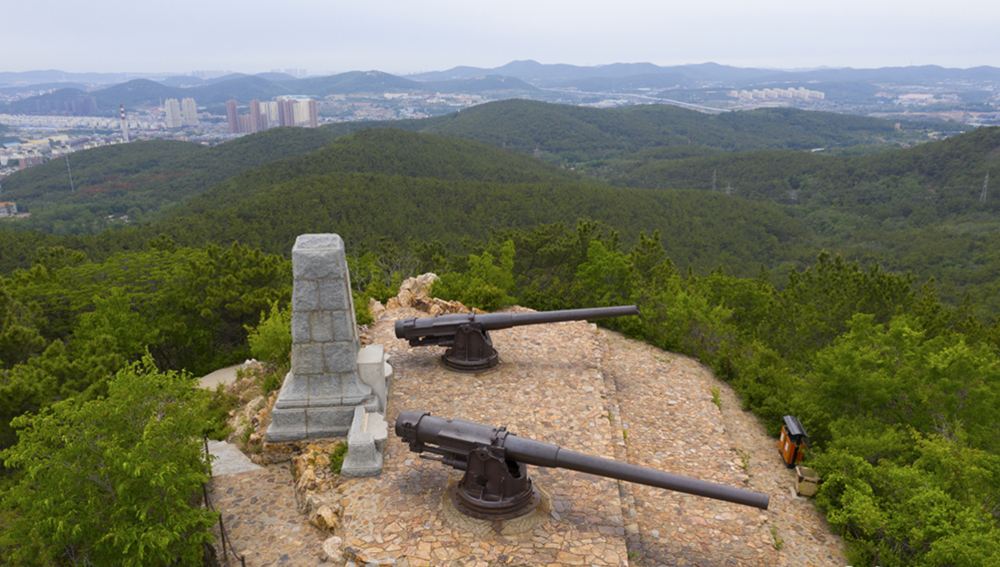
▲ These two cannons did only one thing their entire lives—being carried from the ship to the mountain, and then watching a battle end right at their feet.
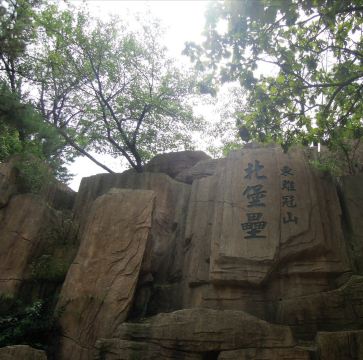
▲ Construction began in 1900 and took four years to complete: a pentagonal underground fortress. It was designed to be "indestructible," yet it was blown open from below by two and a half tons of explosives. The fortress's brilliant design was making you believe it had no breach; the ironic ending was that the breach opened from beneath your feet.
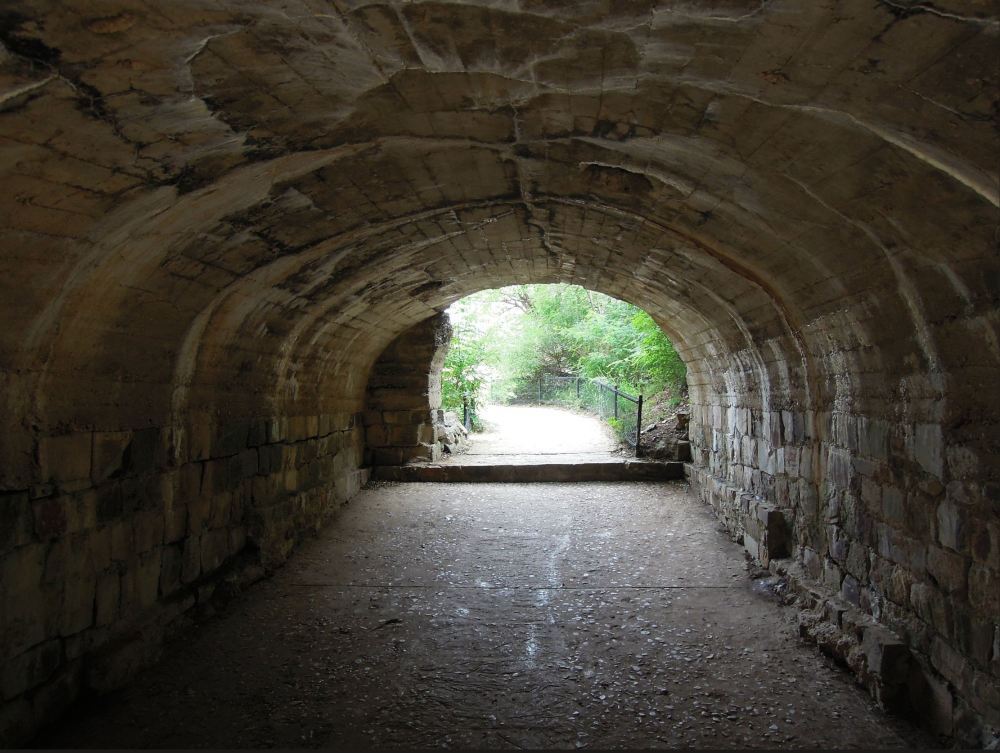
▲ The passage of this fortress is neither wide nor high. What does this passage connect? The command post, barracks, ammunition depot, hidden bunker, forward positions. In other words—orders are relayed through here, ammunition is delivered through here, the wounded are carried out through here. Whether a fortress can hold does not depend on how thick the walls are, but on whether this passage remains open. That shaft up ahead looks like a well from above, but it's actually a staircase. When the shelling starts, people have a much better chance of surviving moving up and down inside the well than running around on the surface.
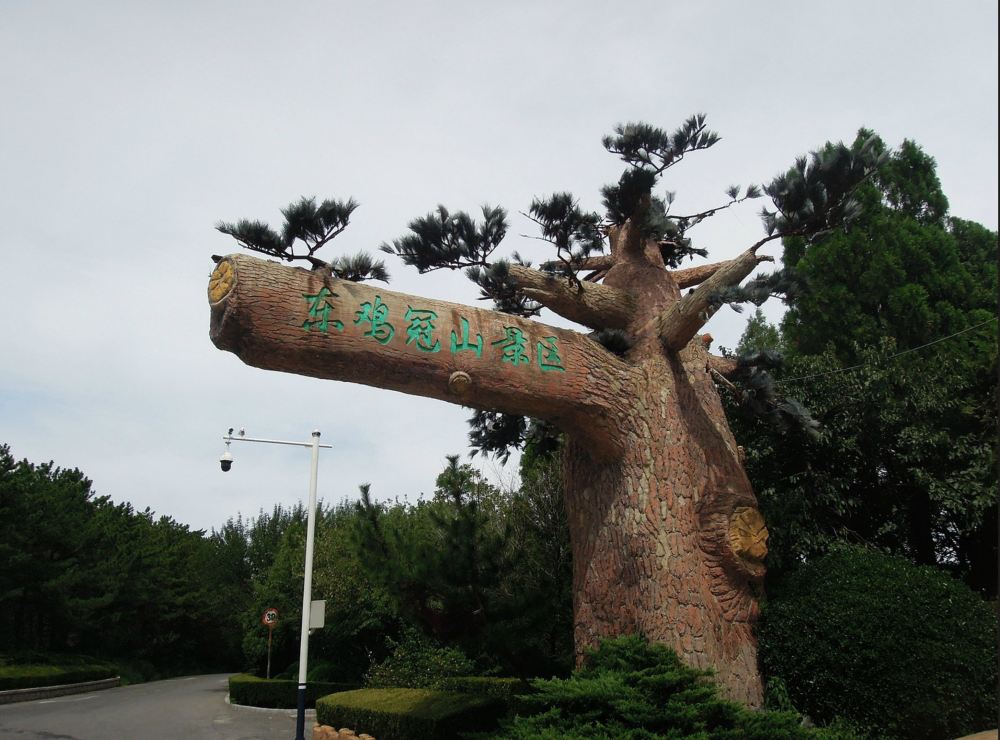
▲ A small hill in the northeast of Lüshun's urban area, it was the main battlefield of the eastern front during the 1904 Russo-Japanese War. Three century-old forts form a defensive line; walking the two-plus km route reveals how a battle was fought. In the 1904 Russo-Japanese War, Lüshun was the core of the contest between both sides. The Russian army built a ring of fortifications around the outskirts of Lüshun, and the eastern section was positioned on this hill—the North Fort guarded the front, the Wangtai battery served as the eyes, and the Erlongshan Fort protected the flank and water source.
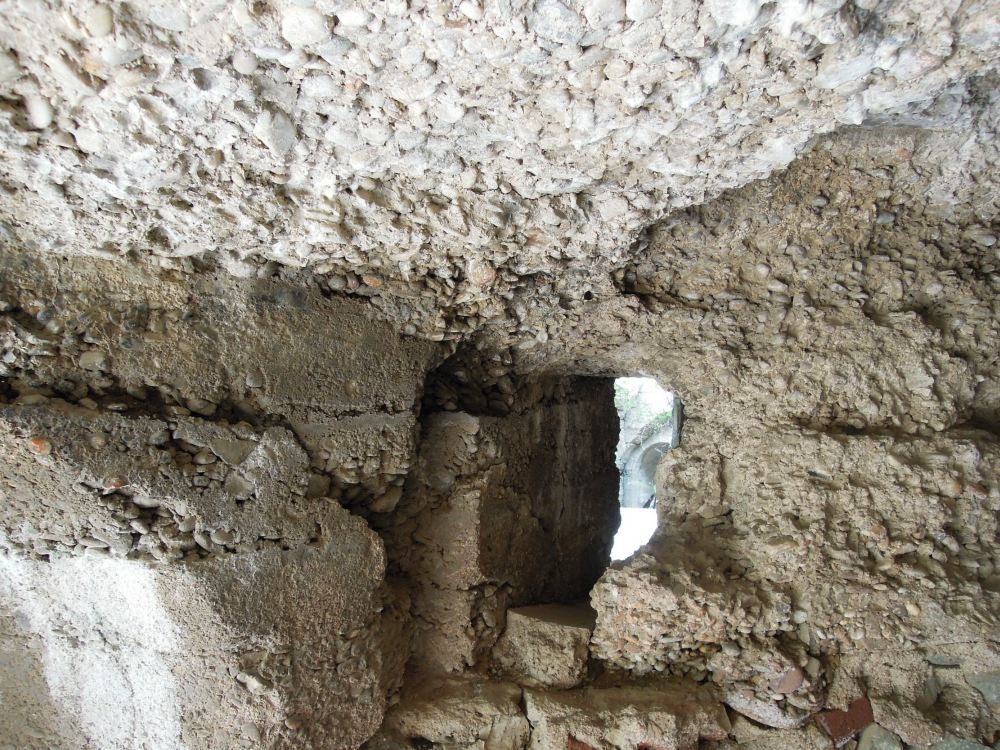
▲ The fort's construction used no rebar, yet it was absurdly hard. The pour used "imported cement + sea pebbles + glutinous rice slurry"—the glutinous rice slurry was a binder passed down by the Chinese, which the Russian engineers adopted as a formula. So this fort was a mixture of Russian design, Chinese materials, and Chinese labor. The cement came by boat. Shipped by sea from St. Petersburg to Lüshun, packed in wooden barrels of 150 kg each, then carried up the mountain one load at a time by donkeys. The cost of building a fortress began with transporting materials halfway around the world.
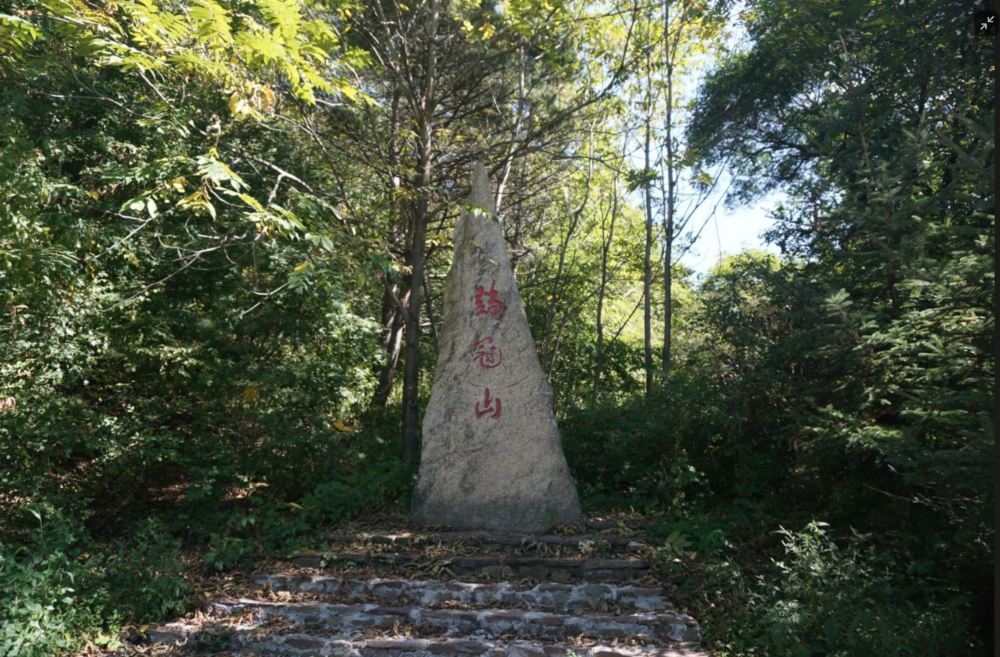
▲ A small hill in the northeast of Lüshun's urban area, it was the main battlefield of the eastern front during the 1904 Russo-Japanese War. Three century-old forts form a defensive line; walking the two-plus km route reveals how a battle was fought. In the 1904 Russo-Japanese War, Lüshun was the core of the contest between both sides. The Russian army built a ring of fortifications around the outskirts of Lüshun, and the eastern section was positioned on this hill—the North Fort guarded the front, the Wangtai battery served as the eyes, and the Erlongshan Fort protected the flank and water source.