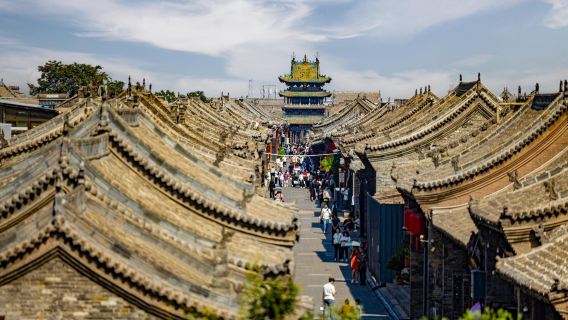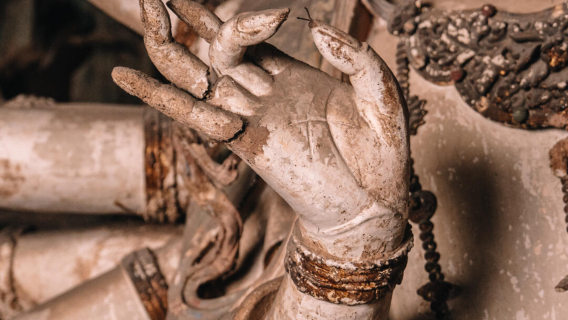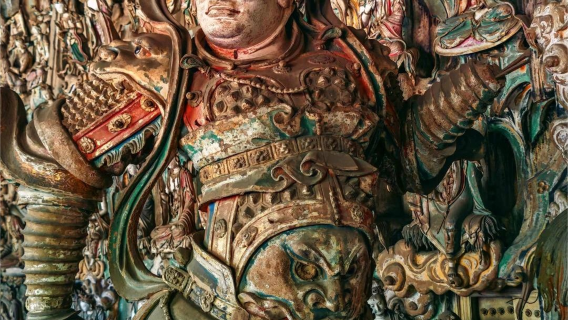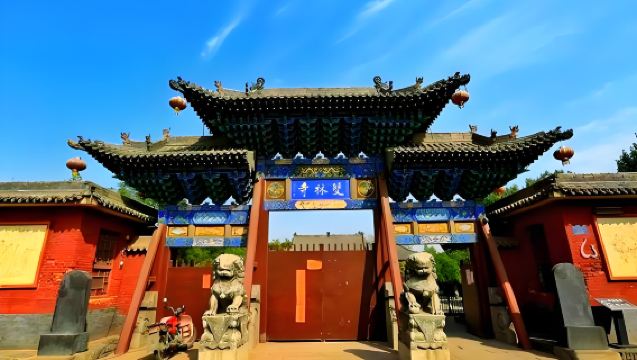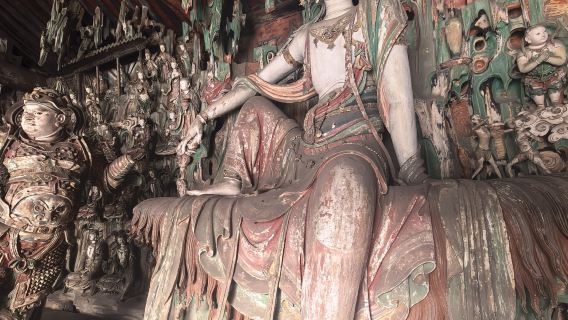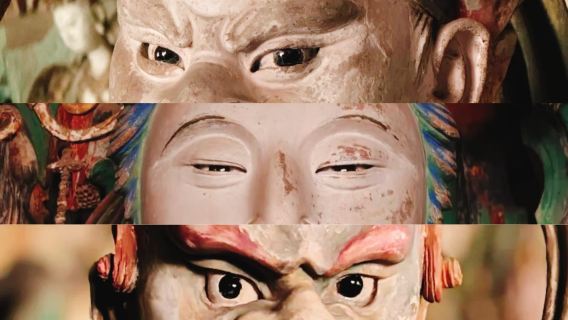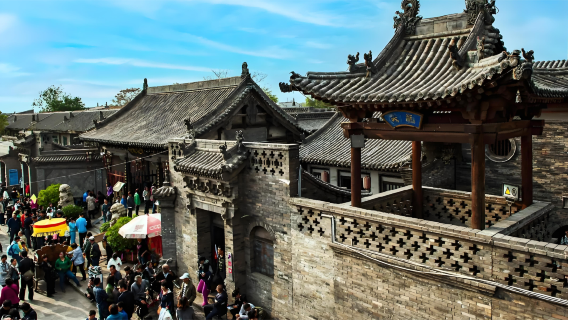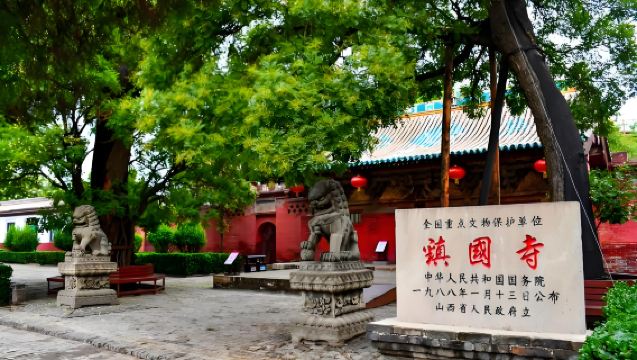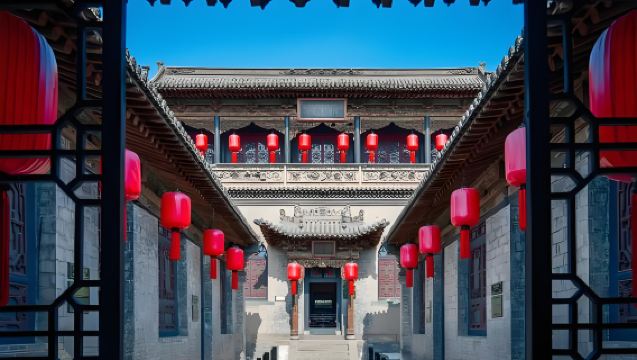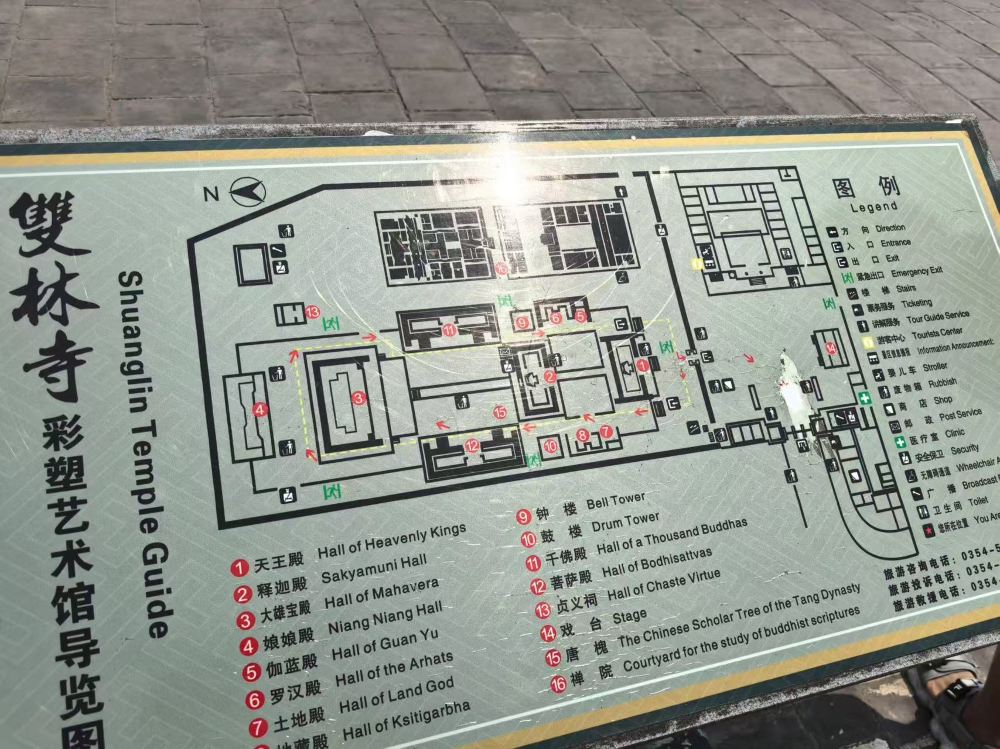
▲ Shuanglin Temple, originally named Zhongdu Si, is located in Qiaotou Village, six km southwest of Pingyao County, Shanxi Province. The site was originally the location of the old city of Zhongdu, hence the name. Shuanglin Temple covers an area of approx. 15,000 square m and is divided into two major sections, east and west.
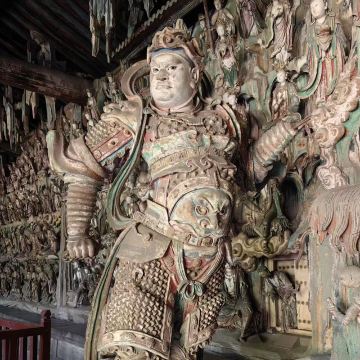

▲ The ancient stele extant in Shuanglin Temple is the "Aunt's Stele" from the fourth year of the Dazhong Xiangfu era of the Northern Song Dynasty (1011). Due to its great age, the inscription is blurred, though the twentieth line, "the temple was rebuilt in the second year of Wuping," is still legible.
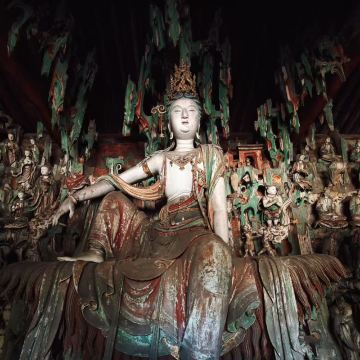

▲ "The second year of Wuping" (571) was a reign title of the Northern Qi dynasty. Since this was a reconstruction, its original founding date must have been earlier than this. Even counting from the Northern Qi period, Shuanglin Temple has already weathered more than fourteen hundred years.
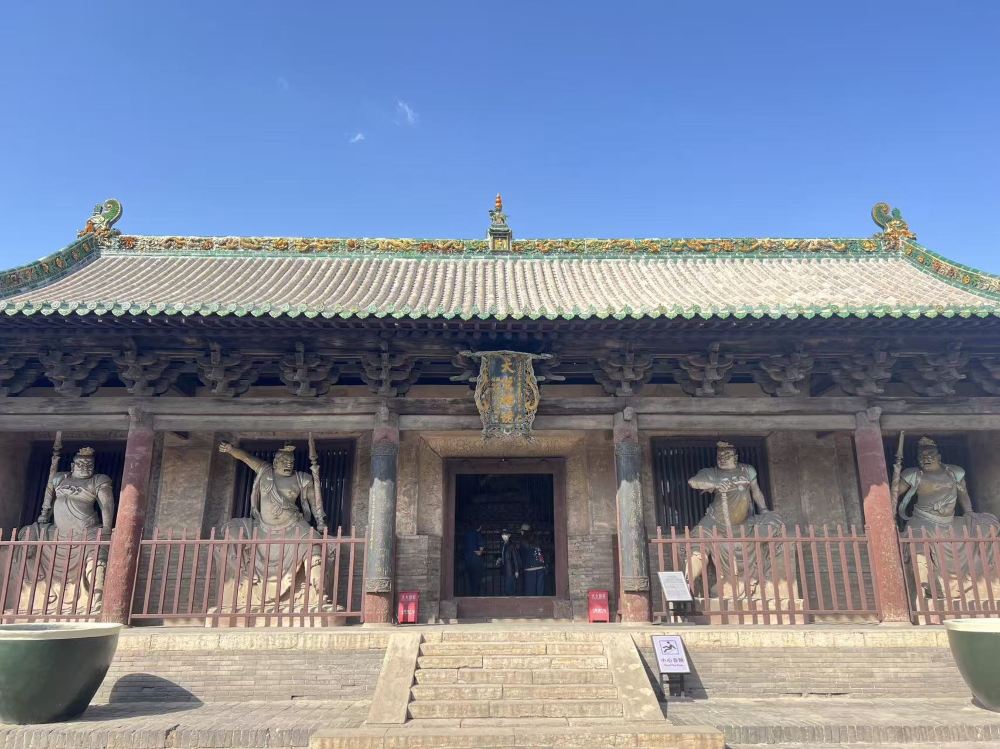
▲ Shuanglin Temple faces south, and its perimeter is enclosed by a tall rammed-earth wall with a brick facing. The temple is divided into two major sections, east and west. The western section is the temple compound, which contains ten halls and three successive courtyards.
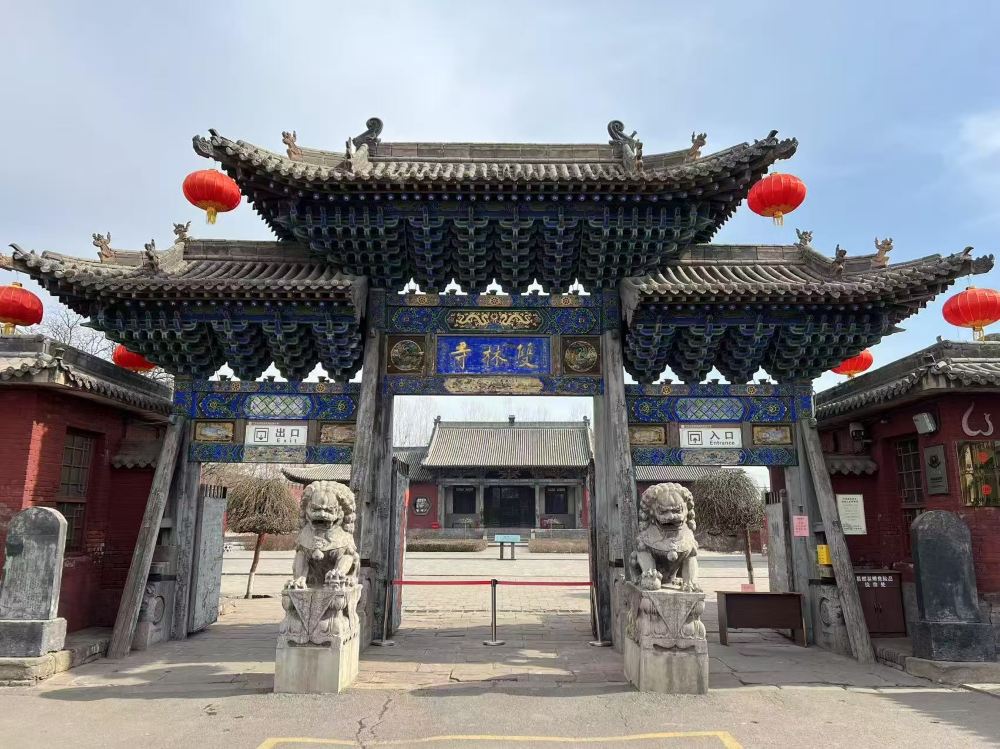
▲ Shakyamuni Hall, Arhat Hall, Martial Sage Hall, Earth God Hall, Yama Hall, and Heavenly King Hall form the front courtyard; the Mahavira Hall and the Thousand Buddha Hall and Bodhisattva Hall in the side wings form the middle courtyard; the Goddess Hall and the Shrine of Chastity and Righteousness form the rear courtyard
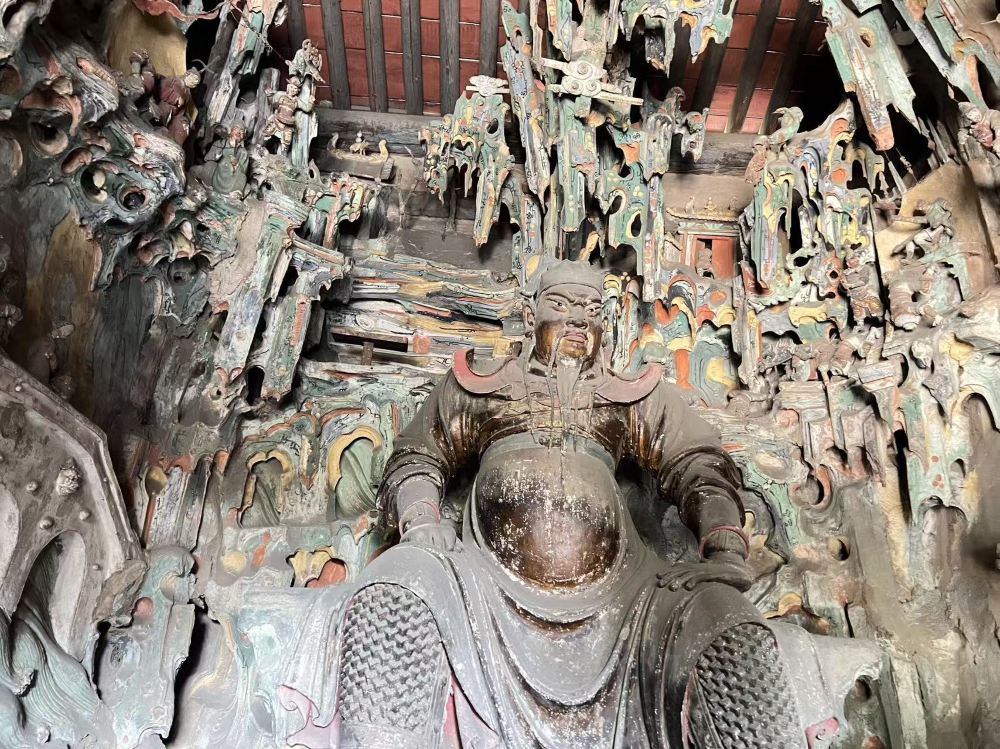
▲ The eastern part mainly consists of the Zen courtyard and sutra rooms. Shuanglin Temple is located in Qiaotou Village, six km southwest of Pingyao County, Shanxi Province. It is a cultural relic site under third-batch national key protection and a national AAA-level attraction. In 1997, it was listed as a World Cultural Heritage site as an important component of the Ancient City of Pingyao.
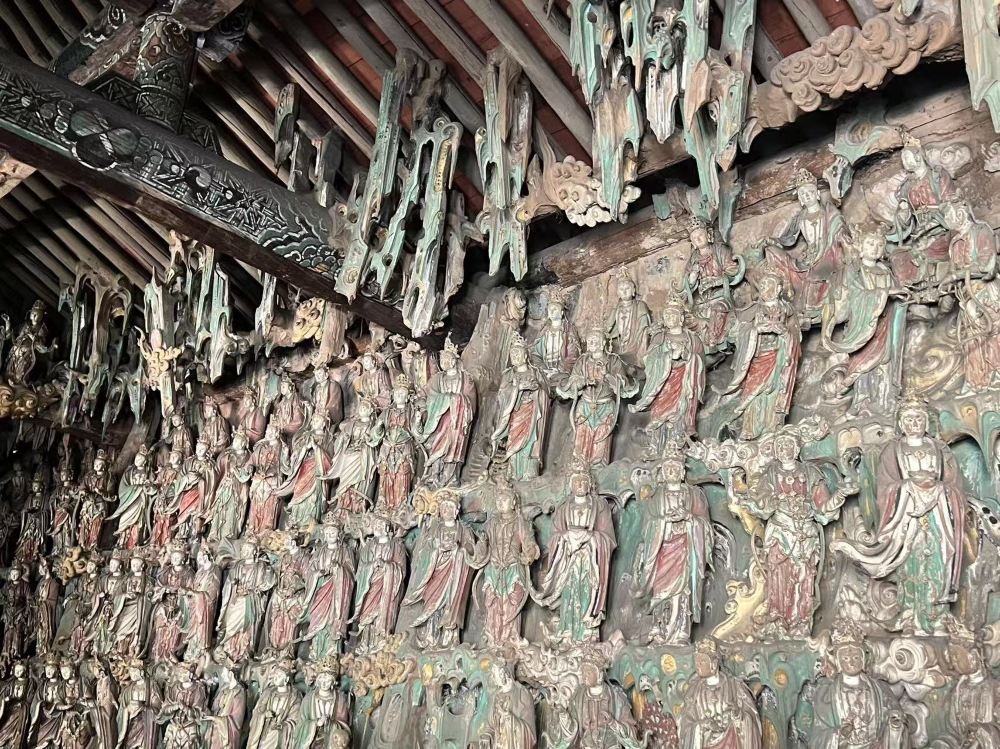
▲ Shuanglin Temple was a scenic spot of the region at that time, with magnificent temple buildings, flourishing incense offerings, and an endless stream of visitors. It once had a "seven-story pavilion, so high that one could see the provincial capital." Unfortunately, it was destroyed by fire. The foundation stones of the original pavilion still exist today, measuring over 1 m in diameter, which sufficiently proves the scale of its former grandeur.
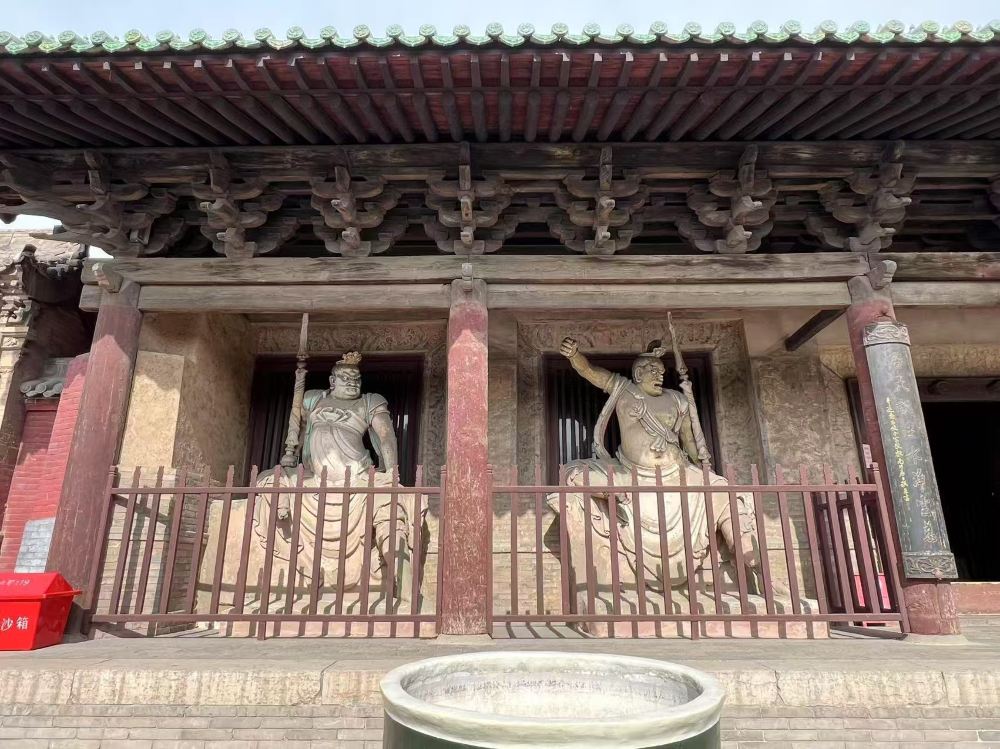
▲ Around the Song Dynasty, Zhongdu Temple was renamed Shuanglin Temple. According to Buddhist scriptures, the place where the Buddha Shakyamuni attained nirvana was among the twin sal trees beside the Ajitavati River in the ancient Indian city of Kushinagar. At that time, the Buddha lay beneath the twin trees with his head to the north and face to the west, resting on his right side, and passed into parinirvana. Instantly, the twin trees on all four sides bloomed with white flowers.
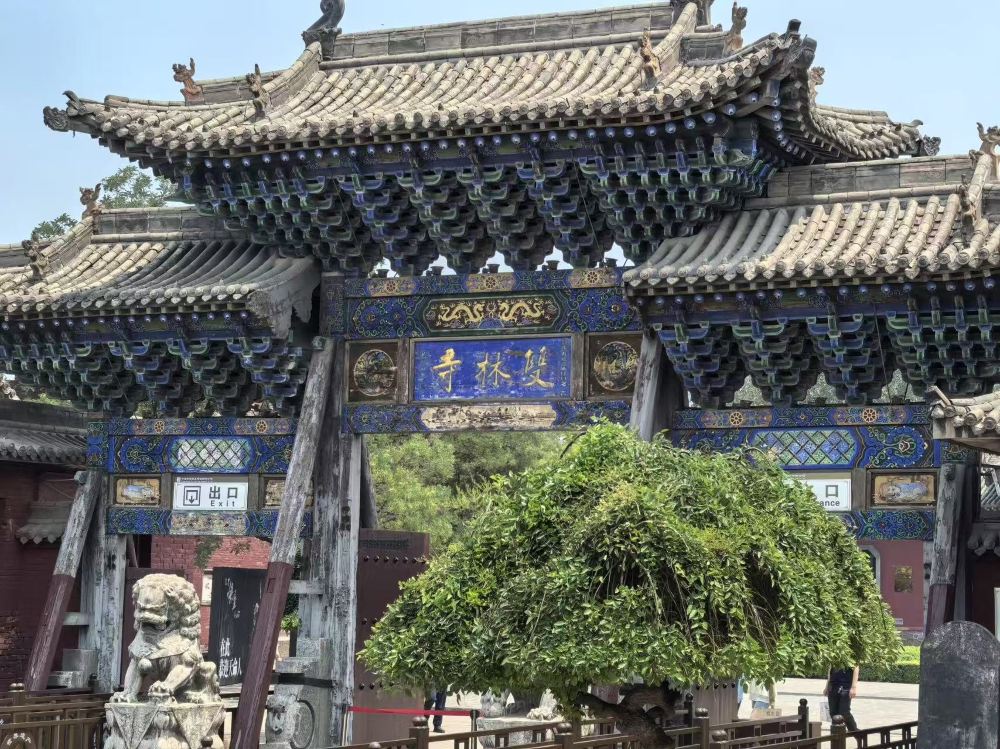
▲ This is known as the "Double Trees Entering Nirvana." After the Song Dynasty, nuns once resided in the temple, hence the existence of relics such as the "Aunt's Stele" and the "Shrine of Chastity and Righteousness," which are likely related to commemorating these nuns.
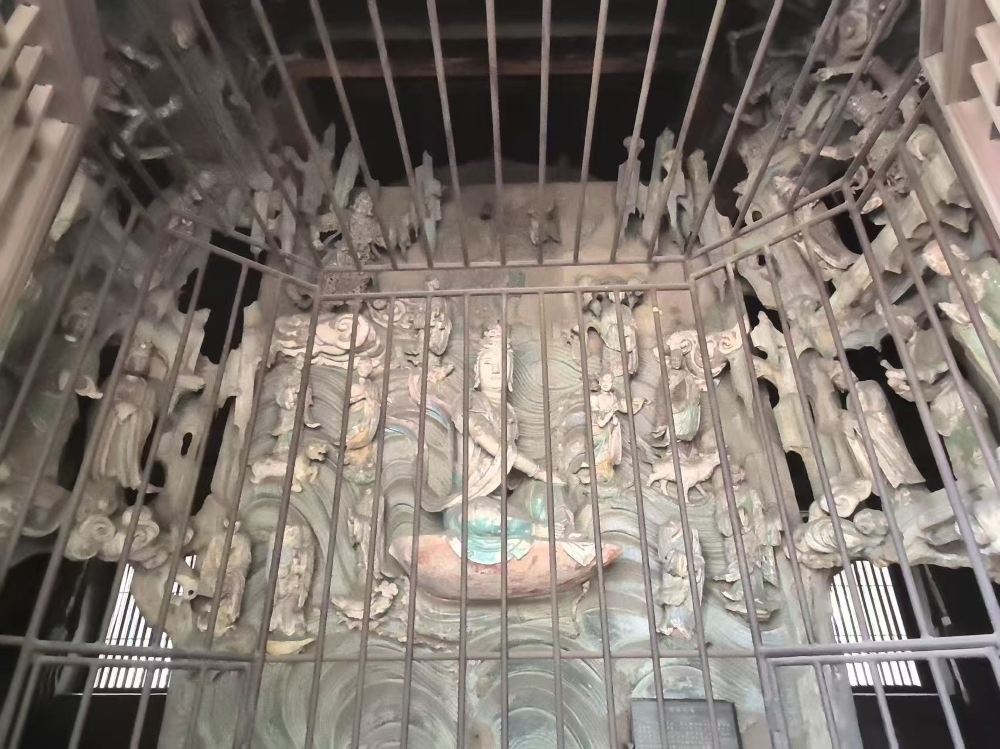
▲ The buildings of Shuanglin Temple have endured over a thousand years of wind, rain, and the ravages of war, and the temple gradually fell into disrepair. Although repairs were made throughout successive dynasties, by the late Yuan dynasty it had reached a state where "the pillars and beams of the halls were damaged and crumbling, and the halls and corridors were collapsing."