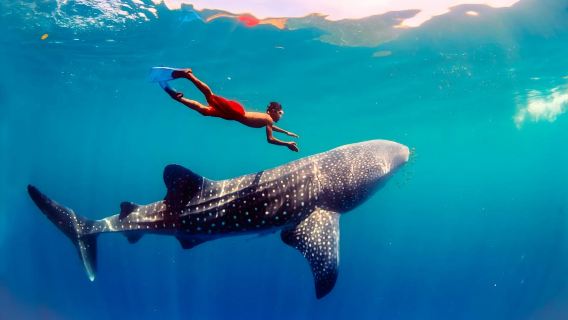
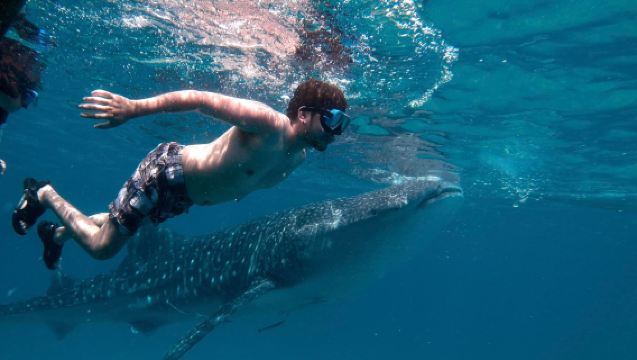
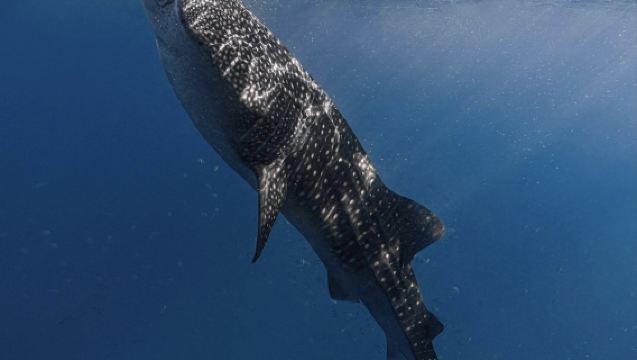
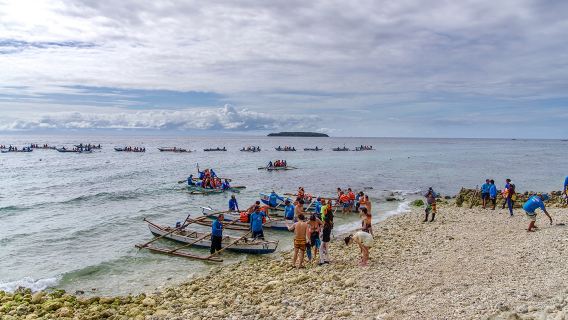
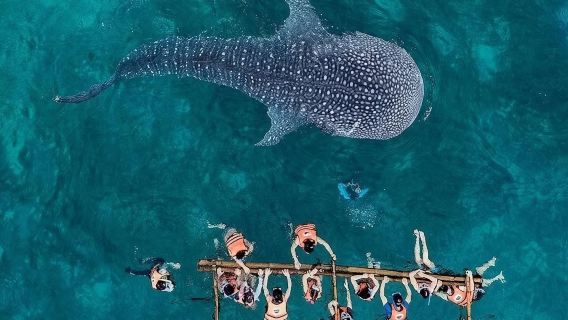
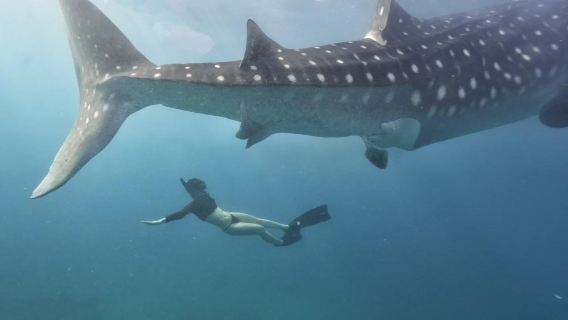
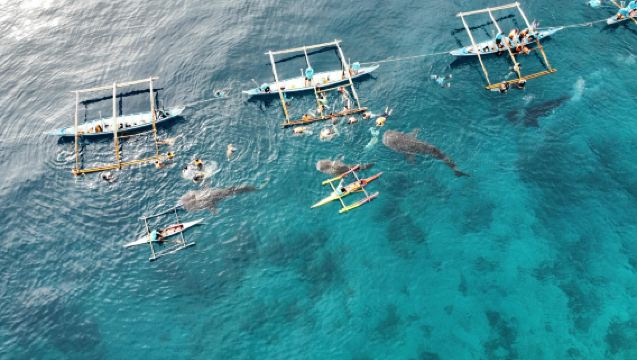
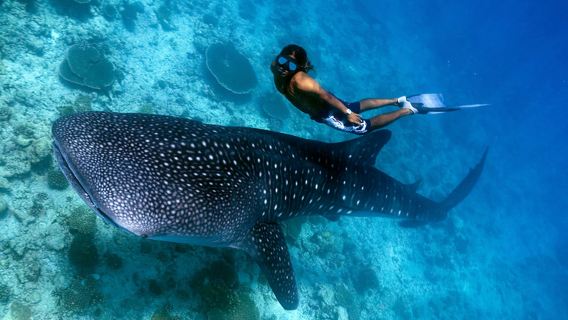
▲ First stop: Oslob Whale Shark Watching Located in the Tan-awan fishing village at the southern tip of Cebu, this is the opening highlight of the southern day tour. Upon arrival, you will first listen to a briefing at the visitor center, then local licensed boatmen will take you out to sea by paddle boat (motorized boats are not allowed into the viewing area). After entering the water, you can snorkel face-down on the surface or hold onto the side of the boat and drift along. Each interaction lasts about 30 minutes. Life jackets and diving masks are provided on site, while snorkels are mostly available for rental. Whale sharks are wild individuals that gather due to feeding; the probability of sightings is high, but no guarantee is made. After the site opens at 6:00 in the morning, the water quality and order are relatively better for the first two batches of swimmers. On-site rules must be followed: Keep at least 5 m from the sides and tail fin of the whale shark, and at least 2 m in front of its mouth; touching, riding, and chasing are prohibited; flash photography is prohibited; remove sunscreen and lotion before entering the water (oily residue can harm the whale shark's skin); unauthorized personnel must not feed the whale sharks. The tail fin swings with great force, so be sure to avoid the arc directly behind it. Equipment recommendations: On-site washing facilities only provide cold water, with no hair dryers or power outlets. It is recommended to bring your own quick-dry towel and clothing, waterproof bag, and long-sleeved jellyfish suit (for sun protection and to prevent stings from small jellyfish attracted by leftover bait). Those prone to seasickness should take medication in advance, as the outrigger boat will rock with the waves while queuing. Opening hours and distance details are subject to the on-site briefing on the day of your visit.

▲ Second stop: Tumalog Falls The transfer from the whale shark spot is quick, making it a fixed stop on the southern route for "cooling off and washing away the dust after seeing the whale sharks." The waterfall shatters into mist as it falls from an entire limestone cliff face, cascading down like layers of white curtains into the milky-blue pool below. Locals call it "Milk Waterfall," and it has a strong ethereal feel, making it one of the higher-yield photo spots on this route for a leisurely stop. It has no stream-tracing or cliff-jumping activities; the main draw is standing by the pool to let the water mist fall on you, soaking your feet, and photographing the curtain of water. The pace is much more relaxed than Kawasan, making it suitable for elders, children, and those who don't want intense water activities; the pool is shallow, and small fish will nibble around your feet underwater, essentially a complimentary natural fish spa. Access tip: From the parking area down to the bottom of the pool, you have to walk a stretch of steep dirt steps. On-site, most transfers are done by riding on the back of a motorcycle. Visitors with limited mobility or bad knees are advised to just enjoy the panoramic view from the viewing platform above and not force themselves down to the pool. Equipment recommendations: Wear shorts and a rash guard that you won't mind getting wet, paired with water shoes or old sneakers (the stone steps are slippery when wet); be sure to put your phone and camera in waterproof pouches, as water spray can easily get into the lens; bring a change of clothes and a dry towel, since you'll feel cold once the wind blows after getting soaked. There are no convenience stores near the pool, so prepare water and snacks in advance.

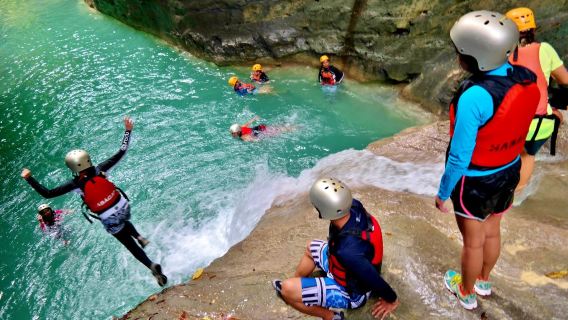
▲ Third stop: Kawasan Falls (including canyoneering) Located in Matutinao village in the town of Badian, the water source comes from the Kabukalan spring in the mountains. The three-tiered cascade drops layer by layer along a limestone riverbed, with the main waterfall at about 40 m, and the water is Tiffany blue. There are two options: the light hiking version, which involves walking about 1.5 km from the entrance to the main waterfall, soaking in the water, taking photos, and sitting beneath the falls to let the water pound your shoulders ("waterfall massage"), with 1–2 hours being enough; the canyoneering version goes downstream from Matutinao, passing through gorges, caves, and natural water slides, with 5 m / 8 m / 10 m jump platforms progressing step by step along the way and the main waterfall at the endpoint, taking 3–4 hours and requiring a relatively high level of physical fitness.