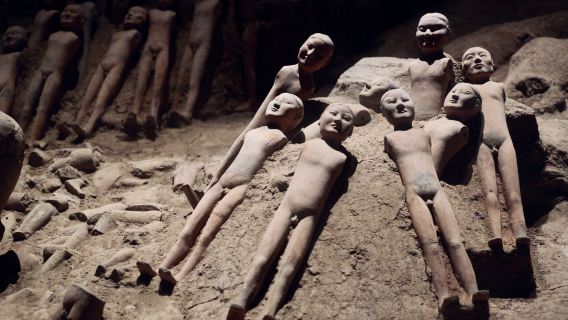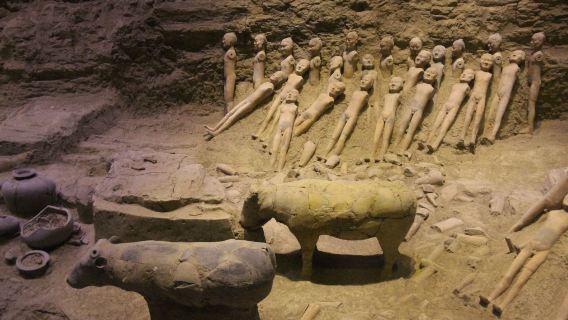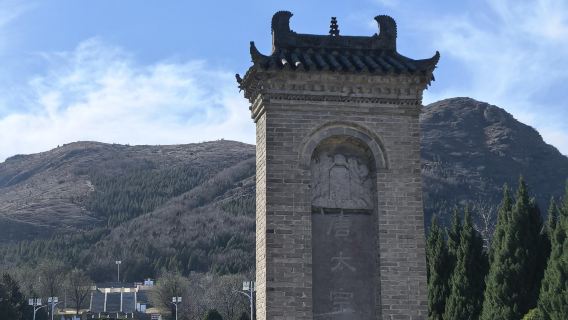

▲ Emperor Jing of Han, Liu Qi, was the fourth emperor of the Western Han Dynasty. Together with his father, Emperor Wen of Han, Liu Heng, they created the golden age of governance in China's autocratic monarchy society, known as the "Rule of Wen and Jing." He passed away in the Weiyang Palace of Chang'an in 141 BCE and was buried in the Yangling Mausoleum. The construction of Yangling Mausoleum began in 153 BCE. From the time Emperor Jing started building his tomb until Empress Wang was buried there, the construction spanned 28 years. During the Qianlong era of the Qing Dynasty, Bi Yuan, the governor of Shaanxi, erected a stele to officially name the mausoleum. From 1906 to 1910, Japanese scholar Adachi Kiroku, a lecturer at Shaanxi Higher School, conducted preliminary archaeological surveys of the Western Han imperial tombs, including Yangling, as well as the ruins of Han-era Chang'an. [Friendly Reminder] The package includes only the general admission ticket to the park. Other expenses are optional and at your own discretion.

▲ Yuanjia Village is now a rapidly developing tourist village in Shaanxi, primarily catering to high-spending urbanites and those who long for the charm of rural life. Each household specializes in serving homemade meals, wild vegetables, and coarse grains, providing nutritious food for visitors. With many original elements, it brings endless joy and helps people relieve fatigue. It's a wonderful place to experience local customs and traditions. Yuanjia Village is known as the "Grand View Garden of Guanzhong Folk Culture," featuring attractions such as Baoning Temple, the Village History Museum, and sightseeing orchards.