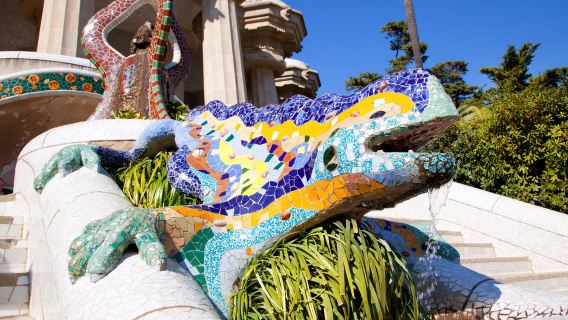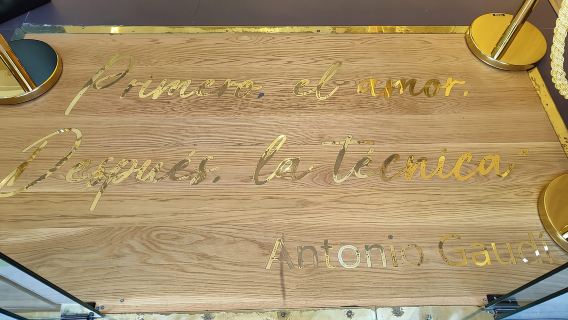

▲ Güell Palace was designed by Gaudí in 1888, a masterpiece that established his reputation as a great creator of atmospheric spaces. It was designated as a UNESCO World Heritage Site in 1984. Originally built as the residence of industrial tycoon Eusebi Güell, Gaudí's design skillfully balanced the private living and social needs of its occupants, incorporating ingenious ideas in lighting and interior design. The wrought-iron family crest of the Güell family between the arches is exceptionally grand. The parabolic vault design of the central hall is particularly innovative, with its arches and columns clearly influenced by the Alhambra Palace. The diverse chimney designs here became the prototype for Gaudí's later bold chimney creations. Gaudí's beloved trencadís (broken tile mosaic) technique was first used extensively here, creating exquisite and spectacular effects. Additionally, Güell Palace hosts a permanent exhibition showcasing Gaudí's...

▲ The Gothic Quarter (El Gòtic or Barri Gòtic) is the central district of Barcelona's old town, stretching from La Rambla to Via Laietana and from the Mediterranean seafront to Ronda de Sant Pere. It is the birthplace of Barcelona and a hub of tourist attractions. Apart from some changes in the 19th and early 20th centuries, many buildings date back to the Middle Ages, with some even tracing their origins to ancient Roman times. Remnants of the square Roman walls can still be seen in certain areas. The medieval Jewish quarter, El Call, is also located within this district. The old town's cathedral and palaces remain in use today, well-preserved. The Gothic Quarter retains its maze-like

▲ The CosmoCaixa Museum of Science is located in Barcelona, the capital of Catalonia, Spain. It is a modern museum that combines science education with interactive experiences. The museum features various themed exhibition areas, including life sciences, physics, chemistry, and astronomy. Through engaging displays and interactive experiments, visitors can explore the wonders of science in a fun and relaxed atmosphere. The "Human Body Exploration" zone is highly recommended, where visitors can learn about human anatomy through simulations of organ functions. The "Cosmic Exploration" zone uses advanced telescopes and 3D projection technology to take visitors on a journey through the vast universe. Additionally, the museum regularly hosts science lectures and workshops suitable for visitors of all ages, making it an ideal destination for family trips.

▲ Aquarium Barcelona is one of the largest aquariums in Europe, located in the Old Port area of Barcelona, Spain, making it an ideal destination to explore marine life. Renowned for its diverse marine exhibits and innovative interactive experiences, the aquarium attracts visitors from around the world. It features multiple themed zones, with the most famous being the "Ocean Tunnel," where visitors can walk through an 80-meter-long transparent tunnel and enjoy a 360-degree view of sharks, rays, and other large marine creatures swimming overhead. The aquarium also showcases a variety of species from the Mediterranean and tropical seas, including colorful coral fish, seahorses, and jellyfish, offering an opportunity to learn about marine ecosystems. The interactive zone provides touch pools and educational activities for children and families, allowing hands-on learning experiences.

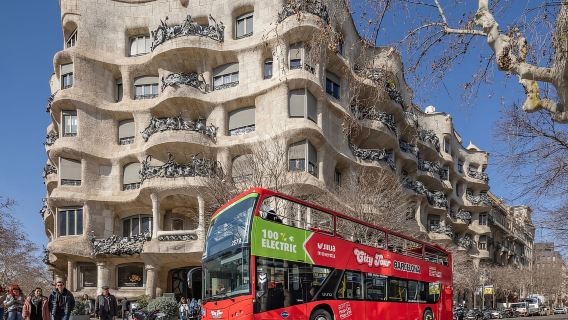
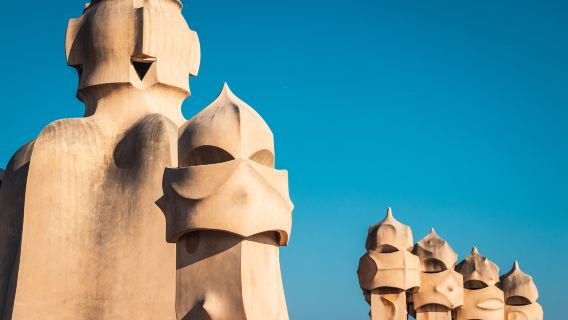
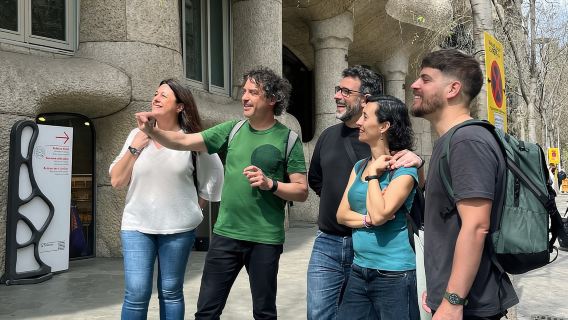
▲ • La Pedrera – Casa Milà is one of the masterpieces by the renowned architect Antoni Gaudí, designated as a UNESCO World Heritage Site in 1984. • Famous for its stunning stone façade, the building resembles a giant wave rising along Passeig de Gràcia, presenting a monumental sculpture standing 30 meters high and 84 meters wide. • The rooftop terrace of La Pedrera – Casa Milà is an iconic landmark of Barcelona, offering breathtaking 360º panoramic views of the city.