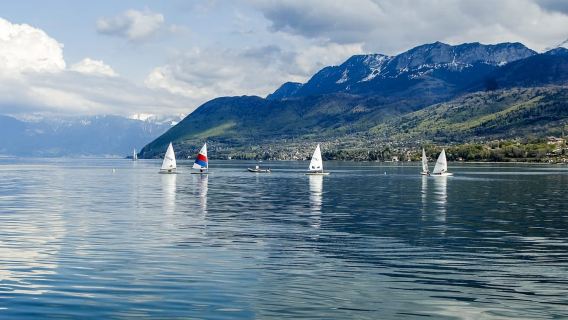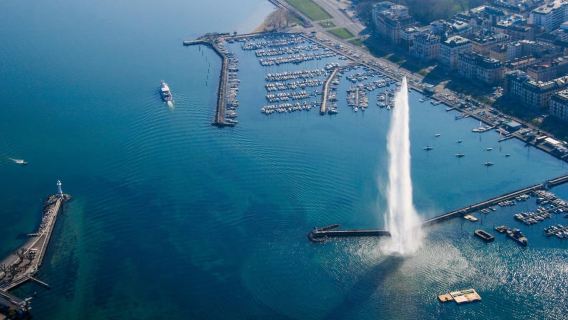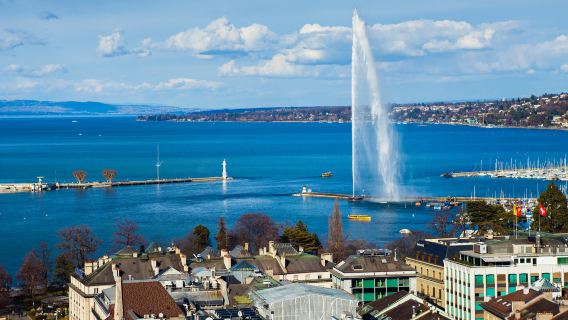

▲ Lake Geneva is located at the border between Switzerland and France, and is the largest lake in Western Europe. The northern shore and the eastern and western ends of the lake belong to Switzerland, while the southern shore is part of France. The lake covers an area of 582 square kilometers, with a crescent shape, stretching approximately 75 kilometers from east to west and reaching a maximum width of about 14 kilometers from north to south. Its deepest point is 330 meters. Formed by the melting of the Rhône Glacier in the Alps, the Rhône River is the main river that feeds and drains Lake Geneva. The lake boasts many distinctions, such as its mild climate and being the largest body of water in Central Europe. The "Jet d'eau" fountain on the lake is a symbol of Geneva, with water jets reaching up to 140 meters high. Visitors can enjoy boat tours to admire the scenic beauty of the lake, mountains, and surrounding castles and vineyards.
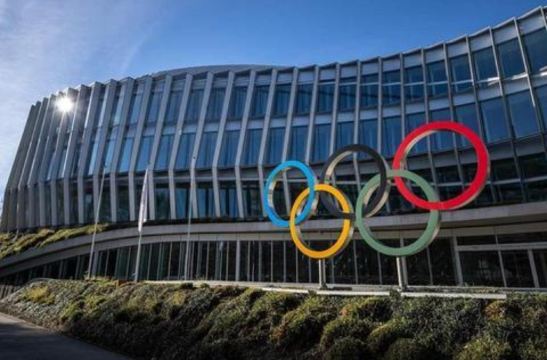
▲ The headquarters of the International Olympic Committee (IOC) in Switzerland is located in the Olympic Park in Lausanne, adjacent to the Olympic Museum and Lausanne-Ouchy, serving as the central management hub of the Olympic Movement. The headquarters building blends modern style with Olympic spirit, featuring a simple and grand exterior. Inside, it houses meeting rooms, office areas, and exhibition spaces, with walls often displaying historical Olympic photos and athlete highlights. This is not only where IOC members discuss global sports affairs but also partially open to the public. Visitors can explore exhibits such as Olympic torches and medals, experiencing the solemnity of the Olympic Charter and the five-ring flag. Since its relocation here in 1915, it has remained a spiritual landmark promoting the development of the Olympic Movement, witnessing a century of global sports events.
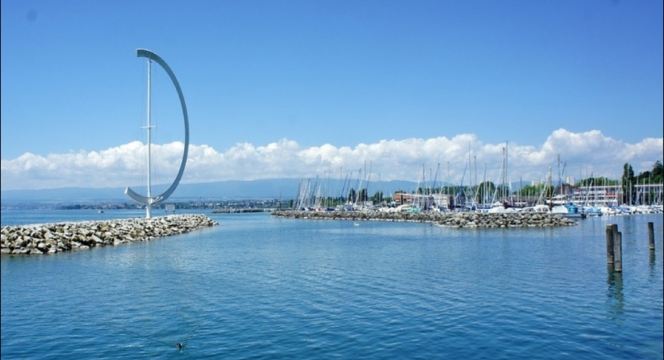
▲ The Lausanne-Ouchy pier in Switzerland is located on the shores of Lake Geneva in Lausanne and serves as a vital water transport hub. It not only hosts numerous ferries and cruise ships but also offers boat trips to nearby cities like Évian-les-Bains in France. Along the pier, visitors can find cafes, restaurants, and hotels, where they can enjoy delicious meals while taking in the stunning views of Lake Geneva. The lakeside is also home to many swans that interact closely with visitors. Additionally, this area is a popular leisure spot for locals, offering activities like ice skating and skateboarding. The Olympic Museum and Olympic Park are also situated here, blending a strong Olympic atmosphere with the beautiful natural scenery, attracting countless visitors.
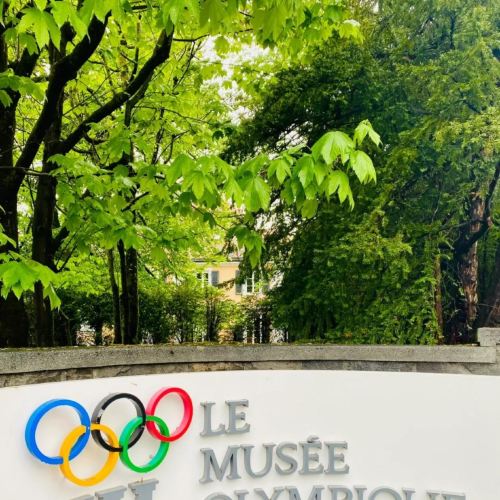

▲ The Swiss Olympic Park is located in Lausanne, adjacent to the International Olympic Committee and the Olympic Museum. Nestled between mountains and Lake Geneva, the park spans over 8,000 square meters and offers breathtaking views of the lake and the Alps. The pathways are designed to resemble running tracks, and numerous sports sculptures, such as the knotted gun barrel and wrestling match statues, vividly embody the Olympic spirit. The steps are engraved with the names of past Olympic host cities, and the Olympic flame burns eternally here. This park is not only a paradise for sports enthusiasts but also an ideal destination for cultural explorers. Visitors can immerse themselves in the rich Olympic atmosphere and experience the charm of the Olympic movement.
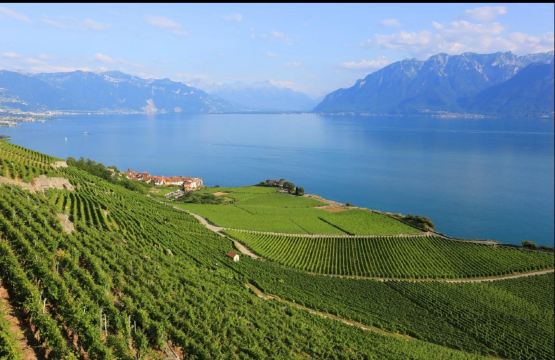
▲ Lavaux Vinorama, located in the heart of the UNESCO World Heritage Site of Lavaux Vineyard Terraces, is the ideal place to fully explore Lavaux, its vineyards, and wines. The museum displays over 300 varieties of wines, and visitors can sample selected vintages weekly at the bar or tasting corner. Through an 8-language short film, visitors gain in-depth knowledge about viticulture and the year-round work of winemakers. The Lavaux vineyards, where the museum is situated, boast a rich history dating back to Roman times. During the Middle Ages, monks began large-scale grape cultivation, gradually forming the spectacular terraced view seen today. The museum's immersive wine culture blends harmoniously with the picturesque lakes and mountains surrounding it, offering visitors an unforgettable experience.
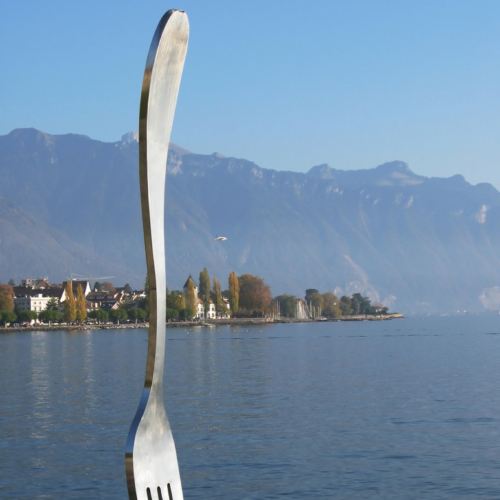

▲ The Fork - Alimentarium is a unique landmark located by Lake Geneva in Vevey. Created by Swiss artist Jean-Pierre Zaugg, it was first unveiled in 1995 to celebrate the 10th anniversary of the local food museum. This 8-meter-high stainless steel fork measures 1.3 meters wide and 0.5 meters thick, weighing approximately 450-500 kilograms. Temporarily removed in 1996, it was reinstalled in 2008 due to public petitions and has remained ever since. Not only a popular photo spot, it also embodies the fusion of local culinary culture and art, attracting numerous visitors to this iconic site.