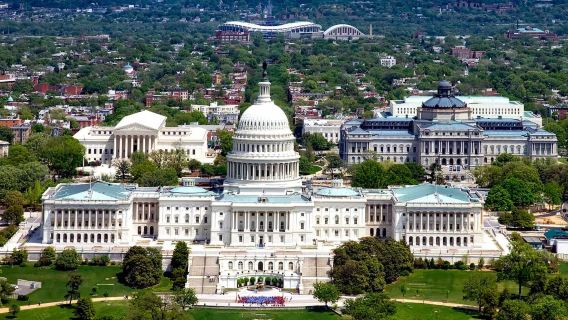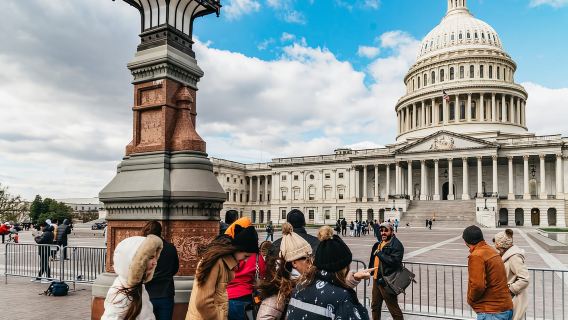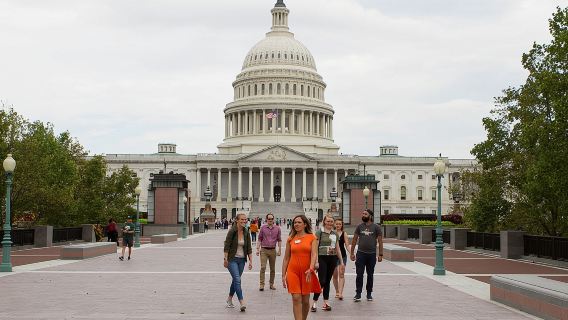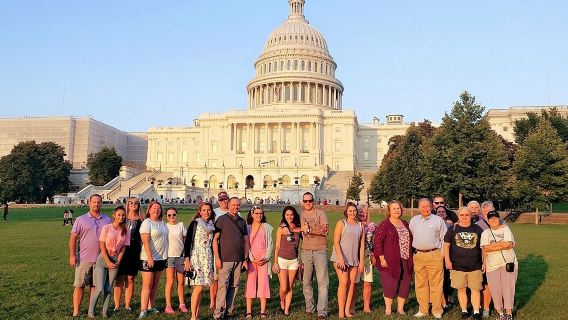
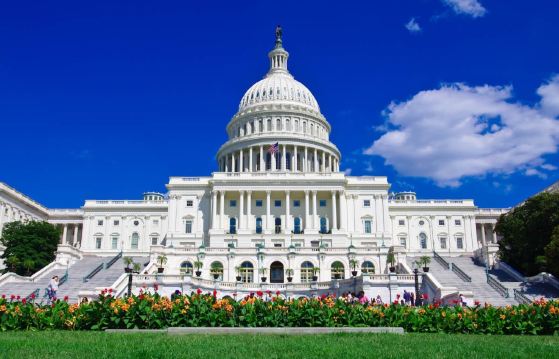
▲ A symbol of the government of the people, by the people, for the people. The United States Capitol was laid by President George Washington himself on September 18, 1793, and put into use in 1800. During the War of 1812, it was burned by the British, destroying parts of the building. Later additions included the Senate and House chambers, the dome, and the Rotunda, with multiple renovations and expansions over time. The United States Capitol serves as the seat of the legislative branch, with the Senate located in the north wing and the House of Representatives in the south wing.
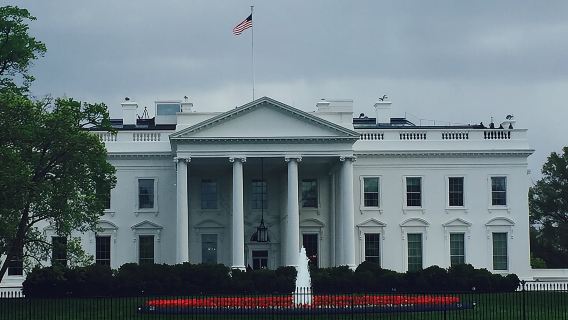
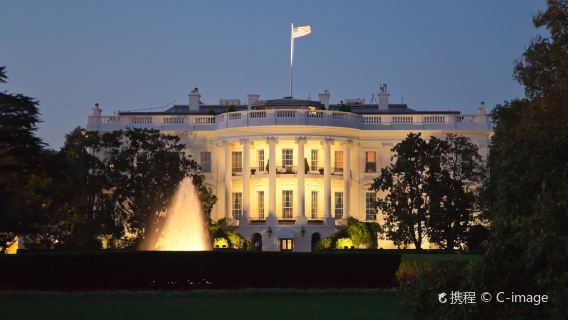
▲ The building stands 233 meters tall, constructed primarily of white marble, with a three-tiered grand dome at its central rooftop, atop which stands a 6-meter-high bronze statue of Freedom, symbolizing liberty and independence. Many people mistake the United States Capitol for the White House—the official residence and office of the U.S. President. The striking statue of Freedom crowning the dome was created by American sculptor Thomas Crawford in Italy and, after completion, was transported with great difficulty to Washington D.C. The bronze statue of Freedom wears a feathered headdress, holds a sword in her right hand, rests her left hand on a shield, and forever gazes toward the east, where the sun rises.
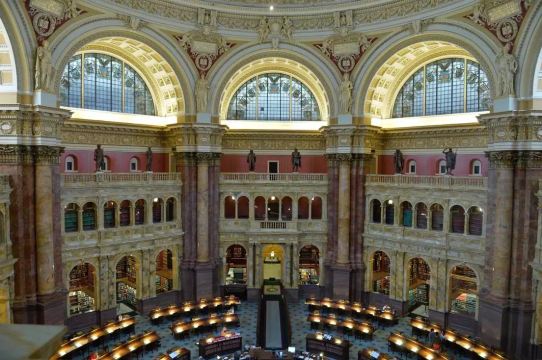
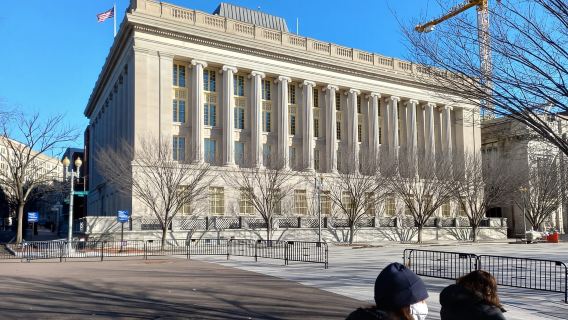
▲ The Library of Congress was established in 1800 and officially opened in April 1800. Located on Capitol Hill in Washington D.C., it stands as the pinnacle of libraries worldwide and is one of the most significant libraries globally. The Library of Congress was built through the support of the U.S. Congress, utilizing public funds, appropriate congressional appropriations, donations from private enterprises, and the collective efforts of dedicated staff. The library spans 35 acres, with shelves totaling 848 kilometers in length, housing numerous rare books, special collections, maps, films, and television recordings.
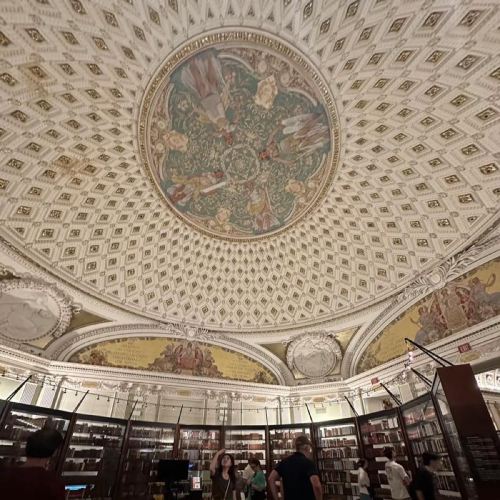

▲ The Library of Congress embodies the symbolic architectural style of American landmarks, serving as a treasure trove that documents the world's knowledge and creative endeavors for the American people. It collects, organizes, and preserves historical records of the United States, with particular emphasis on documenting American creativity, while safeguarding a vast repository of information representing the essence of human knowledge. This includes materials gathered from around the world—books, periodicals, maps, newspapers, photographs, audio recordings, videos, and more. While specialized collections like biomedical technology, human nutrition, diagnostic medicine, agricultural technology, and veterinary science are managed by the National Library of Medicine and the National Agricultural Library respectively, the Library of Congress covers all other fields and subjects in its comprehensive collection.