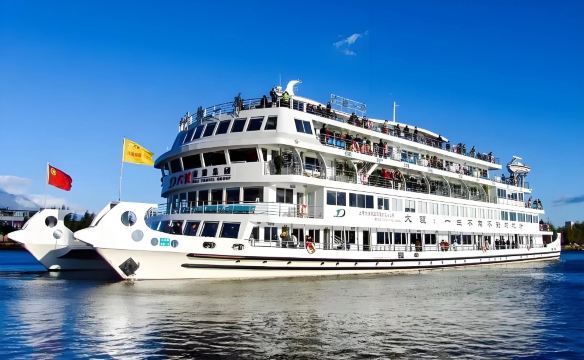
▲ The luxury cruise ship is the largest, highest-grade, and fastest vessel in Yunnan Province with comprehensive facilities, featuring a passenger capacity ranging from 400 to 950. Onboard amenities include KTV private rooms, an ethnic song and dance performance hall, a shopping area, and the Five Golden Flowers Photography Studio. Guests can enjoy the rich cultural experience of the Bai ethnic group through the "Bai Three-Course Tea Song and Dance Performance," showcasing their unique folk traditions.
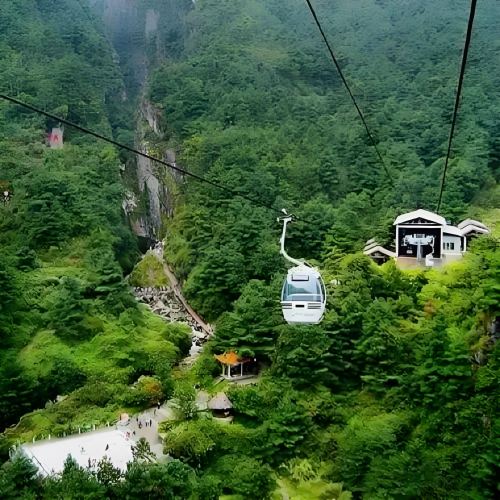
▲ Taking the Gantong Cableway, visitors can enjoy breathtaking views of Cangshan Mountain, including natural landscapes like Qingbi Stream, Qilongnv Pool, Cangshan Grand Canyon, and Yudai Cloud Trail. Additionally, they can gaze up at Cangshan's snow-capped peaks and look down upon the shimmering waters of Erhai Lake, along with cultural landmarks such as Dali Ancient Town and Chongsheng Temple with Three Pagodas. In the distance, the majestic Jizu Mountain and Jade Dragon Snow Mountain create a spectacular panorama that's simply unforgettable.
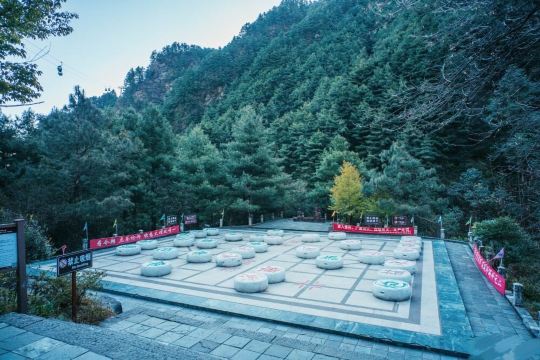
▲ The "Zhenlong" chessboard is actually a massive ancient bluestone. The so-called "Zhenlong" setup is deliberately designed to challenge players. This puzzle changes endlessly, adapting to each player's personality—greedy individuals make mistakes due to desire, while hot-tempered ones ruin their game through anger.
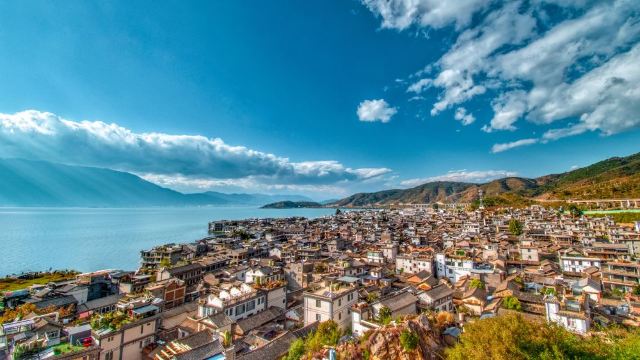
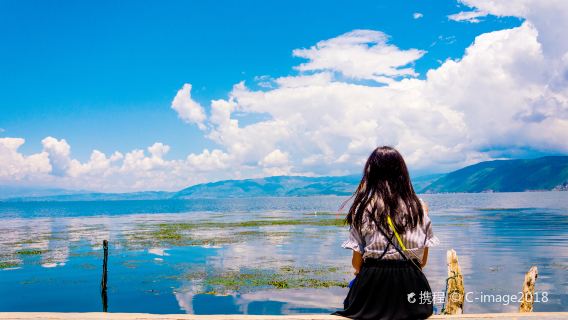
▲ Shuanglang Ancient Town, where the sky and water merge into one, the lush mountains reflect on the lake, and the golden shuttle weaves a tapestry. Surrounded by the "Twin Islands and Twin Bends," it embraces the simple elegance and rich cultural charm of a traditional Bai ethnic market town.
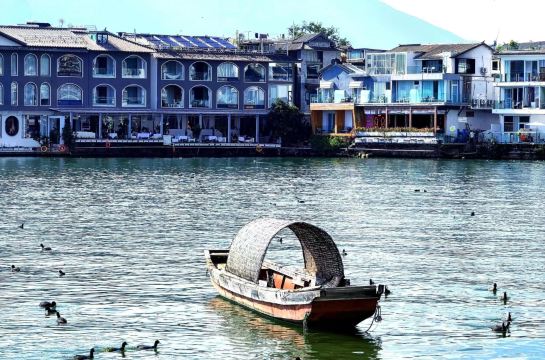
▲ Erhai Lake was known by various names in ancient times, such as "Yeyu Water," "Yeyu River," "Yeyu Marsh," "West Er River," "Er River," and "Kunmi River." The name "Er" for Erhai Lake is said to have originated either from its shape resembling a human ear or from its appearance like a moon embracing an earring. The use of "Hai" (meaning "sea") in its name comes from a custom in Yunnan. One of the "Eighteen Oddities of Yunnan" is indeed "lakes are called seas."