Things to do in Dingxiang
Explore top experiences
Top 10 attractions in Dingxiang


Xinzhou Ancient City
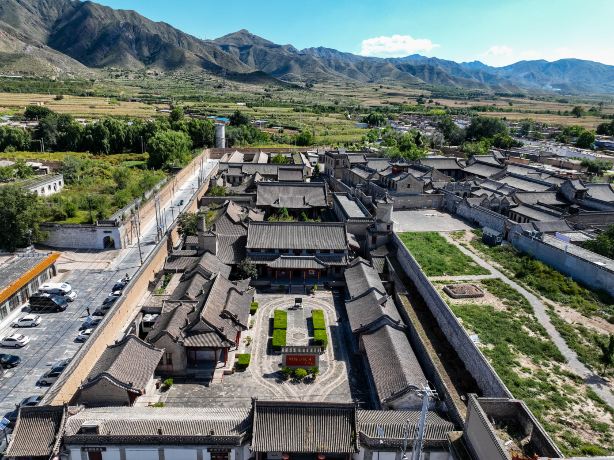
Xinzhou was called Xiurong in ancient times. It is located between Taiyuan and Mount Wutai. It is the seat of Xinzhou Administrative Office and Prefectural Committee. In the Spring and Autumn Period, Xinzhou belonged to Jin State. In the Warring States Period, it belonged to Zhao State. In the Qin and Han Dynasties, it belonged to Taiyuan County, Yanmen County, and Taiping County. In the Sui Dynasty, it was Xinxingdu and Yanmen. During the Tang, Five Dynasties and Song dynasties, it was called Dingxiang Prefecture of Xinzhou. During the Jin, Yuan, Ming and Qing dynasties, it was called Xinzhou, Daizhou and Baodezhou. During the Anti-Japanese War and the War of Liberation, most of the area belonged to Jinchaji, and the area to the west belonged to Jinsui. In 1949, Xinzhou Prefecture was established. The cultural relics and historical sites in Xinzhou City include: Xinzhou North Gate Tower. Located in Xinzhou City, on the Gongchen Gate of the old north city wall. The North Gate Tower was built in the 24th year of Wanli in the Ming Dynasty. The tower is located on the 12-meter-high city wall, which makes it more majestic and magnificent. The city wall stands tall and is painted red on the outside. There is a Voucher doorway below, with a very high top and a bottom width of more than 3 meters.Xinzhou · 20.1 km from Dingxiang

Hebian Folk Museum
The Hebian Folk Museum was established based on the former residence of Yan Xishan. It is located in Hebian Village (formerly Wutai County), 22 kilometers northeast of Dingxiang County. The entire building complex faces east and west, with nearly 30 courtyards and more than 800 houses. The exhibits in the museum are mainly folk cultural relics, arranged in six major series of agriculture, food, housing, transportation, entertainment and faith, including folk dough modeling, embroidery, carving, food, faith, wedding customs and Lantern Festival folk customs street, with a total area of 1,980 square meters. The exhibits in these exhibition rooms are relatively independent and cross-related to each other, vividly reflecting the unique folk culture and colorful folk art of northern Shanxi in the late Qing Dynasty and the early Republic of China. Yan Xishan's former residence is divided into two courtyards, the upper and lower courtyards, and the east and west gardens in front and back. The buildings in the east garden are mainly traditional Chinese palace-style buildings, and the gate is an ancient archway. Passing through the rockery, you will reach the first courtyard, where the ground is made of pebbles and blue bricks in geometric patterns. Opposite is a tall two-story building. Across the corridor is the second courtyard, and the main hall of the second courtyard is three large rooms for the Yan family to discuss and hold meetings. The palace-style building in the third courtyard is tall and magnificent, and you can overlook the whole village from the building.Dingxiang · 18.5 km from downtown

Hongfu Temple
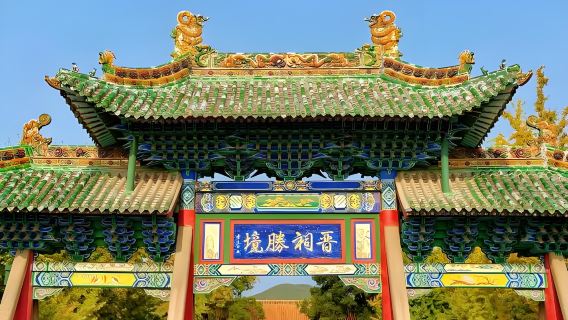
Hongfu Temple is located east of Beishe, 23 kilometers northeast of Dingxiang County. Originally a monastery, it now consists of a five-bay north-facing main hall, five east side halls, two remaining west side halls, a south gate, and surrounding walls. The five-bay main hall features a gabled roof with six purlins and is three bays deep, demonstrating its solid and beautiful construction. A plaque inscribed with the words "Virtu True Realm" hangs in the center above the main hall door, inscribed by Li Hang from this village in the ninth year of the Daoguang reign of the Qing Dynasty. The hall houses nine main Buddha statues, along with numerous additional and hanging sculptures. In the center stands Sakyamuni, flanked by Kasyapa and Ananda, and Manjusri and Samantabhadra. Two attendant Bodhisattvas flank the two sides, and two Vajra statues flank the outer flanks. The entire ensemble boasts harmonious rhythm and well-proportioned arrangement, creating an exquisite, lifelike, and imaginative image, significantly different from typical replicas and offering valuable insights into traditional sculptural techniques.Dingxiang · 19.6 km from downtown

Xinzhou Ancient City Tang-style and Shanxi charm molten iron flower
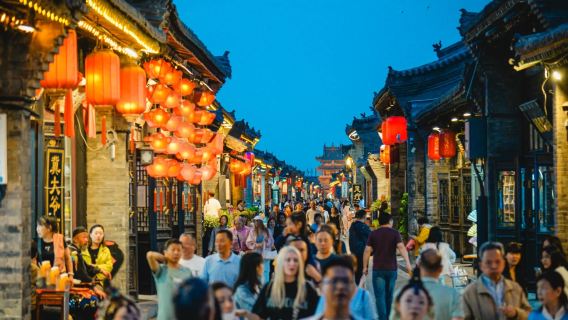
Xinzhou Ancient City Tang-style and Shanxi charm molten iron flower is a nighttime intangible cultural heritage performance within Xinzhou Ancient City. The molten iron flower performance is said to date back to the Northern Song Dynasty. During the show, performers scoop up molten iron and strike it forcefully into the night sky with wooden rods. The molten iron, heated to over 1,000 degrees, bursts into a sky full of golden flowers in mid-air, pouring down like a golden curtain of rain. Framed against the city walls and pavilions illuminated by lanterns, it is a highly iconic scene of the ancient city at night. Behind this stunning display is real skill: performers must operate in close proximity to the high-temperature molten iron, relying on years of practice to control the force and timing of the strikes. The moment the iron flowers bloom, sparks fly and the sound is like rolling thunder; the heat and intensity are overwhelming, far beyond what can be experienced through a screen. The molten iron flower performance involves open flames. Please stay at a safe distance outside the warning line while watching and follow the guidance of on-site staff. After nightfall, the ancient city lights up with rows of lanterns. After the show, you can stroll through the streets and alleys to explore the night market snacks, perfectly rounding out your night in the ancient city.Xinzhou · 20.8 km from Dingxiang

Yuwang Cave
Yu Wang Cave, originally named Fairy Cave, is located in the southeast side of Xinzhou City. It earned its current name from a stone statue resembling Yu Wang in the cave. The depth of the cave is still a mystery to this day. The part of the cave that has been discovered is built into four stories, including three halls with 10 caves such as the Fairy Cave, the Guanyin Cave, the Stone Flower Cave, and so on. There are stone waterfalls, stone towers, stone flowers, and so on, everywhere in the caves. It is a natural tourist destination.Xinzhou · 22.4 km from Dingxiang

Xiurong Academy
Xiurong Academy is located inXiurong Street, Xin County, Xinfu District, Xinzhou City, Shanxi Province.It was first built in the 40th year of Emperor Qianlong's reign in the Qing Dynasty. At that time, Xin County was called Xiurong County, so it was named after it and was the first academy in Xinzhou City.Xinzhou · 20.6 km from Dingxiang

Xihetou Didao Zhan Memorial Hall
Dingxiang · 2.6 km from downtown

Nanchan Temple
Nanchan Temple, located in Lijia Village, Yangbai Township, Wutai County, is a rare national treasure in terms of architecture, statues and brick carvings. Nanchan Temple has the oldest existing wooden structure in my country, the Great Buddha Hall. It is the oldest building among the ancient buildings in Mount Wutai. According to the inscription on the beam of the hall, it can be determined that the hall was rebuilt in the third year of Tang Dezong Jianzhong (782 AD), which has a history of more than one thousand years. The Great Buddha Hall is the main building of Nanchan Temple, sharing twelve eaves pillars to support the huge roof. The stigmas of the surrounding eaves and columns are slightly inward, and the four corner columns are slightly higher, so that the arches protruding from each layer are lifted up, and the ends of the ridge are decorated with owl kisses. The main hall is stable and pretty, with a concise structure and a typical large-scale wooden structure in the mid-Tang Dynasty. In the main hall, you can also admire the statues of the Tang Dynasty. In the hall, there is a statue of Sakyamuni Buddha, and on both sides are two Bodhisattvas, Manjushri and Samantabhadra. Whether it is Manjusri Bodhisattva riding a lion, Samantabhadra Bodhisattva riding an elephant, or Ananda and Kasyapa standing still, all of them have a calm demeanor and lifelike expressions. Around the Buddhist altar, there are dozens of Tang Dynasty brick carvings, all of which are masterpieces of Tang Dynasty brick relief art. There are also two stone lions and stone pagodas in Nanchan Temple, which are also relics of the Tang Dynasty. One is a reclining lion, and the other is in the form of "two lions facing each other"; the stone pagoda is about half a meter high and is divided into five floors.Wutai County · 29.1 km from Dingxiang

Guanwang Temple
Dingxiang · 2 km from downtown

Yungang Grottoes
Yungang Grottoes Scenic Area is divided into a landscape zone and the grottoes. It is one of the three largest grottoes in China. The sculpture combines Chinese and Western art. Here you can experience the artistic charms of Northern Wei Dynasty. Yungang Grottoes not only embodies traditional Chinese art style but also integrates art styles of ethnic groups from ancient India, countries west of China and China's central plains. It is a famous historical site in Datong City.China · Datong
Experiences you can't miss in Dingxiang
Featured Cultural experiences in Dingxiang
View all Cultural experiences
5.0/5
· 1 reviewFree cancellation
FromTRY 297.40
Free cancellation
Instant confirmation
FromTRY 3,799.26
Free cancellation
Instant confirmation
FromTRY 7,848.00


Free cancellation
Book now for tomorrow
FromTRY 3,717.48
Featured Day tours in Dingxiang
View all Day tours
5.0/5
· 1 reviewInstant confirmation
Book now for tomorrow
FromTRY 2,576.89

5.0/5
· 1 reviewFree cancellation
Instant confirmation
FromTRY 2,534.65
Free cancellation
Instant confirmation
FromTRY 2,534.65

FromTRY 3,345.73

Free cancellation
Instant confirmation
FromTRY 5,914.17
Free things to do in Dingxiang
Xinzhou Ancient City
Xinzhou · 20.1 km from DingxiangXiurong Academy
Xinzhou · 20.6 km from Dingxiang
Yunzhong River Hot Spring Tourist Resort
Xinzhou · 22.3 km from Dingxiang
Shanxi Museum
Taiyuan · 77.2 km from Dingxiang
Datong Ancient City
China · Datong
Xinzhou City Museum (New Building)
Xinzhou · 20.9 km from Dingxiang
Donghu Vinegar Garden
Taiyuan · 73.3 km from Dingxiang
Taiyuan Ancient County
Taiyuan · 92.6 km from Dingxiang
Guangfu Ancient City
China · Handan
Zhengding Ancient City
China · Zhengding
What travelers say about Dingxiang

Anonymous user17 September 2026
5.0
This is the most spectacular iron flower display I've ever seen! The program was diverse and engaging, the host was witty, the audience interaction was lively, the iron flower workers were incredibly skilled, and the iron flowers were dazzling and colorful – the effect was absolutely stunning! Thumbs up! 👍👍👍
Xinzhou Ancient City
Anonymous user29 July 2026
5.0
Built on the site of Yan Xishan's former residence, the complex features numerous courtyards, ancient alleyways with blue bricks, and pavilions blending Chinese and Western architectural styles, creating a unique charm. Over fifty folk custom exhibition rooms quietly display old farm tools, dough figurines, and wedding items, each piece evoking the everyday life of northern Shanxi in bygone days. Wandering through the corridors and exploring hidden tunnels, one is enveloped in a profound sense of history. Free from crowds, it's perfect for a leisurely stroll, allowing you to appreciate the exquisite ancient architecture while learning about the folk culture of northern Shanxi. Architecture enthusiasts and history buffs alike will find it worthwhile. Only by taking the time to explore can one truly understand the turbulent years and local memories this courtyard embodies.
Hebian Folk Museum

Genli10 October 2026
5.0
Hongfu Temple is located in Beishe East Village, Hongdao Town, Dingxiang County, Xinzhou City, Shanxi Province. Its founding date is unknown, but according to inscriptions within the temple, it was built no later than the Northern Song Dynasty, and underwent repairs during the Yuan, Ming, and Qing Dynasties.
Hongfu Temple faces south and covers an area of approximately 3200 square meters. Although it has undergone numerous repairs during the Jin, Yuan, Ming, Qing, and modern periods, the preserved Song Dynasty wooden structure remains largely unchanged, making it an important surviving example of Song Dynasty palace architecture in China. The temple is surrounded by high, thick walls and brickwork, with a seven-meter-high rammed earth platform at its base, making it a fortress-style temple, a rarity in ancient Chinese temple architecture and possessing high cultural value. The main hall of Hongfu Temple contains nine clay sculptures, a grand and solemn display, representing masterpieces of Song Dynasty painted sculpture art with profound historical and artistic value.
Hongfu Temple

向往的远方盘锦28 April 2025
5.0
It's worth a look, very beautiful, you won't see it in other places!
Xinzhou Ancient City Tang-style and Shanxi charm molten iron flower

M28***0923 August 2026
4.0
The scenic area is very close to Xinzhou Ancient City, only a ten-minute drive away. Perhaps because it wasn't a holiday, there weren't many tourists, and the shuttle bus departed before it was full, saving time. The scenery is beautiful, and the climb isn't strenuous. If you have the stamina, you can reach the cave entrance in under 30 minutes. Don't listen to the景区 staff trying to persuade you to take the cable car!
Yuwang Cave

爱笑的兔叽10 September 2023
4.0
A must-visit attraction located in the ancient city of Xinzhou. Ancient buildings coexist with modern buildings. If you have time, you can take a quiet walk or find a teahouse to sit down and drink a cup of tea to calm your mind.
Xiurong Academy

紫色雪狐29 December 2021
5.0
The Xihetou Tunnel Warfare Site is well-known both at home and abroad. It is one of the two most complete tunnel warfare sites in China. During the Anti-Japanese War and the War of Liberation, the strategic location of Xihetou Village was very important. During the Anti-Japanese War, it was located at the western outpost of the Wutai Mountain Anti-Japanese Base Area and was the two main gates guarding the Jin-Cha-Ji Border Region. In the late period of the War of Liberation, Xihetou Village was an important barrier and gateway to resist the invasion of the Dingxiang Chengdong Liberated Area by the enemy to the west of Zhicun, Xinxian, and Taiyuan.
Xihetou Didao Zhan Memorial Hall

山在穷游7 May 2026
4.0
Nanchansi Temple is a must-visit temple in Xinzhou, often considered one of the two essential temples along with Foguangsi Temple. Entering Nanchansi Temple, I found it exceptionally quiet, perhaps due to off-peak travel. The small courtyard showcased the wisdom left by the ancients. I recommend visiting early, avoiding holidays, as the scenic area isn't large. Besides the statues inside, the exterior structure is also worth seeing.
Nanchan Temple

_TI***1421 October 2026
4.0
The grottoes are one of the main reasons to visit Datong. These stunning statues in the cave walls are absolutely mind-blowing and worth seeing. Although the intenrnet often says it takes 3 hours to see it all, you can actually view and appreciate them all in under 1,5 hour if there are no queues ( I went around opening time). I would highly recommend them, I think for quieter times go int he morning g, but for better lighting for pictures go int he afternoon!
Yungang Grottoes


