
Things to do in Gansu
Explore top experiences
Top 10 attractions in Gansu


Gansu Provincial Museum
Gansu Provincial Museum is a large comprehensive museum centered on the civilization of the Silk Road. Located at a strategic point along the Silk Road and a convergence zone of Han and Tibetan cultures, its collections embody the diverse characteristics of the Central Plains, Western Regions, and the Tibetan Plateau. The three treasured artifacts—the Galloping Bronze Horse, the mural brick of a courier, and the painted pottery vase with a human-head-shaped mouth—serve as iconic representations of the museum. The museum has three floors, featuring permanent exhibitions on themes such as the civilization of the Silk Road, Buddhist art of Gansu, painted pottery of Gansu, paleontological fossils, and revolutionary Gansu. The Silk Road civilization exhibition on the second floor is the museum's centerpiece: the bronze galloping horse unearthed in 1969 from the Leitai Han tomb in Wuwei is displayed here. The horse has three hooves in the air and one stepping on a flying bird, standing steadily on a single hoof. Its image is now the symbol of Chinese tourism. In the same hall, the mural brick depicting a courier from the Wei-Jin tombs in Jiayuguan shows a messenger galloping on horseback, notably without a mouth, symbolizing the need for couriers to "keep their mouths shut." This pattern was later adopted as the emblem of China Post. The exhibition also features a procession of chariots and horses excavated from the same tomb as the bronze horse, along with Han and Tang dynasty silk textiles, gold and silver artifacts, making the prosperity of Silk Road trade vividly tangible. The Buddhist art exhibition hall on the third floor features replicas of caves from the Mogao Grottoes and Maijishan Grottoes, alongside statues, ritual objects, white pagodas, and prayer wheels from both Han and Tibetan Buddhism. Stepping into the hall feels like entering a temple, and this harmonious blend of Han and Tibetan styles is rarely seen elsewhere. On the same floor, the painted pottery exhibition showcases ceramics from cultures such as Dadiwan, Yangshao, and Majiayao, with intricate and fluid patterns like spiral and sawtooth designs. Among them, the painted pottery bottle with a human-head-shaped spout unearthed at Dadiwan in Qin'an, which integrates facial sculpture with the pottery vessel, is a highly popular exhibit. If you're interested in natural history, the paleontological fossils exhibition hall features the impressive skeleton of the Yellow River ancient elephant unearthed in Heshui, and the dinosaur fossils and reconstructed models are also popular with children. The revolutionary Gansu exhibition hall showcases historical artifacts and materials from periods such as the Nanliang base area and the Shaan-Gan-Ning border region, narrating the modern history of this land. The museum houses a large quantity of exhibits, and even a quick tour would take half a day. It's recommended to start with the Silk Road exhibition on the second floor, then proceed to the third floor for Buddhist art and painted pottery, following a logical route. In the exhibition halls, you can scan to listen to the audio guide, and at certain times, volunteers also provide guided explanations.China · Lanzhou

Zhangye Giant Buddha Temple
The Zhangye Giant Buddha Temple is located in the urban area of Zhangye. It was first built during the Yong'an era of the Western Xia Dynasty and has a history of over 900 years. The temple is renowned for housing one of China's largest indoor clay reclining Buddha statues, along with other distinctive ancient structures such as the earthen pagoda and the Shanxi Guild Hall, which are open for visits. Exhibitions inside the temple help travelers understand Buddhist art and the history of the Zhangye Giant Buddha Temple. As one of Zhangye's iconic attractions, it is a must-see for visitors to the city. The current site of the temple is not large, with a depth of approx. 200 m and a width of approx. 100 m. Visitors can enter from the western square and explore on foot. The main buildings open for visits, from west to east, include the Giant Buddha Hall, the Hall of Ten Thousand Saints (now the Buddhist Art Exhibition Hall), the Scripture Hall (now the Buddhist Texts Exhibition Hall), the earthen pagoda, and the Shanxi Guild Hall. A complete tour takes approx. 1–2 hrs. The Giant Buddha Hall is the temple's most significant structure and the highlight for travelers. It features one of China's largest indoor clay reclining Buddha statues, depicting the Nirvana of Sakyamuni. The statue measures 34.5 m in length and 7.5 m in shoulder width—so massive that a single finger can accommodate a lying person, and one ear can seat 10 people side by side. The hall also houses statues of the Ten Great Disciples and the Eighteen Arhats, along with exquisite murals depicting Journey to the West and the Classic of Mountains and Seas. The Hall of Ten Thousand Saints and the Scripture Hall, located in the central area, now serve as exhibition spaces for Buddhist art and texts, displaying sculptures, grotto statues, scriptures, and other artifacts. Notable among these is a collection of over 6,000 Buddhist scriptures personally bestowed by Emperor Yingzong of the Ming Dynasty, many written in pure gold, which are the temple's prized treasures. The earthen pagoda, standing over 30 m tall, is east of the Giant Buddha Hall. Its two-tiered base features four small pagodas on each level, adorned with exquisite carvings and housing solemn Buddha statues. The Shanxi Guild Hall, situated northeast of the temple complex, was originally a merchant guild hall during the Qing Dynasty. This typical northwestern residential courtyard features ancient architecture with intricately carved beams and painted pillars, exuding rustic elegance.China · Zhangye

Dunhuang Bookstore
Dunhuang Bookstore covers a total area of 806 square meters, with its exterior and interior designs inspired by Dunhuang murals. The collection is categorized into sections such as Dunhuang introduction, Dunhuang history, and Dunhuang murals, displaying over 2,100 categories and more than 25,000 books on Dunhuang themes. The scripture hall houses over 1,200 volumes of Dunhuang manuscripts, making it the most comprehensive offline public space in China for reproduced editions of these manuscripts. Dunhuang Bookstore also integrates Dunhuang calligraphy and paintings, 12 self-developed series totaling 50 themes and 5,000+ SKUs of Dunhuang cultural creative products, the brand coffee Dunhuang 1900, and Dunhuang cultural activities. It regularly hosts over 100 cultural activities such as research studies, elegant gatherings, forums, and book-sharing events, welcoming more than 200,000 visitors. The bookstore has been visited and studied by hundreds of institutions, including the Central Propaganda Department, the Economic Daily of the Propaganda Department, CCTV Video, and cultural tourism enterprises from various regions. It has also garnered continuous coverage from top-tier media outlets like CCTV News, Xinwen Lianbo, and The Paper, solidifying its status as a new landmark in Chinese cultural spaces.China · Dunhuang

Dunhuang Museum
The Dunhuang Museum is located in the south of Dunhuang city. It is a museum mainly displaying historical artifacts of Dunhuang, a hub on the Silk Road, as well as precious relics from the Mogao Caves. The new museum opened in 2012. While not particularly large among national museums, its focus on showcasing Silk Road and Mogao Caves culture makes it an excellent place to learn about Dunhuang's history and Mogao art. Museum enthusiasts should not miss it. The museum's current exterior is quite distinctive, resembling the walls and beacon towers of the Han dynasty Great Wall. Stepping inside feels like entering a cave temple complex, with walls and corridors designed in the style of ancient grotto passages—a highly characteristic feature. The museum houses six exhibition halls, with its main display being the thematic exhibition "A city where Chinese and foreign cultures converge." A full tour takes approximately 1-2 hours. The exhibition "A city at the crossroads of Chinese and foreign cultures" runs through the entire museum building. It is divided into individual units by historical periods, allowing visitors to explore them floor by floor in chronological order. The exhibition covers Dunhuang's ancient history and its inhabitants, the significant development during the Han dynasty, continued growth in the Wei, Jin, and Southern and Northern dynasties, prosperity in the Sui, Tang, and Five Dynasties period, the rule of Dunhuang by the Shazhou Uighurs and Western Xia, Dunhuang during the Yuan and Ming dynasties, Qing dynasty development of Dunhuang, the discovery of the Library Cave, the anti-tax movement in the Qing dynasty, and ancient Silk Road coins. These units are primarily arranged chronologically, guiding visitors along corridor-like passages to experience Dunhuang's millennia of historical vicissitudes from ancient times to the present. The museum's exhibits are mainly divided into two categories. One focuses on the cave art of Mogao Grottoes, including a replica of the undeveloped Cave 45 from Mogao Grottoes, where visitors can see the legendary cave style reflecting musical themes. There are also some Dunhuang manuscripts, known as the famous "Dunhuang manuscripts," which are extremely precious. The other category features exhibitions centered on Silk Road culture, with elegant artifacts like the Northern Liang stone pagoda and pictorial bricks. Among them, the qilin brick is exceptionally rare nationwide and can be considered the museum's treasure—definitely not to be missed.China · Dunhuang

Lanzhou Old Street
Lanzhou Old Street is located in the center of Lanzhou city, gathers Chinese branded products, nightlife, trendy fashion brands, retail centers, experiential businesses, catering and entertainment, leading the trend and creating a place for eating, drinking, fun and entertainment in Lanzhou.China · Lanzhou

Zhongshan Bridge
Zhongshan Bridge, also known as the Lanzhou Yellow River Iron Bridge, spans the Yellow River with White Pagoda Mountain to its north and serves as a city landmark of Lanzhou. Completed in the late Qing Dynasty, it was built by the German firm Telge & Schroeter. The bridge materials, including steel beams and cement, were shipped from Germany across the ocean and then transported to Lanzhou via railway and horse-drawn carriage. It is one of the earliest permanent bridges built across the Yellow River in Lanzhou's history. It was later renamed Zhongshan Bridge in memory of Dr. Sun Yat-sen, a name that remains in use today. The bridge is over 200m long, and its gray-black steel truss structure is simple and substantial. The several arched steel ribs added above the bridge body during reinforcement in the 1950s give the entire structure a more imposing appearance. Today, the iron bridge is open only to pedestrians. Walking onto the bridge deck, you can see the Yellow River flowing slowly eastward beneath your feet. On the south bank lies the lush Binhe Road, while the north bank is home to White Pagoda Mountain Park. Climbing to the top of the mountain and looking back, the view of the iron bridge, the Yellow River, and the streetscape on both banks framed together is particularly beautiful. People often line up to take photos in front of the golden "Zhongshan Bridge" inscription at the south end of the bridge. In the pavilion on the east side of the south bridgehead stands a Ming Dynasty "General Pillar," a relic from the earlier Zhenyuan Floating Bridge that is easy to miss if you just walk past. After nightfall, the iron bridge offers a different scene: the bridge's colorful lights turn on, and the entire outline of the bridge is clearly illuminated. On one side are the bustling lights of Binhe Road, and on the other are the lights shining on the mountain, making it a great place to experience and photograph the night view of Lanzhou.China · Lanzhou

Dunhuang Night Market
Dunhuang Night Market is located on Yangguan East Road and is one of the most popular night markets in Dunhuang. It is not only a gathering place for Silk Road delicacies but also a showcase for Silk Road handicrafts. With its distinctive local characteristics and rich folk customs, Dunhuang Night Market is hailed as the "nightscape painting" and "cultural portrait" of Dunhuang. Dunhuang Night Market attracts travelers from all directions with its rich variety of delicacies and unique cultural experiences. In addition to food, Dunhuang Night Market also offers a dazzling array of handicrafts and souvenirs. Travelers can purchase locally distinctive crafts here, such as exquisite Dunhuang mural replicas, gorgeous silk products and unique sand paintings, as precious mementos of their trip. The stalls at Dunhuang Night Market are arranged in a compact yet orderly manner, with dazzling lights creating a lively and vibrant atmosphere. Strolling through, travelers can not only savor delicious food and purchase souvenirs, but also experience the unique cultural charm of Dunhuang and the joy of interacting with locals.China · Dunhuang

Ganjia Grassland
Ganjia Grassland is an open alpine meadow and a traditional pasture where herders have grazed their livestock for generations. In midsummer, the grassland is lush green, with wildflowers spreading along the gentle slopes and herds of cattle and sheep scattered throughout. Compared to Sangke Grassland near the county seat, it receives fewer tourists and retains the more primitive and tranquil appearance of an alpine pasture. The grassland's distinctiveness largely comes from the Baishiya stretching across the end of the pasture — a gray-white cliff stretching over 10 km that stands like a screen above the greenery, with Baishiya Temple located at its foot. The Yangqu River and Yangla River meander across the grassland. The Bajiao Ancient City, built on the terrace where the Yangqu and Yangla rivers meet, is named for its eight corners. Ascend the viewing platform to take in the panoramic view of the ancient city, surrounding highland barley fields, and pastures. The grassland covers a large area with scattered attractions. Baishiya, Bajiao Ancient City, and Zuohai Temple are located in different directions, making it suitable for a self-drive or car charter tour along the route.China · Xiahe

Wuwei Confucius Temple
Wuwei Confucian Temple is located in the southeast of Wuwei City and is also the location of Wuwei City Museum. This Confucian Temple was built in the Ming Dynasty, with a large scale and a high status in history. Today, you can come here to worship the first sage Confucius, visit the quaint historical buildings and courtyards, and visit the many cultural relics collected in the museum. The Confucian Temple is very large, with a depth of nearly 200 meters and a width of more than 100 meters. After entering, you can walk and play. Generally, it is advisable to play for 1-2 hours. There are many ancient buildings in the temple, such as Chongsheng Temple, Zunjing Pavilion, Zhuangyuan Bridge, Shanmen, etc. There are also some towering ancient trees in the courtyard. The whole scenic area is antique and suitable for visiting and taking pictures. When visiting the Confucian Temple, you can pay attention to the many plaques hanging on the building, some of which are written in ancient Uighur and Western Xia scripts, which are very special. The inscriptions in the temple are also worth noting. Some of the inscriptions have all the jinshi who have ever been out of Wuwei. You can go and see. In addition to the buildings and courtyards, the Confucian Temple is also the location of the Wuwei City Museum. There are exhibitions about the history of Wuwei. You can visit here and learn about the heyday of ancient Liangzhou in history. The Zhuangyuan Bridge in the Confucian Temple is covered with red banners with various gold prayer lists, and many parents with students at home will come here to offer incense and pray for blessings.China · Wuwei

Yongjing Liujiaxia Tourist Resort
Located in Yongjing County, Linxia City, Gansu Province, Liujiaxia is home to the Liujiaxia Hydropower Station, Bingling Temple Grottoes and Tai Chi Island, as well as Liujiaxia Reservoir. Beginning from Liujiaxia Dam, Liujiaxia Reservoir reaches the narrows of Bingling Temple in the west, connects to Jiedong County and Linxia County in the south, and borders Yongjing County in the north. Liujiaxia Reservoir occupies a vast area. The reservoir sits on plateaus and in canyons, allowing visitors to return to the beauty of nature.China · Yongjing
Experiences you can't miss in Gansu
Featured Cultural experiences in Gansu
View all Cultural experiences
5.0/5
· 1 reviewFree cancellation
Instant confirmation
From€134.23
Free cancellation
Instant confirmation
Save €1.85
From€35.20€37.05
Free cancellation
Instant confirmation
From€20.94
From€40.01
From€139.01
![Zhouqu Trip Moments[Portrait Photography/Couple Wedding Photography/Family & Group Portraits/Commercial Photography & Videography, Including Aerial and Street Photography]](https://ak-d.tripcdn.com/images/0354912000qymlvg34533_C_568_320.jpg?_fr=wc)
From€89.49
Featured Day tours in Gansu
View all Day tours
4.5/5
· 13 reviews· 157 bookedFree cancellation
Instant confirmation
From€10.47
4.8/5
· 12 reviews· 86 bookedFree cancellation
Instant confirmation
Save €0.73
From€71.73€72.46
4.7/5
· 9 reviews· 77 bookedFree cancellation
Instant confirmation
Save €0.64
From€62.97€63.61

4.3/5
· 7 reviews· 72 bookedFree cancellation
Instant confirmation
Save €0.65
From€63.88€64.53

4.7/5
· 28 reviews· 164 bookedFree cancellation
From€21.21
4.5/5
· 17 reviews· 124 bookedFree cancellation
Instant confirmation
Save €0.48
From€46.81€47.29
![Liujia Gorge + Water-ink Danxia (private charter) 1-day tour [Danxia + Yellow River-Tao River confluence + Bingling Cave-Temple Complex]](https://ak-d.tripcdn.com/images/0356212000tcocgtt3D92_C_568_320.jpg?_fr=wc)
5.0/5
· 16 reviews· 95 bookedFree cancellation
Instant confirmation
77 travelers saved
From€56.11

5.0/5
· 4 reviews· 82 bookedFree cancellation
Instant confirmation
Save €0.46
From€45.31€45.77
Featured Food & drink in Gansu
View all Food & drink
Free cancellation
Instant confirmation
From€40.01
Free things to do in Gansu
Gansu Provincial Museum
China · LanzhouZhangye Giant Buddha Temple
China · ZhangyeBook now for tomorrow, Cancel anytimeDunhuang Bookstore
China · DunhuangBook now for tomorrow, Cancel anytimeDunhuang Museum
China · DunhuangLanzhou Old Street
China · LanzhouZhongshan Bridge
China · LanzhouDunhuang Night Market
China · DunhuangGanjia Grassland
China · XiaheWuwei Confucius Temple
China · WuweiBook now for tomorrow, Cancel anytimeYongjing Liujiaxia Tourist Resort
China · Yongjing
More ways to travel from Gansu
Private Tours in Gansu
View More Private Tours in Gansu



Group Tours in Gansu
View More Group Tours in Gansu
What travelers say about Gansu

M14***996 October 2026
5.0
Lina, the lecturer at the Gambo Museum, is exceptionally skilled. During the two-hour learning experience, she demonstrated a thorough understanding of the chronological order and comparative analysis of the artifacts, meticulously integrating historical evolution with everyday life. I look forward to the completion of the new Gambo Museum and visiting it again next time.
Gansu Provincial Museum

你好哇开心11 October 2026
5.0
It's a great choice for learning about the Hexi region, its religious art, history, and culture. Nearby attractions include the city museum and the Wooden Pagoda. Overall, it offers good value for money and is worth visiting.
Zhangye Giant Buddha Temple

皮皮爱吃锅包肉11 October 2026
5.0
This is extremely important, and I must say it first: don't trust the bookstore's own mini-program for booking a visit at a specific time. The description said there was a 9 PM visit after closing time, but I booked that one. Luckily, my itinerary ended early, and I arrived around 8:30 PM, only to be told they were closing and I should go to the second floor first. Closing time was 9 PM, and I almost missed it!
Remember to wear shoe covers once inside. They're in the basket on the right. Put them on before entering. The bookstore is quite spacious, with the second floor being the main attraction, perfect for taking photos.
Dunhuang Bookstore

leowxp7 October 2026
5.0
The museum is located in the city center, very close to the night market. It gets dark quite late in Dunhuang, so after visiting the Mogao Grottoes, it's a good opportunity to review the visit at the museum.
Admission is free, just make a reservation. Guided tours are available for a fee. The advantage of the museum is that the exhibits are arranged chronologically, making them clearer. Finally, the souvenir and creative shops are also great to browse; the prices are very reasonable. Don't bother with fridge magnets and other items at the night market; they're much better quality here.
Dunhuang Museum

大叔的星辰大海!21 April 2026
4.0
Lanzhou Old Street is quite close to the Yellow River Tower. We walked there after visiting the Yellow River Tower. The old street area isn't small, and it feels like a newly built commercial district. In the afternoon during the off-season, there were very few people. I wonder if it will be more crowded at night? The shops are mainly restaurants, plus souvenir shops. If you're passing by, you can check it out!
Lanzhou Old Street

Jamie Ning20 July 2026
4.0
Before coming to Lanzhou, I had no idea what this bridge was like.
I arrived around 3 PM; the sun was still blazing, and the iron railings on the bridge felt hot to the touch. This iron bridge, built in 1909, spans the Yellow River, looking sturdy yet silent. Standing on the bridge, the Yellow River surged beneath my feet, carrying the scent of silt. Speedboats darted out from under the arches, splashing up waves, and children on the bank screamed excitedly—their jubilation was unstoppable.
I didn't rush up the mountain; instead, I found a seat at a teahouse under the bridge. I ordered a cup of "Sanpaotai" (a type of local tea), 15 yuan, with refills. The bamboo chair was a bit old, but just the right amount of comfortable. Several local old men around me were cracking sunflower seeds and playing chess, occasionally glancing up at the river and saying, "The water's risen again." That relaxed feeling is rare in tourist spots.
You absolutely must try the Sanpaotai at the teahouse. Don't rush; sit for at least half an hour, just gazing at the river and daydreaming—that's the real deal.
The cruise ticket is only a few dozen yuan, not expensive at all, and worth experiencing the view from under the bridge.
Speedboats and sheepskin rafts are available on the shore; thrill-seekers can give them a try.
Regarding photography: the "Zhongshan Bridge" stone monument on the south side of the bridge is a classic spot for photos.
Take your time; although the sun is strong 🌞, the river breeze is very pleasant.
Zhongshan Bridge

acyeveryday4 August 2026
5.0
The Shazhou/Dunhuang Night market is clean, cohesively decorated, and conveniently located in the city center! As part of your silk road travels visit this well put together market for delicious food and souvenir buys! 🛍 We bought cashmere wool scarves, magnets, and knick knacks all for great prices. The vendors are not pushy at all! We had a pleasant experience wandering the shops and the vendors were very friendly and accommodating. I'd recommend having alipay or wechat pay set up as this is the most convenient payment method when travelling China but at this market the vendors did accept cash from our fellow tour guide travellers. 🐟 The food court area gives camping vibes. You'll see small camp stools and chairs around small fires. Our tour guide told us that the fish and beef cakes are the most popular. We tried the fish which was yummy and the beefcakes welllll the line was a little too long for us but our fellow tour group travellers said it was delicious and even bought some for the road the next day! 🎐 Since the market was in the city center we explored the shops nearby and then caught a Didi back to our hotel. The night market is worth visiting, probably one of the best I have visited in my travels.
Dunhuang Night Market

晚霞风车24 August 2023
5.0
Gangjia Grassland is located in Gangjia Township, Xiahe, Gannan Tibetan Autonomous Prefecture, Gansu Province, 33 kilometers north of Xiahe County, and is directly accessible by road. Gangjia Grassland is a meadow grassland, vast and boundless, with an average altitude of more than 3,000 meters. It is one of the main animal husbandry bases in Gannan Tibetan Autonomous Prefecture. There is a reception desk at the Muyun Tent Camp, which prepares fresh milk tea, tsampa, Tibetan buns, hand-pulled mutton and other Tibetan specialties for tourists. It also prepares grassland tourism programs such as horses, yaks, shooting bonfire parties, etc. for tourists. Visitors can fully experience the mysterious and simple Tibetan customs here.
Ganjia Grassland

游来游去的鱼鱼🐡6 October 2026
5.0
The Wuwei Confucian Temple, located on Chongwen Street in Liangzhou District, Wuwei City, Gansu Province, is the largest and best-preserved Confucian temple complex in Northwest China, renowned as the "Crown of Confucian Temples in Longyou."
🏛️ Key Highlights
• Guiji Hall Plaque Complex: The most exquisite part of the temple, displaying 46 giant plaques from the Ming and Qing dynasties to the Republic of China period. Among them, "Jujing Yangji" (聚精扬纪) and "Shucheng Never Sleeps" (书城不夜) are included in the "Famous Plaques of China," making it a treasure trove of calligraphy and sculpture art.
• Ming Dynasty Architectural Complex: Built between 1437 and 1439 (the second to fourth years of the Zhengtong reign of the Ming Dynasty), this complex retains the complete layout of the Lingxing Gate, the Pan Pond, the Zhuangyuan Bridge, and the Dacheng Hall, allowing visitors to directly experience the magnificent style of Ming Dynasty architecture.
• Suggested Itinerary: The Wuwei Western Xia Museum is located directly opposite the Confucian Temple, which can be visited at the same time for a one-stop understanding of Liangzhou's history.
Wuwei Confucius Temple

M10***512 July 2026
5.0
The Liujiaxia Reservoir is a large-scale hydroelectric power station built independently during the First Five-Year Plan. The green Yellow River and the earthy yellow mountain valleys complement each other beautifully, and the scenery along the bridge is also stunning. It's definitely worth a visit!
Yongjing Liujiaxia Tourist Resort
Frequently asked questions
What are the must-do things in Gansu?
Don't miss these attractions in Gansu: Gansu Provincial Museum, Zhangye Giant Buddha Temple, and Dunhuang Bookstore. If you like Cultural experiences, try Pick-up service | Lanzhou ink danxia + Bingling Cave-Temple + Yellow and Tao rivers confluence 1-day tour. If you enjoy Day tours, try Pure play 1-day tour to Yardang, Yang Pass and Yumen Pass with cultural creative gift and sunset starry sky viewing.
What are the must-try foods and restaurants in Gansu?
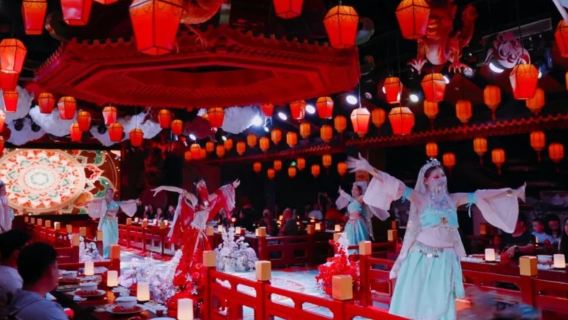
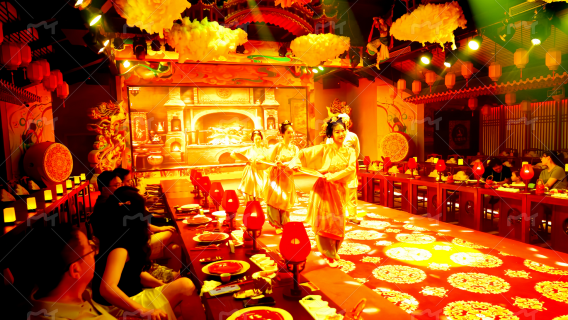
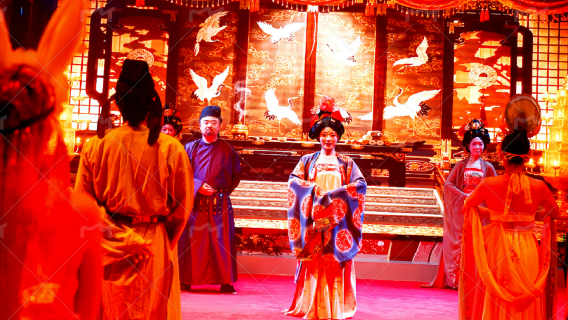
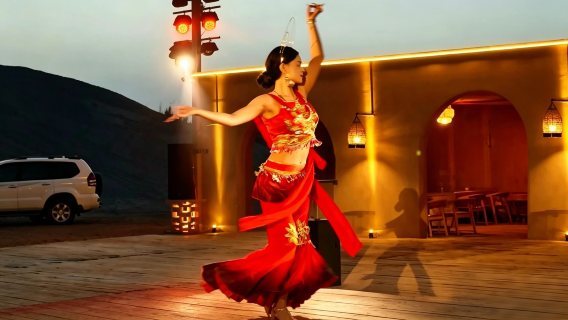
You can give Gansu Dunhuang Shan Bureau · Han and Tang imperial banquet (immersive Han and Tang dynasty palace banquet show + creative Silk Road feast + Hanfu costume change experience) and Dunhuang singing sand mountain desert evening banquet (wild luxury desert dinner + dune sunset + wilderness ceremony + bonfire party) a try. Before you go, please check their opening hours and menus online. Reservations are recommended, especially during peak hours.
What are the recommended tours and excursions in Gansu?
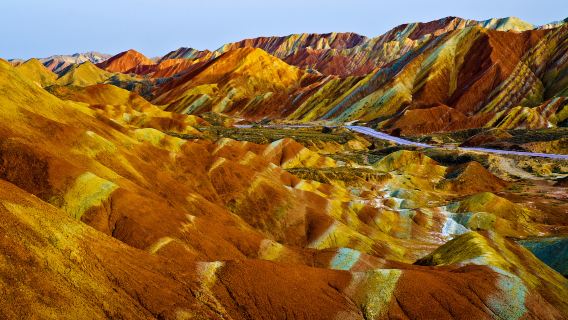
When choosing a tour, start with how much time you have and the kind of experience you're looking for. Trending options right now include Pure play 1-day tour to Yardang, Yang Pass and Yumen Pass with cultural creative gift and sunset starry sky viewing, Zhangye Colorful Danxia Scenic Spot & Pingshan Lake Grand Canyon Day Tour, and One-Day Tour of Zhangye Danxia Rainbow Mountains & Mati Temple (Explore Geological Wonders, Discover Millennia-Old Buddhist Grottoes). Check the real-time availability and itinerary before you book.
What's the typical cost of day tours and activities in Gansu?
As of 15 October 2026, the reference price for day tours and activities in Gansu is around EUR 10.47 – EUR 71.73. Rates vary by duration, group size, transportation, tickets, meals, and any special admission requirements. Before you book, please confirm the billing currency and whether the price is quoted per person or per group.
How can I contact Trip.com customer support?
Get help anytime, anywhere within 30 secondsContact customer support
Can I change or cancel my booking?
Change and cancellation policies vary by attractions and tours. Please check the product details page for more information.
How can I get discounted prices?
Ticket prices may vary between weekdays and weekends, as well as during peak and off-peak seasons. When booking with Trip.com, you can also use Trip Coins to get extra savings. For more tips on booking discounted tickets, please visit Trip.com for the latest information.
Trip.com picks
Popular cities in China
Popular Gansu Tours
Best Gansu Experiences
Recommended Car Rentals in China
Things to do in ShanghaiThings to do in QingdaoThings to do in GuangzhouThings to do in YulongThings to do in JiuzhaigouThings to do in ChinaThings to do in ZhuhaiThings to do in ChengduThings to do in SanyaThings to do in ShenzhenThings to do in ChongqingThings to do in SuzhouThings to do in TaipeiThings to do in BeijingThings to do in Dujiangyan
From Shanghai: Private Day Trip to Wuxi‑Huishan Ancient Town & Nanchangjie Ancient CanalShanghai departure - Wuxi private charter 1-day tour: Three Kingdoms Town + Lingshan Buddhist Scenic SpotSuzhou, China + Wuxi Lingshan Grand Buddha 1-day tour MShanghai to Wuxi Private Day Tour Lingshan Giant Buddha+Free showPrivate Day Tour from Hangzhou to Yuantouzhu Scenic Spot and Taihu Lake - Flexible Departure Time!Customized private charter in Wuxi city - one booking per group, no join-in tourSuzhou, China + Wuxi Sunac Land + Sunac Sea World + Taihu attraction One-Day Tour from Suzhou to Wuxi: Three Kingdoms Town, Water Margin Town, and YuantouzhuPrivate Day Tour from Shanghai to Wuxi's Taihu Lake and Yuantouzhu Scenic Area 1-day tour to Wuxi Lingshan Giant Buddha and Nianhua Bay from ShanghaiRound-trip from Shanghai: Nanchang Street + Lingshan Giant Buddha + Nianhua Bay in Wuxi | Multilingual guides including Chinese/English | Customized private charter Wuxi Lingshan Giant Buddha and Nianhua Bay Day Tour: Private Car+TicketShanghai departure: Wuxi Plum Garden + Lihu Park private charter 1-day tourWuxi, Jiangsu: Private customized 1-day tour with private charter/guide, multilingual services including Chinese, English, Russian, French, Spanish Lingshan Giant Buddha &Tai Hu Yuantouzhu Scenic Spot Day TourGansu Day ToursGansu ActivitiesGansu Connectivity SolutionsGansu Travel ServicesGansu Group ToursWuxi Day ToursGansu SIM CardCar rentals in TaipeiCar rentals in BeijingCar rentals in Hong KongCar rentals in Shanghai