Things to do in Huaihua
Explore top experiences
Top 10 attractions in Huaihua


Qianyang Ancient Town
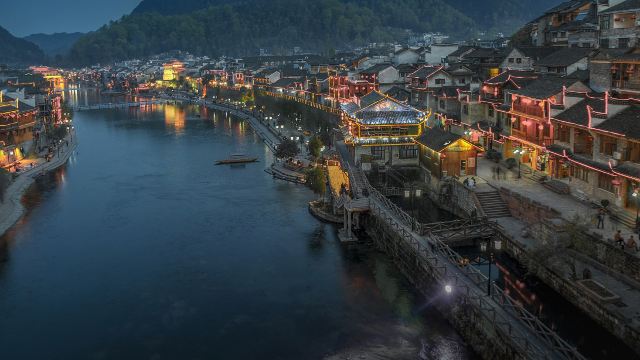
Nestled in the upper reaches of Yuanshui, Qianyang Ancient Town is one of the well-preserved examples of ancient cities dating from the Ming and Qing Dynasties. The ancient city is surrounded by water on three sides. It is a frontier town in Xiang-Chu-Miao Region and also known as the “gateway to Yunnan and Guizhou”. Of the original five city gates, four still remain to this day. The West Gate is also known as Zhongzheng Gate. The gate and the building are incredibly well preserved with the words “Zhong Zheng Men” still inscribed on the gate, written by Dai Li, dating back from the days of the Warlord Era. The well-preserved fishbone-shape road layout is formed by the two main streets in the north and south. It was called Nine Streets and Eighteen Lanes in ancient times and there are a variety of ancient buildings on both sides of the street such as the county government, academies, temples, inns and theaters.HongJiang · 2.7 km from downtown

Hongjiang Ancient Commercial Town
Hongjiang Ancient Commercial Town was built along the two rivers of Yuan and Wu. It took shape in the late Yuan Dynasty and early Ming Dynasty. Until now, the atmosphere of this important ancient commercial town can still be experienced. The architectural style of Hongjiang Ancient City is typical of the Ming and Qing Dynasties and the south of the Yangtze River. At the same time, it has significant characteristics of Yuanxiang. Every house in the city feels harmonious. Workers used only bricks, wood, and stone as materials, with no nails. They created solid, practical, and artistic buildings. The exquisite window frames, lattice fans, door carvings and delicate railings reflect the ingenuity of ancient Chinese architectural art.HongJiang · 19.6 km from downtown
Wanfo Mountain
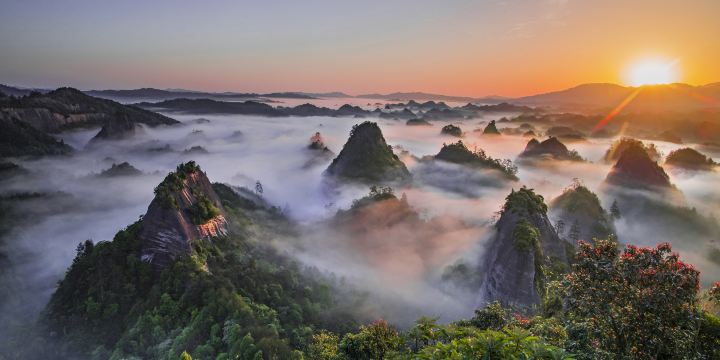
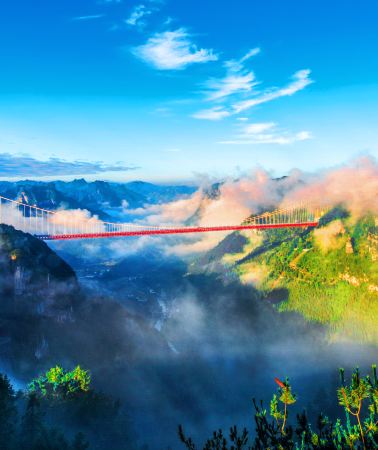
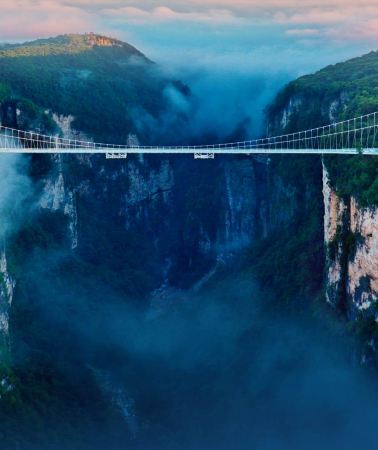
Wanfo Mountain in Huaihua is located in Taipingyan Village, Linkou Town, Datong County, about 20 kilometers away from Shuangjiang Town, the county seat. In addition, the natural vegetation here is lush, the air is very fresh, and the mountain road is not very steep or steep. For tourists who lack daily exercise in the city, it is relatively easy to climb up. It takes about 2 hours to climb to the top of the mountain, especially Suitable for weekend leisure travel in the mountains. The vegetation in the mountains is lush, and the ground in the jungle is full of fallen leaves for many years. Walking on it is soft, surrounded by pine waves, and sometimes you can hear the chirping of birds, which will make people feel extremely relaxed. Tourists who like excitement can also go for a walk on the plank road on a cliff in the mountain to experience the feeling of excitement. There is also a lake in the scenic area with clear water. Tourists can go fishing by the lake, or set up a tent in the woods and enjoy the leisure and freshness of nature. At the end of June 2016, the "Wanfoshan Hanging Plank Road" was opened in the scenic area. The total length of the plank road is about 350 meters, and the relative height difference is about 120 meters, of which the glass plank road is about 40 meters long. The plank road is located on the main peak of Wanfo Mountain, from the Shilian Reclining Buddha Platform to the northern viewing platform of Wanfo Mountain. Walking on the glass plank road, you can not only enjoy the beauty of the mountains, but also challenge your courage.Tongdao · 18.3 km from downtown

Longjin Wind and Rain Bridge
Longjin Wind and Rain Bridge spans the Wu River in Zhijiang, Huaihua. First built in the 19th year of the Wanli reign of the Ming Dynasty, it was damaged and rebuilt several times over the past 400-plus years, remaining a vital crossing point for travelers and merchants between Hunan and Guizhou. The current bridge structure dates back to a large-scale reconstruction in the late 1990s, which still utilizes traditional Dong wooden construction techniques. The entire bridge is over 200 m long and more than 10 m wide, resting on 16 boat-shaped stone piers with pointed ends facing the current, bonded with a mortar of sticky rice and tung oil. The wooden structure on the bridge is entirely joined by mortise and tenon, without the use of a single nail or rivet. The name "Longjin" is said to be derived from the sight of the boat-shaped piers "spitting water" as they cut through the waves. A long corridor with triple-eaved roofs connects the two banks, interspersed with seven five-story pavilions. With their deep blue glazed tiles and upturned eaves, they look like a long dragon lying on the river from a distance. Nearly 100 stall-style shops line both sides of the bridge, filled with local snacks like pickled radish and Zhijiang duck, as well as Dong silver jewelry and daily goods. The scent of tea drifts from teahouses where locals often sit and relax, making a walk across the bridge feel more like strolling through an old street built over the river. Climbing up to the pavilions in the middle of the bridge offers a bird's-eye view of the stilt houses along both banks of the Wu River, with the nearby Zhijiang Tianhou Temple complementing the bridge. The bronze rhinoceros statue at the bridgehead, covered in Dong patterns, embodies prayers for flood control and peace.Zhijiang · 865m from downtown

Yutou Dong Ethnic Village
Yutou Dong Ethnic Village is hidden in the green mountain folds of the Tongdao Dong region, surrounded by mountains on three sides, with the Yutou Creek winding through the village. The ancient village was first built during the Hongwu era of the Ming Dynasty, dating back over 600 years. After being destroyed by a fire during the Shunzhi era of the Qing Dynasty, it was rebuilt. The stilt houses rise along the creek and climb layer by layer along the mountain ridge. The entire complex of stilt-style wooden buildings stretches freely with the terrain, leaning against the hillside. Seen from a distance, they are layered and staggered, often leading first-time visitors to exclaim that it "looks like the Potala Palace." The village preserves a large number of buildings from before the mid-Qing Dynasty and is known as a "museum of physical artifacts" of Dong architecture. The village's highlights are quite concentrated: the four Drum Towers each have their own unique style. The Lusheng Drum Tower is topped with a lusheng, featuring nine layers of dense eaves; the top four layers are octagonal, while the bottom five are square. The eaves are painted with scenes of Dong farming and weaving, and the upturned eaves are carved with dragons and phoenixes; theCliff Drum Toweris half-built on the cliff face and half-suspended, supported by over a dozen wooden pillars, and has stood on the mountainside for over 200 years. The Huilong Bridge is a Wind and Rain Bridge, one of the "three treasures of Dong architecture." The bridge, pavilion, and corridor are integrated into one, constructed using wooden mortise and tenon joints; the two ancient wells at the head and tail of the village have sweet, clear water. TheSasui Altar, built of bluestone by the creek, is where the Dong people commemorate their ancestor, the "Great Grandmother" Sasui. The paths underfoot are also worth a closer look: the ancient flower-patterned streets and the old mountain post roads crisscross the village. The bluestone post road stretches for approx. 1.6 km, where porters and merchant caravans once traveled. The Dong village has many festivals, such as the Spring Ox Festival in the first lunar month, the Tasting New Rice Festival on the sixth day of the sixth lunar month, the Lusheng Festival on the fifteenth day of the eighth lunar month, and the Fish Pond Snatching Festival on the first day of the eleventh lunar month. During these festivals, the entire village resounds with the sound of lusheng and constant singing; on ordinary days, there are always people sitting around the fire pit in theDrum Tower, which also serves as a place for the whole village to hold meetings and gatherings. If you want to photograph the layered rooftops, you can walk to the viewing pavilions on the mountains on the east and west sides to overlook the entire village.Tongdao · 7.3 km from downtown

Huaihua Grand Canyon
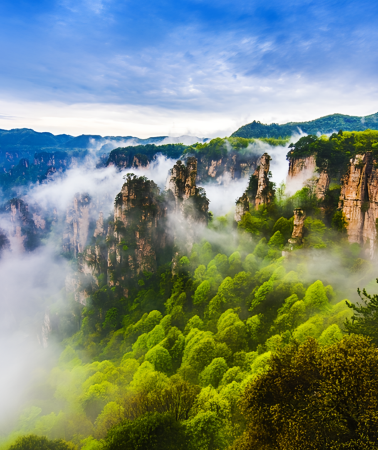
Huaihua Grand Canyon is located in Daping Village, Huangyan Tourist Resort, 20 kilometers east of Hecheng District, Huaihua City. It has an average altitude of 850 meters and a high altitude of 1,200 meters. The annual temperature is 5-6 degrees lower than that of the urban area. The air in the area is clear, the environment is beautiful, there are groups of caves, and the rocks are jagged. It is a typical karst landform. You can go outing and enjoy flowers in spring, escape the heat and cool in summer, enjoy the maple leaves in autumn, and enjoy the snow in winter. It is a good place for suburban Residents and tourists to hike and visit.Zhongfang · 15.6 km from downtown

Furong Tower, Qianyang Ancient Town
The Furong House is situated in Qiancheng Town, at the confluence of the Yuan and Wu rivers. It is a perfect example of classical garden architecture. The Furong House is exquisite and well-ordered. According to legend, In the 7th year of the reign of the Tianbao Emperor of Tang (748 AD), Wang Changling was degraded as the Governor of Longbiao (now Qianyang County). During his reign he built the Furong House, for drinking, poetry, reception and farewell guests. In the 20th year of the reign of the Jiaqing Emperor of the Qing Dynasty (1815 AD), the local people rebuilt the Furong House at Xianglubi in the western part of the city to commemorate the famous poet. The currently extant building was constructed in the 19th year of the Daoguang Emperor of the Qing Dynasty (1839 AD).HongJiang · 2.8 km from downtown

Yushuwan
Located in Huaihua, Hunan, Yushuwan is a destination that blends natural ecology with cultural and leisure elements, perfect for both daily relaxation and short getaways. Preserving abundant natural vegetation, the lush greenery is interspersed with walking trails and rest areas. Visitors can stroll along the trails, enjoying the fresh forest air, or rest on a bench under the shade of a tree for a moment of tranquility. The area features a waterfront terrace, situated near the water, offering expansive views of the ripples and surrounding scenery. On clear days, the play of light and shadow between the water and the vegetation creates a soothing atmosphere. In addition to the natural landscape, Yushuwan also features recreational areas, including stylish and practical public facilities and small shops offering light meals and beverages to meet visitors' more relaxed dining needs. Some areas are decorated with seasonal themes, such as spring floral displays and autumn natural hues, adding a touch of variety to each visit. Whether visiting alone to relax or with family and friends for a stroll and a chat, there's a perfect place to unwind and experience a relaxing time close to nature.Huaihua · 7.8 km from downtown

Disun Miao Village
Disun Miao Village in Sanshui Township, Jingzhou County is about 40 kilometers away from the county seat. There are residential buildings with distinctive ethnic customs and beautiful natural environment. You can see the stilted buildings with very Miao style. These stilted buildings are in line with the mountains. It is built on a hillside, with a hill behind the stockade, a pond in front, and a small hill around it. It is a very good place to live. Many cultural relics and historical sites have been preserved in the village, such as: ancient wells, stone road, ancient oil pressing workshop, ancient school ruins, and buildings such as mountain gates, village gates, flower bridges, waterwheels, etc. are being restored one after another. Miao Village is surrounded by mountains, with lush forests and fresh air. Here, you can experience the tranquility of the village in the mountains and enjoy the tranquil idyllic scenery here.Jingzhou · 24.7 km from downtown

Huangdu Dong Culture Village
Legend has it that when the ruler of the ancient Yelang kingdom passed through here, he was so captivated by the rich local ethnic customs that he founded a city called Huangdu. Huangdu Dong Culture Village consists of four villages—Head Village, Tail Village, New Village, and Pan Village—and has a long history, well-preserved customs, and vibrant, colorful traditions. In the drum tower, in the pavilions, and along the banks of the covered bridge, music drifts everywhere and singing rises like a tide. To reach the Dong village, you must first cross a bridge named Puxiu Bridge, which is acovered bridge. At the foot of the hill across the river stands an elegant village gate where six iron cannons fire in sequence, dozens of Dong men play lively lusheng tunes and dance gracefully, and a group of Dong women in festive dress stand in the middle of the road carrying bowls of fragrant local wine to welcome guests, a grand ceremonial greeting. At the performance stage inlaid with a sunflower pattern, watching the outstanding performances by the Huangdu Dong Culture Village art troupe is another delight. A series of ethnically rich programs—"Toasting song", "Chechemo", "Stepping on the winnowing basket", "Rice stalk song", "Tea riot", "Egg snatching", "Bench love song", and "Tongdi Guluo Nao Ge Tang"—brings together the essence of Dong traditional culture, with lyrical songs and graceful dances that are deeply moving and reveal a rugged beauty in their flowing, effortless motions.Tongdao · 8.2 km from downtown
Experiences you can't miss in Huaihua
Featured Day tours in Huaihua
View all Day tours


5.0/5
· 1 reviewBook now for tomorrow
FromJPY 11,564

Free cancellation
Instant confirmation
FromJPY 10,072

Free cancellation
Instant confirmation
Book now for tomorrow
FromJPY 13,619

Free cancellation
Instant confirmation
FromJPY 13,518

Free cancellation
Instant confirmation
FromJPY 12,360
More ways to travel from Huaihua
Group Tours in Huaihua
View More Group Tours in Huaihua


Free things to do in Huaihua
Qianyang Ancient Town
HongJiang · 2.7 km from downtownImmediate access, Book now for today, Cancel anytimeHongjiang Ancient Commercial Town
HongJiang · 19.6 km from downtownWanfo Mountain
Tongdao · 18.3 km from downtownLongjin Wind and Rain Bridge
Zhijiang · 865m from downtownYutou Dong Ethnic Village
Tongdao · 7.3 km from downtownHuaihua Grand Canyon
Zhongfang · 15.6 km from downtownFurong Tower, Qianyang Ancient Town
HongJiang · 2.8 km from downtownYushuwan
Huaihua · 7.8 km from downtownDisun Miao Village
Jingzhou · 24.7 km from downtownHuangdu Dong Culture Village
Tongdao · 8.2 km from downtown
What travelers say about Huaihua

dl69066 July 2026
5.0
The ancient town is quaint and not overly commercialized, with a beautiful and comfortable surrounding environment, situated by the river. It's relatively quiet, with many shops closed and virtually no restaurants, but this adds to its tranquility.
Qianyang Ancient Town

110***1729 July 2025
5.0
Compared to Qianxi Ancient Town, I personally prefer Hongjiang Ancient Town, located 25 kilometers away. Originating in the Spring and Autumn Period, it took shape during the Tang Dynasty and reached its peak during the Ming and Qing Dynasties. It was the most prosperous commercial center in Southwest China after the reign of Emperor Kangxi of the Qing Dynasty. Its architectural style blends elements of Xiangxi, Huizhou, and Western architecture, making it more majestic than the 2,200-year-old Qianyang Ancient Town, which features more folk architecture. The ancient town is home to numerous chambers of commerce from various regions. The saying, "With just a bag and an umbrella, one comes to Hongjiang to become a boss," was a common troupe of entrepreneurs in ancient times (see Figure 1). Figure 2 shows the home of Chen Rongxin, the local tycoon. While the frontage may seem small, the courtyard is quite spacious. Figures 4 and 5 show money shops of the time, Figure 6 shows the Lijin Bureau (now the Tax Bureau), and Figures 7 and 8 show opium dens and brothels. Numerous docks surround the ancient town, demonstrating its vibrant commercial life. In terms of current ancient town management, I personally believe Hongjiang Ancient Town is more effectively managed than Qianyang (with a single ticket system), making it more convenient for visitors.
Hongjiang Ancient Commercial Town

zzll1981100126 July 2025
5.0
I drove there by myself. It was nine kilometers from the visitor center to the trailhead. There were not many people. I chose the steepest trail when climbing, which still required some physical strength. The scenic spot prepared a bottle of water for everyone, which was quite considerate.
Wanfo Mountain

tzy7987983 May 2025
5.0
Longjin Wind and Rain Bridge is located in Zhijiang Dong Autonomous County, Huaihua City, Hunan Province. It is a Dong wind and rain bridge that integrates trade, tourism and leisure.
The following is a detailed introduction for you:
Historical Origin
Longjin Wind and Rain Bridge was first built in the 19th year of Wanli in the Ming Dynasty (1591). It was donated by the famous monk Kuanyun. Because the bridge piers and flowing water are shaped like a dragon's mouth spraying water, it is named "Longjin Wind and Rain Bridge". The bridge has been damaged and repaired many times in history. It has always been a traffic fortress on the Hunan-Guizhou Highway, and it is also the most prosperous place for merchants and tourists to travel. It is known as the "No. 1 Bridge in the Southwest of the Three Chus". In early 1999, Longjin Bridge was rebuilt again and completed on November 7 of the same year.
Architectural features
The bridge is 246.7 meters long and 12.3 meters wide, with a sidewalk width of 5.8 meters. It is a mortise and tenon hollow wooden structure covered bridge. The highest point of the covered bridge is 17.99 meters. There are 7 exquisite bridge pavilions in between. The main building pavilion in the middle is an octagonal five-story bridge pavilion. There are 94 wing-style shops on both sides of the corridor. The architectural style has strong Dong ethnic characteristics. The corridor-style building of the bridge can shelter pedestrians from wind and rain, and the bridge pavilion is a place for people to rest. The entire wind and rain bridge is a full wooden structure without a single nail or rivet, reflecting the contemporary Dong ethnic garden architectural style.
Cultural value
Longjin Wind and Rain Bridge is a cultural relic protection unit in Hunan Province. It was included in the Shanghai Guinness World Records in December 2000 and is the world's largest wind and rain bridge. It is a perfect fusion of historical monuments and architectural art, and has become a rare cultural landscape in China.
Longjin Wind and Rain Bridge

一位爱旅行的推荐官7 September 2025
5.0
Passing through the village gate and stepping onto the ancient post road paved with bluestone slabs, it felt as if time had flown back in time. The village is devoid of bustling commercial streets or bustling tourists, only quaint stilt houses and the simple homes of the Dong people.
The path paved with bluestone and cobblestones is a popular photo-op in Yutou Dong Village. After a drizzle, the slippery bluestone path stretches through the village, like a crystal-clear stream.
Small fish ponds connect to each other along the roadside, each containing a small pavilion. At first, I thought they were architectural models, but later I learned they were "shade pavilions" designed to provide shade for the fish.
Walking up the mountain along the bluestone path, I arrived at Yutou Dong Village's most unique structure, the Yashang Drum Tower (also known as the Cliff Drum Tower). Built in 1777, the drum tower is perched on a steep hillside.
The Drum Tower follows the slope, half built on the hillside and half suspended in mid-air by 17 pearwood pillars. The six pillars, of varying lengths, provide optimal load-bearing support, ensuring the tower's sturdiness over two centuries. The tower's arching eaves, with their quaint, ancient form, combine both uniqueness and precariousness.
Inside the Yashang Drum Tower is a unique sculpture depicting a "monkey holding a melon," said to be the only such sculpture among drum towers. "Melon" means strong in the Dong language, suggesting that the monkeys contribute to the tower's stability.
Halfway up the hill, there's a small wooden cabin, within which lies the Qianlong Ancient Well. Built in 1791, the 56th year of the Qianlong Emperor's reign, the water remains sweet and delicious, suitable for drinking directly.
The village's high number of longevity is said to be closely linked to the quality of the well's water. I scooped up a handful of the well water and tasted it; it was indeed refreshing and refreshing.
Yutou Dong Ethnic Village

酣然入梦.23 August 2025
5.0
Over the weekend, I ventured deep into the Grand Canyon, seeking the tranquil, mirror-like waters. Immersed in the canyon, detached from the hustle and bustle, I felt the loving embrace and warm comfort of nature.
[Scenery] Stunning
Huaihua Grand Canyon

西格玛 1234 June 2025
5.0
黔阳古城位于湖南省西部的洪江市黔城镇。是一座有着2200多年历史的文化名城,保存完好,拥有🤓10 多处全国重点文物保护单位。古城三面环水,河畔有“楚南第一楼”芙蓉楼,游客不多,站在楼上大声朗诵王昌龄的千古佳局《芙蓉楼送辛渐》,“寒雨连江夜入吴,平明送客楚山孤。洛阳亲友如相问,一片冰心在玉壶”,看着眼前沅舞流清、胜景如画,非常惬意。
Furong Tower, Qianyang Ancient Town


殷都老虎24 March 2024
4.0
Disun Miao Village (3A)
Located in Sanqiao Township, Jingzhou County. It is one of the birthplaces of the national intangible cultural heritage Miao Song. The Miao-style stilt houses in the village have distinctive architectural features, the cultural relics are well preserved, and the folk culture is well inherited. In addition to the Miao Song, which is known as the "living fossil of original polyphonic ethnic music", there are also customs with ethnic customs such as playing in the mountains to meet friends, dating in tea stalls, and snatching brides.
There are 120 households and 670 people in the village. Sanqiao Miao Song is a polyphonic chorus form that evolved from the sounds of nature. In the ancient Miao village, the beautiful and fresh natural environment and the simple and cheerful life prompted the Miao ancestors to have a strong interest and association with the colorful "harmony" of nature such as birdsong, cicada singing, flowing water, and forest waves. So they imitated the "harmony" of nature and composed high and low overlapping pleasant songs.
The area around Sanqiao, Jingzhou, has long been known as the "hometown of mountain songs". The Miao people here love to sing, and they are all experts in composing songs. "Food nourishes life, and songs relax the mind" is the colloquialism of the Miao people. They regard singing as equally important as farming and eating, and singing has become the main way for them to communicate their thoughts, feelings, culture, and art.
According to their musical carriers, the songs of the Miao people in Sanqiao, Jingzhou, can be divided into eight types: tea songs, wine songs, mountain songs, water-carrying songs, rice songs, entertainment songs, wedding songs, and three-tone songs. The lyrics are seven-character four or more sentences, and the language is mainly the language of the Miao people with the surname Wu in Sanqiao Township, supplemented by the languages of other surnames. Most of them use rhetorical techniques such as metaphor, exaggeration, and personification, with rich associations, extensive citations, and philosophical meanings. It has rich content and a wide range of themes. There are long-standing story songs, narrative songs praising the deeds of heroes, and love songs expressing the affection between young men and women, etc. There are eleven tunes, which vary from place to place. The singing form mostly starts with the low voice, Enter after the middle and high school sections, and multiple voices flow alternately.
Disun Miao Village is a typical layout of the high mountain "Hua Yi Miao" group village architecture. The stilt houses are built along the slope due to the terrain of the mountain. They are side by side on the left and right, staggered in front and back, and the flat and open place in the middle is the public activity venue and public facilities such as wells and ponds. It conforms to the Miao folk house site selection principle of "mountains against mountains, posts against posts, streams against streams, and ponds around ponds".
Strategy
Transportation: The minibus from Jingzhou County to Sanqiao Township passes by the entrance of the village, and the bus from Sanqiao to Disun goes to the village. Deep in the mountains, the road is good, suitable for self-driving, 18 kilometers of mountain roads, 6 kilometers of winding mountain roads, be careful about driving at night.
Ticket price: free
Accommodation and meals: Authentic Tujia cuisine, reasonable price, the group village is small and exquisite, the folk customs are simple, and it is suitable for short stays.
Time: 2-48 hours. From May to November, there are no programs or night views on weekdays.
Disun Miao Village

gz当地向导伊妹儿17 June 2021
5.0
Tongdao Huangdu Dong Ethnic Cultural Village is located in Tongdao County, Huaihua City, Hunan Province. It has a unique and charming architectural style, strong interest, pleasant scenery and super cost-effectiveness. You can experience the local customs and folkways.
Huangdu Dong Culture Village


