
Things to do in Jurong
Explore top experiences
Top 10 attractions in Jurong


Maoshan Mountain Scenic Area
The Maoshan Mountain Scenic Area is located 20 km southeast of Jurong city, with the three main peaks - Damao Peak, Ermao Peak, and Sanmao Peak - arranged from south to north. The highest peak (main peak), Damao Peak, has an elevation of 372.5 m. The Maoshan Mountain Scenic Area is the birthplace of the Shangqing sect of Taoism. Originally named Juqu Mountain, it was renamed after the three Mao brothers from Shaanxi during the Western Han Dynasty - Mao Ying, Mao Gu, and Mao Zhong - who practiced Taoism here.MaoshanDuring the Eastern Jin Dynasty, Ge Hong and Tao Hongjing of the Southern Dynasties resided here.MaoshanPracticed cultivation here. The mountain is dotted with Taoist temples, which, despite their long history, have suffered repeated war damages. Most of what we see today are modern reconstructions, with the Jiuxiao Wanfu Palace and Yuanfu Wanning Palace being the most famous, collectively known as the "Maoshan Mountain Scenic Area - Maoshan Taoist Temple". The Maoshan Mountain Scenic Area is located at the border of Jurong City and Jintan City, with the Jiuxiao Wanfu Palace at the peak of Damao Mountain serving as the boundary. The western part is under the jurisdiction of Jurong, while the eastern part is managed by Jintan. In fact, the so-called Jurong Maoshan Mountain Scenic Area and Jintan Maoshan refer to the same Maoshan Mountain Scenic Area. The main attractions of the Maoshan Mountain Scenic Area, including the Jiuxiao Wanfu Palace, belong to Jurong and are concentrated at the peak and northern slope of Damao Mountain. At the main entrance of the Maoshan Mountain Scenic Area (Maoshan West Gate), there are sightseeing vehicles that transport visitors to the entrance of the Jiuxiao Wanfu Palace at the peak, with stops at other attractions. It is recommended to take the sightseeing vehicle as the attraction is quite large, and hiking to the peak of Damao Mountain may take 1-2 hours. Private vehicles are not allowed to enter the attraction. The Jintan Maoshan area is primarily for hiking, with some Taoist temples scattered around. Hiking from the Jinniuling cableway (Maoshan east gate) to the Jiuxiao Wanfu Palace at the peak takes 1-2 hours. Alternatively, you can take the cableway directly to Jiuxiao Wanfu Palace. Note that if you wish to visit the attractions on the Jurong Maoshan Mountain Scenic Area side after reaching the peak, you will need to purchase an admission ticket for the Maoshan Mountain Scenic Area separately. Tickets for the Maoshan Mountain Scenic Area are not sold at the foot of Jintan Mountain and must be purchased at the peak. The first stop can be Jiuxiao Wanfu Palace, also known as the top palace, built after the three Mao immortals ascended to heaven in the Western Han Dynasty. In the 26th year of the Wanli era of the Ming Dynasty (1598 AD), the emperor bestowed it the name "Jiuxiao Wanfu Palace". The red exterior walls of the Taoist temple are very eye-catching. Inside the temple, there is a three-gate stone archway on the ascension platform, which is the highest point of the Maoshan Mountain Scenic Area in Jurong at an altitude of 372.5 m. It is said to be the place where Mao Ying ascended to heaven. From Jiuxiao Wanfu Palace, you can overlook the Yuanfu Wanning Palace at the foot of the mountain. The second stop is Yuanfu Wanning Palace, built in the fifth year of the Chongning era of Emperor Huizong of the Song Dynasty (1106 AD). It is also known as the seal palace because the Song Dynasty emperor gifted the temple a treasure called the "jiulao xiandu seal". Remember to touch the character "fu" (meaning blessing) on the back of the stone wall at the Duxing gate inside the temple, which is said to bring good luck. The most striking feature of the entire temple is the 33 m tall bronze statue of Laozi, which shines golden under the sunlight with extraordinary grandeur. Be sure to notice the palm of Laozi's left hand, where there is a real wasp nest with a diameter of 1 m, which is quite miraculous. There is a folk saying: "Offer incense at the peak palace, stamp the seal at the seal palace," meaning one prays for blessings at the peak palace and gets a seal stamped at the seal palace. The jiulao xiandu seal is currently not at Yuanfu Wanning Palace but at Jiuxiao Wanfu Palace, making it relatively difficult for ordinary visitors to obtain. Outside the Yuanfu Wanning Palace, there are three karst caves within walking distance in the Maoshan Mountain scenic area - Huayang Cave, Yuzhu Cave, and Xianren Cave. Huayang Cave in the Maoshan Mountain scenic area was where Tao Hongjing, the prime minister of the Southern Dynasties, practiced cultivation. This cave connects with Yuzhu Cave, while Xianren Cave in the Maoshan Mountain scenic area is located approx. 80 m to the north. If taking the sightseeing bus, it's recommended to visit Huayang Cave first, then proceed to Xianren Cave in the Maoshan Mountain scenic area, as the exit of Xianren Cave is very close to the sightseeing bus stop. Then head to Xike Spring in the Maoshan Mountain scenic area, an ancient spring as old as the Maoshan Mountain Scenic Area in Jurong. When many people clap around the spring, you can see strings of bubbles rising from the water. Near Xike Spring in the Maoshan Mountain scenic area, there are a wellness bookstore and Prince Zhaoming's reading platform. Follow the direction indicated by the statue of the immortal sage behind the bookstore to take a stroll around Dezi Valley. The valley is shaded by lush trees with wooden boardwalks, making it a pleasant walk where you can also see attractions like Dezi Pavilion in the Maoshan Mountain scenic area. The last stop is the Sunan victory monument of the war of resistance against Japan at the entrance of Maoshan Mountain in Jurong. The Maoshan Mountain scenic area is not only a Taoist holy site but also a base for the war of resistance against Japan. A unique feature here is setting off firecrackers at the base of the monument, which produces a distinct echo resembling a military bugle in the sky. Vendors near the monument sell firecrackers for those who wish to hear the echo. Located 150 m west of the monument is the Maoshan new fourth army memorial hall, where decommissioned aircraft and cannons are displayed outside, and the hall showcases the history of the war of resistance against Japan in the Maoshan Mountain scenic area of Jurong. Visitors short on time can focus on Yuanfu Wanning Palace and Jiuxiao Wanfu Palace, while those with more time can explore additional attractions like Maoshan Mountain Scenic Area - Huayang Cave, Maoshan Mountain Scenic Area - Xike Spring, and the Southern Jiangsu Anti-Japanese War Victory Monument. There are restaurants outside Yuanfu Wanning Palace within the scenic area, but they are relatively expensive with average food quality, so bringing snacks is recommended for extended visits. Outside the main gate, there are many local restaurants serving delicious food. At the main entrance of Maoshan Mountain Scenic Area in Jurong, there are accommodations such as Jurong Maoshan Wanfu Building Hotel and Bubugao Hotel. However, since you can return to nearby urban areas on the same day after visiting Maoshan Mountain Scenic Area, it is recommended to stay in Jurong, Jintan, Zhenjiang or other nearby locations.Jurong · 22.5 km from downtown

Tangshan No.1 Hot Spring Resort
Tangshan Premier Hot Spring Resort is located in the hot spring resort area in the Nanjing Military Region of Tangshan. It consists of an open-air hot spring area, a villa area, a dining and entertainment area, and a conference area, making up a total of six districts. There are a total of more than 50 open-air hot spring pools, four springs, and the water temperature remains 65 degrees Celsius all year round. The interior of the hot spring is particularly stylish, and there is an open-air hot spring pool outside. There are many types and the water quality is very good.Nanjing · 15.6 km from Jurong

Maoshan Forest World
Maoshan Forest World in Changzhou, located in the core area of Jintan Maoshan tourism resort, is a one-stop family vacation destination surrounded by 3,500 acres of forest. The attraction features ten forest animal interaction zones and nine themed forest wonderlands, with seasonal charms: digging bamboo shoots in spring, enjoying jungle rafting in summer, hiking to admire fall hues in autumn, and encountering a snowy forest kingdom in winter—every step is poetic throughout the seasons. The first borderless forest animal interaction themed zone: sloth daydream house, red panda manor, capybara fantasy forest, cattle and horse prairie ranch, raccoon reception hall, deer in the deep woods... Immerse yourself in animals' natural habitats and experience a slow healing journey of harmony between humans and nature in the wilderness. Family-friendly groups can enjoy dozens of mountain recreational activities; Maoshan gourmet restaurants and six themed stays with complete facilities meet diverse vacation requests for 1-day tours or 2-day tours among visitors from Jiangsu, Zhejiang, and Shanghai. Here is an outdoor study classroom for families to explore nature, and a trendy photo spot for young people to discover the secret world of light and shadow. With convenient transportation connecting the Yangtze River Delta metropolitan area, it creates a "away from the hustle but not the city" forest getaway wonderland. From adorable animal interactions and seasonal activities to forest therapy and immersive aesthetic experiences, Maoshan Forest World redefines quality vacations for all ages with ecology as its foundation and creativity as its soul.Changzhou · 21.4 km from Jurong

Qianhua Ancient Village
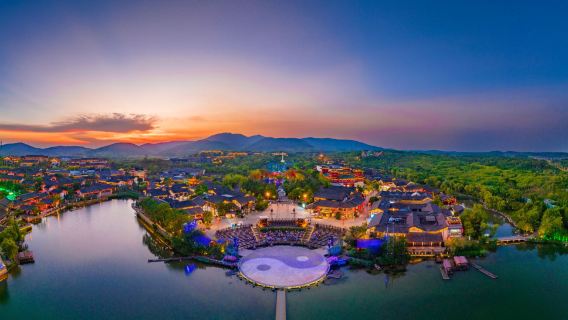
Qianhua Ancient Village is an imitation Ming- and Qing-style village at the foot of Baohua Mountain in Jurong. The ancient villages show visitors the life of the local residents during the Kangxi and Qianlong's reigns about 300 years ago. Exhibits here include dioramas and weaving looms, giving visitors a sensation as if they have stepped back in time. Walking along the river, the stilted houses on both banks are arranged next to each other, a beautiful and peaceful sight against the blue sky and white clouds.Jurong · 22.8 km from downtown

Baohuashan National Forest Park
Baohua Mountain is approx. 30 km from Jurong to the south, Zhenjiang to the east and Nanjing to the west. With an altitude of 437.2 m, it is named after Monk Baozhi, the prototype of Ji Gong and the founding master of Longchang Temple on the mountain. Longchang Temple is the main attraction of the scenic area. Built in the first year of Tianjian during the Liang Dynasty (502 AD), it is famous for its three-altar ordination ceremony and is currently one of the largest ordination sites in China. Monks receive their ordination certificates from Longchang Temple. Baohua Mountain has two main gates: the north gate and the south gate. Visitors usually enter the attraction through the north gate, as buses pass by this gate and National Highway 312 is also located to the north. The mountain has a winding road, making driving more convenient than taking buses. Vehicles entering the attraction must purchase both admission tickets and parking tickets. Small vehicles (under 15 seats) cost CNY 10 per vehicle, while large vehicles cost CNY 15 per vehicle. Non-driving travelers can take the shuttle bus inside the attraction for a one-way fare of CNY 10, or walk from the foot of the mountain to Longchang Temple, which takes approx. 30-40 minutes. After visiting Beiquan lake and the coal mine "General's cave" dug by General Xu Shiyou from the north gate, travelers will arrive at the hiking trail "Qianlong imperial path". Those who hike can take the stairs uphill from here, while self-driving travelers visiting in April are also advised to park by the roadside, walk a section of the trail before returning to their parking spot to see the three-million-year-old Magnolia zenii on the mountainside, with its lotus-sized white flowers tinged purple-red at the base. At "Qinhuai river source", travelers can stop and climb a few steps to the hilltop for panoramic mountain views. Note that the "Qinhuai river source" here merely indicates Baohua mountain as the river's origin through an informational sign, rather than showing the actual source. If you depart from Nanjing, Zhenjiang, or other places in the morning, you will likely arrive at Longchang Temple on the mountain around noon. You can first have a vegetarian meal at Baoyue Zhai near the temple entrance—the vegetarian noodles are recommended, with a reference price of CNY 20. Afterward, visit Longchang Temple. The temple's main gate faces north and features Huizhou-style architecture. Highlights include: 1) the white marble ordination platform from the Kangxi era of the Qing Dynasty, where hundreds of thousands of monks have been ordained since the Qing era; 2) the five large cauldrons from the Guangxu era of the Qing Dynasty, each capable of serving meals for a thousand people; and 3) the Bronze Hall and Beamless Hall built in 1605 (the 33rd year of the Wanli era in the Ming Dynasty). Caves like Wulong cave on the mountain can only be viewed at the entrance. Only experienced outdoor teams equipped with cave exploration gear like searchlights and ropes can descend for closer inspection. It's a stalactite cave. Other attractions on the mountain include the mountain turtle listening to scriptures, the monk cemetery complex, and Tianlong blessed land square. Every October, generally around October 8-18, Longchang Temple holds the Three Altars Ordination Ceremony, which accepts both male and female participants. Travelers can observe the ceremony but must respect Buddhist etiquette by avoiding loud noises and pointing. In late April each year, Baohua Mountain hosts the mountain soaking festival, featuring various activities such as camping, hiking, and kite flying. Baohua Mountain attraction has the Shanyifang international resort on the southern side of the mountain, and Baohua Mountain villa outside the north gate, both offering accommodation. Staying in Baohua town is also an option, but it's better to return to Zhenjiang or Nanjing for more choices and complete dining and entertainment options.Jurong · 22 km from downtown

Tangshan Scenic District
Tangshan Scenic District is located in the Tangshan area in the eastern suburbs of Nanjing. It integrates steles, hot springs, caves, lakes, and temples, where cultural relics and geological landscapes intertwine. The stele here refers to the Yangshan Quarry, which consists of giant stele materials left behind from the Ming Dynasty Yongle reign, when Zhu Di commissioned the carving of the "Divine Merit and Saintly Virtue Stele" for the Xiaoling Mausoleum of Zhu Yuanzhang. The three massive stones were carved directly into the mountain but were abandoned on-site because their size far exceeded the transport capabilities of the time. They have lain quietly in the mountains for over 600 years. Nearby, the Ming Culture Village recreates the labor and daily life scenes of Ming Dynasty craftsmen. Hidden within Leigong Mountain on the west side of Tangshan is a cluster of karst caves. The Nanjing Ape Man Cave once yielded fossilized skulls of the Nanjing Ape Man dating back hundreds of thousands of years, providing key evidence of early human activity in the Yangtze River Basin. Today, visitors can still enter the cave to explore the chamber where the fossils were unearthed, while the geological museum in the park recounts the full story. After seeing the stele and exploring the caves, a soak in a hot spring completes the experience. Tangshan Hot Springs have been flowing for thousands of years, with water temperatures consistently maintained between 50–60°C. Soaking in a pool here during the fall and winter is especially pleasant.Nanjing · 19.1 km from Jurong

Nanjing Museum
Nanjing Museum is located at the southern foot of Purple Mountain and north of Zhongshan Gate. The museum is one of the earliest to be established in China. Here, you can see ancient artifacts like gold-threaded robes such as those depicted in “Grave Robbers' Chronicles” and you can enjoy exquisite painting and calligraphy and Ming treasures such as a gold-plated stupa. You can take a trip through time and even walk along the streets of the Warlord Era.Nanjing · 34.1 km from Jurong

Dr. Sun Yat-sen's Mausoleum
Dr. Sun Yat-sen's Mausoleum is located in the Zhongshan scenic area in the eastern suburbs of Nanjing, nestled at the southern foot of Purple Mountain, adjacent to Linggu Temple to the east and Ming Xiaoling Mausoleum to the west. It serves as the tomb of Dr. Sun Yat-sen. The entire architectural complex, designed by architect Lü Yanzhi, follows the mountain's terrain along a central axis from south to north. When viewed from above, the tomb area forms a "warning bell" pattern, symbolizing "awakening the people." Construction began in 1926, and the main structures were completed in 1929, marked by the grand burial ceremony. The blue-glazed tiles paired with granite walls create a solemn and serene tone, making it one of the representative works blending Chinese and Western architectural styles. Along the central axis: the entrance features a towering granite Bo'ai archway, with the gilded inscription "Bo'ai" (universal love) handwritten by Sun Yat-sen on its lintel. Behind the archway lies a long tomb path flanked by trees. At the end of the path stands the mausoleum gate with cyan-glazed tiles, inscribed with "Tianxia wei gong" (the world belongs to the public). Further north is the stele pavilion housing a massive granite tombstone. Beyond this are 392 stone steps with a height difference of over 70 m, each section offering a resting platform. A thought-provoking visual design hides here: looking up from below, only steps are visible; looking down from above, only platforms appear—a detail worth experiencing firsthand. On one platform along the way, a pair of bronze tripods inscribed with "grand burial ceremony" are displayed, one bearing a bullet hole from Japanese artillery fire in 1937—a detail often missed by hurried visitors but worth pausing to observe. At the top of the steps lies the main sacrificial hall, designed in palace style. Its three arched doorways are engraved with "minzu" (nationalism), "minquan" (democracy), and "minsheng" (livelihood), while the central door bears Sun Yat-sen's calligraphy "Tiandi zhengqi" (righteousness of heaven and earth). Inside, a white marble statue of Sun Yat-sen sits at the center, with six relief carvings around its base. The burial chamber behind the hall is usually closed to the public, with visits focused on the sacrificial hall. The surrounding area also features memorial structures like the music stage, Liuhui Pavilion, Yangzhi Pavilion, Xingjian Pavilion, and the Sun Yat-sen Memorial Hall.Nanjing · 32 km from Jurong

Zhongshan Mountain National Park
Zhongshan Mountain National Park is located in the east of Nanjing, centered around Purple Mountain, historically known as Zhongshan. Its main peak stands nearly 450 m above sea level, with winding ridges resembling a dragon. Ancient people described Jinling's terrain as "Zhongshan coils like a dragon, while Stone City crouches like a tiger." The entire park blends mountains, water, the city, and forests. Along its southern foothills from west to east lie three core attractions: Ming Xiaoling Mausoleum, Sun Yat-sen Mausoleum, and Linggu Temple, interspersed with Plum Blossom Hill, Nanjing Botanical Garden Mem. Sun Yat-Sen, and the former site of Purple Mountain Observatory. The three major sections each have their highlights: The Ming Xiaoling Mausoleum is the joint burial site of Emperor Taizu Zhu Yuanzhang and Empress Ma, with stone animals lining both sides of the sacred path winding around Plum Blossom Hill. In late fall, the ginkgo, Chinese tallow, and maple trees gradually change color, representing the quintessential autumn scenery of Nanjing. The Sun Yat-sen mausoleum features long stone steps ascending layer by layer along the central axis, with its blue-glazed tile sacrificial hall standing out vividly against the lush forest. The Linggu attraction offers relatively tranquil surroundings, where the Beamless Hall—the only remaining structure from the Ming Dynasty's Linggu Temple—is entirely built of brick and stone without a single beam or pillar, making it worth a special visit. Every early spring, Plum Blossom Hill becomes blanketed with blooming plum flowers, and the tradition of spring outings to admire them has been passed down through generations. Meanwhile, the tree-shaded Lingyuan Road remains lush and green year-round—simply strolling leisurely along this path is delightfully soothing. Zhongshan offers more than just mausoleums. The attraction covers a vast area with considerable walking distances between sections, so it's advisable to plan your route in advance, allocate most of a day, and wear comfortable walking shoes. For hiking enthusiasts, the mountain trail to the main peak, Toutuo ridge, offers a panoramic view of Xuanwu lake and Nanjing city. This route is also a popular fitness spot for locals.Nanjing · 33.4 km from Jurong

Ming Xiaoling Mausoleum
The Ming Xiaoling Mausoleum is located in the scenic area of Zhongshan Mountain. It is the tomb of Emperor Taizu Zhu Yuanzhang and Empress Ma, featuring magnificent architecture that represents the architectural and stone carving achievements of the early Ming Dynasty. It also directly influenced the design of imperial mausoleums in both the Ming and Qing dynasties. Cemetery area distribution The overall layout of the mausoleum area is divided into two parts: the winding sacred path of the tomb and the main structures of the mausoleum, which is the burial site of Zhu Yuanzhang. The main structures of the Ming Xiaoling Mausoleum include the Civil and Military Gate (the main entrance), the Xiang Hall, the Square City, the Ming Tower, and the burial mound (also known as the Chong Mound), all arranged along the traditional central axis and enclosed by walls. The layout design of the Ming Xiaoling Mausoleum, featuring "court in the front and living quarters at the back, square in the front and round at the back," along with architectural forms such as the Square City, Ming Tower, and the burial mound, pioneered the construction regulations of imperial mausoleums in the Ming and Qing dynasties. It is hailed as a milestone in the development history of Chinese imperial tombs. Shinto The sacred way stretches from the dismounting arch to the main gate of Ming Xiaoling Mausoleum, spanning 2400 m. With its winding and secluded path, it breaks away from the traditional straight layout of Chinese imperial mausoleums. The sacred way is divided into two sections: the stone elephant road and the Wengzhong road. The stone sculptures on both sides are a major highlight, featuring 12 pairs of towering stone animals and two pairs each of civil officials and military officers. These sculptures are carved from single blocks of stone, showcasing simple designs, clear patterns, and exquisite craftsmanship. Every fall, the ginkgo trees and red maples here create a picturesque scene, attracting numerous photography-loving travelers. Enjoyment Hall The sacrificial hall, also called the Ming Xiaoling Mausoleum hall, was originally the place to enshrine the memorial tablets of Zhu Yuanzhang and Empress Ma. The original hall has been destroyed, but the three-layer Sumeru pedestal base and six large carved stone steps with cloud, dragon, and landscape reliefs remain. This site now serves as a historical exhibition room. Fangcheng The square city is a massive structure in front of the Ming Xiaoling Mausoleum's treasure dome, built with large stone slabs and featuring a sumeru base at the bottom. The Ming Tower stands atop the square city, with its original yellow-glazed roof destroyed and later restored. You can ascend to the Ming Tower via the walkways on either side of the square city. Ming Xiaoling Mausoleum - Treasure dome North of the square city lies the Ming Xiaoling Mausoleum's burial mound, also known as the treasure dome, with a diameter of approx. 400 m. This is the burial site of Zhu Yuanzhang and Empress Ma. Entering through the central arched gate in front of the square city leads to a vaulted tunnel. After climbing 54 steps and exiting the tunnel, you'll reach the southern wall of the burial mound, inscribed by later generations with "This mountain is the tomb of Emperor Taizu of Ming." Beyond this point, visitors cannot proceed further. Beneath the burial mound lies the underground palace of Zhu Yuanzhang's tomb, which has not been excavated. Plum garden and cherry garden Plum blossom hill is located directly south of the Ming Xiaoling Mausoleum, covered with plum blossoms. At the foot of the hill lies the plum blossom valley, home to over 13,000 plum trees. The wintersweet garden of the Ming Xiaoling Mausoleum is distributed on both sides of the central axis from the Golden Water Bridge to the Soul Tower, covering more than 80 acres with over 3,000 wintersweet plants. It encompasses 3 major variety groups and more than 60 varieties. The wintersweet viewing period lasts from December each year to late February of the following year. On Plum blossom hill, you can also see the tomb of Sun Quan. Near the stone elephant path of the sacred way lies a cherry blossom garden, where travelers flock to admire the blossoms from late March to early April. Honglou art garden is a landscape that embodies the culture of Dream of the Red Chamber and the rich Jiangnan style. To the north, Zixia lake serves as an ideal summer retreat.Nanjing · 33.3 km from Jurong
Experiences you can't miss in Jurong
Featured Cultural experiences in Jurong
View all Cultural experiences
4.4/5
· 5 reviews· 81 bookedFree cancellation
Instant confirmation
Book now for tomorrow
FromAED 24.71
5.0/5
· 2 reviews· 48 bookedFree cancellation
Instant confirmation
Book now for tomorrow
FromAED 103.22

5.0/5
· 3 reviewsFree cancellation
Book now for today
FromAED 673.78
10% off
Limited-time sale
FromAED 588.21AED 653.57
Free cancellation
Instant confirmation
Book now for tomorrow
FromAED 164.70

FromAED 21.91
Featured Day tours in Jurong
View all Day tours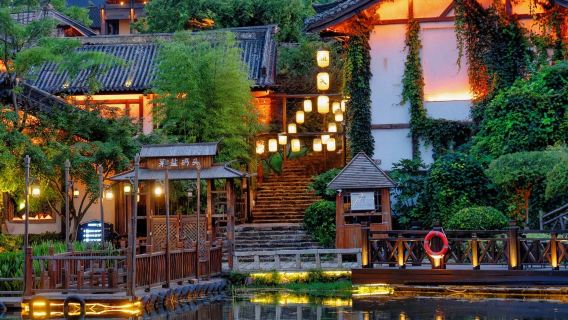
FromAED 1,042.55

5% off
Limited-time sale
FromAED 797.66AED 839.65
5.0/5
· 5 reviews· 107 bookedFree cancellation
FromAED 107.84

5.0/5
· 10 reviews· 54 bookedFree cancellation
Instant confirmation
FromAED 905.30
5.0/5
· 9 reviews· 28 bookedFree cancellation
Instant confirmation
FromAED 905.30
5.0/5
· 3 reviews· 21 bookedFree cancellation
Instant confirmation
Save AED 2.02
FromAED 200.59AED 202.61
Free cancellation
Instant confirmation
Save AED 3.25
FromAED 322.23AED 325.48
Featured Food & drink in Jurong
View all Food & drink
5.0/5
· 1 review· 48 bookedFree cancellation
Book now for tomorrow
FromAED 163.61
5.0/5
· 3 reviews· 38 bookedFree cancellation
Instant confirmation
67 travelers saved
FromAED 65.88
23 booked
Free cancellation
Book now for tomorrow
FromAED 61.49
5.0/5
· 4 reviews· 26 bookedFree cancellation
Instant confirmation
Book now for tomorrow
FromAED 53.81
FromAED 163.61
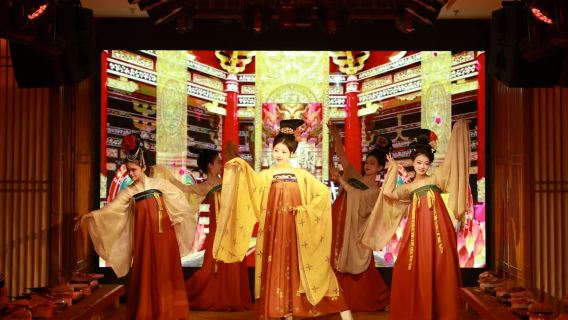
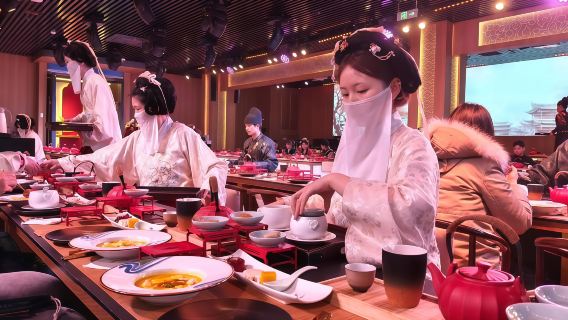
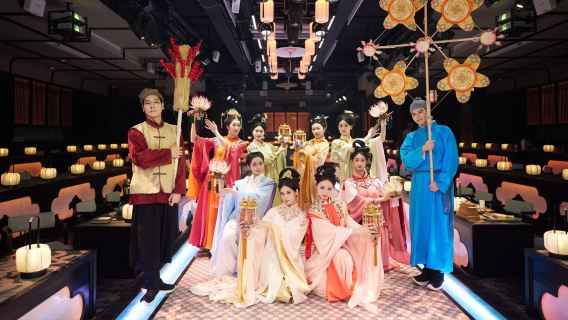
Jinling Dream Splendor: Ming Dynasty Themed Banquet +Hanfu Styling + Traditional Performances & Food
Free cancellation
Instant confirmation
FromAED 383.21
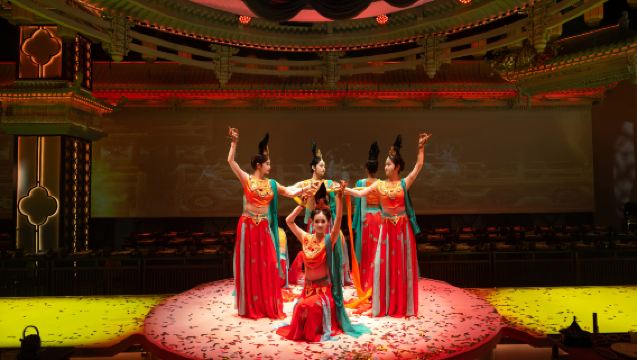
Free cancellation
Instant confirmation
FromAED 421.64
Free things to do in Jurong
Maoshan Mountain Scenic Area
Jurong · 22.5 km from downtownImmediate access, Book now for today, Cancel anytimeTangshan No.1 Hot Spring Resort
Nanjing · 15.6 km from JurongImmediate access, Book now for today, Cancel anytimeMaoshan Forest World
Changzhou · 21.4 km from JurongImmediate access, Book now for today, Cancel anytimeQianhua Ancient Village
Jurong · 22.8 km from downtownBaohuashan National Forest Park
Jurong · 22 km from downtownTangshan Scenic District
Nanjing · 19.1 km from JurongNanjing Museum
Nanjing · 34.1 km from JurongDr. Sun Yat-sen's Mausoleum
Nanjing · 32 km from JurongZhongshan Mountain National Park
Nanjing · 33.4 km from JurongMing Xiaoling Mausoleum
Nanjing · 33.3 km from JurongImmediate access, Book now for today, Cancel anytime
What travelers say about Jurong

Anonymous user4 October 2026
5.0
Choosing the right route is crucial when hiking in Maoshan with elderly people and children. Seeing the "Eighth Grotto-Heaven" stele marks the start of the core scenic area. The steps here aren't particularly steep, so a leisurely walk is perfectly fine. The roadside signs are clear, and Yuanfu Wanning Palace is only a few hundred meters away. You can experience Taoist culture without climbing too high. The mountaintop offers expansive views and fresh air, making it a pleasant place for the whole family to stroll and relax. It's truly a perfect leisure destination for a family trip! 👍✨
Maoshan Mountain Scenic Area

蒋杰森6 October 2026
4.0
The buffet was decent, with reasonable value for money. It's a long-established hot spring resort with numerous pools, surrounded by lush greenery, making it very comfortable. The only truly worthwhile hot spring is the fishpond, which is free of charge.
Tangshan No.1 Hot Spring Resort

M22***089 October 2026
5.0
We went on October 5th. The weather was great, and the environment on the mountain was lovely. However, many attractions required an additional fee, such as the thrill ride, family go-karting, and paintball. If you plan to do these, you might want to check if you can buy a combined ticket. Rafting cost 150 yuan per person, and even with raincoats, you'd get completely soaked, especially your shoes. Luckily, the staff warned us, so we didn't go rafting. The sightseeing train was 39 yuan per person, which wasn't cheap, but you had to wait at each stop, and there was no one to guide the queue; you had to grab your own spot, which was quite frustrating. The restaurants near the entrance were also mediocre. I thought Chinese food wouldn't be too bad, but I was proven wrong.
Maoshan Forest World

馋兔奶4 April 2025
5.0
Half-day tour route: North Gate entrance - Qinhuai source - Intangible Cultural Heritage Market Culture Street - Qianlong Ancient Theater - Zuixiang - Baozhi Temple - Exit the scenic area. This route is suitable for tourists with tight schedules and can quickly check in the main attractions.
One-day tour route: Visit Qianhua Ancient Village in the morning, check in the above main attractions, and experience folk activities; taste special food in the ancient village at noon; go to Baohua Mountain in the afternoon, climb the mountain to enjoy the natural scenery, visit Longchang Temple, and feel the Zen of the thousand-year-old temple.
Qianhua Ancient Village

嫣 然21 July 2025
5.0
Baohua Mountain is definitely worth a visit! It is like a paradise not far from the bustling city, integrating natural scenery, profound humanities, religious holy places and leisure experiences. Here are a few reasons why it is particularly worth going:
1. **Buddhist holy land, ancestral home of Vinaya school:**
* **Core attraction:** The famous **Longchang Temple** (also known as Baohua Temple) is located on the mountain. This is the ancestral home of the Buddhist Vinaya school (Nanshan Vinaya school). It has a high status in the Buddhist world and is known as the "No. 1 mountain of Vinaya school". For those who believe in Buddhism or are interested in Buddhist culture and history, this is a must-visit holy place.
* **History and architecture:** Longchang Temple has a long history and its buildings are simple and solemn. The temple has precious cultural relics, such as the Bronze Hall and the Beamless Hall, which reflect the exquisite craftsmanship of ancient architecture and the profound religious atmosphere. Here you can feel the quiet and solemn atmosphere of the thousand-year-old temple.
2. **National Forest Park, Beautiful Natural Scenery:**
* **Excellent Ecological Environment:** Baohua Mountain is a national forest park with a very high forest coverage rate, dense vegetation, many ancient trees and famous trees, fresh air, rich negative oxygen ion content, and is a natural "big oxygen bar", very suitable for washing lungs and relaxing the body and mind.
* **"The beauty of the forest and the beauty of the peaks":** Although the mountain is not particularly tall and steep, it is winding, with layers of peaks and ridges, and the scenery is beautiful and pleasant. There are the famous "Baohua Thirty-Six Scenic Spots", such as magnolia flowers (wild Baohua magnolias in spring are very precious), sea of fog, green peaks, ancient trees, etc., with different scenery in different seasons.
3. **Qianhua Ancient Village, Immersive Folk Experience:**
* **Reconstructed Ming and Qing Style Street:** Qianhua Ancient Village (Yangliuquan Village) at the foot of the mountain is a carefully built Ming and Qing style folk culture village. Blue bricks and black tiles, small bridges and flowing water reproduce the lively street style of the Ming and Qing Dynasties.
* **Folk activities and performances:** There are various traditional handicrafts, special snacks, and folk performances (such as street juggling, opera, etc.) in the ancient village, which are very lively and interesting, suitable for taking photos and experiencing local customs.
4. **Mountain hiking, close to nature:**
* **Perfect hiking trails:** Baohua Mountain has perfect hiking trails with moderate slopes, suitable for all ages. During the hiking process, you can exercise your body, enjoy the forest landscape, listen to the birdsong and streams along the way, and enjoy the wildness of the mountains and forests.
* **Overlooking view:** After reaching the top, the view is wide, and you can overlook the surrounding scenery from a distance, which is refreshing.
5. **Excellent geographical location and convenient transportation:**
* Baohua Mountain is located in the northwest of Jurong City, Jiangsu Province, not far from Nanjing City and Zhenjiang City (usually about 1 hour drive away), which is very suitable as a destination for a one-day trip or weekend short trip around Nanjing/Zhenjiang.
6. **All seasons are suitable, each with its own characteristics:**
* **Spring:** The mountain flowers are in full bloom, especially the rare Magnolia grandiflora, which is a good time to enjoy the flowers.
Baohuashan National Forest Park

Steven Zhang8 December 2025
4.0
Tangshan Fangshan National Geopark in Nanjing is the largest and most important ecological forest reserve in Jiangning District, Nanjing, named for its unique ecological environment and long history. While many people associate Tangshan with hot springs, it offers much more. Tangshan Fangshan National Geopark is the oldest place in Jiangning and even the entire city of Nanjing. The ancient Nanjing Man, dating back 300,000 years, originated here, and there is a site where the Nanjing Man excavation was conducted that can be visited. Currently, Tangshan Fangshan National Geopark offers several well-developed resorts and tourism and cultural projects for visitors to experience.
Tangshan Scenic District
Anonymous user16 October 2026
5.0
We were very fortunate that our top guide today was Ms. Dong Ling. Her professional expertise was solid; she didn't just recite from memory. She eloquently explained the stories and archaeological backgrounds behind each of the museum's treasures, making dry history vivid and easy to understand. My son and I deeply experienced the thousand-year history of Nanjing. Highly recommended!
Nanjing Museum

高速上开火车18 June 2026
5.0
The Sun Yat-sen Mausoleum Scenic Area, located on Zijin Mountain in Nanjing, is the tomb of Dr. Sun Yat-sen and a national 5A-level scenic area. Admission to the mausoleum is free. As the core of the Zhongshan Scenic Area, it is not only a memorial site but also a masterpiece of modern architectural art. Its unique architectural style: the overall plan is shaped like a "Liberty Bell," symbolizing the awakening of the people. There are 392 stone steps from the archway to the tomb chamber, symbolizing the 392 million people in China at that time. The core attractions are concentrated here: the Bo'ai Archway, the mausoleum gate, the stele pavilion, the sacrificial hall, and the tomb chamber. Surrounding these are auxiliary buildings such as the Music Stage, the Liuhui Pavilion, and the Meiling Palace.
Dr. Sun Yat-sen's Mausoleum

天罪虚无17 October 2026
4.0
Nanjing is known as a city of strategic importance, with its mountains converging at Zhongshan Mountain. This area boasts auspicious feng shui, scientific research facilities, ancient temples, and former residences of famous figures, making it a landmark scenic area of Nanjing.
The scenic area mainly comprises the Sun Yat-sen Mausoleum, the Music Terrace, the Ming Xiaoling Mausoleum, the Meiling Palace, and Linggu Valley, among other attractions, as well as many smaller sites.
I visited the underwater world here with my school during my student days; it was amazing decades ago.
I spent most of the day visiting several major scenic areas, connected by shuttle buses, and even then, it was a massive undertaking of nearly 30,000 steps.
Zhongshan Mountain National Park

桑桑324110 October 2026
5.0
During the National Day holiday, I visited Nanjing with my family. One must-see attraction was the Ming Xiaoling Mausoleum. If you take the subway, I recommend getting off at Muxuyuan Station, from where you can walk to the scenic area. After visiting the mausoleum, stroll along Wutong Avenue to experience the romantic atmosphere of old Nanjing.
Ming Xiaoling Mausoleum


