
Things to do in Linfen
Explore top experiences
Top 10 attractions in Linfen


The Hukou Waterfall Scenic Area
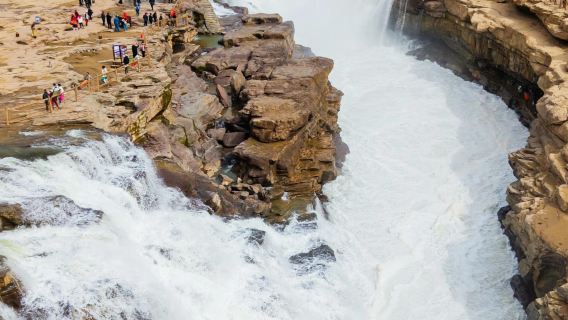
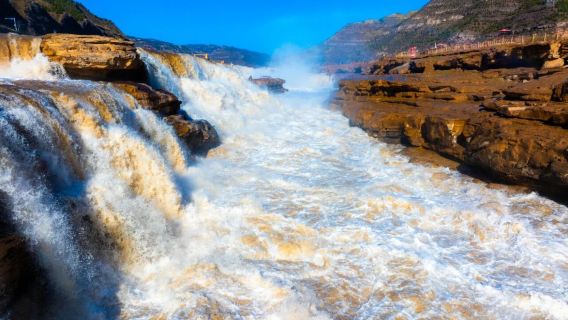
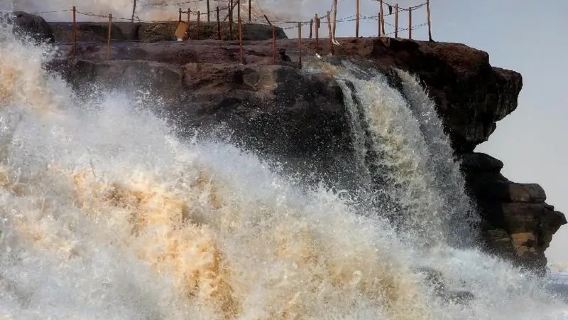
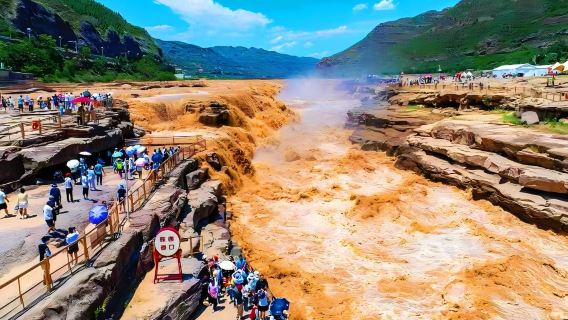
The Hukou Waterfall is a famous waterfall on the Yellow River. The roiling water of the Yellow River roars downward here with great power. The Hukou Waterfall area is divided by the Yellow River. On the west side is Yichuan County, Shaanxi, and on the east side is Ji County, Shanxi. The waterfall is also divided into the Hukou Waterfall (the part of the falls in Shaanxi) and the Shanxi Hukou Waterfall (the part of the falls in Shanxi). Separate tickets are sold for each area. The Shanxi section of the Hukou Waterfall is located 45 kilometers west of the seat of Ji County in Linfen City, Shanxi.Ji County · 21.2 km from downtown

Hukou Waterfall tourist area of the Yellow River
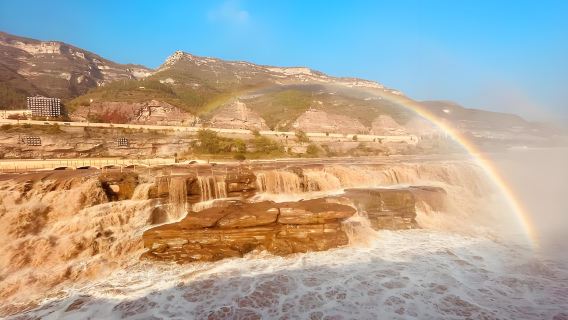
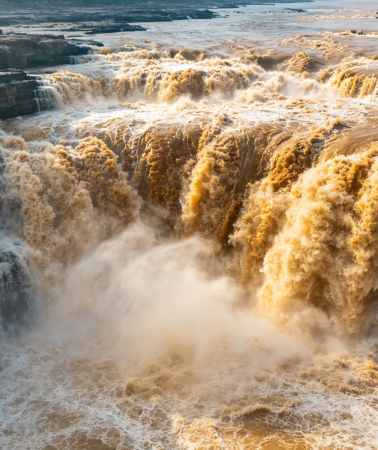
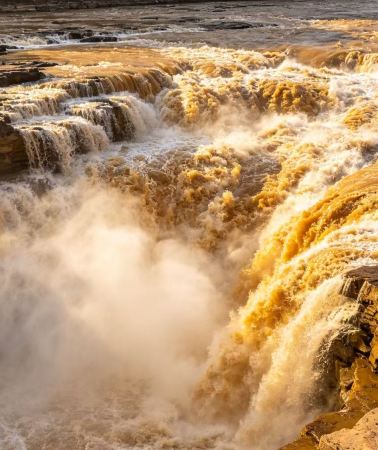
The Hukou Waterfall tourist area of the Yellow River is located on the riverbed of the Yellow River in the Qin-Jin Grand Canyon, where the provinces of Shanxi and Shaanxi face each other across the river. The main stream of the Yellow River, originally hundreds of m wide, suddenly narrows to dozens of m and plunges into a deep trough with a drop of 20–30 m, resembling water being poured from a giant pot—hence the name "Hukou" (Pot Mouth). Due to the large amount of sediment carried by the river, the waterfall presents a rare golden-yellow view: the turbid waves roar down with a sound like distant thunder rolling through the valley, while the rising mist lingers before the cliff, earning the nickname "smoke rising from the water." On sunny days, sunlight casts a rainbow over the waterfall, known as "a rainbow playing in the water." The mist may drench visitors even without wind or rain, creating the wonder called "rainfall under a clear sky." Hukou waterfall is regarded as the symbol of the "soul of the Yellow River" and the spirit of the Chinese nation. In 1938, when poet Guang Weiran crossed the Yellow River, he witnessed the roaring waves of Hukou and the boatmen's chants, which inspired him to create the now-legendary Yellow River Cantata. Liang Heng's essay of the same name was selected for middle school Chinese textbooks, and the back of the fourth series CNY 50 banknote also features this scene. Many first learned about it through textbooks and currency before visiting in person. In the past, cargo ships had to leave the water and bypass the waterfall here, leaving behind the maritime memory of "sailing on dry land." The scenery here varies with the seasons: In early spring, the upstream ice melts and the water level rises sharply, coinciding with the blooming of mountain peach blossoms on both banks, known as the "March peach blossom flood." In midsummer, the rainy season brings abundant water, with muddy waves towering into the sky. After fall begins, the rainy season subsides, and the water becomes high and steady. As the fall breeze sweeps by, rainbows often appear, earning the name "Hukou autumn breeze." In deep winter, layers of ice form along the banks, and overflow freezes into inverted ice peaks, glistening under the sunlight, creating the spectacular "upside-down ice peaks." The viewing platform on the Shaanxi side stretches along the cliff top on the western bank, offering a commanding view of the "thousand-mile Yellow River funneled into one pot" and the ten-mile-long Dragon Trough below the waterfall. During high-water seasons, the mist is heavy, and clothes get soaked quickly, so remember to protect your camera and phone; the boardwalk is slippery, so watch your step while walking and taking photos.Yichuan · 95.9 km from Linfen

Little Western Paradise
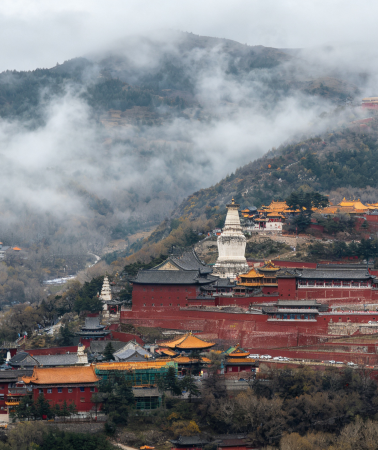
Little Western Paradise is perched atop Phoenix Mountain in Xi County, Linfen, Shanxi Province. This Buddhist temple, originally named the Thousand Buddha Nunnery, was established during the Chongzhen era of the Ming Dynasty. It earned its initial name from the thousand Buddha statues enshrined in its Main Hall of the Great Hero. Later, it was renamed due to the inscription "Entering the Western Paradise" above its gate and to distinguish it from another ancient temple, "Great Western Paradise," located south of the city. Surrounded by mountains on three sides and facing a river in front, the temple is compact yet ingeniously laid out across its upper and lower courtyards. Ascending the stone steps and passing through the secluded "Heavenly Grotto" corridor evokes a sense of gradually entering a Buddhist paradise. The upper courtyard centers around the Main Hall of the Great Hero, flanked by the Manjusri Hall and Samantabhadra Hall. The Main Hall is the temple's crowning jewel: within its modest 100-square-meter space, nearly 2,000 suspended sculptures adorn niches, gables, beams, and rafters, transforming the hall into a museum of suspended sculpture art. Five interconnected niches dominate the rear wall, housing the Medicine Buddha, Amitabha, Sakyamuni, Vairocana, and Maitreya seated on lotus thrones, with ten principal disciples standing beside them. The southern wall depicts Buddhist narratives featuring the Four Sages and Four Heavenly Kings, while the northern wall portrays the 33 celestial palaces of Mount Sumeru. Flying apsaras, divine birds, and musician bodhisattvas dance among clouds on the beams, their gilded polychrome surfaces retaining vibrant hues after centuries. This rare collection of late Ming to early Qing suspended sculptures has gained wider recognition since the temple became a filming location for the popular game Black Myth: Wukong, attracting many travelers for dedicated visits. The lower courtyard also rewards exploration: the Immeasurable Hall faces east, where dozens of bronze Buddha statues interplay with wooden celestial palaces in what was once the monks' meditation hall. Opposite stands the Skanda Hall, housing a single nanmu-carved statue of Skanda. The temple also preserves thousands of volumes from the Yongle Northern Canon, a Ming imperial gift. Visitors are advised to spend extra time in the Main Hall—dim lighting requires slow, upward gazes to appreciate the intricate details of the high-placed sculptures. After exploring both courtyards, one can ascend Solitary Paulownia Peak via the "Seemingly No Path" route behind Skanda Hall, where the Cloud-Touching Pavilion offers panoramic views of the rural landscape below.Xi County · 1.2 km from downtown

Guangsheng Temple
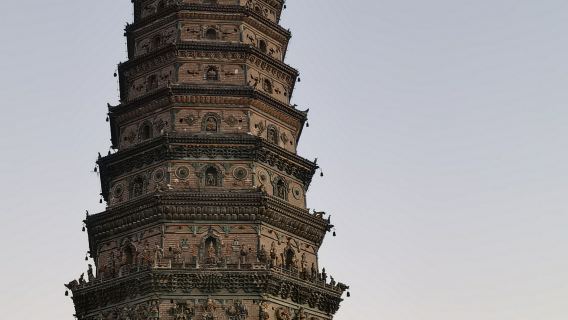
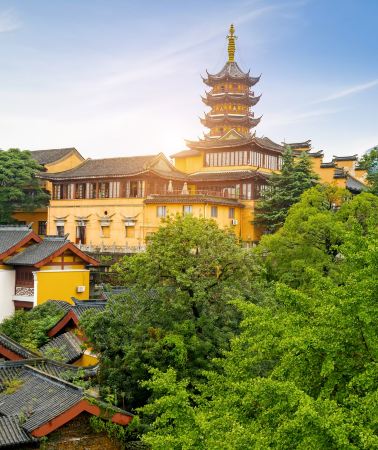
Guangsheng Temple is located at the southern foot of Huo Mountain in Hongtong County, Linfen, Shanxi. It is said to have been initially built during the Eastern Han Dynasty and renamed to its current name in the Tang Dynasty. Despite being repeatedly destroyed by wars, fires, and earthquakes over the centuries, the surviving halls are primarily structures from the Yuan and Ming Dynasties. The attraction consists of the upper temple on the mountain peak, the lower temple at the foot of the mountain, and the Water God Temple, forming a high-low connection that creates a natural upward visiting route. The Feihong Pagoda in the upper temple is the visual center of the entire complex. This octagonal thirteen-story brick pagoda, standing over forty meters tall, is adorned with glazed tiles in yellow, green, blue, white, and other colors from the second floor upwards. Figures of Buddhas, bodhisattvas, celestial beings, coiled dragons, and lion-like beasts protrude from the brick surfaces layer by layer. When sunlight hits it on clear days, the entire structure refracts rainbow-like brilliance, which is said to be the origin of its name "Feihong" (Flying Rainbow). The 1986 TV adaptation of *Journey to the West* filmed the episode where Tang Monk sweeps the pagoda to uncover an injustice here. In the 1930s, Liang Sicheng and Lin Huiyin also highly praised the quality and craftsmanship of the pagoda's glazed decorations during their survey. Behind the pagoda, a row of dark red sutra cabinets still stands in the Amitabha Hall, where the Buddhist canon "Zhaocheng Golden Tripitaka" was once stored. This engraved Tripitaka from the Jin Dynasty lay forgotten for centuries until its rediscovery in 1933. During the Anti-Japanese War, to prevent it from falling into Japanese hands, local soldiers and civilians risked their lives to transport it overnight. Now housed in the National Library of China, it is regarded as one of the library's most treasured collections. The sutra cabinets remain in the hall, and this legendary tale is worth pausing to hear. The Water God Temple at the foot of the mountain, the Mingying Wang Hall, is adjacent to the Huo Spring outlet. Its walls are adorned with over ten Yuan Dynasty murals centered around themes of praying for rain, rainfall, and giving thanks to deities. These murals depict water god worship and urban life rather than the typical Buddhist or Taoist subjects found in ordinary temples. The eastern section of the southern wall features "The grand performance troupe Zhongduxiu performing here," showcasing over ten actors and musicians representing various role types (sheng, dan, jing, mo, chou) on the same stage. This is a precious image for studying Yuan Dynasty zaju performances and, along with "The ball-hitting game," has been included in history textbooks. The adjacent Great Buddha Hall of the Lower Temple is a Yuan Dynasty wooden structure. Its original large-scale murals were stripped and sold overseas in the late 1920s, with the famous "Illustration of the Bhaisajyaguru Sutra" now housed at the Metropolitan Museum of Art in New York. To appreciate Yuan Dynasty murals, focus your attention on the Water God Temple. A bottom-up route is recommended: first visit the water god temple and lower monastery, then ascend via stone steps or the mountain road to see the Feihong pagoda at the summit. The glazed colors appear especially vibrant on sunny days, making it easier to capture great photos.Hongtong · 12.9 km from downtown

Hongtong Dahuaishu Ancestor Memorial Garden
Hongtong Dahuaishu Ancestor Memorial Garden is a national AAAAA-level tourist Attraction and a key cultural relic protection unit in Shanxi Province. The Attraction is located in Hongtong County, Shanxi Province, 2 kilometers away from Hongtong Railway Station, 3 kilometers away from Dayun Expressway Intersection, 8 kilometers away from Daxi High-speed Railway, and 22 kilometers away from Linfen Airport. The transportation is extremely convenient. The Attraction consists of four major theme sections: "Immigration Historic Site Area", "Ancestor Worship Activity Area", "Folk Customs Tour Area" and "Fenhe Ecological Area", with a total of more than 60 scenic and cultural attractions. It is the only folk worship holy place in the country with the themes of "seeking roots" and "worshiping ancestors". In recent years, Hongtong Dahuaishu Root-seeking and Ancestor-worshiping Park has achieved brilliant results with the joint efforts of all employees. It has been awarded "National Civilized Unit", "National Youth Civilized Unit", "National Primary and Secondary School Students' Research and Practice Education Base", "High-level Service Industry Standardization Demonstration Project", "China Overseas Chinese International Cultural Exchange Base", "China Couplet Cultural Garden", "National Model Workers' Home", "National Factory Affairs Open Democratic Management Demonstration Unit", "Second Shanxi Quality Award Nomination Award", "Shanxi May 1st Labor Award", "Shanxi Top Ten Quality Tourist Attraction", "Shanxi National Traditional Festival Protection Demonstration Site", "Shanxi Civilized Scenic Attraction", "Shanxi Civilized Tourism Advanced Unit", "Shanxi Cultural Industry Advanced Unit", "Shanxi Cultural System Reform Advanced Unit" and more than 100 other major brand honors. Its unique "Dahuaishu Ancestor Worship Custom" has been listed as the second batch of "Intangible Cultural Heritage". On the morning of October 29, 2018, the Ministry of Culture and Tourism held a plaque awarding ceremony for new 5A-level tourist Attraction, and Hongtong Dahuaishu Root-seeking and Ancestor-worshiping Park was officially promoted to a national 5A-level tourist Attraction. Nowadays, it has gradually formed a comprehensive tourism service area with Attraction, folk hotels and travel agencies as the main business sectors, tourism cultural and creative product development and cultural media development as the flanks, integrating food, accommodation, transportation, travel, shopping and entertainment.Hongtong · 1.9 km from downtown

Mount Yun Scenic Area
Mount Yun Scenic Area is located in Xiangning County, Linfen City.Lüliang MountainsNestled at the intersection with the Fenwei Graben, this scenic area boasts lush forests and serves as a natural oxygen bar. Legend has it that this was where ancient emperors Yao, Shun, and Yu observed celestial phenomena to measure time, making it a cradle of China's "harmony culture" that continues to thrive here. Beyond its beautiful legends, Mount Yun Scenic Area is a sacred site integrating Confucianism, Buddhism, and Taoism. The mountain houses the Confucian Yunqiu Academy, the Buddhist Duobao Lingyan Zen Temple, and numerous Taoist temples. From the Five Dragon Palace to the First Heavenly Gate, Second Heavenly Gate, Third Heavenly Gate, Patriarch Summit, and finally the Jade Emperor Peak, all are Taoist structures. This area is believed to be the grotto-heaven where Emperor Zhenwu attained enlightenment, making the Five Dragon Palace particularly significant.Zhenwu Hall, and even features a dedicated temple for worshiping the Emperor Zhenwu.Patriarch PeakDuring the Northern Song Dynasty, when the western and northern frontiers were frequently invaded, the imperial court enshrined the mighty Zhenwu Emperor to protect the nation and its people. This site later became the birthplace of the Taoist Longmen School during the Yuan Dynasty. The local folk customs here are equally unique. Every year in the second lunar month, the Mount Yun Scenic Area hosts its Zhonghe Festival temple fair. During this time, countless pilgrims ascend the mountain to worship at its peak, pray for blessings, and fulfill vows—creating an unbroken stream of visitors from dawn till dusk. This tradition has continued uninterrupted from the Tang Dynasty to the present day, earning the Zhonghe Festival recognition as intangible cultural heritage. The Zhonghe culture derived from this festival has also been passed down through generations, enduring for over a millennium.Xiangning · 27.8 km from downtown

Yao Temple
The Temple of Yao is located next to Linfen City's Huamen Tourist Area. According to the legend, Linfen used to be the capital of the ancient ruler Yao. In later years people would build temples in honor of King Yao. The Temple of Yao was first built in the Jin Dynasty. It was later rebuilt and expanded many times. The majority of buildings which visitors can see today were recently built. The first thing visitors see when entering the Temple of Yao is the beautiful Wufeng Hall. Behind the Wufeng Hall, there is the Well of the Yao Pavilion. The pavilion is built in the form of a hexagon. The Guangyun Temple inside the Temple of Yao is also referred to as the Palace of Yao. It is said to be the place where Yao met with his court and ministers. It is also the main structure in the temple.Linfen · 4.5 km from downtown

Dongyue Temple
Dongyue Temple is located on the top of Baishan Mountain, 2 kilometers east of Pu County, Shanxi Province. The mountain is covered with lush cypress trees, which are green all year round, so it is commonly known as Baishan Temple. The temple is large in scale and well-planned, with more than 60 buildings including the mountain gate, Lingxiao Hall, Music Tower, meeting hall, offering pavilion, Dongyue Palace Hall, Houtu Temple, Shengmu Temple, Qingxu Palace, Dizang Temple, Hell, corner towers and surrounding corridors. The founding date is unknown, but it was established in the fifth year of Jin Taihe (1205). This palace-style building, like other famous Dongyue Temples, is regarded as the traditional palace of Huang Feihu, the Emperor of Dongyue. Dongyue Temple is unique in design, with a prominent main body, symmetrical left and right, dotted with pavilions, two-story corridors, and towering corner towers at the four corners of the temple. Near the temple, Mengjue Temple, Taiwei Terrace, Huachi Temple, and Bifeng Tower stand on the top of the mountain. The green pines and cypresses all over the mountain are towering, making Dongyue Temple extremely beautiful.Pu County · 2.6 km from downtown

Fencheng Ancient Building Complex
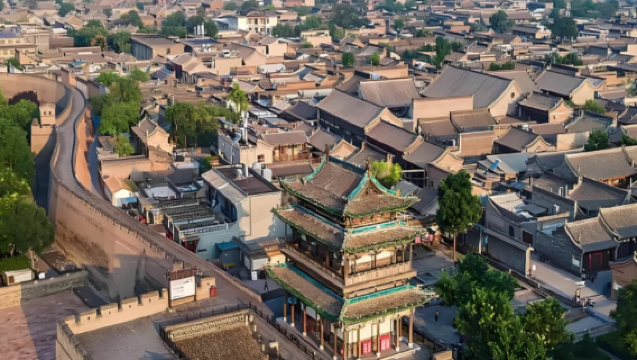
Fencheng Ancient Building Complex was the site of Taiping County during the Ming and Qing dynasties. It currently preserves theCity God Temple,Confucian Temple,Examination Hall,County Government Office, Guan Temple,Drum Tower, Hongji Bridge, and many other ancient buildings from the Jin, Yuan, Ming, and Qing dynasties. The overall scale is quite impressive. In 1912, it was renamed Fencheng County because the county name was duplicated elsewhere. Later, it merged with Xiangling County to become Xiangfen, and the appearance of the old town has been preserved intact.Xiangfen · 16.1 km from downtown

Huamen
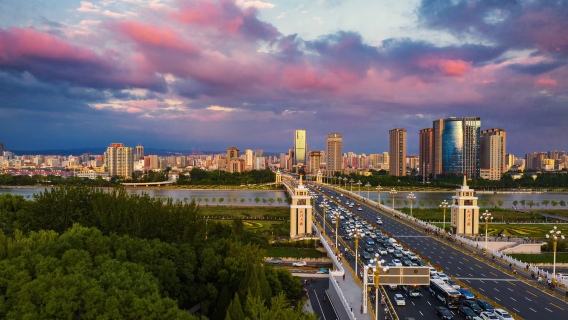
Sitting in the Yaodu district, Linfen City, China's Gate is more like a monument to Chinese civilization than a single gate. China's Gate was built to commemorate the unification of China by Emperor Yao who started the civilization of China and to show the long history of the Chinese nation. It consists of three parts: the base, the main door and the gate building. The main projects include the big steps, the podiums, the main gate and the attics. There are two floors underground and seven floors on the ground.Linfen · 4.9 km from downtown
Experiences you can't miss in Linfen
Featured Cultural experiences in Linfen
View all Cultural experiences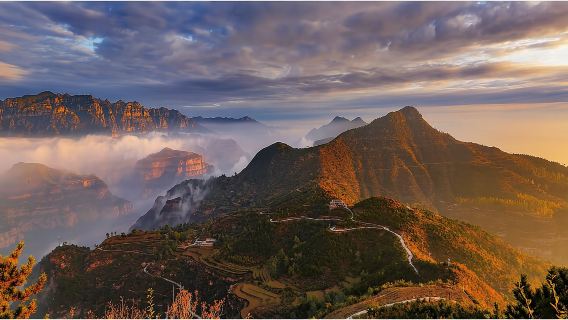

From€231.86

![[Yuncheng, Shanxi] Guides/Translators/Local Companions for City Walks, Sightseeing, Exhibition Translation, Hiking, and Travel Escorts in Chinese/English/French/Russian and Other Languages](https://ak-d.tripcdn.com/images//0583q12000o3apkv3E7F1_C_568_320.jpg?_fr=wc)
Featured Day tours in Linfen
View all Day tours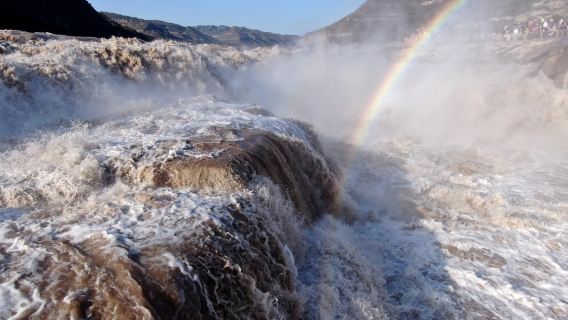
5.0/5
· 2 reviewsFree cancellation
Instant confirmation
Book now for tomorrow
From€109.83
Free cancellation
Instant confirmation
Book now for tomorrow
From€129.66
5% off
Limited-time sale
From€202.87€213.55
![Hukou Waterfall tourist area of the Yellow River 1-day tour [door-to-door pickup│optional skip-the-line]](https://ak-d.tripcdn.com/images/0350412000q8nl0kh22AB_C_568_320.jpg?_fr=wc)
5.0/5
· 2 reviews· 73 bookedFree cancellation
Instant confirmation
Book now for tomorrow
From€38.66
5.0/5
· 4 reviews· 23 bookedFree cancellation
Instant confirmation
Book now for tomorrow
From€42.69
Instant confirmation
Book now for tomorrow
Save €0.57
From€55.72€56.29
Free cancellation
Instant confirmation
Book now for tomorrow
From€289.82
5.0/5
· 1 reviewFree cancellation
Book now for tomorrow
From€286.77
Free things to do in Linfen
The Hukou Waterfall Scenic Area
Ji County · 21.2 km from downtownImmediate access, Book now for today, Cancel anytimeHukou Waterfall tourist area of the Yellow River
Yichuan · 95.9 km from LinfenImmediate access, Book now for today, Cancel anytimeLittle Western Paradise
Xi County · 1.2 km from downtownImmediate access, Book now for today, Cancel anytimeGuangsheng Temple
Hongtong · 12.9 km from downtownImmediate access, Book now for today, Cancel anytimeHongtong Dahuaishu Ancestor Memorial Garden
Hongtong · 1.9 km from downtownMount Yun Scenic Area
Xiangning · 27.8 km from downtownImmediate access, Book now for today, Cancel anytimeYao Temple
Linfen · 4.5 km from downtownImmediate access, Book now for today, Cancel anytimeDongyue Temple
Pu County · 2.6 km from downtownFencheng Ancient Building Complex
Xiangfen · 16.1 km from downtownHuamen
Linfen · 4.9 km from downtownImmediate access, Book now for today, Cancel anytime
More ways to travel from Linfen
Private Tours in Linfen
View More Private Tours in Linfen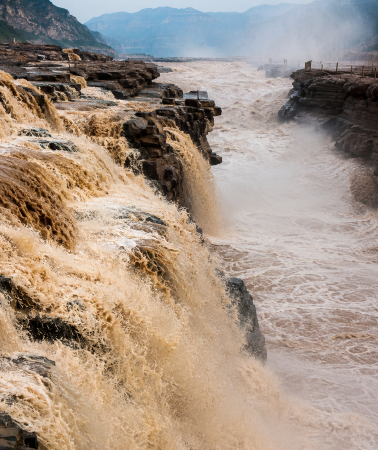


Group Tours in Linfen
View More Group Tours in Linfen


What travelers say about Linfen

M25***7114 October 2026
5.0
This restaurant is quite close to the Hukou Waterfall Visitor Center. The food is delicious, and the towels, bath towels, and toilet seats are all disposable. It's a building with an elevator, and the owner is very generous; he gave us some of his own apples when we left. Breakfast is 10 yuan per person, consisting of millet porridge, steamed buns, a local egg, and two servings of pickled vegetables—enough to fill you up.
The Hukou Waterfall Scenic Area

IVERSON352013 October 2026
5.0
Great! The Shanxi and Shaanxi combined ticket is fantastic. Two days valid, excellent value for money. Both places are quite fun. In Shaanxi, you can book a free show of the "Yellow River Cantata," which is very good and worth the ticket price. The shuttle bus is very convenient, with frequent departures and short waiting times. A great travel experience, highly recommended.
Hukou Waterfall tourist area of the Yellow River

Anonymous user10 October 2026
5.0
The main hall, spanning only 170 square meters, is densely packed with nearly 200 suspended sculptures, works from the late Ming Dynasty 400 years ago. These sculptures are crafted from wood and clay, with gold leaf applied to the walls. From the walls and beams to the roof, they depict celestial palaces, flying apsaras, musicians, and mythical birds, intricate yet orderly, with lifelike expressions, earning it the title of the pinnacle of Chinese suspended sculpture.
Little Western Paradise

自由20006 October 2026
4.0
I arrived at the scenic area at 4:15 PM on October 2nd. It was a 40-minute walk to the Upper Temple. It was cloudy at the time, but the glazed tile structures on the eaves of the Flying Rainbow Pagoda were exquisite and varied in shape; they would have been even more beautiful in sunlight. The statues in the temple were lifelike and expressive.
By the time I walked down to the Lower Temple, it was already quite dark, and I couldn't see the statues and murals anymore. Because they are cultural relics, flash photography is not allowed inside the temple, so unfortunately, I missed seeing many things in the Lower Temple.
I'll say this three times: Do not enter the scenic area on cloudy days or after 4 PM! Do not enter the scenic area on cloudy days or after 4 PM! Do not enter the scenic area on cloudy days or after 4 PM! Otherwise, you'll only be able to see pictures in the mural exhibition hall. It's best to enter the scenic area in the morning for a better experience.
Guangsheng Temple
Anonymous user13 October 2026
5.0
For those driving, here's a key point! Navigate directly to the park's dedicated parking lot; parking is plentiful, and there are charging stations available, so even those with electric vehicles don't need to worry.
After entering the park, follow the route shown in Figure 1 to explore all the attractions and gain a thorough understanding of the rich history of population migration during the Ming Dynasty.
Before you set off, we strongly recommend opening the official WeChat mini-program for the Big Locust Tree and searching for your family name. Perhaps your ancestors migrated from here to various places.
Many people are unaware of this little-known fact: the original Big Locust Tree was submerged in a flood during the Qing Dynasty; the main tree we see today is a later replica. The existing second and third generation Big Locust Trees are original ancient trees, lush and weathered by time.
Although the original Big Locust Tree is long gone, the roots of the Chinese people are still firmly planted here, making the entire journey of tracing one's roots truly moving.
The atmosphere of the scenic area is absolutely fantastic! ✨
Hongtong Dahuaishu Ancestor Memorial Garden
Anonymous user7 October 2026
5.0
Due to time constraints, we visited the ice cave and the ancient village of Talpo. The ice cave was truly breathtaking; at around minus ten degrees Celsius, it had remained frozen for thousands of years, a testament to the magical power of nature. The ancient village of Talpo wasn't particularly interesting, and it wasn't very popular. Overall, though, the trip was worthwhile.
Mount Yun Scenic Area

crystalura16 September 2026
5.0
Shanxi is truly an underrated treasure province, with many historical and cultural buildings hidden in the city's heart, including the Yao Temple. With over 1700 years of history, it contains ancient trees and buildings, serving as a sacred site for emperors throughout the ages to worship Emperor Yao and for descendants of Yan and Huang from home and abroad to pay homage to their ancestors. Perhaps because it's off-season now, there aren't many people, allowing for a leisurely experience.
Yao Temple

山在穷游11 October 2026
4.0
Many people drive long distances to Xixian County to see Xiaoxitian (Little Western Paradise) and then sneak away. However, there are several other scenic spots worth visiting along the road from Linfen to Xixian County, one of which is Dongyue Temple. Located high in the mountains, it beautifully showcases Dongyue culture.
Dongyue Temple

行走毛毛17 November 2025
5.0
Some attractions will never regain their former tranquility. For example, there is a group of ancient buildings that used to be so quiet and not open to the public. Now that it is open, there are always all kinds of crowds. Some people say that the gate has been blocked off and that an entrance fee may be charged in the future.
Fencheng Ancient Building Complex
Anonymous user6 April 2026
5.0
Huamen, the First Gate Under Heaven, is located on Yaodu Avenue, west of Yaomiao Square, Yaodu District, Linfen City, Shanxi Province. It is a monument to Chinese civilization. Huamen consists of a base, the main gate, and the gate tower. The three gates on the front symbolize the three emperors Yao, Shun, and Yu. The main gate, at 18 meters high, is the largest gate in the world. A 25-meter-long waterfall wall runs in front of the main gate. Fifty-six yellowish-brown steps lead up to the gate, representing the 56 ethnic groups of China.
The first-floor pavilion houses the "Nine Linked Tripods," a bronze artifact. One main tripod connects eight auxiliary tripods, symbolizing the unification of China and the power of a single word, showcasing the majesty of these important Chinese artifacts. Eight giant bronze dragon pillars stand tall and majestic in the main hall, complementing the exhibits on various dynasties, creating a profound and awe-inspiring display of China's 5,000-year cultural heritage.
The Nuwa sculpture in the "Hall of Heroines" on the fourth floor is an innovative masterpiece of Nuwa sculpture in China. The fifth-floor rooftop offers panoramic views of the surrounding scenery.
Overall, the visit was quite pleasant. The architecture is impressive and photogenic, especially beautiful when lit up in the evening. The interior isn't particularly large, but it's clean and tidy, with information about Chinese history and the Yao culture on each floor. You can take an elevator to each floor. As a must-see attraction in Linfen, it's worth stopping by for a look and some photos; suitable for both locals and tourists. It takes about 30 minutes to an hour to see everything.
Huamen


