
Things to do in Petra
Explore top experiences
Top 10 attractions in Petra


Petra
The city of Petra, the capital of the Nabataeans, is one of the most famous archaeological sites in the world. Located 240 km south of the capital, Amman, and 120 km north of the Red Sea town of Aqaba, Petra, the world wonder, is undoubtedly Jordan's most valuable treasure and greatest tourist attraction. It is visited by tourists from all over the world.Petra · 3.5 km from downtown

The Treasury
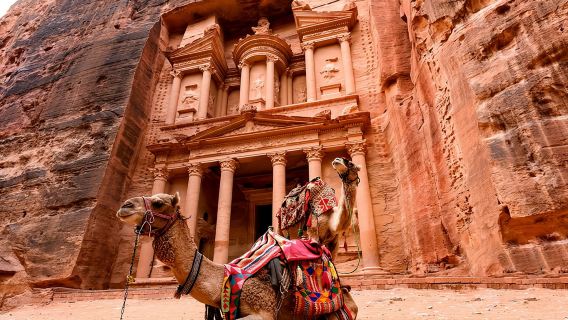
The Khazni Temple, also known as the Khazni Treasure House, is carved from a rose-red rock. This 140-foot-high, 90-foot-wide, splendid building with a strong Greek flavor is said to have once been the place where pirates hid jewels, and is the birthplace of the well-known story of Ali Baba and the Forty Thieves.Petra · 2.7 km from downtown

Al-Siq
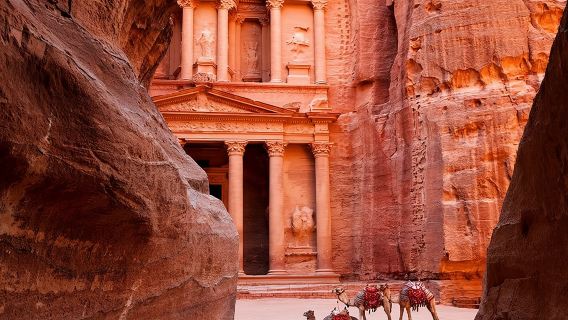
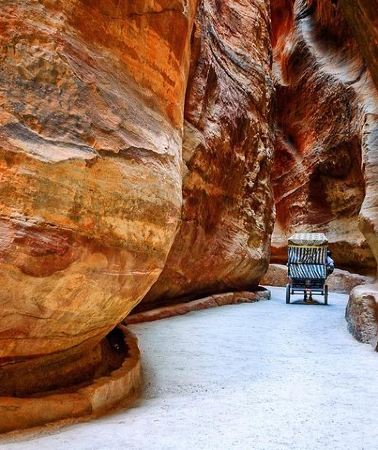
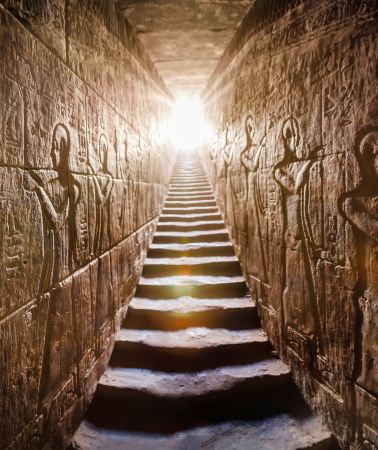
The Snake Pass, the gateway to Petra, is actually a 1-kilometer-long rock crevice nearly 100 meters high. Walking in it, one can't help but marvel at the ingenious work of nature, and at the same time envy the good luck of the Petra people to find such a natural shelter.Petra · 2.3 km from downtown

Petra By Night
Petra by Night is a unique experience in the ancient city of Petra, Jordan, held on certain evenings each week, where visitors can enter Petra after dark and walk along the winding canyon path to the "Al Khazneh Temple". Along the way, thousands of candles light up the road, adding a romantic and mysterious atmosphere to the journey. Before arriving at the temple, visitors are seated to enjoy traditional Jordanian music performances and Bedouin storytelling. These performances not only add cultural color to the evening, but also allow visitors to gain a deeper understanding of local history and traditions. The entire event lasts approximately two hours and is a visual and auditory experience. Visitors are advised to wear comfortable shoes to facilitate walking on sandy and gravel roads. Due to the lower temperatures at night, it is also wise to bring a light jacket. Petra by Night provides visitors with an opportunity to explore the ancient city under the stars, which is an unforgettable cultural experience.Jordan · Wadi Moussa

Little Petra - Temple / Colonnaded Triclinium
Little Petra is a stone-carved city similar to Petra, although not as grand as Petra, it is also very detailed in detail. Because the reputation is not as loud as Petra, and few tourists visit, the quiet environment has a more treasure-hunting atmosphere. Of course, the good treasures that can be picked now may be beautiful colored stones, which can be sold for 1 dinar in Petra. The road to Little Petra is beautiful. There is a corner where you can see the buildings of Petra. There is also a large reservoir hidden in the stone wall. The driver will stop and take you to visit.Petra · 6.5 km from downtown

High Place of Sacrifice
There is an altar on the higher point of the hill on the west side of Petra, which is the place where the Nahada people hold religious sacrifices, and it is also an ideal place to overlook the whole view of Petra. The stone room for religious ceremonies is now converted into a museum, which displays relics such as pottery, sculpture, iron, copper and glass products from the Nahata and Roman times unearthed in Petra. The exhibits leave a deep impression on tourists. impression.Petra · 3.2 km from downtown

AlDayr
Dyer Abbey is located on the top of the mountain on the north side of an ancient city. In the past, it took five kilometers to walk and 1,800 steps to climb. Although it was hard, it was worth it. The monastery is the second largest building in Petra after Kazni. It is a temple or tomb carved by the Nahada people along the mountain. It was used as a monastery in the Roman and Byzantine periods, perhaps because it was a city far away from the mundane. , just meditate. For tourists, the monastery is also a great place to watch the sunrise in Petra.Petra · 5.1 km from downtown

Mousa's Spring
Petra · 1.7 km from downtown

Nabatean Theatre
Petra · 3.2 km from downtown

Great Temple
The high steps were originally the base of the temple, and 60 columns above it have collapsed. This site is the larger building in the ancient city of Petra and is worth visiting.Petra · 3.7 km from downtown
Experiences you can't miss in Petra
Featured Day tours in Petra
View all Day tours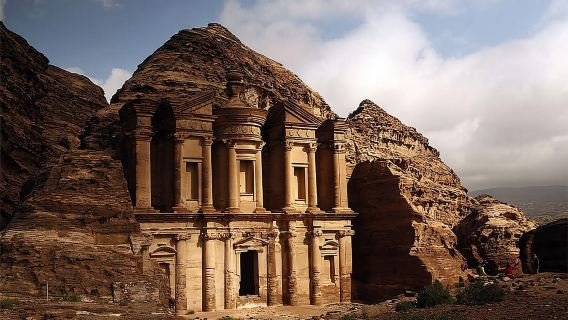
5.0/5
· 1 reviewBook now for tomorrow
FromPHP 8,842.90

Free cancellation
Instant confirmation
Book now for tomorrow
10% off
Limited-time sale
FromPHP 20,769.21PHP 23,076.9
![Private chartered tour to Amman + the Treasury in Petra + High Place of Sacrifice [tickets not included]](https://ak-d.tripcdn.com/images/0355e12000pt6mcg4D529_C_568_320.jpg?_fr=wc)
FromPHP 16,201.53

FromPHP 21,398.58
4.6/5
· 5 reviewsFree cancellation
Book now for tomorrow
FromPHP 30,209.75
4.9/5
· 252 reviewsFree cancellation
Book now for today
98.8% of travelers recommend
FromPHP 11,958.03
FromPHP 12,524.46
Featured Outdoor experiences in Petra
View all Outdoor experiences
5.0/5
· 2 reviewsFree cancellation
Book now for today
5% off
Limited-time sale
FromPHP 2,419.50PHP 2,546.85
Free cancellation
Book now for today
FromPHP 3,776.22
5.0/5
· 4 reviewsFree cancellation
Book now for today
5% off
Limited-time sale
FromPHP 6,379.47PHP 6,715.24
Free cancellation
Book now for today
5% off
Limited-time sale
FromPHP 4,221.87PHP 4,444.08
Featured Nature & wildlife in Petra
View all Nature & wildlife
Free cancellation
Book now for tomorrow
5% off
Limited-time sale
FromPHP 3,226.01PHP 3,395.8
5.0/5
· 1 reviewFree cancellation
Book now for tomorrow
5% off
Limited-time sale
FromPHP 1,505.56PHP 1,584.8
Free cancellation
Book now for today
5% off
Limited-time sale
FromPHP 3,584.59PHP 3,773.26
Free cancellation
Book now for tomorrow
5% off
Limited-time sale
FromPHP 4,710.07PHP 4,957.97

Free cancellation
Book now for tomorrow
5% off
Limited-time sale
FromPHP 3,026.56PHP 3,185.86
FromPHP 5,034.96
Free things to do in Petra
Petra
Petra · 3.5 km from downtownImmediate access, Book now for todayThe Treasury
Petra · 2.7 km from downtownAl-Siq
Petra · 2.3 km from downtownPetra By Night
Jordan · Wadi MoussaLittle Petra - Temple / Colonnaded Triclinium
Petra · 6.5 km from downtownHigh Place of Sacrifice
Petra · 3.2 km from downtownAlDayr
Petra · 5.1 km from downtownMousa's Spring
Petra · 1.7 km from downtownNabatean Theatre
Petra · 3.2 km from downtownGreat Temple
Petra · 3.7 km from downtown
More ways to travel from Petra
Private Tours in Petra
View More Private Tours in Petra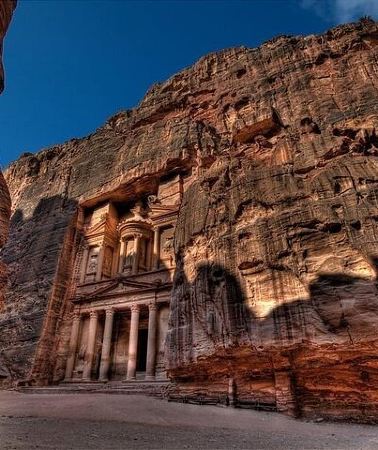


Group Tours in Petra
View More Group Tours in Petra

What travelers say about Petra

Aлi12 October 2026
5.0
🌙 Petra by Night — where ancient wonders glow by candlelight, the desert falls silent, and history feels like a dream. ✨🇯🇴❤️💫🛕#PetraByNight #Jordan #WondersOfTheWorld #TravelDreams
Petra

Eva20221 March 2024
5.0
A beautiful place. Make sure to allocate enough time for it as it takes a while to hike from the entrance.
The Treasury

悠游麦兜12 November 2019
5.0
The Snake Road is a canyon leading to the ancient city of Petra. It is called the "Snake Road" because of its winding and narrow shape. The narrowest part here can only pass a horse-drawn carriage, and the slightly wider part is only a few meters. The cliffs on both sides of the Snake Road are brightly colored. The deepest impression is when you are near the Khazneh Temple, passing through the narrowest snake road, a ray of sunlight shines on the cliff of the Khazneh Temple, and that moment makes you cry.
Al-Siq

奶油话梅拿铁6 November 2024
5.0
[Scenery] Very beautiful
[Fun] Interesting
[Value for money] Worth going
Petra By Night

小小呆6011 June 2020
3.0
It's a relatively isolated place, but I personally like it very much. There are fewer tourists here and it's relatively quiet. I think the preserved buildings here are very delicate, and there are many details to see.
Little Petra - Temple / Colonnaded Triclinium

Nickolas C27 May 2023
5.0
the most underrated trail in petra. there are not many crowds and the views are amazing
High Place of Sacrifice

天际流3 March 2016
4.0
At the end of the avenue of columns, everyone was exhausted. The next thing to face was more than 1,800 steps carved along the rock. Only by climbing these winding stone steps could we reach the "Deir Monastery" in the deepest part of Petra. Although everyone was confident, they still sat down for a short rest before continuing on the road.
On the way up the mountain, sometimes we walked through narrow canyons, met two goats staring at you on the winding cliffs, sometimes looked back on the abrupt boulders, overlooking the center of the ancient city of Petra, and sometimes sat on the side of the road, watching groups of tourists from all over the world passing by.
After nearly two hours of climbing, the end of the steps suddenly opened up, and the monastery appeared in front of us on the right side of the huge square. The monastery is very different from what I have in mind or what I have seen in Europe. It turns out that this is also a temple built by the Nabateans. It was only during the Roman Empire and Byzantine period that it was converted into a monastery, and then it has been passed down as a monastery. Interestingly, the bottom of the monastery is very weathered, but the higher it goes, the more intact it is. The weathering at the bottom seems to be eroded by water, but the eroded parts are not on the same plane, which is puzzling.
The way down the mountain is not that difficult to walk, and there is no need to walk, rest, or look around, so the speed is much faster. It took more than an hour to reach the Khazneh Temple, while it took more than two hours to walk up the mountain.
AlDayr


