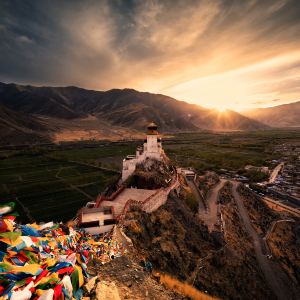
Things to do in Qushui
Explore top experiences
Top 10 attractions in Qushui

Yarlung Zangbo River
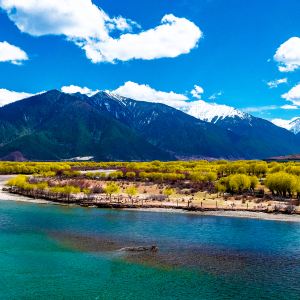
Yarlung Zangbo River has nurtured an ancient culture with a long history, and the Neolithic culture in its basin is represented by Nyingchi and Motuo. Stone tools, pottery shards, axes, adzes, chisels, and other artifacts have been collected in Nyingchi County and Motuo County.Gongga · 16.4 km from Qushui

Yajiang River Valley Viewing Platform
The Yajiang River Valley Observation Deck is located on the hillside of Gangbala Mountain in Jiangtang Town, Gonggar County, Shannan City, Tibet, at an altitude of 4,280 meters. It is the only way to Yamdrok Yumtso (Yamdrok Lake). As an important resting point on the winding mountain road from Lhasa to Yanghu Lake, it is famous for its broad vision and magnificent natural scenery. You can overlook the magnificent landforms of the middle reaches of the Yarlung Zangbo River Valley. The Yarlung Zangbo River rushes out of the mountains in this section, forming a winding and deep canyon. The mountains on both sides of the river valley are stacked, and the scenery varies in different seasons. The main body of the observation deck is a 4,280-meter-high stone monument engraved with Tibetan and Chinese. This place is not only a scenic spot for photography enthusiasts, but also a window to experience the Tibetan culture - the local handicraft market and the scene of fluttering prayer flags add cultural atmosphere to the natural landscape. As a microcosm of the integration of nature and humanity in Gonggar area, the Yajiang River Valley Observation Deck has become a classic starting point for exploring the Yarlung Zangbo River, the "Heavenly River" of Tibet, with its pure vision at high altitude and pristine Tibetan customs.Gongga · 18.2 km from Qushui

Yajiang River Valley
Gongga · 8.2 km from Qushui

Qushui Zoo
Qushui Zoo is a scenic Attraction integrating sightseeing, popular science education, and animal ex situ conservation. It is the highest zoo in China and also the zoo in the Xizang. Qushui Zoo is about 63 kilometers away from Lhasa. It is located in the middle reaches of the Yarlung Zangbo River valley and adjacent to the Yarlung Zangbo River. It covers an area of 1,240 acres. The entire park is lush with trees, showing a natural, primitive, wild and simple style. Qushui Zoo mainly displays species from Xizang and the southwest, highlighting the unique animals in Xizang and the southwest, and at the same time introducing unique animal species from home and abroad. There are more than a dozen attractions including the welcoming avenue, the front area of the park, the animal square, the rare animal exhibition area, the children's animal park, the battery car terminal, the African and Asian herbivorous animal exhibition area, the manor, the peacock garden, and the beast area.Qushui · 4.1 km from downtown


Potala Palace
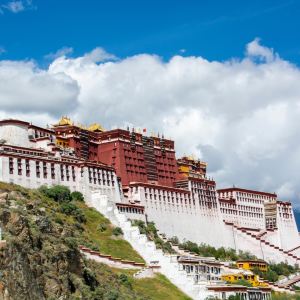
The Potala Palace is the symbol of Xizang and a sacred place in the hearts of all pilgrims! "Potala" is a Sanskrit word, also translated as "Putuo", which originally refers to the residence of Guanyin Bodhisattva. When you come here, you can not only view the large number of historical relics collected in the palace, appreciate the wonderful architectural art of the Tibetan people, but also have a baptism of the soul in that holy atmosphere. The origin of the Potala Palace According to historical records: In the 1930s of the seventh century AD, the 33rd Tibetan King Songtsen Gampo moved the capital to Lhasa and began to build the Potala Palace. Since then, major religious and political ceremonies have been held here, and it has become the ruling center of Xizang integration of politics and religion. The White Palace and the Red Palace The Potala Palace has a distinct Tibetan style and is majestic. It is the existing complete palace-style building complex in Xizang and is known as one of the world's top ten earth buildings. Its main buildings are divided into two parts: the White Palace and the Red Palace. The White Palace is named after its white exterior wall. It is the place where the lamas live and conduct political activities. Because the sun shines all day long, it is called the East and West Sunlight Palaces. The Red Palace is located at the top center of the Potala Palace. Its outer wall is red and it consists of many stupas and various Buddhist temples. Historical relics The Potala Palace houses and preserves a large number of historical relics, including stupas, statues, murals, thangkas, scriptures and books, as well as gold books, jade books, gold seals granted by the emperors of the Ming and Qing dynasties, which show the historical relationship between the Xizang local government and the central government, as well as gold and silver wares, jade wares, porcelain, enamel and handicrafts. Among them, the eight stupas from the fifth generation are eye-catching. They are all magnificent and decorated with a dazzling array of gems, which can be called a palace of art.Lhasa · 49.4 km from Qushui

Xiazhulin Temple
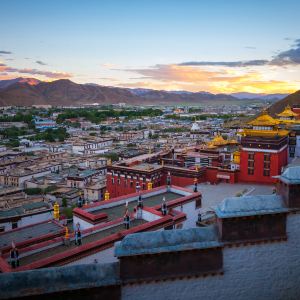
Gongga Xiazhulin Temple was built in the early 17th century AD, and what we see now is a temple rebuilt by the living Buddha of Sera Monastery in the 1980s. The temple is more famous for the body of the auspicious goddess it enshrines. She was seated a thousand years ago. She was only twelve years old when she died. After her death, her body naturally shrunk to a height of only one cubit. Legend has it that she is the true incarnation of Green Tara's auspicious goddess, and was later enshrined in this temple by believers.Gongga · 10.1 km from Qushui
Yamdrok Yumtso
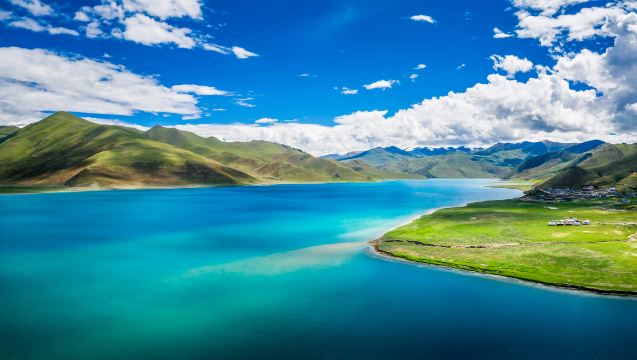
Yamdrok Yumtso means "swan pool" in Tibetan and is also called Yamdrok Yumtso Lake, locally referred to as "Yang Lake" for short. Along with Namtso and Mapam Yumtso, it is known as one of the three holy lakes of Xizang. Located on the south bank of the Yarlung Zangbo River in Nagarze County, Shannan City, the lake surface sits at an elevation of approx. 4400 m, making it a relatively large inland lake on the northern foothills of the Himalayas. Yamdrok Yumtso has numerous branching inlets and winding tributaries, resembling coral branches spreading among the mountains when viewed from above, hence its Tibetan name "upper coral lake." The lake water displays alternating layers of blue and green under different lighting conditions. The lake is dotted with over a dozen small islands and is home to plateau fish species such as the fine-scaled fish, Xizang schizothoracin, and plateau naked carp. It is also an important waterbird habitat in southern Xizang, where migratory birds like swans, bar-headed geese, yellow ducks, and ospreys gather in flocks along the lakeshore and on the central islands to overwinter each winter. Yamdrok Yumtso is more impressive when viewed from afar than up close. After crossing the Gambala Pass at an altitude of about 5,000 meters, the view suddenly opens up, and the winding lake surface can be seen like a ribbon below—a classic angle to admire Yamdrok Yumtso. Descending the winding mountain road for about half an hour leads to the lakeshore, with multiple viewing platforms along the way for stopping to take photos and appreciate the changing colors of the lake and the interplay of mountains and water from different heights.Nagarze County · 48.2 km from Qushui

Jokhang Temple
Jokhang Temple, known as "Jokhang" in Tibetan and also called "Tsulag Khang," is the ultimate destination for Tibetan Buddhist devotees. In their hearts, Jokhang Temple is as sacred as the Potala Palace. Both geographically and spiritually, Jokhang Temple is the true holy site and center of Tibetan Buddhism, holding an exceptionally lofty and pure status in Tibetan Buddhist history. Built in the mid-7th century by Tibetan King Songtsen Gampo to enshrine the 8-year-old life-sized statue of Sakyamuni brought by his Nepalese princess Bhrikuti from her hometown of Kathmandu, Jokhang Temple gained further prominence in 1409 when Tsongkhapa, the founder of the Gelug school, propagated Buddhist teachings and held the Great Prayer Festival here, solidifying its pivotal role in Tibetan Buddhist history. In the 8th century, the 12-year-old life-sized statue of Sakyamuni brought by Princess Wencheng of the Tang Dynasty from Chang'an was enshrined in Jokhang Temple, becoming its most treasured relic and a must-see for travelers and pilgrims alike. In addition, the temple houses nearly 1 km-long Tibetan-style murals depicting "Princess Wencheng's journey to Tibet" and "The construction of Jokhang Temple," as well as two embroidered thangkas of guardian deities from the Ming Dynasty, which are rare artistic treasures. Lhasa has three circumambulation routes—inner, middle, and outer—all centered around Jokhang Temple. The inner route, called "Nangkhor," circles the Jokhang Hall within the temple. The middle route, called "Barkhor," goes around the outer perimeter of Jokhang Temple. The outer route, called "Lingkhor," encompasses the Potala Palace, Chakpori Hill, Ramoche Temple, and Jokhang Temple. Attraction guide: Entering Jokhang Temple through the main gate leads to a courtyard. On the east side of the courtyard are rows of butter lamps, which remain lit year-round as devotees replenish the butter daily. Behind the butter lamps is the main entrance to Jokhang Temple's central hall. To the left of the entrance is a statue of Padmasambhava, founder of the Nyingma school, and to the right is Jampa Buddha, also known as Maitreya or the Future Buddha. The right wall features murals depicting the temple's founding, including scenes of the Potala Palace in the 7th century and the lake-filling construction of Jokhang Temple. Proceeding clockwise, visitors encounter the chapel dedicated to Tsongkhapa, founder of the Gelug school, and his eight disciples. Continuing right, passing the Yaksha and Naga chapels, and beyond hundreds of butter lamps lies the renowned "Jokhang" Hall—the heart and essence of the temple. At its center is the main assembly hall, where monks chant and meditate, surrounded by smaller chapels. The unmissable highlight is the central chapel housing the 12-year-old life-sized golden statue of Sakyamuni, brought by Princess Wencheng. This sacred center of Jokhang Temple is the ultimate destination for devout pilgrims. Stairs beside the courtyard lead to the second and third floors. The second floor features the Dharmaraja Chapel, with statues of King Songtsen Gampo, Princess Wencheng, and Princess Bhrikuti, as well as the Palden Lhamo Chapel dedicated to the protective deity. The spacious terrace on the second floor offers a panoramic view of the Potala Palace, making it an ideal photo spot. The third floor's golden roofs are another attraction, though this level is rarely open to the public. If fortunate enough to ascend, visitors are awestruck by the four resplendent golden pinnacles.Lhasa · 50.1 km from Qushui

Princess Wencheng Theater
Princess Wencheng Theater is located in Cijuelin Valley on the south bank of Lhasa River. It reconstructs the epic of marriage 1,300 years ago with an open-air stage at an altitude of more than 3,000 meters. This high-altitude live-action theater, backed by the mountains projected by the Potala Palace, uses the natural mountain as a curtain, and uses the starry sky, snow-capped peaks and Tibetan watchtowers to interpret the magnificent chapter of the integration of Han and Tibetan civilizations. The core of the theater is the 90-minute large-scale live-action drama "Princess Wencheng". On the stage of more than 20,000 square meters, more than a dozen Tibetan and Han actors recreate the legend of the princess carrying the life-size statue of Sakyamuni at the age of 12 into Tibet with scenes such as galloping horses, moving Buddhist temples, and pouring waterfalls. Scenes such as the collapse of the Winter Palace, the snowy wedding, and the Tibetan wedding, combined with laser-projected thangkas and real herds of cattle and sheep, draw the audience into the torrent of history. The theater is surrounded by rich supporting facilities, and the Princess Wencheng Tibetan Cultural Park is full of special cultural and creative products. Every time there is a performance, there will be a grand garden party, which is very lively.Lhasa · 49.2 km from Qushui

Yamdrok Lake Scenic Area - No. 1 Viewing Platform
Gongga · 21.7 km from Qushui
Free things to do in Qushui
Yarlung Zangbo River
Gongga · 16.4 km from QushuiYajiang River Valley Viewing Platform
Gongga · 18.2 km from QushuiPotala Palace
Lhasa · 49.4 km from QushuiXiazhulin Temple
Gongga · 10.1 km from QushuiYamdrok Yumtso
Nagarze County · 48.2 km from Qushui
Barkhor Street
Lhasa · 49.8 km from Qushui
Tibet Museum
Lhasa · 47.5 km from Qushui
Norbulingka
Lhasa · 47.3 km from Qushui
Zashi Lhamo Temple
Lhasa · 52.5 km from Qushui
Nam Co Sheng Xiang Tian Men
China · Baingoin
What travelers say about Qushui

喜欢猫的虎30 September 2022
5.0
The world's largest canyon is a natural geological museum, a paradise for animals and plants, and a sacred place for original ecological and cultural experiences.
The scenic area has a rich variety of viewing and photography angles, and is the best place to view Mount Nanga Bawa.
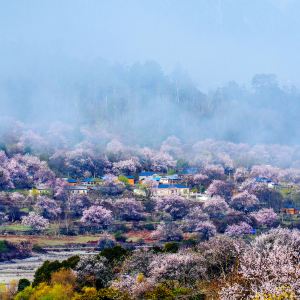
From mid-to-late March to early May every year, the century-old peach blossoms in the scenic area are as bright as brocade. Early May and early October are the best hiking seasons.
The Grand Canyon is dotted with villages inhabited by the Gongbu Tibetans, who maintain their eternal living traditions.
Yarlung Zangbo River

lyn99092918 January 2021
5.0
Walking in Tibet, you will see different scenery every day. Sitting in the car, you can take pictures of the beautiful scenery. After a while, I passed by a viewing platform and saw a stone with "Yajiang River Valley" written on it. There were two majestic Tibetan mastiffs standing on both sides of the stone. The Yajiang River Valley is located in Shigatse, Tibet. When driving from Lhasa to Yamdrok Lake, one of the three sacred lakes in Tibet, you will pass by the river valley viewing platform, which is 4,280 meters above sea level. Looking into the distance, the river valley, blue sky and white clouds are extremely beautiful.
Yajiang River Valley Viewing Platform

可爱长大的仙女y21 June 2023
5.0
The Yajiang River Valley is located halfway from Lhasa to Yamdrok Lake. It is actually an observation deck overlooking the Yarlung Zangbo River Valley. The small platform is filled with various stalls on both sides, selling various Tibetan gadgets. There are many Tibetan mastiffs tied to the cliffs near the river bank for tourists to take photos and group photos. It costs 20 yuan to take any photo.
I took some photos with courage. The Tibetan mastiffs are quite well-behaved. The boss will also train them to look at the camera. Then a big Tibetan mastiff looked up at me, and I felt scared. It is also a popular check-in spot.
Yajiang River Valley

enjoyzent29 March 2021
4.0
Lhasa Qushui Zoo was expanded from the original zoo and has a new name called "Pure Land Healthy Animal Protection Park". The Lhasa Horse Racing Festival is a national "intangible cultural heritage" with a history of more than 300 years. It is a unique event in Dangxiong, during which racehorses and jockeys will warm up and perform here.
Qushui Zoo
M29***0330 September 2026
5.0
Our tour guide, Mr. Cheng, was very handsome, gave a very detailed explanation, and had excellent service. If you have the chance, you must experience the charm of the Potala Palace. Highly recommended! 👍👍👍
Potala Palace

二胖儿四进藏8 May 2022
5.0
Each of the four courtyards in Tibet is an everlasting legend and a power of faith. The scenery is stunning and charming, the fun is average, and the cost performance is still very high.
Xiazhulin Temple

闲庭漫步3016 October 2026
5.0
The experience was excellent. It's so convenient for tourists who don't drive to get to Yamdrok Lake. The driver was also very nice and made sure to stop at each viewpoint for a good amount of time so that tourists could enjoy the view and take photos. Thumbs up!
Yamdrok Yumtso

李肢强8 October 2026
5.0
Visiting Jokhang Temple again after many years, the entrance has been significantly improved, making it look more like a proper tourist attraction. The interior remains the same, but the management is more comprehensive; however, the third floor is no longer open to the public. It's a must-see attraction on any trip to Lhasa.
Jokhang Temple

Anonymous user31 July 2026
5.0
When visiting Lhasa, seeing the Princess Wencheng Theater is a must-do attraction. The theater is quite large, with a museum nearby, and the Potala Palace is visible in the distance directly opposite. It's definitely worth a visit.
Princess Wencheng Theater