
Things to do in Shanxi
Explore top experiences
Top 10 attractions in Shanxi


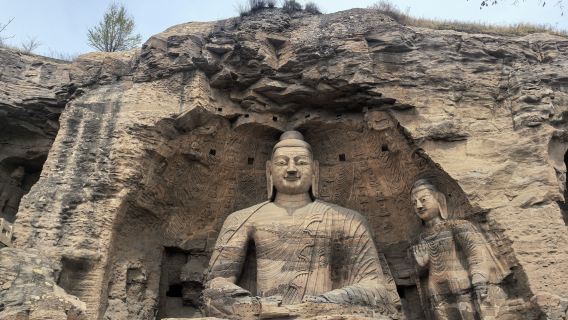
Yungang Grottoes
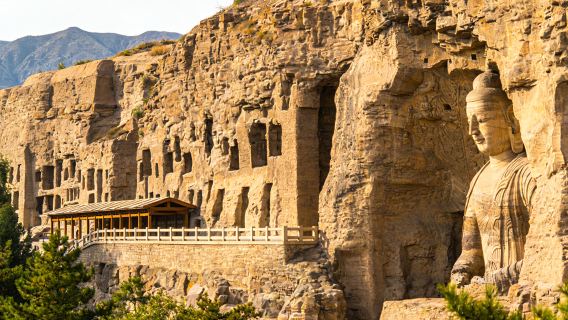
Yungang Grottoes Scenic Area is divided into a landscape zone and the grottoes. It is one of the three largest grottoes in China. The sculpture combines Chinese and Western art. Here you can experience the artistic charms of Northern Wei Dynasty. Yungang Grottoes not only embodies traditional Chinese art style but also integrates art styles of ethnic groups from ancient India, countries west of China and China's central plains. It is a famous historical site in Datong City.China · Datong

Jinci Temple Museum
Jinci Temple is located on the banks of the Jin River at the foot of Xuanweng Mountain, 25 km southwest of Taiyuan. It was built by later generations to commemorate Tang Shuyu, the founding feudal lord of the Jin State, and served as the ancestral temple of the Jin State. It is often said that "a visit to Taiyuan is incomplete without seeingJinci Templethe saying "a wasted trip to Taiyuan". After getting off at Jinci Temple, the first place you'll reach isJinci MuseumThis is a free park with a pleasant environment, perfect for casual strolling. After about a 10-minute walk through the park, you'll reach the main area of Jinci. Inside Jinci Museum,Jinci TempleThe "Three Treasures" (Xian Hall, Flying Bridge Across Fish Pond, and Shengmu Hall) and "Three Wonders" (Zhou-bai, Nanlao Spring Pavilion, and painted clay sculptures) are must-sees for every visitor toJinci Templeview that everyone must see. Jinci TempleThe "Three Treasures" are connected and located atJinci Templeon the central axis, allowing for a combined visit. Xian Hall is a place for offering sacrifices, with fence-like walls on all four sides, providing good ventilation and coolness. Notably, not a single iron nail was used in the beams and pillars throughout the hall. The Flying Bridge Across Fish Pond is located in front of Xian Hall and was built during the Song Dynasty. The entire view resembles a modern overpass, making it the only existing example among ancient bridges in China. One end of the "Flying Bridge" connects to Shengmu Hall, which is the earliest existing main building in Jinci Museum. The main hall is spacious, and a major highlight is its beam-and-pillar structure without internal columns. Eight wooden carved coiled dragons, appearing ready to fly, are carved on the eight corridor pillars in front of the hall, which, together with the "Flying Bridge Across Fish Pond," present a magnificent sight. Centered around the Hall of the Holy Mother, it's easy to find the "Three Wonders." The painted clay figurines are located inside the Hall of the Holy Mother, with the main statue of the Holy Mother seated majestically in a wooden shrine, dignified and resplendent, while the other 42 attendant statues stand on either side. These figurines are dressed in vibrant colors with varied expressions, including one maidservant dressed as a flower-dan (young female role in Chinese opera), her face half joyful and half sorrowful, evoking complex emotions in viewers. Master Mei Lanfang once stood before this maidservant statue for a long time, carefully studying her posture and inner emotions, and praised it highly. The Zhou Cypress, located north of the Hall of the Holy Mother, was planted during the Western Zhou Dynasty and is over 3,000 years old. The Pavilion of the Never-Aging Spring stands south of the Hall of the Holy Mother, where the source of the Jin River flows continuously year-round. In addition,Jinci TempleInside, there is also the extremely precious "Jinci Inscription" stele, personally composed and handwritten by Emperor Taizong of Tang, Li Shimin. At the southernmost part, you can find the Shifang Fengsheng Zen Temple, which is said to have originally been the villa of Yuchi Gong, a founding general of the Tang Dynasty. In the northern part of the temple complex, the Futu Courtyard houses the Sheli Shengsheng Pagoda. Climbing the pagoda offers a panoramic view.Jinci TempleThe panoramic view is clearly visible.China · Taiyuan

Yingxian Wooden Pagoda
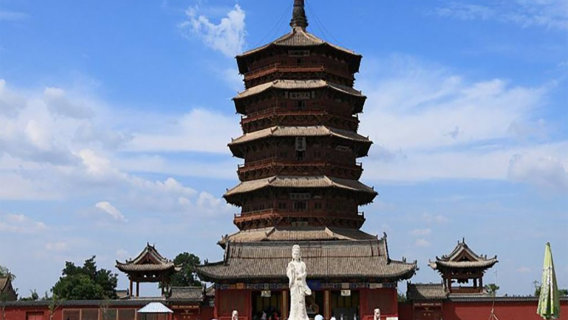
The full name of Yingxian Wooden Tower is Sakyamuni Pagoda of Fogong Temple. It is in the Fogong Temple in the northwest of Yingxian County. The octagonal wooden pagoda has five stories. Except for the high-end stone foundation of the first floor, the rest of the pagoda is made of wood using the traditional craftsmanship of Sunmao. Each layer of the wooden tower is equipped with wind chimes for a pleasant sound when the wind blows.China · Ying County

The Hukou Waterfall Scenic Area
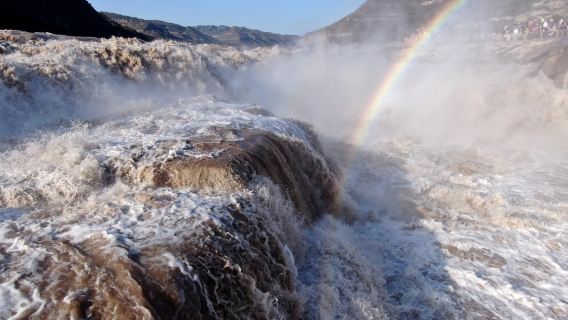
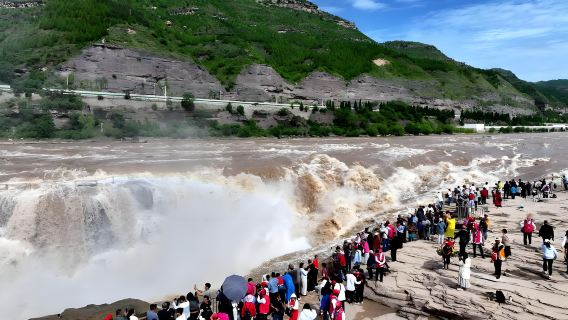
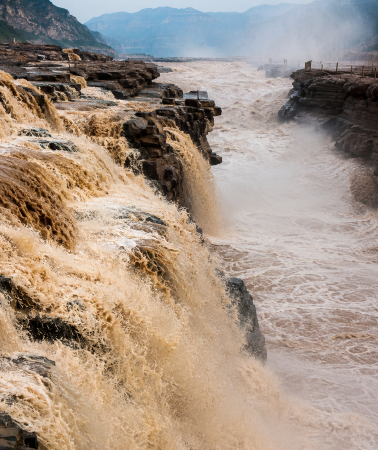
The Hukou Waterfall is a famous waterfall on the Yellow River. The roiling water of the Yellow River roars downward here with great power. The Hukou Waterfall area is divided by the Yellow River. On the west side is Yichuan County, Shaanxi, and on the east side is Ji County, Shanxi. The waterfall is also divided into the Hukou Waterfall (the part of the falls in Shaanxi) and the Shanxi Hukou Waterfall (the part of the falls in Shanxi). Separate tickets are sold for each area. The Shanxi section of the Hukou Waterfall is located 45 kilometers west of the seat of Ji County in Linfen City, Shanxi.China · Ji County

Pingyao Ancient City
Pingyao Ancient City is approx. 85 km from Taiyuan. The streets, shops, and residences within the ancient city still maintain their traditional layout and appearance, making it one of the best-preserved ancient cities in China. It is also the only ancient county town in China that has successfully been listed as a UNESCO World Heritage Site as an entire city. Pingyao was once the financial center of China during the late Qing Dynasty. Walking through this once-prosperous ancient city, you can feel the essence of Shanxi merchant culture everywhere. The ancient city has six gates in total, with the north gate near Pingyao bus station and the west gate nearPingyao train stationThe south gate and west gate are places with many travelers. Entering the ancient town does not require an admission ticket, but if you want to climb the city wall or visit attractions like the ticket number, you need to purchase a pass for the ancient town. The ancient town is not very large, and walking is enough to explore it all. If you prefer not to walk, you can also take electric bikes. The streets of the entire ancient city are laid out in the shape of the Chinese character "土" (earth). When visiting, you usually enter the city from the West Gate and walk along West Street to Rishengchang Draft Bank, known as the "ancestor of modern Chinese banking". Here you can not only learn about the development history of ancient banking, but also have the old manager in a long robe and mandarin jacket write a draft for you using the early draft method, which is particularly historical. Moving forward is the north-south spanningSouth street, it is the central axis of the ancient city. During the Ming and Qing dynasties,South streetControlling over half of the nation's financial institutions, it was hailed as the "Wall Street of China" in its heyday. Today, it remains a bustling area of the ancient city, known as the Ming-Qing Ancient Street. Most attractions in Pingyao Ancient City are concentrated here, centered around the landmark structure, the Ancient City Tower. Surrounding it are attractions like Xie Tong Qing ticket number (China Banking Museum) and Wei Tai Hou (Ticket number museumAttractions such as Baichuantong, China Escort Museum, Tongxinggong Escort, Weishengchang, China Rare Newspaper Exhibition Hall, and Tianjixiang are available, along with restaurants, musical instrument stores, cafes, and bars. After strolling along the street, you can dine here, buy some souvenirs, and then continue south for more sightseeing. At the Pingyao Ancient City's county government office on the south side of the ancient city, you can see a large number of ancient documents and torture instruments, with daily performances of court sessions; near the Shangdong Gate are the Pingyao Ancient City's Chenghuang Temple andConfucian templeIt is quite grand and meticulously built, with thriving incense offerings where you can burn joss sticks. The Pingyao Ancient City wall is also one of the highlights of the ancient city, being not only majestic but also remarkably well-preserved. Climbing the wall offers a panoramic view of the entire ancient city. Among the gates, the tower of the south gate (Yingxun Gate of Pingyao Ancient City wall) is exquisitely crafted, and this area is close to residential buildings, allowing visitors to observe the daily life of the locals. If time permits, you can walk around the ancient city along the wall to fully appreciate its charm, which takes about an hour. Watching the sunset from the wall in the evening presents a beautiful scene. Besides the ancient town itself, Pingyao has two other major attractions: Zhenguo Temple and Shuanglin Temple. Zhenguo Temple was built without a single nail, with all structures joined by interlocking wooden components. Shuanglin Temple houses over 10 halls containing exquisitely crafted painted sculptures dating from the Yuan to Ming dynasties. It is highly recommended to stay overnight in the ancient town to enjoy its night view. You can also rent a bicycle to explore the small alleys and experience the authentic Pingyao, where the local culture and customs or photography make excellent subjects. Especially during the Chinese New Year, Pingyao is full of festive atmosphere. The town features old courtyards converted into inns, which are usually affordable, with clean and tidy accommodations available for just a few dozen yuan. Additionally, Pingyao is renowned for its beef. In the late Qing Dynasty, Empress Dowager Cixi passed through Pingyao and was so fond of the local beef after tasting it that she designated it as a royal tribute. Shops bearing the name "Guanyun beef" can be seen everywhere in the ancient town, making it hard to distinguish authenticity, and prices are generally high. You may consider buying some outside the town to try or give as gifts to friends and relatives.China · Pingyao County

Xuankong Temple
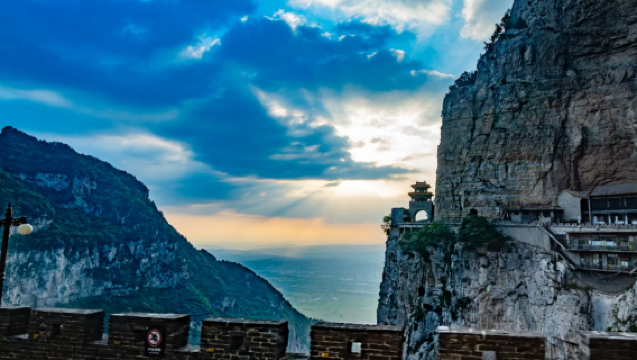
Xuankong Temple is located between the cliffs of Cuiping Peak in Jinlong Gorge, Hengshan. It was built in the Northern Wei Dynasty and has a history stretching longer than 1,500 years. It is a well-preserved high-altitude wooden cliff building in China. At the foot of Hengshan, from a distance, you can see the Hanging Temple suspended over the mountainside. The entire temple is hung on the steep cliff, skillfully utilizing and building into the concave and convex portions of the cliff, making it exceptionally staggered and yet rhythmic. Visitors walk along the wooden plank road suspended within the temple to feel the magical architectural charm of the Hanging Temple.China · Hunyuan

Huayan Temple
Huayan Temple is located in the center of Datong. This temple was built in the 8th year of Liao Qingning Period (AD 1062). In the Daxiong Hall of Huayan Temple, you can see the groundworks of Liao Dynasty and the buildings of Jin Dynasty, as well as the statues of Ming Dynasty and the murals of Qing Dynasty. The Hall of BojiaJiaocang in the temple is the only Liao Dynasty building here. The statues from Liao Dynasty in the Hall are extremely precious. There is a double-storey pavilion-style cabinet behind the Hall of Bojiajiaocang, the upper level is for Buddha statues and Buddhist altars, and the lower layer stores for books.China · Datong

Hukou Waterfall tourist area of the Yellow River
The Hukou Waterfall tourist area of the Yellow River is located on the riverbed of the Yellow River in the Qin-Jin Grand Canyon, where the provinces of Shanxi and Shaanxi face each other across the river. The main stream of the Yellow River, originally hundreds of m wide, suddenly narrows to dozens of m and plunges into a deep trough with a drop of 20–30 m, resembling water being poured from a giant pot—hence the name "Hukou" (Pot Mouth). Due to the large amount of sediment carried by the river, the waterfall presents a rare golden-yellow view: the turbid waves roar down with a sound like distant thunder rolling through the valley, while the rising mist lingers before the cliff, earning the nickname "smoke rising from the water." On sunny days, sunlight casts a rainbow over the waterfall, known as "a rainbow playing in the water." The mist may drench visitors even without wind or rain, creating the wonder called "rainfall under a clear sky." Hukou waterfall is regarded as the symbol of the "soul of the Yellow River" and the spirit of the Chinese nation. In 1938, when poet Guang Weiran crossed the Yellow River, he witnessed the roaring waves of Hukou and the boatmen's chants, which inspired him to create the now-legendary Yellow River Cantata. Liang Heng's essay of the same name was selected for middle school Chinese textbooks, and the back of the fourth series CNY 50 banknote also features this scene. Many first learned about it through textbooks and currency before visiting in person. In the past, cargo ships had to leave the water and bypass the waterfall here, leaving behind the maritime memory of "sailing on dry land." The scenery here varies with the seasons: In early spring, the upstream ice melts and the water level rises sharply, coinciding with the blooming of mountain peach blossoms on both banks, known as the "March peach blossom flood." In midsummer, the rainy season brings abundant water, with muddy waves towering into the sky. After fall begins, the rainy season subsides, and the water becomes high and steady. As the fall breeze sweeps by, rainbows often appear, earning the name "Hukou autumn breeze." In deep winter, layers of ice form along the banks, and overflow freezes into inverted ice peaks, glistening under the sunlight, creating the spectacular "upside-down ice peaks." The viewing platform on the Shaanxi side stretches along the cliff top on the western bank, offering a commanding view of the "thousand-mile Yellow River funneled into one pot" and the ten-mile-long Dragon Trough below the waterfall. During high-water seasons, the mist is heavy, and clothes get soaked quickly, so remember to protect your camera and phone; the boardwalk is slippery, so watch your step while walking and taking photos.China · Yichuan

Little Western Paradise
Little Western Paradise is perched atop Phoenix Mountain in Xi County, Linfen, Shanxi Province. This Buddhist temple, originally named the Thousand Buddha Nunnery, was established during the Chongzhen era of the Ming Dynasty. It earned its initial name from the thousand Buddha statues enshrined in its Main Hall of the Great Hero. Later, it was renamed due to the inscription "Entering the Western Paradise" above its gate and to distinguish it from another ancient temple, "Great Western Paradise," located south of the city. Surrounded by mountains on three sides and facing a river in front, the temple is compact yet ingeniously laid out across its upper and lower courtyards. Ascending the stone steps and passing through the secluded "Heavenly Grotto" corridor evokes a sense of gradually entering a Buddhist paradise. The upper courtyard centers around the Main Hall of the Great Hero, flanked by the Manjusri Hall and Samantabhadra Hall. The Main Hall is the temple's crowning jewel: within its modest 100-square-meter space, nearly 2,000 suspended sculptures adorn niches, gables, beams, and rafters, transforming the hall into a museum of suspended sculpture art. Five interconnected niches dominate the rear wall, housing the Medicine Buddha, Amitabha, Sakyamuni, Vairocana, and Maitreya seated on lotus thrones, with ten principal disciples standing beside them. The southern wall depicts Buddhist narratives featuring the Four Sages and Four Heavenly Kings, while the northern wall portrays the 33 celestial palaces of Mount Sumeru. Flying apsaras, divine birds, and musician bodhisattvas dance among clouds on the beams, their gilded polychrome surfaces retaining vibrant hues after centuries. This rare collection of late Ming to early Qing suspended sculptures has gained wider recognition since the temple became a filming location for the popular game Black Myth: Wukong, attracting many travelers for dedicated visits. The lower courtyard also rewards exploration: the Immeasurable Hall faces east, where dozens of bronze Buddha statues interplay with wooden celestial palaces in what was once the monks' meditation hall. Opposite stands the Skanda Hall, housing a single nanmu-carved statue of Skanda. The temple also preserves thousands of volumes from the Yongle Northern Canon, a Ming imperial gift. Visitors are advised to spend extra time in the Main Hall—dim lighting requires slow, upward gazes to appreciate the intricate details of the high-placed sculptures. After exploring both courtyards, one can ascend Solitary Paulownia Peak via the "Seemingly No Path" route behind Skanda Hall, where the Cloud-Touching Pavilion offers panoramic views of the rural landscape below.China · Xi County

Xinzhou Ancient City
Xinzhou was called Xiurong in ancient times. It is located between Taiyuan and Mount Wutai. It is the seat of Xinzhou Administrative Office and Prefectural Committee. In the Spring and Autumn Period, Xinzhou belonged to Jin State. In the Warring States Period, it belonged to Zhao State. In the Qin and Han Dynasties, it belonged to Taiyuan County, Yanmen County, and Taiping County. In the Sui Dynasty, it was Xinxingdu and Yanmen. During the Tang, Five Dynasties and Song dynasties, it was called Dingxiang Prefecture of Xinzhou. During the Jin, Yuan, Ming and Qing dynasties, it was called Xinzhou, Daizhou and Baodezhou. During the Anti-Japanese War and the War of Liberation, most of the area belonged to Jinchaji, and the area to the west belonged to Jinsui. In 1949, Xinzhou Prefecture was established. The cultural relics and historical sites in Xinzhou City include: Xinzhou North Gate Tower. Located in Xinzhou City, on the Gongchen Gate of the old north city wall. The North Gate Tower was built in the 24th year of Wanli in the Ming Dynasty. The tower is located on the 12-meter-high city wall, which makes it more majestic and magnificent. The city wall stands tall and is painted red on the outside. There is a Voucher doorway below, with a very high top and a bottom width of more than 3 meters.China · Xinzhou
Experiences you can't miss in Shanxi
Featured Cultural experiences in Shanxi
View all Cultural experiences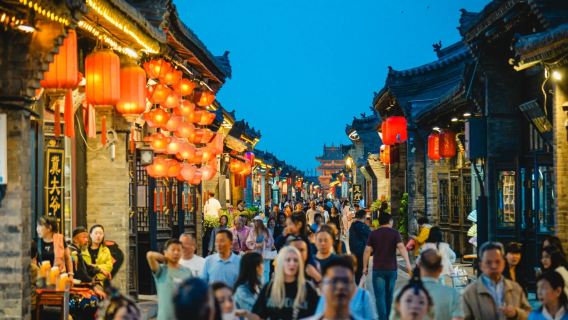
Free cancellation
Instant confirmation
From€68.60


5.0/5
· 1 reviewFree cancellation
From€5.37

Free cancellation
Instant confirmation
From€14.77



Free cancellation
Book now for tomorrow
From€36.11
Featured Day tours in Shanxi
View all Day tours![※※Private chartered tour: 1-day tour to Datong Xuankong Temple + Yungang Grottoes + Yong'an Temple with private charter [city pickup]](https://ak-d.tripcdn.com/images/0104z120008ab62gc27C1_C_568_320.jpg?_fr=wc)

4.9/5
· 201 reviews· 323 bookedFree cancellation
Instant confirmation
99% of travelers recommend
From€53.39
![※1-day private charter tour to Xuankong Temple + Yungang Grottoes in Datong [Hotel pickup included]](https://ak-d.tripcdn.com/images/10040v000000jhuz86DE4_C_568_320.jpg?_fr=wc)
4.9/5
· 49 reviews· 245 bookedFree cancellation
Instant confirmation
49 consecutive positive reviews
5% off
Limited-time sale
From€50.72€53.39

4.9/5
· 39 reviews· 120 bookedFree cancellation
Instant confirmation
31 consecutive positive reviews
From€64.07

4.9/5
· 30 reviews· 111 bookedFree cancellation
Instant confirmation
From€51.11
4.9/5
· 48 reviews· 203 bookedFree cancellation
Instant confirmation
48 consecutive positive reviews
5% off
Limited-time sale
From€48.54€51.1

5.0/5
· 11 reviews· 50 bookedFree cancellation
Instant confirmation
From€27.46
5.0/5
· 7 reviews· 23 bookedFree cancellation
Instant confirmation
From€36.61
From€221.48
Featured Food & drink in Shanxi
View all Food & drink
Free cancellation
Instant confirmation
Book now for today
From€59.66
Free cancellation
Instant confirmation
Book now for tomorrow
From€152.54

Featured Outdoor experiences in Shanxi
View all Outdoor experiences
Free cancellation
Instant confirmation
From€48.82
5.0/5
· 2 reviewsFree cancellation
Instant confirmation
From€109.83
![※Datong Xuankong Temple + volcanoes + Ying County wooden tower private charter 1-day tour [Flexible departure time]](https://ak-d.tripcdn.com/images/0353n12000trq7tgq9F0E_C_568_320.png?_fr=wc)
From€26.85
Free cancellation
Instant confirmation
From€65.59
![Daning travel photo shoot[Daning Ancient City Daning River Exciting Rafting Photography with Multilingual Local Photographers]](https://ak-d.tripcdn.com/images/0353d12000o9950j6CAF6_C_568_320.jpg?_fr=wc)
Instant confirmation
Book now for today
From€29.83
Free cancellation
Instant confirmation
From€137.29
Free cancellation
Instant confirmation
From€141.69
Free things to do in Shanxi
Yungang Grottoes
China · DatongBook now for tomorrow, Cancel anytimeJinci Temple Museum
China · TaiyuanImmediate access, Book now for today, Cancel anytimeYingxian Wooden Pagoda
China · Ying CountyImmediate access, Book now for today, Cancel anytimeThe Hukou Waterfall Scenic Area
China · Ji CountyImmediate access, Book now for today, Cancel anytimePingyao Ancient City
China · Pingyao CountyBook now for tomorrow, Cancel anytimeXuankong Temple
China · HunyuanHuayan Temple
China · DatongImmediate access, Book now for today, Cancel anytimeHukou Waterfall tourist area of the Yellow River
China · YichuanImmediate access, Book now for today, Cancel anytimeLittle Western Paradise
China · Xi CountyBook now for tomorrow, Cancel anytimeXinzhou Ancient City
China · Xinzhou
More ways to travel from Shanxi
Private Tours in Shanxi
View More Private Tours in Shanxi


Group Tours in Shanxi
View More Group Tours in Shanxi
What travelers say about Shanxi

Anonymous user15 October 2026
5.0
The Northern Wei Dynasty royal grottoes are visually stunning and are a World Heritage Site. The five grottoes of Tan Yao (Caves 16-20) are the highlights, with the open-air Buddha in Cave 20 being a landmark; gazing up at the colossal Buddha evokes a sense of awe and power. Caves 5 and 6 are covered with richly detailed bas-reliefs. Most of the caves can be entered up close, allowing for an immersive viewing experience of the carvings, unlike many grottoes that can only be viewed from a distance. The tour path is easy to navigate; the main path is flat and not tiring for those with good mobility. For those who prefer not to walk, a round-trip electric shuttle bus is available for 15 yuan, saving energy.
Yungang Grottoes

M58***1713 October 2026
5.0
A microcosm of Shanxi's history, the Song Dynasty wooden structures and painted sculptures are its biggest highlights. The ancient cypress trees reaching for the sky and the murmuring Nanlao Spring are well worth a leisurely visit; a guided tour is highly recommended for a more enriching experience.
Jinci Temple Museum

M31***8614 October 2026
4.0
Having been there and seen it, the obsession has been let go. I always wanted to see it again. I was afraid it would disappear one day. Looking up, I marveled at the wisdom of the ancients. Those who appreciate architecture will certainly not be disappointed.
Yingxian Wooden Pagoda

M25***7114 October 2026
5.0
This restaurant is quite close to the Hukou Waterfall Visitor Center. The food is delicious, and the towels, bath towels, and toilet seats are all disposable. It's a building with an elevator, and the owner is very generous; he gave us some of his own apples when we left. Breakfast is 10 yuan per person, consisting of millet porridge, steamed buns, a local egg, and two servings of pickled vegetables—enough to fill you up.
The Hukou Waterfall Scenic Area

玫兰妮14 October 2026
5.0
The hotel and service are both good. You can take a walk on the city wall, stroll around the Ma Family Courtyard, and visit the security escort agency and money exchange. You need to calm down and experience things slowly, and it would be best to listen to some traditional opera.
Pingyao Ancient City

五月之恋201415 October 2026
5.0
After arriving at Hengshan Scenic Area, we took their shuttle bus in, which felt a bit unreasonable. The scenery was amazing, and the architecture was quite impressive when we walked around. It was also famous for the Black Monkey King. However, tickets to the summit are extremely hard to get; they are limited and almost impossible to see. You can only admire them from afar. If you have the chance to get a ticket to the summit, it's worth going back to see it.
Xuankong Temple

M19***3915 October 2026
5.0
Today, Teacher Xie gave us a lecture. Thank you, Teacher Xie, for your wonderful explanation; I finally got to appreciate the wonder and exquisite beauty of Shanxi's ancient architecture. Teacher Xie is patient, meticulous, and knowledgeable. You could feel her pride and love for her hometown's historical buildings in her words. Highly recommended!
Huayan Temple

IVERSON352013 October 2026
5.0
Great! The Shanxi and Shaanxi combined ticket is fantastic. Two days valid, excellent value for money. Both places are quite fun. In Shaanxi, you can book a free show of the "Yellow River Cantata," which is very good and worth the ticket price. The shuttle bus is very convenient, with frequent departures and short waiting times. A great travel experience, highly recommended.
Hukou Waterfall tourist area of the Yellow River
Anonymous user10 October 2026
5.0
The main hall, spanning only 170 square meters, is densely packed with nearly 200 suspended sculptures, works from the late Ming Dynasty 400 years ago. These sculptures are crafted from wood and clay, with gold leaf applied to the walls. From the walls and beams to the roof, they depict celestial palaces, flying apsaras, musicians, and mythical birds, intricate yet orderly, with lifelike expressions, earning it the title of the pinnacle of Chinese suspended sculpture.
Little Western Paradise
Anonymous user17 September 2026
5.0
This is the most spectacular iron flower display I've ever seen! The program was diverse and engaging, the host was witty, the audience interaction was lively, the iron flower workers were incredibly skilled, and the iron flowers were dazzling and colorful – the effect was absolutely stunning! Thumbs up! 👍👍👍
Xinzhou Ancient City
Frequently asked questions
What are the must-do things in Shanxi?
Don't miss these attractions in Shanxi: Yungang Grottoes, Jinci Temple Museum, and Yingxian Wooden Pagoda. If you like Cultural experiences, try Private tour | 1-day tour of Taiyuan (Jinci Temple Museum + Pingyao Ancient City) with independent private car door-to-door pickup. If you enjoy Day tours, try ※※Private chartered tour: 1-day tour to Datong Xuankong Temple + Yungang Grottoes + Yong'an Temple with private charter [city pickup].
What are the must-try foods and restaurants in Shanxi?
You can give Shanxi noodle culture making experience activity and Datong Ancient City Night Food Tour: Taste 10 Local Northern Snacks & Ancient Hutong Walk a try. Before you go, please check their opening hours and menus online. Reservations are recommended, especially during peak hours.
What are the recommended tours and excursions in Shanxi?
When choosing a tour, start with how much time you have and the kind of experience you're looking for. Trending options right now include ※※Private chartered tour: 1-day tour to Datong Xuankong Temple + Yungang Grottoes + Yong'an Temple with private charter [city pickup], ※1-day private charter tour to Xuankong Temple + Yungang Grottoes in Datong [Hotel pickup included], and Private Car Tour to Yungang Grottoes and Hanging Temple. Check the real-time availability and itinerary before you book.
What's the typical cost of day tours and activities in Shanxi?
As of 16 October 2026, the reference price for day tours and activities in Shanxi is around EUR 27.46 – EUR 221.48. Rates vary by duration, group size, transportation, tickets, meals, and any special admission requirements. Before you book, please confirm the billing currency and whether the price is quoted per person or per group.
How can I contact Trip.com customer support?
Get help anytime, anywhere within 30 secondsContact customer support
Can I change or cancel my booking?
Change and cancellation policies vary by attractions and tours. Please check the product details page for more information.
How can I get discounted prices?
Ticket prices may vary between weekdays and weekends, as well as during peak and off-peak seasons. When booking with Trip.com, you can also use Trip Coins to get extra savings. For more tips on booking discounted tickets, please visit Trip.com for the latest information.
Trip.com picks
Popular cities in China
Popular Shanxi Tours
Best Shanxi Experiences
Recommended Car Rentals in China
Things to do in ShanghaiThings to do in QingdaoThings to do in GuangzhouThings to do in JiuzhaigouThings to do in ChinaThings to do in ZhuhaiThings to do in ChengduThings to do in YangshuoThings to do in HarbinThings to do in SuzhouThings to do in BeijingThings to do in HangzhouThings to do in DujiangyanThings to do in MacauThings to do in Zhangjiajie
Pure play 1-day tour to Yardang, Yang Pass and Yumen Pass with cultural creative gift and sunset starry sky viewingDunhuang highlights one-day private chartered tourOne-Day Tour to Dunhuang's Western Thousands Buddha Grottoes, Yumen Pass, and Yardang National GeoparkOne-day tour to Western Thousand Buddha Caves, Yang Guan, Yumen Pass and Yardang National Geological Park in Dunhuang Dunhuang Day Trip | Sunset viewing at Yangguan Pass + Yumenguan Pass + Yadan Geological Park | pick up&drop off service + Enjoy Sunset + Available for Booking by 1 PersonDoor-to-door pick-up and drop-off service | Dunhuang day trip | Sunset viewing at Yangguan Pass + Yumenguan Pass + Yadan Geological ParkDunhuang 1-day tour●The Western Thousands Buddha Grottoes + Yangguan + Yumen Pass + Yadan sunset●Private tour●Door-to-door pickup1-day tour to Dunhuang Xuanquanzhi and Yangguan ancient road Yulin Grottoes & Suoyang City & Western Jin Tombs Private Day Tour1-day tour to Yumen Pass and Yardang Geological Park One-day tour to Yulin Grottoes, Suoyang City and the Giant Baby in Dunhuang - millennium-old murals hidden in Yulin River ValleyMust-Visit in Dunhuang: Private Day Tour to Yumen Pass, Yadan National Geological Park, and Yang GuanDunhuang private tour: Cultural heritage city, Yangguan and Dunhuang Yardang National GeoparkDunhuang Day Tour: Western Thousand Buddha Caves, Yangguan Pass and Yadan Geological ParkDunhuang Day Tour: The Western Thousands Buddha Grottoes, Yumen Pass & Dunhuang Yardang National Geopark Shanxi SIM CardShanxi ActivitiesShanxi Group ToursShanxi Connectivity SolutionsShanxi Travel ServicesCar rentals in TaipeiCar rentals in BeijingCar rentals in Hong KongCar rentals in Shanghai