Things to do in Si County
Explore top experiences
Top 10 attractions in Si County


Nanjing Museum
Nanjing Museum is located at the southern foot of Purple Mountain and north of Zhongshan Gate. The museum is one of the earliest to be established in China. Here, you can see ancient artifacts like gold-threaded robes such as those depicted in “Grave Robbers' Chronicles” and you can enjoy exquisite painting and calligraphy and Ming treasures such as a gold-plated stupa. You can take a trip through time and even walk along the streets of the Warlord Era.China · Nanjing

Nanjing Confucius Temple
The Confucius Temple was originally built in the Song Dynasty to commemorate Confucius. It is located beside Gongyuan Street on the north bank of Qinhuai River. However the temple was destroyed and rebuilt several times. The current temple was rebuilt in 1987 after it was destroyed by Japanese Aggressors during WWII. Currently, the temple is the main scenic spot of the Qinhuai River Scenery. It also includes the China Imperial Examination Museum and Xue Gong (The Imperial Academy). At the Confucius Temple, you can admire a 6 meter high huge portrait of Confucius and 38 mural paintings reflecting the life story of Confucius.China · Nanjing

Confucius Temple-Qinhuai Scenic Area
The Confucius Temple-Qinhuai Scenic Area refers to the Qinhuai River area centered around the Confucius Temple, where the streets, alleys, residences, and historical sites along both banks form a continuous stretch. It has been a bustling and lively part of Nanjing since ancient times. The line "The swallows that skimmed by painted eaves in bygone days are dipping now among the humble homes' doorways" by Liu Yuxi describes this very place. The Wuyi Lane mentioned in the poem still lies hidden among the alleys near the Confucius Temple. Exploring history along the river is the highlight of this area: The Dacheng hall of Confucius temple stands by the water, with a towering screen wall across the Pan pond in front; the nearby Jiangnan examination hall was the imperial testing site for provincial exams during the Ming and Qing dynasties, now replaced by the China imperial examination museum; Zhan garden and Egret isle park both originated from the mansion gardens of Xu Da's family, a founding general of the Ming dynasty—the former also houses the Taiping heavenly kingdom history museum; scattered along both banks within walking distance are historical sites like Meixiang tower (former residence of "Peach blossom fan" heroine Li Xiangjun), the well-preserved Zhonghua gate with its urn-shaped defense system, Wu Jingzi's residence (author of "The scholars"), and ancient ferry relics like Taoye crossing, easily connected into a historical walking trail. Cuisine is also a signature feature of this area: "The eight Qinhuai delicacies" refer to sixteen famous dishes from eight time-honored snack restaurants, including Yongheyuan's crab-shell yellow sesame cakes and dried shrimp shreds, Qifangge's duck oil crispy cakes and sesame oil dried shreds, Jiangyouji's beef pot stickers, and Lianhu pastry shop's osmanthus-filled glutinous rice balls. The Confucius Temple area and Laomendong are lined with teahouses, snack shops, and various stores, offering plenty of opportunities to rest and grab a bite when tired, along with the chance to pick up some souvenirs. The highlight comes after nightfall: board a painted boat from the pier in front of the Confucius Temple, listen to the guide while admiring the white walls and black tiles illuminated by riverside lanterns—this is the classic "night mooring on the Qinhuai" experience. From Chinese New Year to the Lantern Festival each year, the Qinhuai River Lantern Festival (also known as the Jinling Lantern Festival), listed as a national intangible cultural heritage, takes place here. The Confucius Temple, Laomendong, and along the Qinhuai River are adorned with lanterns and decorations. "Visiting the Confucius Temple to see lanterns during New Year" remains a cherished tradition for Nanjing locals. Even on ordinary days, the area buzzes with cultural temple fairs, food festivals, and other celebrations, offering unique surprises in different seasons.China · Nanjing

Sanhe Ancient Town
Sanhe Ancient Town is situated at the southern tip of Feixi County in Hefei, where the Fengle River, Hangbu River, and Xiaonan River converge. The town derives its name from these three waterways, with the name "Sanhe" appearing as early as the Ming Dynasty and officially becoming Sanhe Town during the Qing Dynasty. In 1858, Taiping Rebellion generals Chen Yucheng and Li Xiucheng achieved a decisive victory over the Xiang Army here, historically known as the "Great Victory of Sanhe." The triumphal arch at the town entrance, Yingwang Mansion, and ancient city walls still bear witness to this turbulent period. The old bluestone-paved streets stretch along the river, lined with contiguous Huizhou-style residences featuring gray brick walls and soaring horse-head gables, blending water-town alleys with Huizhou-style markets seamlessly. Most tours begin at Sanxian Bridge in the town center. To its northwest stands the seven-story Guocui Tower, offering panoramic views of the town and displaying Huizhou artifacts like sedan chairs, inscribed tablets, carved beds, and stone carvings. Nearby, the Dafu Mansion (Sanhe Folk Museum) recreates an official residence's hall with exquisite wood carvings, including an oversized abacus over one meter long. Northeast of the bridge, Xiangu Tower is a Huizhou-style temple funded by merchants including the owner of the time-honored pastry shop "Zhonghexiang." Heading north along the east bank of Xiaonan River leads to ancient West Street, paved with bluestones and once bustling with shops—Liutongxinglongzhuang still maintains its original commercial layout. South along the west bank brings you to Quezhu Covered Bridge, named after Sanhe's ancient moniker "Quezhu," featuring a two-tiered eaves corridor with "beauty's seat" railings perfect for resting and enjoying the waterfront. The southern area around Old South Street and Wannian Street clusters notable former residences, including those of physicist Chen-Ning Yang, general Sun Liren, and Helu. During the Anti-Japanese War, young Chen-Ning Yang sheltered here with his family. Nearby, the famous "One-Person Alley" narrows to barely accommodate a single visitor, making it a popular photo spot. Further south stand Wannian Temple, Chenghuang Temple, and the historic Wannian Stage—Sanhe being the birthplace of Lu Opera, whose authentic melodies often grace the stage during festivals. Local snacks concentrate near Sanxian Bridge: freshly fried Sanhe rice dumplings with crispy shells, shrimp paste, crispy duck, and various river delicacies represent regional cuisine, while tea-flavored dried tofu makes for perfect street-side nibbling. Rice wine and feather fans serve as portable souvenirs. In 2026, Sanhe became a key filming location for CCTV's Spring Festival Gala Hefei segment, with its night scenes of a thousand fish lanterns captivating nationwide audiences.China · Feixi

Xuzhou Museum
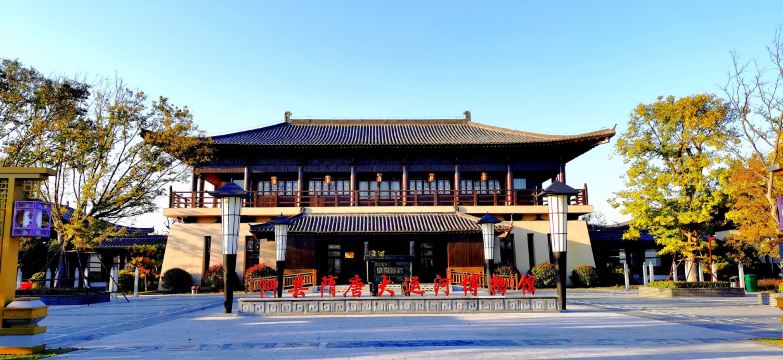
The Xuzhou Museum is located in the northern part of the Yunlong Mountain, and the area of the museum was originally the site of Emperor Qianlong's palace during the Southern Tour in 1757. museum exhibition hall is composed of three exhibition areas: Exhibition Building, Qianlong Palace and Tushan Han Tomb.China · Xuzhou

Dr. Sun Yat-sen's Mausoleum
Dr. Sun Yat-sen's Mausoleum is located in the Zhongshan scenic area in the eastern suburbs of Nanjing, nestled at the southern foot of Purple Mountain, adjacent to Linggu Temple to the east and Ming Xiaoling Mausoleum to the west. It serves as the tomb of Dr. Sun Yat-sen. The entire architectural complex, designed by architect Lü Yanzhi, follows the mountain's terrain along a central axis from south to north. When viewed from above, the tomb area forms a "warning bell" pattern, symbolizing "awakening the people." Construction began in 1926, and the main structures were completed in 1929, marked by the grand burial ceremony. The blue-glazed tiles paired with granite walls create a solemn and serene tone, making it one of the representative works blending Chinese and Western architectural styles. Along the central axis: the entrance features a towering granite Bo'ai archway, with the gilded inscription "Bo'ai" (universal love) handwritten by Sun Yat-sen on its lintel. Behind the archway lies a long tomb path flanked by trees. At the end of the path stands the mausoleum gate with cyan-glazed tiles, inscribed with "Tianxia wei gong" (the world belongs to the public). Further north is the stele pavilion housing a massive granite tombstone. Beyond this are 392 stone steps with a height difference of over 70 m, each section offering a resting platform. A thought-provoking visual design hides here: looking up from below, only steps are visible; looking down from above, only platforms appear—a detail worth experiencing firsthand. On one platform along the way, a pair of bronze tripods inscribed with "grand burial ceremony" are displayed, one bearing a bullet hole from Japanese artillery fire in 1937—a detail often missed by hurried visitors but worth pausing to observe. At the top of the steps lies the main sacrificial hall, designed in palace style. Its three arched doorways are engraved with "minzu" (nationalism), "minquan" (democracy), and "minsheng" (livelihood), while the central door bears Sun Yat-sen's calligraphy "Tiandi zhengqi" (righteousness of heaven and earth). Inside, a white marble statue of Sun Yat-sen sits at the center, with six relief carvings around its base. The burial chamber behind the hall is usually closed to the public, with visits focused on the sacrificial hall. The surrounding area also features memorial structures like the music stage, Liuhui Pavilion, Yangzhi Pavilion, Xingjian Pavilion, and the Sun Yat-sen Memorial Hall.China · Nanjing

Xuzhou Yunlong Lake Tourist Area
Yunlong Lake is located in the center of Xuzhou with its mysterious misty fog attracting many tourists throughout the year. Nowadays, the eastern part of the Lake is filled with a number of exciting water activities and tours while the western part features health resorts. In the south, you can find hotels and local entertainment. There are also beaches, a children's water park, and a large swimming pool.China · Xuzhou

Wanpingkou Seaside Scenic Area
The Wanpingkou Beach Tourist Spot has a 5-kilometer long sandy beach. You can play in the sand with your family, tread the water barefoot, and enjoy the sunshine on the beach. You can also take a speedboat, surf, and go kayaking. It is also a great place to enjoy the sunrise and see the charming night view. It's a must-see for all Photography lovers.China · Rizhao

Anhui Museum (New Building)
The Anhui Provincial Museum (new building), located in Hefei, opened in 2011 and is the main museum area. The building itself is a highlight: its architectural design draws inspiration from the traditional Hui-style residences, featuring interconnected buildings with white walls and black tiles that enclose a central courtyard, covering an area of over 40,000 square meters. The museum houses over 200,000 artifacts, with Shang and Zhou bronzes, Han dynasty stone carvings, Song and Yuan dynasty gold and silver wares, the Four Treasures of the Study (writing brush, ink stick, inkstone, and paper), and Hui-style carvings being its most distinctive features. The permanent exhibition, "Anhui Civilization History Exhibition," traces the history from prehistoric jade artifacts of Lingjiatan to the Ming and Qing dynasties, with its popularity concentrated on several important bronze artifacts: the Zhuke Ding (also known as the Chu Ding), unearthed from the tomb of King You of Chu in Shouxian County, is astonishing in size, with a twelve-character inscription engraved on its rim, named after the first two characters "Zhuke" (铸客). The characters "Anbang" (安邦) are also cast on its front legs and underside. The Ejun Qijin Jie (鄂君启金节), a tax-free confirmation voucher for vehicle and ship transportation issued by the King of Chu, resembles a split bamboo section. The five round pillars of the Western Zhou cloud-patterned bronze five-column vessel stand equidistantly on a square base; their purpose remains undetermined, but their resemblance to a router often brings a knowing smile to visitors' faces. The special exhibitions are also worth spending time on. The "Ancient Architecture of Huizhou" exhibition hall showcases the beauty of Huizhou architecture through water features, ancestral halls, memorial archways, and wood, stone, and brick carvings. At its heart is the Feng Renjing Residence, a Qing Dynasty house relocated from Shexian County and rebuilt exactly as it was. With a central courtyard and a "回" (hui) shaped floor plan, visitors can walk into the courtyard and look up to see how the water from the four slopes flows into it. The "Four Treasures of the Study" exhibition brings together Xuan paper, Huizhou ink, Xuan brushes, and She inkstones. The "Treasures of Jianghuai" exhibition is small yet exquisite; a Southern Song Dynasty gold-rimmed agate bowl with a warm, translucent luster, and a Yuan Dynasty lacquer box with carved cloud patterns bearing an inscription on the bottom, demonstrate the exquisite craftsmanship even to those unfamiliar with antiques. The adjacent Anhui Provincial Geological Museum is a good option to visit on the same day. It is recommended to set aside half a day: first see the bronze artifacts in the "Anhui Civilization History Exhibition", and then visit the "Ancient Architecture of Huizhou", "Anhui Stationery", and "Treasures of Jianghuai" in that order; if time is limited, prioritize the first two exhibition halls. Don't just take photos at the entrance of Feng Renjing's residence; you can only truly appreciate it by walking into the courtyard.China · Hefei

Xiaoyaojin Park
Xiaoyaojin Park is located in the northeast corner of Hefei's old city. In ancient times, it was a ferry crossing on the Feishui River, from which the park derived its name. During the Three Kingdoms period, Wei general Zhang Liao achieved a famous victory against overwhelming odds here, defeating Sun Quan's army. The historic event "Zhang Liao's awe-inspiring reputation at Xiaoyaojin" occurred in these waters, making it one of the few remaining Three Kingdoms battlefield sites in Hefei's old city. During the Ming and Qing dynasties, the site served as private gardens for the Dou, Wang, and Gong families. The Quzhuang villa built in the late Qing Dynasty was commonly known as "Gong family garden." After being converted into a public park in 1952, it has carried the urban memories of generations of Hefei residents. The park is naturally divided into east and west gardens by its water system, with eight signature scenic spots like Xiaoyao ancient ferry, awe-inspiring east of the Yangtze, pavilion lake fall moon, and Wei-Wu historical relics after comprehensive upgrades. Entering through the south gate archway, visitors see the plaque "Xiaoyaojin Park" inscribed by Lu Runxiang, a Qing dynasty top scholar. Walking along the bluestone-paved Xiaoyao avenue, the statue of Zhang Liao on horseback wielding a sword stands prominently. Feiqi bridge is said to be where Sun Quan leapt to safety on horseback, while a replica Eastern Wu warship docks by Xiaoyao lake. The east garden excels with water features—islets dot the lake, with Xiaoyao villa and Zhang Liao's cenotaph hidden among island trees. Ascending Xiaoyao pavilion offers panoramic views, and painted pleasure boats at the cruise dock provide lake tours. Quzhuang's open-air stage regularly hosts traditional opera performances like Huangmei, Luzhou, and Peking opera, where tea-sipping audiences enjoy nostalgic charm. Play facilities including the elephant slide and ferris wheel cluster in the southeast corner, ideal for family half-day outings. The west garden features botanical landscapes, with plum blossom hill, peony garden, and azalea garden taking turns to shine through the seasons. The secluded Zangyou garden displays exquisite bonsai cultivated by generations of gardeners, while the adjacent tropical rainforest hall thrives with lush greenery. The Wei-Wu historical relics area—including Zhang Liao's tomb complex, the Three Kingdoms Hefei history and culture museum, and Jian'an culture museum—appeals to travelers interested in Three Kingdoms history. The ancient-style scenery around Feiqi bridge, Xiaoyao pavilion, and classical corridors offers perfect hanfu photography backdrops.China · Hefei
Free things to do in Si County
Nanjing Museum
China · NanjingNanjing Confucius Temple
China · NanjingImmediate access, Book now for today, Cancel anytimeConfucius Temple-Qinhuai Scenic Area
China · NanjingSanhe Ancient Town
China · FeixiXuzhou Museum
China · XuzhouDr. Sun Yat-sen's Mausoleum
China · NanjingXuzhou Yunlong Lake Tourist Area
China · XuzhouWanpingkou Seaside Scenic Area
China · RizhaoAnhui Museum (New Building)
China · HefeiXiaoyaojin Park
China · Hefei
What travelers say about Si County

Anonymous user16 October 2026
5.0
We were very fortunate that our top guide today was Ms. Dong Ling. Her professional expertise was solid; she didn't just recite from memory. She eloquently explained the stories and archaeological backgrounds behind each of the museum's treasures, making dry history vivid and easy to understand. My son and I deeply experienced the thousand-year history of Nanjing. Highly recommended!
Nanjing Museum

青水月19 September 2026
4.0
The Confucius Temple and Jiangnan Examination Hall along the Qinhuai River in Nanjing offer stunning nighttime views. A stroll through them in the gentle autumn breeze is incredibly pleasant. There are free performances and some attractions that charge admission, so you can choose what to do. In short, anyone visiting Nanjing should definitely check them out.
Nanjing Confucius Temple
Anonymous user7 October 2026
4.0
If you haven't been there, it's worth a visit. It's a famous spot in Nanjing, always packed with people. As for the boat tour, if you haven't been before, you can take a ride, but it's probably a one-time thing, so the price isn't great. It's a 40-minute round trip on the boat, listening to the announcements, watching the night view of the Qinhuai River, with its many bridges along the banks. You can learn about history, see the waterscape and night view, and soak in the atmosphere.
Confucius Temple-Qinhuai Scenic Area

爱旅行的溪姐7 October 2026
5.0
Sanhe Ancient Town is a free ancient town near Hefei that's well worth visiting. With its charming canals, ancient streets, and alleys, it exudes a captivating atmosphere. You can stroll along the cobblestone paths, visit historical residences, and sample local delicacies such as rice dumplings, rice wine, and dried tea. It's not overly commercialized, making for a relaxed and enjoyable experience. Overall, it offers great value for money and is perfect for a short trip to experience the charm of a Jianghuai water town.
Sanhe Ancient Town

320***054 October 2026
5.0
I happened to be there during the chrysanthemum exhibition, and the all-inclusive ticket was quite cheap. The scenery inside was nice, and Bird Island was also quite interesting, with shows and various activities. You can easily spend a morning exploring at your own pace.
Xuzhou Museum

高速上开火车18 June 2026
5.0
The Sun Yat-sen Mausoleum Scenic Area, located on Zijin Mountain in Nanjing, is the tomb of Dr. Sun Yat-sen and a national 5A-level scenic area. Admission to the mausoleum is free. As the core of the Zhongshan Scenic Area, it is not only a memorial site but also a masterpiece of modern architectural art. Its unique architectural style: the overall plan is shaped like a "Liberty Bell," symbolizing the awakening of the people. There are 392 stone steps from the archway to the tomb chamber, symbolizing the 392 million people in China at that time. The core attractions are concentrated here: the Bo'ai Archway, the mausoleum gate, the stele pavilion, the sacrificial hall, and the tomb chamber. Surrounding these are auxiliary buildings such as the Music Stage, the Liuhui Pavilion, and the Meiling Palace.
Dr. Sun Yat-sen's Mausoleum
139***1115 October 2026
4.0
Yunlong Lake boasts a vast expanse of clear, clean water, nestled against the lush Yunlong Mountain, creating a picturesque and soothing landscape. A leisurely stroll along the lakeside path, with a gentle breeze rippleing across the surface, is incredibly pleasant. The popular submerged walkway is a must-see, offering close-up views of the fish, shrimp, and aquatic plants, making you feel as if you're walking in the middle of the lake – a truly immersive experience.
The scenic area is rich in attractions, including the elegant Xiaonan Lake, the rustic Sugong Pagoda, the beautifully designed Fanyue Bridge, the Xuzhou Concert Hall, and the popular "Ten Thousand People Beach." Every step reveals a new vista, making every snapshot a potential photo opportunity. During the day, enjoy the stunning lake and mountain views; in the evening, watch the sunset; and at night, the lights reflecting on the lake create a gentle and tranquil atmosphere.
Xuzhou Yunlong Lake Tourist Area
Anonymous user30 August 2025
4.0
The round trip from Gate 1 to Gate 5 costs 69 yuan, and you can get on and off at each stop. Gate 3 has many popular check-in spots, and Gate 5 is best visited during low tide in the afternoon when the reefs are exposed.
Wanpingkou Seaside Scenic Area

娜娜家小公主13 September 2026
5.0
The new Anhui Provincial Museum features a Hui-style "four waters returning to the hall" design, exuding grandeur and tranquility. Admission is free, but remember to make a reservation in advance. The exhibition halls unfold along a historical timeline, from the Lingjiatan Jade Pig and the Zhuke Ding (a large bronze vessel), to the Wu King Guangjian (a bronze mirror) and Hui-style brick carvings, each artifact connecting five thousand years of civilization in the Jianghuai region. The Chu Ding (a large bronze vessel) is particularly impressive. The guide, Liu Ruya, provides a patient and humorous explanation, enhancing the visit.
Anhui Museum (New Building)

iAndyChina6 April 2026
4.0
Very nice place at day and at night nice park and entertainment quite places and tea houses for families and singles
Xiaoyaojin Park


