Things to do in Xianyou
Explore top experiences
Top 10 attractions in Xianyou


Jiuli Lake Scenic Spot
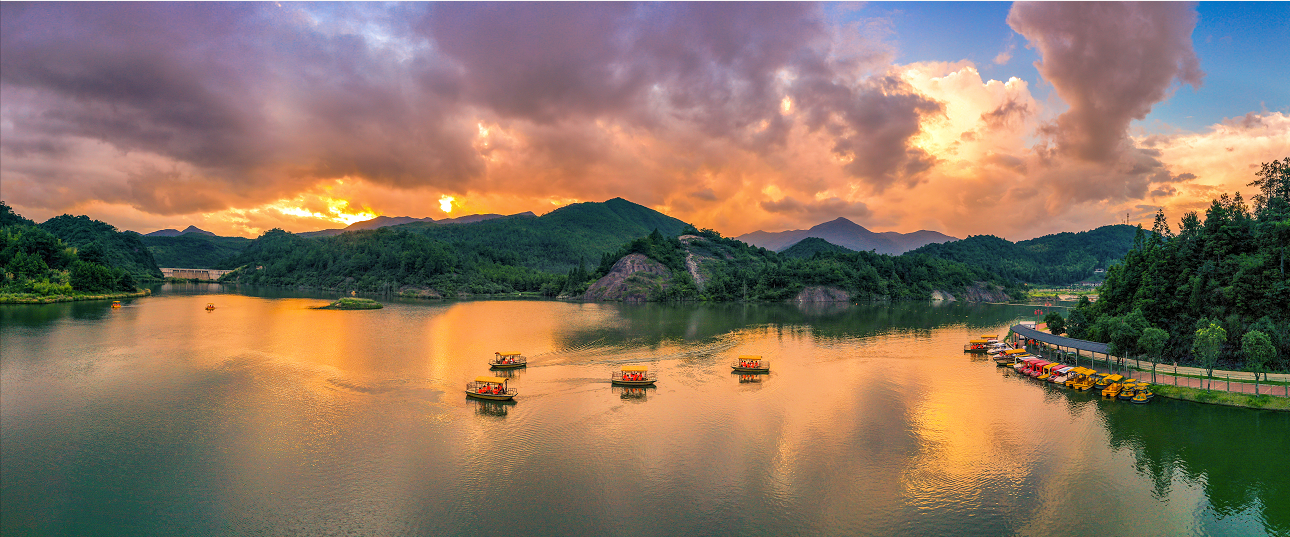
Jiuli Lake Scenic Spot is located in Xianyou County in Fujian Province. The area's most popular attractions include a picturesque lake and large waterfall. The lake has been famous throughout Chinese history and inspired many poets and writers. The waterfall is particularly spectacular. Visitors can walk past the waterfall and enjoy the beautiful natural surroundings.Xianyou · 17.1 km from downtown

Hong Mountain Waterfall
Hongshan Waterfall is located in Quanzhou, Fujian. Hongshan Township is more than 600 meters above sea level. The average annual temperature is 4 to 6 degrees Celsius lower than that of the urban area. The air is fresh and the summer and autumn are cool. The meandering stream flows down from the cliff of more than 80 meters, and the splashing water mist forms a circle of beautiful rainbows under the sunlight, hence the name of Hongshan Waterfall. He Qiaoyuan, a well-known local historian in ancient my country, traveled to this place, and wrote a poem, "The red sun shines on the sky and the earth, and the flying snow is white; the Taoist occasionally comes here, and the thunder is not surprised." The ancient trees around the waterfall are towering and varied. There are vigorous and straight ancient pine trees and ancient camphor trees that can only be hugged by three people.Quanzhou · 12.5 km from Xianyou

Caixi Rock
Legend has it that Caixi Rock has over one hundred tourist attractions. There is an ancient temple built by the Tang Dynasty on the mountain. The temple has had periods of prosperity and decline and was rebuilt to include the Grand Hall, Jiuxian Shine, Hall of Avalokitesvara Buddhisatva and Ningdai Dagoba. Two huge rocks stand against each other near the temple, between them a stone gate. The precipice on the north side of the stone gate is like a giant shield. Water running from of the mountain after rain forms a splendid waterfall.Xianyou · 24.6 km from downtown

Xianshuiyang
Xianshuiyang is a flat bedrock riverbed in the upper reaches of Jiuxianxi, at the junction of Xianyou County and Dehua County. The surrounding scenery is stunning, with beautiful mountains and clear water, giving it the name of "the green treasure house" or "the land of clouds and mist". It is also one of the birthplaces of South Shaolin and a tourist spot integrating leisure and sightseeing, as well as a top fishing spot for local residents.Xianyou · 24.2 km from downtown

Kowloon Valley Scenic Area
The Jiulong Valley Scenic Area has always been known as Putian's beautiful “backyard,” and it includes the lower half of the nine waterfalls of Jiuli (“Nine Carp”) Lake. The scenic area also has quite a rich assortment of entertainment facilities. You can get your fill of lake scenery floating on a bamboo raft along the lake. Thrill seekers can get personally acquainted with the rapids on kayaks. Alternatively, visitors can challenge themselves by taking a walk on the cable bridge that spans the two sides of the stream.Putian · 16.8 km from Xianyou

Wanjia International Hot Spring Resort
The Xianyou Wanjia Hot Spring Resort project covers an area of 253 mu and has a total construction area of about 57,900 square meters. It is a hot spring tourism project created by Fujian Wanjia Hotel Management Group. The resort is developed around the core goals of "hot spring bathing, ecological landscape, healing and health care, Fujian cuisine". It will be a landscape and humanities complex ecological leisure tourism area with the theme of Fujian style, integrating hot spring culture, ecological vacation, health care, food culture, outdoor development and water entertainment. A 4A-star hot spring resort hotel and a 4A-level hot spring park will be built. The supporting facilities include guest rooms, Dining, hot springs, SPA clubs, children's playgrounds, national standard indoor swimming pools, KTV entertainment, etc. The hot spring park has 60 large and small pools with different styles, functions and shapes, including health care pools with added materials, fish therapy pools, original pools, irregular outdoor constant temperature hot spring swimming pools, SPA hydrotherapy impact pools, children's pools, children's paddling pools, etc. There are also leisure tea restaurants and rest areas. There are slate warm baths and dry and wet steaming function rooms, health care clubs, and water park facilities, including indoor national standard constant temperature swimming pools, outdoor water entertainment facilities, and water outdoor expansion facilities. The hotel has two banquet halls, each of which can accommodate 500-600 people and can hold various large-scale banquets. The hotel has 25 RTV boxes of different sizes. The hotel lobby has a rest area and a main desk, with dozens of commercial shops on both sides. The hotel tea restaurant can accommodate 150 people for dinner at the same time, mainly providing breakfast, Afternoon Tea, etc. The hotel KTV is located on the negative 1st floor, with a total of 20 rooms of different styles and sizes.Xianyou · 3.8 km from downtown

Qingyuan Mountain
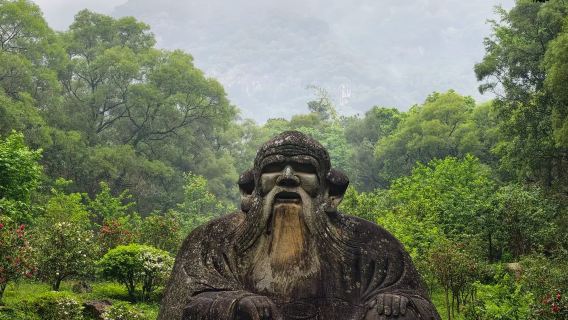
Qingyuan Mountain is the only 5A scenic spot in Quanzhou, which is a local landmark. The mountain is only 500 meters above sea level and is a perfect spot for a casual hike. With thousands of years of history, a major highlight is Laojun Rock. Located at the foothill, it is a detailed carved sculpture of Laozi. Literally taste the culture of Southern Fujian by stopping and taking tea breaks during your hike. Brewing tea on the mountain while observing the view is highly recommended.Quanzhou · 47.1 km from Xianyou

Quanzhou Kaiyuan Temple
Kaiyuan Temple is located in QuanzhouWest Street, Licheng DistrictBuilt in the second year of the Chuigong era during the reign of Empress Wu Zetian of the Tang Dynasty, it has a history of over 1,300 years. It is an important cultural relic along the southeastern coast of China and one of the larger-scale Buddhist temples in Fujian Province. The attractions of the monastery are arranged along the central axisWorship pavilion, the Baiting, the main hall of Kaiyuan Temple, the Sangpeng historic site, the Kaiyuan Temple's Sweet Dew Ordination Platform, the scripture depository, etc.Also,, as well as the stone pagodas on the east and west sides and the east and west corridors. Quanzhou Kaiyuan Temple - The heavenly king hall, also the mountain gate of the temple, was built in 1925. The stone pillars are slightly thinner at the top and bottom, thicker in the middle, shaped like a shuttle, reflecting the Tang dynasty stone pillar style. A wooden couplet hangs on the stone pillars, reading "This place is called the land of Buddha, where every street is filled with saints." It was composed by Zhu Xi, a great Neo-Confucian scholar of the Southern Song dynasty, and written by the modern eminent monk Hongyi. Crossing the mountain gate brings you toWorship pavilionStanding here, you can see the east and west pagodas rising from the ground and the spacious, bright east and west corridors symmetrically arranged on both sides. The east and west pagodas are among the more famous attractions in the area. The east pagoda is called "Zhenguo Pagoda (East Pagoda)," while the west pagoda is named "Renshou Pagoda." Standing over 40 m tall, they are one of the tallest pairs of stone pagodas in China and serve as landmarks and symbols of the ancient city of Quanzhou. Worship pavilionIn front, there is a large stone courtyard where officials and commoners from ancient and modern times gather for activities, becoming particularly lively during events. On both sides of the stone courtyard stand eight large banyan trees, beneath which are arranged 11 ancient sutra pillars and small stupas from the Tang, Song, and Ming dynasties in various styles, as well as two stone tortoises. Then there is the main structure, the Mahavira Hall of Kaiyuan Temple. The Mahavira Hall of Kaiyuan Temple also has an elegant name, "Hundred-Pillar Hall." Originally, the hall was planned to have one hundred pillars, but later, to accommodate the placement of Buddha statues and create space for Buddhist activities, the beams were extended, and the number of pillars was reduced, resulting in the "Hundred-Pillar Hall" with 86 pillars.Quanzhou · 51 km from Xianyou

South Shaolin Temple
First built during the Longshuo era and abandoned in the Tianyou era. According to Cai Yongjian's "Xishan magazine" from the Qing Dynasty, which cited the Tang Dynasty's "Minzhong records," before the first year of Longshuo in the Tang Dynasty (661 AD), "Zhikong entered Minzhong and built the Shaolin Temple at the foot of Qingyuan Mountain, consisting of thirteen courtyards." "The Shaolin Temple had thirteen sections, surrounded by walls three zhang high, with vast fields and lush forests." "Beside the celestial altar stood the Shaolin Temple, where Zen master Zhikong met with Governor Wang at the celestial altar." Zhikong (styled Daoguang) was one of the thirteen staff-wielding monks from the Songshan Shaolin Temple renowned for saving the Tang emperor. His arrival in Min marked the beginning of martial monks in Fujian, and he trained twelve disciples—some capable of capturing tigers or lifting massive cauldrons, others skilled in wielding heavy crossbows, mastering chain hammers, or moving with extraordinary speed... The "Minzhong records" also states: In the first year of the Tang Tianyou era (907), "the Shaolin Temple rebelled against Wang Shenzhi's allegiance to the Liang Dynasty and was destroyed." Shi Mengshuo of the Southern Song Dynasty wrote in his "Donglu poetry collection": "The Shaolin Temple was built in Qingyuan, with ten grand gates and towering walls; a hundred acres of fields across three ridges, where a thousand monks practiced martial arts to rebel against the Wang regime." The "Wang regime" refers to the Min King Wang Shenzhi. Wang Shenzhi's destruction of the South Shaolin Temple in Quanzhou marks its first destruction. Prospered during the Taiping Xingguo era and declined during the Zhiyuan era The "Xishan magazine" records that in the sixth year of the Taiping Xingguo era of the Northern Song Dynasty (981 AD), an imperial decree was issued to rebuild the South Shaolin Temple in Quanzhou. This marked the second revival of the South Shaolin Temple in Quanzhou. Liu Changyan of the Northern Song Dynasty wrote in his poem: "The legacy of Qingyuan was built during the Xingguo era, the Shaolin spirit pervades throughout southern Quanzhou." "Xingguo" refers to the reign era of Emperor Taizong of Song, Taiping Xingguo (976–983). A copy of the Zhang family genealogy preserved in Donghu village, Dongqiao town, Hui'an county, states: "Shizhi, styled Fayi, renowned for stone carving, his craftsmanship was unparalleled, such as the stone lions in front of the Shaolin Temple in Quanzhou..." Zhang Shizhi was the younger brother of Zhang Shixun, a figure from the Song Dynasty, indicating his involvement in carving the stone lions at the entrance of the Shaolin Temple in Quanzhou during the Song Dynasty. Northern Song Dynasty records document that the South Shaolin Temple originally comprised a mountain gate, Mahavira Hall, dharma hall, Bodhidharma ancestral hall, thirteen halls, arhat hall, xuannü hall, scripture repository, heavenly king hall, Guanyin hall, Ksitigarbha hall and other supporting facilities, covering 400 mu of land. During the 2002 reconstruction of the heavenly king hall, over 40 stone temple components were excavated underground, including 1 pagoda base, 1 pagoda cover, 7 finials resembling those of Yinggeng Pagoda at Chengtian Temple, 4 stone caps, 4 column bases, 6 stone pillars, and notably 20 intact mortise stones measuring 1 m in diameter - all testifying to the temple's grand architectural scale. Numerous roof tiles and covers were also unearthed. Experts speculate these components likely belonged to the Quanzhou South Shaolin Temple's structures during the Tang and Song dynasties. During the peak periods of the Tang and Song dynasties, the temple housed thousands of martial monks. The "Xishan magazine · general records" also records: "In the first year of the Song Jingyan era (Yuan Dynasty's Zhiyuan 13th year, 1276), a thousand monks from the Qingyuan Shaolin Temple rebelled against Pu Shougeng's surrender to the Yuan Dynasty. The abbot of the Shaolin Temple, Yuan Miao... commonly known as Zhao Mengliang... (Yuan troops) pursued them to the Shaolin Temple... The vanguard, Qi Wotunsi, known for his cruelty, ordered an assault on the Shaolin Temple, provoking the fury of the thousand monks. Amidst the clash of swords, each monk fought like ten, leaving Yuan soldiers' corpses strewn across the east of Qingyuan city, with bones littering the fields. When Suodu arrived, he ordered arrows to be shot, killing most of the thousand monks, with only a hundred surviving... The survivors fled to Dehua (Daiyun Temple)." This marks the second destruction of the South Shaolin Temple in Quanzhou. In the mid-Ming dynasty, Li Sen (born in 1398), a wealthy philanthropist from Anxi, funded the purchase of large tracts of wasteland on Dongyue Mountain to establish charitable burial grounds for the free interment of remains by Quanzhou residents. These burial sites appear to have been the same wastelands where the Shaolin Temple was destroyed after its thousand monks resisted the Yuan dynasty in the late Southern Song period. Prospered during the Hongwu era and declined during the Qianlong era The "Xishan magazine" records: In the tenth year of the Hongwu era of the Ming Dynasty (1377 AD), Faben of the Xuanmiao Temple (a Shaolin monk who fled to Dehua after the resistance of a thousand monks against the Yuan Dynasty in the late Song period, aged 135) persuaded the local official Huang Zhongli to "petition the court for imperial approval to rebuild the Shaolin Temple." The monks then spread martial arts throughout southern Quanzhou. This marked the third revival of the South Shaolin Temple in Quanzhou. The Annals of Jinjiang County, Volume 69, from the Daoguang era of the Qing Dynasty records: "The South Shaolin Temple is located by the East Lake outside Renfeng... It was rebuilt in the 10th year of the Xuande era (1435) during the Ming Dynasty, but later fell into disrepair. Monks restored one-tenth of its original site and also enshrined County Magistrate Peng Guoguang, as Peng had helped monks reclaim temple lands." In the book "Records of Shaolin warrior monks" by master Deqian of the Shaolin Temple on Mount Song (published by Beijing Sports University Press, 1988), it is stated: "According to the 'Internal Chronicles of Shaolin Temple,' monk Yuanran possessed extraordinary martial arts skills and was commended by Emperor Jiajing of the Ming Dynasty (reigned 1522-1566). His eminent disciple, master Yuekong, was ordered to lead over 30 warrior monks who had proven their skills to Quanzhou, Fujian, to suppress Japanese pirates and establish merits. There, they built the South Shaolin Temple, where he became the abbot." This confirms that the "Internal Chronicles of Shaolin Temple" from the northern Shaolin Temple clearly records the existence of a South Shaolin Temple in Quanzhou during the Ming Dynasty, while the claim of it being newly built is a misconception. To this day, southern Fujian still circulates stories of northern Shaolin warrior monks suppressing Japanese pirates. During the Qianlong era of the Qing Dynasty, Emperor Qianlong toured southern China and feared that the warrior monks of the South Shaolin Temple might collude with the remnants of Zheng Chenggong (see "Quanzhou biographical records: Zheng Chenggong"). "In the fall of the 28th year of Qianlong's reign (1763), an imperial decree ordered the burning of the Shaolin Temple... From then on, no one dared to rebuild it." Some temple monks took refuge at Yipian Temple in Nan'an. This marks the third destruction of the South Shaolin Temple in Quanzhou. After the burning of Shaolin Temple, the monk Zhishan sought refuge among the people, continuing to recruit Shaolin disciples to oppose the Qing dynasty and restore the Ming. Zhishan, Hong Xiguan, and their disciples spread to Guangdong, further developing Southern Shaolin boxing, which produced the Southern Shaolin boxing champion Wong Fei-hung. Later, Wong Fei-hung's disciples brought the art to Hong Kong and spread it as far as the United States.Quanzhou · 49.8 km from Xianyou

Maixie Rock
At the foot of Shisuo Mountain in Maixia Village, you can climb up along a stone path. On the right is the towering Tieyi Peak, and on the left is a huge stone with the three characters "Qiaogu Mountain" engraved on it. It is said that these three characters were written by Kublai Khan, the founder of the Yuan Dynasty. According to historical records, in the late Southern Song Dynasty, there was a noble man named Lin Biqing, who was proficient in astrology, well-known in the court and the public, and lived in seclusion here. After Kublai Khan became emperor, he wanted to invite him out of the mountain and give him an official title, but Lin Biqing refused. Kublai Khan praised his integrity and named him "Miaoying Daoji Zhenren", and personally wrote the three characters "Qiaogu Mountain" to him. Opposite the "Qiaogu Mountain" boulder, there is a towering strange stone with eight powerful characters "Zhusheng Daochang, Chaotian Fudi" written on it. There is a Fuxi stream next to the strange stone, winding and twisting. The huge rocks on the stream crisscross, forming an extremely magnificent stone landscape. Legend has it that the Song Dynasty poet Liu Kezhuang once chanted poems and composed fu here, and lingered there. Not far away, under the shade of primitive nanmu, kemu, qingtong and green bamboo, there is a dark stone with three big characters "Chen Gongchi" written on it. It is said that there is a natural pool under this stone, and Yuandi Pavilion was built next to the pool. Later, the pavilion was broken and the pool was filled. To the west of "Chen Gongchi" is Yuquan Cave, and the three characters "Yuquanyan" are written at the entrance of the cave; this cave is about 100 meters long and leads directly to the east side of Maixiayan Temple. To the east is Yinzhen Cave, and the three big characters "Yingzhenjing" are still left; the cave is surrounded by large trees like a canopy; passing through the cave, you will see natural stone caves such as Meihua Cave and Huanzhu Cave. After passing the caves, you will see Maixia Temple, which is built against a huge stone cliff. It is said that this temple was founded by a monk named Ziyong in the Song Dynasty. After the vicissitudes of life, it has been restored by successive dynasties and has become what it is today. Maixia Temple is surrounded by mountains on three sides, with flying eaves and majestic momentum. There is a secret path in the northeast of the temple, which leads directly to the top of the mountain. Along the way, there are jagged rocks and jagged teeth. At the peak of Maixia Rock, a huge rock stands in the air. According to legend, whenever the climate changes suddenly, the huge rock will emit a low bell sound that can be heard from miles away. It is called "Zhongshi". Therefore, this mountainous area is called Zhongshan (now called Zhongshan Town). There is a huge rock near Zhongshi called "Zhanxingshi". According to legend, Zheng Qiao, a historian in the Song Dynasty, once lived here and observed the celestial phenomena on the "Zhanxingshi" at night. The stone is engraved with four large characters "Kaichuangyan Pai" and hundreds of small characters, which are flying like dragons and phoenixes. It is difficult to recognize due to the weathering of the stone due to its age.Xianyou · 23.4 km from downtown
Experiences you can't miss in Xianyou
Featured Cultural experiences in Xianyou
View all Cultural experiences
Save ILS 1.85
FromILS 183.24ILS 185.09
Free cancellation
Instant confirmation
FromILS 601.52

Free cancellation
Instant confirmation
FromILS 642.24
Free cancellation
Instant confirmation
FromILS 545.07
FromILS 18.51
Free cancellation
Book now for today
FromILS 59.23
Featured Day tours in Xianyou
View all Day tours
5% off
Limited-time sale
FromILS 620.57ILS 653.24


4.6/5
· 43 reviews· 359 bookedFree cancellation
Instant confirmation
Book now for tomorrow
289 travelers saved
FromILS 369.71
![1-day tour to Meizhou Island from Xiamen [Includes admission ticket, ferry ticket, guide service, and private tour]](https://ak-d.tripcdn.com/images/0350a12000raaxb2v3E91_C_568_320.jpg?_fr=wc)
5.0/5
· 3 reviews· 33 bookedInstant confirmation
Book now for tomorrow
FromILS 725.09
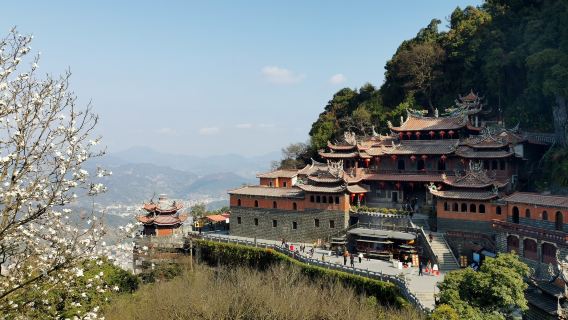
Free cancellation
Instant confirmation
Book now for tomorrow
Save ILS 2.09
FromILS 207.49ILS 209.58
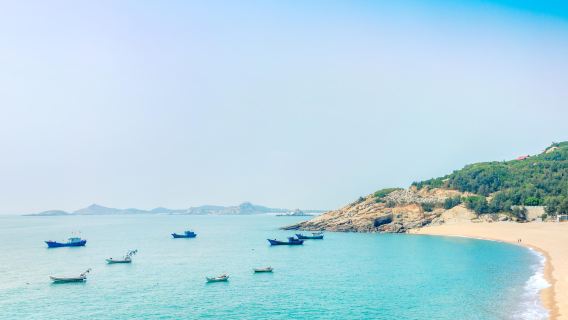
Free cancellation
Instant confirmation
Book now for tomorrow
Save ILS 3.22
FromILS 319.59ILS 322.81

Free cancellation
Instant confirmation
Book now for tomorrow
FromILS 827.32
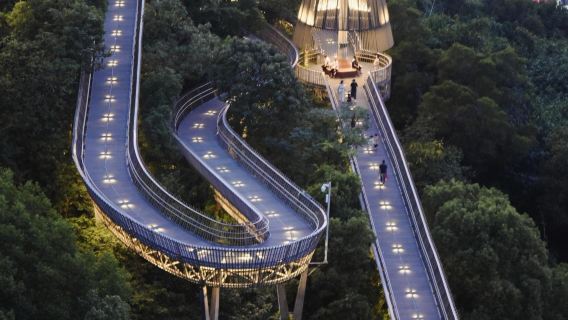
5% off
Limited-time sale
FromILS 413.71ILS 435.49
Featured Food & drink in Xianyou
View all Food & drink
Free cancellation
Instant confirmation
Book now for tomorrow
FromILS 925.42
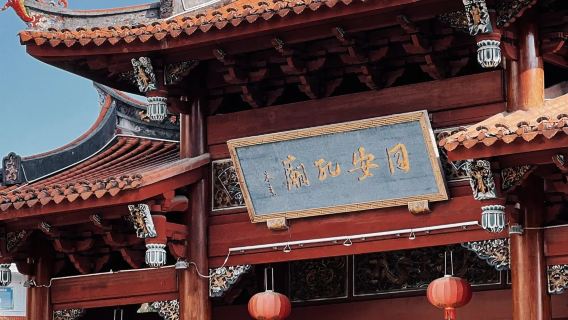
Free cancellation
Instant confirmation
FromILS 1,526.93
Free cancellation
Instant confirmation
Book now for tomorrow
Save ILS 1.16
FromILS 114.01ILS 115.17
Free cancellation
Instant confirmation
Book now for tomorrow
FromILS 272.08
Featured Outdoor experiences in Xianyou
View all Outdoor experiences
5.0/5
· 2 reviewsFree cancellation
Instant confirmation
Book now for tomorrow
FromILS 697.77

Free cancellation
Instant confirmation
Book now for tomorrow
FromILS 629.29
Free cancellation
Instant confirmation
FromILS 554.33
Free cancellation
Instant confirmation
Book now for tomorrow
Save ILS 3.6
FromILS 356.29ILS 359.89
Free things to do in Xianyou
Jiuli Lake Scenic Spot
Xianyou · 17.1 km from downtownImmediate access, Book now for today, Cancel anytimeHong Mountain Waterfall
Quanzhou · 12.5 km from XianyouCaixi Rock
Xianyou · 24.6 km from downtownImmediate access, Book now for today, Cancel anytimeXianshuiyang
Xianyou · 24.2 km from downtownImmediate access, Book now for today, Cancel anytimeKowloon Valley Scenic Area
Putian · 16.8 km from XianyouImmediate access, Book now for today, Cancel anytimeWanjia International Hot Spring Resort
Xianyou · 3.8 km from downtownQingyuan Mountain
Quanzhou · 47.1 km from XianyouImmediate access, Book now for today, Cancel anytimeQuanzhou Kaiyuan Temple
Quanzhou · 51 km from XianyouSouth Shaolin Temple
Quanzhou · 49.8 km from XianyouMaixie Rock
Xianyou · 23.4 km from downtown
What travelers say about Xianyou

M51***337 October 2026
5.0
Xianyou wasn't originally on our itinerary, but due to a typhoon, Meizhou Island was closed, so we took a taxi to Jiuli Lake instead. This unexpected turn of events added a highlight to our trip. We first entered the park, walking along a flat path for about half an hour, then slowly descended the mountain. There were quite a few steps, but the deafening roar of the waterfall made it all worthwhile. The waterfall was huge, with a rapid current, likely due to recent heavy rains and the high water season, making it incredibly beautiful. The second half was more strenuous, involving another climb. The steps were countless, making it extremely tiring. One spot featured a rock formation resembling the Titanic, perfect for photos. The park was very quiet, making for a comfortable walk with fresh air. Just as we were about to leave, a light drizzle started. We bought a 10 yuan return shuttle bus ticket and drove a short distance back to the main gate because we were too exhausted to walk any further. Getting a taxi from Putian city center was easy, taking about 40-50 minutes, but the return trip was a headache – it was difficult to find a ride. We waited for almost an hour before taking a bus down the mountain, and then finally managed to hail a taxi back to the city. Overall, the scenery is highly recommended.
Jiuli Lake Scenic Spot

人生若只如初见AA5 September 2019
4.0
[Scenery] Hongshan Village is most famous not for its waterfalls but for its rapeseed fields. Every year when the rapeseed flowers bloom, the place is crowded with tourists. The rapeseed fields and nearby villages form a harmonious spring painting. The waterfall is at the end of the village and is not very big.
[Fun] The nearby villagers will carry their own vegetables and sell them. In recent years, they have also held long table flower field banquets, which is quite interesting.
[Value for money] No tickets are required
Hong Mountain Waterfall

JJ7723 June 2022
4.0
Caixi Rock is famous for its beautiful mountains and clear waters, strange rocks and steep cliffs, deep valleys and secluded caves. It is the first of the four major scenic spots in Xianyou. There are more than 120 panoramic views of Caixi Rock, with beautiful and colorful scenery, including the towering stone walls that seem to be cut by an axe, the thunderous waterfalls with rainbows hanging in the air and flying beads and jade splashing, the majestic and majestic northwest gate of heaven, the steep rocks and infinite scenery of the southeast ladder, the winding paths leading to secluded and pleasant natural caves, and the winding streams shaded by trees and gurgling water.
Caixi Rock

首席监理7 January 2022
4.0
Xianshuiyang is located in the upper reaches of Jiuxianxi, a tributary of the Minjiang River, at the junction of Xianyou County and Dehua County in Putian City, Fujian Province. It is more than 871 meters above sea level. After geological investigation, it was preliminarily confirmed as a rare shallow water square in the world. It is composed of a whole piece of brown flat stone skin, extending 615 meters along the stream. The stone surface is as smooth as a grindstone, without any gravel, and the stream bed is flat. In addition, the stream flows slowly and the water depth is less than half a meter, making it like a natural water pedestrian street, which can be called a wonder of the waters in central Fujian. Xianshuiyang is located in Caoyang natural village, Fengshan Village, Xiyuan Township, Xianyou County, Putian City, Fujian Province, with an altitude of more than 871 meters. It extends to Daxi, Caoyang natural village to Jiuxianxi Xiwei Reservoir in the east, Daxi in the west, Jiuzuo Temple and Fengding Village in the south, and Jiuxianxi Xiwei Reservoir in the north, with a planned control area of 0.6 square kilometers. After geological investigation, it was initially confirmed that it is a rare shallow water square in the world. It is composed of a whole piece of brown flat stone skin, extending 615 meters along the stream, like a natural water pedestrian street, with a developable area of more than 150,000 square meters. It is a flat bedrock stream bed comparable to Baishuiyang. The stone surface is as smooth as a whetstone, clean and free of gravel; the water is evenly distributed on the rocky riverbed, only reaching the ankles. The clear water is shining under the sun, which is amazing. It is indeed a fairyland on earth, so it is called "Xianshuiyang".
Xianshuiyang

山魂海韵0512 September 2023
5.0
I have been to Jiulong Valley several times. The supporting facilities are getting better and better, but the parking lot is not good. It is not possible to park when there are too many people. The scenic area inside is now much more complete. It can be traveled by individuals or with the whole family. There are many activities in it. If you are willing to spend money, you can try them. Some are not bad. As the lower Jiuli, although the scenery is not as beautiful as the upper Jiuli, it is not bad. It is not expensive to see the scenery, plus the entertainment, the cost performance is poor. It may be better to join a group! But overall it is still good!
Kowloon Valley Scenic Area

M45***8724 December 2021
5.0
This hot spring is really great. When the weather is good, the sky is clear and the air is fresh, the breeze is gentle, and the sky is the same color, which makes you feel relaxed and happy. The waiter has a strong sense of service. I give a thumbs up to the front desk 666
Wanjia International Hot Spring Resort

闲暇即财富11 October 2026
5.0
Definitely worth a visit! The air is fresh, and there are many sights to see. Unfortunately, my schedule was limited that day, so I only took the bus to the mountaintop and visited part of the core scenic area. I didn't get to see the Hongyi Master Relic Pagoda, as half a day wasn't enough. I also missed the recommended evening dinner and panoramic view from Qingyuan Mountain. We'll see what happens next. There are walking trails and scheduled buses within the scenic area; you can choose your route based on your physical condition and schedule. During the National Day holiday, round-trip tickets for the buses are not available; a one-way ticket costs 15 yuan, and buses depart approximately every 20 minutes. Apparently, there's a bus back to the city from the visitor center at the foot of the mountain for only 1 yuan. The staff and holiday volunteers within the scenic area were very helpful, patiently providing guidance and answering questions.
Qingyuan Mountain

菁菁 者莪23 July 2026
5.0
Kaiyuan Temple, a thousand-year-old temple, boasts imposing twin pagodas and towering banyan trees, offering a tranquil escape from the bustling city. Just a wall away lies West Street, a vibrant hub of activity, with its exquisitely carved ancient buildings that blend the diverse cultures of the Maritime Silk Road, making it a worthwhile destination to savor and appreciate the rich heritage of Quanzhou.
Quanzhou Kaiyuan Temple

300***347 October 2026
5.0
The performance, priced at around seventy yuan, was well worth it. The Shaolin monks all gave their all, and the applause was constant throughout the performance. This was not only an affirmation of their performance but also a praise and expression of confidence in the spirit of traditional Chinese martial arts. There was especially a cute little monk, about four or five years old, who could even make a hand gesture, eliciting constant laughter.
South Shaolin Temple

_读万卷书行万里路_14 February 2020
5.0
It is a well-known scenic spot in Xianyou, with a high cost-effectiveness ratio. It is not far from Jiuli Lake and you can see very far from a high place. If you go there in autumn, you can also see a large area of golden rice fields. The sunset is also super beautiful. It’s a pity that we didn’t encounter good weather when we went there.
Maixie Rock


