





 4.6/5
4.6/5 M50***57
Memories of Xiamen Botanical Garden On December 19th, I visited the Xiamen Botanical Garden and made a special trip to the National Bougainvillea Germplasm Resource Bank. I was surprised to learn that bougainvillea, botanically known as a climbing shrub in the Nyctaginaceae family, is native to South America. It is vigorous, thrives in warm climates, and typically blooms in November. Due to its vibrant colors and long flowering period, it has been widely introduced and cultivated in tropical and subtropical regions worldwide, and is now the city flower of more than 30 cities in my country, including Xiamen. The Bougainvillea Germplasm Resource Bank is a "gene bank" of bougainvillea genetic resources, currently housing nearly 500 varieties, accounting for almost half of the world's varieties and ranking first in China. It consists of a bougainvillea germplasm resource conservation base and a bougainvillea exhibition garden. The exhibition garden fully utilizes the natural landscape of the botanical garden, including mountains, rocks, and water, with "flowers and rocks" as its design theme. It highlights both the vibrant beauty of bougainvillea and the unique characteristics of Wanshi Mountain. Following the natural contours of the mountain, the bougainvillea are arranged at varying heights, dividing the area into several zones, including a flower sea area, a bonsai area, a variety area, and a leisure area. Stepping into the flower sea area is like entering a dreamlike wonderland. Hundreds of bougainvillea varieties bloom in competition, their colors ranging from fiery reds and brilliant oranges to dazzling yellows and pure whites. They cascade down the terraced terrain in tiers like waterfalls, creating a magnificent sea of bougainvillea flowers. The walkways meander through this floral paradise; strolling along them, the layers of blossoms resemble colorful waves, swaying gently in the breeze. The invigorating fragrance carried on the breeze is refreshing and unforgettable. Entering the variety area is like stepping into a natural kingdom of bougainvillea. Here, the bougainvillea grows intermittently alongside the rocks, blending perfectly with the surrounding natural environment. Strolling along the winding paths, one encounters numerous "bougainvillea beauties"—varieties like Snow White, Mona Lisa, Hong Kong Beauty, Orange Ice, and River Lotus, each with its own unique charm: some stand gracefully on either side of the path; others nestle against the rocks, all alluring. Among them, the "Red-Bud Beauty" series is the most abundant, with varieties like Yi Hong, Pink Little Elf, Double-Petaled Jujube Red, Golden Deer Crimson, and Deep Red Wrinkled Leaves, each possessing its own distinct character. The "green foliage" adorning these "beauties" is also unique, with varying shades of green, sizes, and even patterns—silver-edged, gold-edged, variegated, and wrinkled leaves creating a delightful contrast. Immersed in the garden, appreciating the rich variety of bougainvillea varieties, and fully enjoying nature's bounty, one's heart is filled with comfort and happiness. Stepping into the leisure area, one enters a tranquil resting place amidst the sea of flowers. Here, you'll find a meticulously crafted "Love Corridor," with vibrant red hearts strung together to form archways, and animal shapes woven from bougainvillea, their graceful forms creating a romantic atmosphere. Lawns, flagstone paths, and rest pavilions are scattered throughout, complementing each other beautifully. Strolling along, you can stop to take photos, enjoy panoramic views of the magnificent terraced flower fields, and gaze at the stunning scenery of Wanshi Mountain and the bougainvillea's graceful, climbing blossoms. Against the backdrop of blue skies, white clouds, colorful flowers, and green grass, you can truly appreciate the harmonious beauty of humanity and nature. In short, the bougainvillea flower sea is one of the most visually stunning biological landscapes I've ever seen on my travels.
 4.7/5
4.7/5 53939036
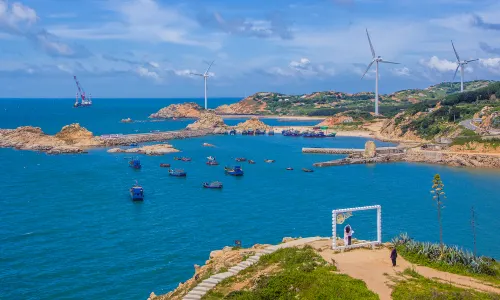
Despite encountering multiple crosswinds while crossing the 16.23-kilometer-long Taiwan Strait Bridge, we still made it to this scenic spot, the closest point on mainland China to Taiwan. We walked the first half, taking photos along the way, and took the shuttle bus back the second half.
 4.7/5M50***57
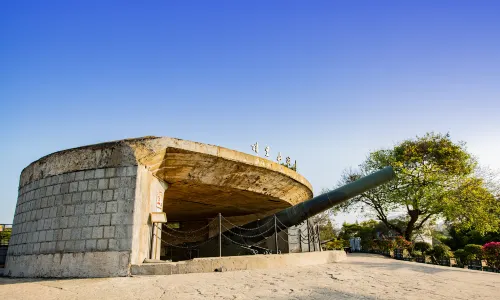
Memories of Hulishan Fortress "Hulishan Fortress" is one of Xiamen's twenty scenic spots. With its unique historical and cultural value and beautiful natural scenery, it has become a calling card for Xiamen tourism. On November 20th, I visited Hulishan Fortress and learned about "One Tree, Two Cannons." ★A Single Tree Forming a Forest It is actually a giant banyan tree with a huge canopy, lush branches and leaves, and numerous aerial roots. It appears to be composed of dozens of banyan trees, but in reality, it is only one. These aerial roots hang down from the branches, take root in the ground, and grow into new trunks, creating a dense canopy that blocks out the sun. ★28-Cen Krupp Cannon "Cen" is an old term; one cen is approximately equal to 10 millimeters. 28 cen means a caliber of 280 millimeters. The 28-cen Krupp cannon was produced by the German Krupp arms factory and had an effective range of 20 kilometers. On September 3, 1937, a Japanese warship entered Xiamen's outer harbor, and this cannon sank the Japanese warship, marking the first time a Japanese warship was sunk in the China theater. Hulishan Fortress originally housed two 28cm Krupp cannons. One was destroyed during the Great Leap Forward in 1958, leaving only one. The State Administration of Cultural Heritage has authenticated this cannon as "the world's only extant 19th-century breech-loading coastal cannon completely preserved at its original site," and it has been included in the Shanghai World Guinness Records. ★Iron Mold Cannon The iron mold cannon utilizes the iron mold casting technique, invented by Gong Zhenlin, a weapons expert in the late Qing Dynasty. This technology predates Europe by 30 years, serving as important evidence of my country's leading position in ancient weapons manufacturing. The iron mold cannon is a unique relic of modern Chinese iron mold casting and a precious treasure of the fortress. The Hulishan Cannon King is not just a scenic spot, but also a historical record of the three seas. Hulishan Cannon King The Hulishan Cannon King crowns Xiamen Island A famous scenic spot in Xiamen records the seasons A single tree shelters the sky, concealing the years Two cannons thunder, calming the sea island Mountains and seas serve as paper, recording a century Vicissitudes are recorded in the scroll, commemorating the past.
 44.7/5
 _We***79
My child was so excited about the whale specimen, and was immediately overwhelmed by its sheer size. He cried... a true example of "Lord Ye's love of dragons" (a Chinese idiom meaning someone who professes to love something but is actually afraid of it)... hahaha. The guide was incredibly gentle and patient, and I thoroughly enjoyed the explanations! A million thumbs up!
 54.3/5
 Anonymous user
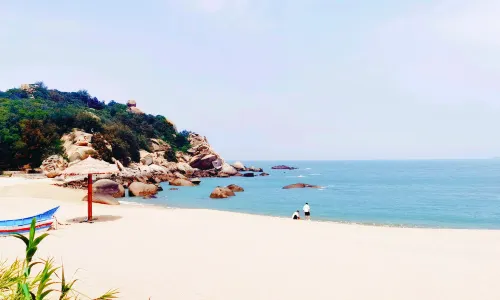
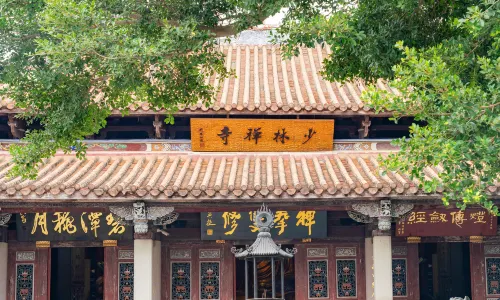
Meizhou Island Travelogue: Sea, God, and Original Intention Stepping onto Meizhou Island, one is immediately enveloped by the atmosphere of the azure sea and the mingled scents of incense. Climbing the steps, the majestic stone statue of Mazu stands tall, its flowing robes seemingly protecting the vast blue waves. The ancestral temple complex features upturned eaves, the golden Mazu statue reflecting the warmth of the jade Mazu statue, while the sounds of morning bells and evening drums bring a sense of tranquility, allowing one to forget the hustle and bustle of the world. Strolling along the rainbow-colored running track, the waves gently kiss the beach, and the sea-eroded wonders of the Goose Tail Rock bear the marks of time. Here, there is no noise, only the whisper of the sea breeze and the piety of the believers. The legend of Mazu's salvation has been carried by the waves for millennia, becoming the island's most gentle and nurturing backdrop. The two-day trip was swift, yet I was deeply moved by the purity of this faith and the tranquility of nature. The beauty of Meizhou Island lies not only in its azure sea and sky, but also in the benevolent power that transcends millennia, leaving one with a clear mind and unforgettable memories.
 64.7/5
 Emily小乖
Fantastic performance! The kids were adorable! The performance was fantastic! The iron head kick was amazing! Even the foreigners were stunned! At 50 yuan per person, it's very affordable! Definitely worth going!
 75.0/5
 M34***17
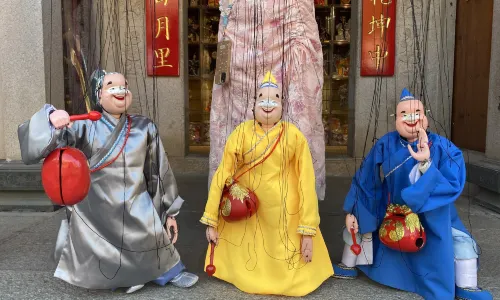
I thought it would be just average, but it gave me a huge surprise. The puppeteer's superb acting skills were truly impressive. It was a genuine reflection of Quanzhou's unique culture. I'll definitely recommend it to them when I get back.
 84.9/5
 M40***76
Ten fingers strumming strings, capturing a thousand years of joys and sorrows; a single hand holding the universe, turning the world upside down. Quanzhou puppets are both an ethereal journey through the clouds and a delicate tapestry of history in the palm of your hand. As the curtain rises and the spirit gathers, as the strings fall and the rhythm remains, the essence of Southern Fujian is fully revealed on this small stage.
 94.8/5
 _TI***2d
Loved it. Lots to do, you could spend all day there. Also make sure you hire a buggy. This place is huge.
 104.6/5M50***57
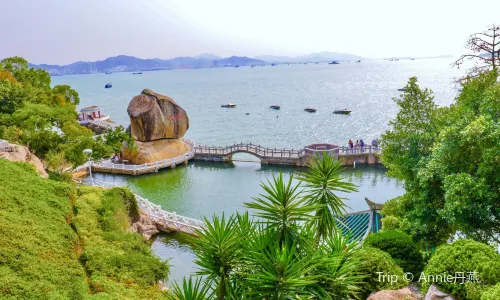
Memories of Shuzhuang Garden ★ Discover a Beautiful Scene Shuzhuang Canghai (Hidden Sea in Shuzhuang) is one of Xiamen's famous scenic spots, referring to Shuzhuang Garden on Gulangyu Island. The garden is divided into two parts: "Hidden Sea" and "Supplementing the Mountain," a modern garden that combines concealment, borrowing, and ingenuity. Upon entering the garden, your view is initially blocked by a yellow wall, allowing only a glimpse of the small courtyard. Passing through an archway, the sea suddenly unfolds, a delightful surprise thanks to the design of first concealing and then revealing. Next, walk to the Forty-Four Bridge, an excellent spot for viewing the sea, named after the garden's owner who was forty-four years old when he built the bridge. A sluice gate under the bridge calms the turbulent sea, cleverly concealing a corner of the ocean within the garden. Strolling along the Forty-Four Bridge, you can enjoy views of the sandy beach and azure sea nearby, the distant Nan Taiwu Mountain, and the silhouette of Sunlight Rock. The surrounding mountain and sea scenery is fully captured within the garden's view, showcasing its open and transparent beauty. Stepping into the piano museum within "Tingtaoxuan," a variety of antique pianos come into view, as if entering a secret realm sealed with time and melody. I was filled with awe and fascination, only regretting missing the scheduled live performance. Walking to the latter part of the garden, I learned that the name "Bushan" (补山) implies "a broken country in urgent need of repair," revealing the garden owner's deep patriotism. The core landscape of Bushan Garden is the Twelve Caves, constructed of reddish-brown sandstone, divided into twelve caves, each containing a statue of one of the twelve zodiac animals. The caves are interconnected, with winding paths, resembling an intricate maze. Seeing many children playing and frolicking freely in the caves filled me with a sense of carefree joy. ★Encountering a Sunset In my memory, sunset is around six o'clock in the evening, but unexpectedly, just after five o'clock, I witnessed a magnificent sunset. At first, the sun hung high above the sea, its midday heat fading to a soft, warm hue. Gradually, the red sun rose above the water, painting the horizon a rich orange-red. The sea and the beach, washed by the waves, transformed into a delicate canvas, bathed in the glow of the sunset. The shimmering waves were filled with flowing gold and red, as if God had spilled his palette, unrestrained yet harmonious. On the beach, people were enveloped in a warm glow, the daytime hustle and bustle gone, replaced only by the sounds of the waves and laughter. Some gazed quietly, some captured moments with cameras, some chased the waves barefoot, family and friends sat side by side, a scene of heartwarming human warmth, comfortable and peaceful. Finally, the red sun slowly sank into the sea, leaving only a faint afterglow on the horizon, the sky gradually turning indigo. This enchanting sunset blended the bridges, pavilions, rocks, sea, and trees of Shuzhuang Garden into the poetic beauty of twilight. It was just an ordinary dusk, but the garden scenery, embraced by the setting sun, made it exceptionally beautiful, making people reluctant to leave and filled with a healing warmth.
 Achieved a 3-year streak on the annual lists
