Eurostar check-in, security & passport control: New rules explained

Lauren Ryan
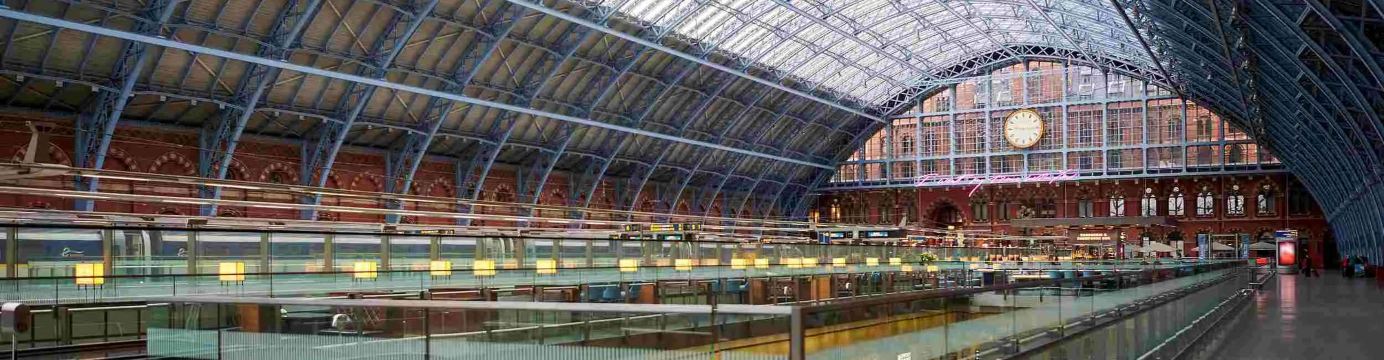
Preparing for a Eurostar journey between the UK and continental Europe can often feel more like preparing for a flight than boarding a conventional train, especially if it’s your first Eurostar trip. But this can cause some confusion about how Eurostar check-in actually works—when it comes to things like arrival times, security and passport control, the mix of traditional train and airport elements might leave you unsure about how to go about things.
Eurostar’s check-in process is certainly distinct from traditional train departures—it follows a structured airport-style procedure in which passengers must complete check-in, security screening and border control before boarding. However, there are some differences from airport check-in too, especially when it comes to timing and luggage.
In this guide, we’ll explain exactly how Eurostar check-in works—specifically, how early to arrive for check-in, what the security screening involves, and the changes that have been rolled out as part of the new Eurostar check-in rules. Our breakdown will ensure you know exactly what to expect on your next Eurostar trip so you can approach the check-in desk with confidence.
Eurostar's new check-in rules explained
If you’re taking Eurostar between the UK and continental Europe, there will be more pre-departure checks than you would have on most domestic rail journeys. The new rules add an extra element to consider when arriving at your departure station. In general, Eurostar check-in involves scanning your digital ticket at the Eurostar departure gates to access the departure terminal. Ticket gates close 30 minutes before departure for most passengers, although gates stay open an extra 15 minutes for Premier passengers. Once you’ve entered the departure terminal, you will proceed to security checks and passport control.
Entry/Exit System rules for Eurostar
The new check-in rules for Eurostar journeys are part of the Entry/Exit System and may require you to arrive at the station earlier than usual. The Entry/Exit System (EES) applies to eligible non-EU nationals travelling to the participating European countries for a short stay. Whether you need to register depends on your nationality and immigration status, rather than where you live. If you are required to register for EES at the station, you will need to visit a kiosk and have your photo taken and your fingerprints scanned. Make sure you check the arrival time stated on your Eurostar ticket and arrive at the station within that window—this time will take into account all aspects of the check-in process, including possible EES registration time. Once you’re registered, you won’t have to complete this process again.
As you can see, it’s important to check the arrival time stated on your Eurostar ticket and follow this recommendation to ensure you have adequate time to get through the ticket gates, security and passport control, as well as any fingerprint and facial scanning that may be required under the new Eurostar check-in rules.
How early do you need to arrive for Eurostar?
Eurostar check-in times vary by station and ticket class and can often see longer queues during peak days and seasons. The typical recommended arrival window is about 60 to 90 minutes before departure to allow time for getting through the ticket gates, security and passport control.
When travelling from London St Pancras as a Standard passenger, for example, the general recommended arrival time for Eurostar is 75 minutes, while a Eurostar Premier passenger travelling from Rotterdam only needs to arrive 30 minutes in advance.
When you download your ticket, the most up-to-date recommended arrival time will be shown on it. This is the most accurate recommendation for your journey and takes into account the whole check-in process as well as any potential EES registration.
Eurostar security process explained
After you pass the ticket gates and enter the departure terminal, you will proceed to the security screening. Eurostar security is a controlled airport-style screening that follows the same principles as airport security, although the rules are much more relaxed.
You will need to place your bags on the conveyor belt to be scanned, where they will be checked for any prohibited items. Fortunately, the list of prohibited items here is much shorter than at the airport—Eurostar security even allows liquids of any size to be brought through! Once your bags are on the belt, you will pass through a metal detector, and your security screening is complete.
Eurostar passport control and border checks
On Eurostar journeys between the UK and the Schengen Area, passport checks take place before boarding. The checks you go through depend on your route and direction of travel. For example, if you’re travelling from London to Paris, you’ll complete the relevant passport checks at your departure station before boarding.
Having both Eurostar passport checks at the departure station prevents bottlenecks at the arrival station—900 people arriving at once could cause severe and potentially dangerous overcrowding—and means once you arrive at your destination, you can go straight through to the exit without delay.
What can and cannot be brought through security?
When it comes to what is allowed through Eurostar security, you’ll be happy to hear that the rules are much more relaxed compared with airport security. The rules in place revolve around passenger safety, so you can relax on your journey.
You can generally bring food on board in your luggage, with no restrictions in place if you intend to eat it on board. For food you intend to consume outside the train, customs rules apply—this typically means you cannot bring meat or dairy products, although specific rules vary by country.
The real win when travelling with Eurostar as opposed to flying is Eurostar security’s liquids policy—there is no limit on the amount of liquids you can bring on board. No more portioning out 100 ml doses of your shampoo and sunscreen—yay! This also makes it easier to carry full-sized toiletries or a bottle of wine purchased during your trip, subject to Eurostar’s luggage and alcohol policies and any customs rules that apply to your journey.
Prohibited items on Eurostar are the usual suspects: anything inherently dangerous or that could cause harm to others, such as weapons, sharp objects and knives, drugs, and lithium e-bike batteries.
Step-by-step Eurostar departure journey
Arrival
When travelling to your departure station, you should aim to arrive at the recommended time stated on your ticket, usually 75 to 90 minutes before departure.
Check-in
Next, make your way to the ticket gates. Before reaching them, staff may ask you to register your biometrics—face and fingerprints—at a kiosk as part of the new Eurostar check-in rules for the EES. You’ll only need to do this if you haven’t registered before, and it should speed up future checks.
Once you reach the gates, all you need to do is scan the QR code on your digital or paper ticket. If your ticket doesn’t have a barcode or QR code, you will need to speak to a member of staff to check in. Each ticket needs to be scanned individually, and once the gates open, you can pass through and proceed to security. If you’re eligible for priority access, follow the signs for the priority lanes or ask a member of staff for directions.
Security
After your ticket has been scanned, you’ll enter the security area. This is where your bags will be scanned and you will go through a metal detector. You won’t have to worry about weight limits, but you will need to be able to safely lift your luggage onto the conveyor belt without assistance.
Fortunately, security is a bit more relaxed for Eurostar compared with airports—no need to worry about liquid limits here. If you’re wearing a belt or smartwatch, you’ll just be asked to put those in a separate tray along with your phone and any loose change. Everything else can stay in your bag as it passes through the scanner. Then you’ll just be asked to walk through the metal detector before proceeding to passport control.
Passport control
On journeys between the UK and the Schengen Area, you’ll undergo the relevant passport and border checks at your departure station before boarding.
Departures lounge
Once you’ve completed your border checks, you’ll enter the Eurostar departures lounge, where you will spend the remaining time before boarding. If your ticket or Club Eurostar membership includes lounge access, check whether a lounge is available at your departure station and when you can enter.
Boarding
About 20 minutes before departure, the screens in the departure lounge will display your train’s platform. You can then go to the indicated platform, find your seats and enjoy a comfortable, seamless journey.
Tips for a smooth Eurostar check-in experience
Early arrival
To make sure your Eurostar check-in goes as smoothly as possible, we have a few golden rules to follow that make every journey a seamless experience for everyone involved. The first goes without saying: arrive on time. Your ticket will state a recommended arrival time that takes into account all the different check-in steps so that you can get through before the gates close. Peak days and the new Eurostar check-in rules may cause longer queues, so arriving early is a must.
Learn the rules beforehand
Another essential tip is to check the border requirements for your journey and prepare accordingly in advance. This means gathering your documents—your passport and Advance Passenger Information are the usual suspects—to ensure a smooth Eurostar check-in experience.
Research where the terminal is
We also recommend getting to know the terminal layout of your departure station. With major interchanges such as St Pancras International, this can really smooth the process and ensure you feel less lost on your travel day. You’ll find station maps online to help you familiarise yourself with where you need to go on the day so that when the time comes, you walk through the station with a bit more confidence. Don’t worry—if you still feel lost, you can usually find a staff member to guide you in the right direction.
Always stay informed
And one last indispensable tip: check the platform screens for announcements. These screens, located in the Eurostar Departures Lounge, are where you will find out which platform your train is leaving from, as well as any potential changes to your journey, such as delays. You must keep an eye on these screens to stay informed throughout your journey.
Eurostar check-in FAQs
How early should I arrive for Eurostar?
The recommended arrival time for Eurostar journeys is usually 75–90 minutes, although this varies by station and ticket class. The recommended arrival time for your specific journey will also be stated on your ticket.
Do you go through security on Eurostar?
Yes, you will need to pass through security before boarding your Eurostar train. This generally involves having your bag(s) scanned for prohibited items and going through a metal detector.
What time does Eurostar check-in close?
Eurostar check-in gates usually close 30 minutes before departure, although Eurostar Premier passengers can arrive as little as 15 minutes before departure.
Is Eurostar security like airport security?
Yes, Eurostar security is similar to airport security in that you will need to have your bags scanned on a conveyor belt and pass through a metal detector. However, it is slightly less strict than airport security—there are no weight limits or liquid restrictions, so you can travel more flexibly.
Do I need a passport for Eurostar?
Usually, yes, you will need a passport for Eurostar journeys—specifically those that cross from the UK to the Schengen Area or vice versa. For Eurostar journeys within the Schengen Area, for example from Brussels to Paris, a passport is not required.
Top Guides

Getting the train to Big Ben: nearest station and popular routes

GWR engineering works (November 2026)


Getting the train to the British Museum: Closest station & routes
Getting the train or tube to Cutty Sark: nearest station and popular routes
Getting to Platform 9 ¾ at London King’s Cross station

Getting the train or Tube to Kensington palace: nearest station and popular routes

How to get to the NEC Birmingham by train?
Getting the train to the O2: nearest station and popular routes
Table of Contents
- Eurostar's new check-in rules explained
- How early do you need to arrive for Eurostar?
- Eurostar security process explained
- Eurostar passport control and border checks
- What can and cannot be brought through security?
- Step-by-step Eurostar departure journey
- Tips for a smooth Eurostar check-in experience
- Eurostar check-in FAQs
Ready to plan your trip?
Sat, Nov 21
11:00
Add return
Open Return
Search
1 adult 0 children, 0 Railcards
Explore hotels
Latest Travel Guides
Getting the train to Big Ben: nearest station and popular routes
Published: November 20, 2026
GWR engineering works (November 2026)
Published: November 20, 2026

Getting the train to the British Museum: Closest station & routes
Published: November 20, 2026
Getting the train or tube to Cutty Sark: nearest station and popular routes
Published: November 20, 2026
Getting to Platform 9 ¾ at London King’s Cross station
Published: November 20, 2026

Getting the train or Tube to Kensington palace: nearest station and popular routes
Published: November 20, 2026

How to get to the NEC Birmingham by train?
Published: November 20, 2026
Getting the train to the O2: nearest station and popular routes
Published: November 20, 2026

How to get to Battersea Power Station by train?
Published: November 19, 2026
Taking the train to Tate modern: nearest station and popular routes
Published: November 19, 2026
Greater Anglia engineering works (November 2026)
Published: November 19, 2026
Getting the train to Buckingham Palace: The nearest stations and popular routes
Published: November 19, 2026
Latest Travel Guides
- Getting the train to Big Ben: nearest station and popular routesPublished: November 20, 2026
- GWR engineering works (November 2026)Published: November 20, 2026
- Getting the train to the British Museum: Closest station & routesPublished: November 20, 2026
- Getting the train or tube to Cutty Sark: nearest station and popular routesPublished: November 20, 2026
- Getting to Platform 9 ¾ at London King’s Cross stationPublished: November 20, 2026
- Getting the train or Tube to Kensington palace: nearest station and popular routesPublished: November 20, 2026
- How to get to the NEC Birmingham by train?Published: November 20, 2026
- Getting the train to the O2: nearest station and popular routesPublished: November 20, 2026
- How to get to Battersea Power Station by train?Published: November 19, 2026
- Taking the train to Tate modern: nearest station and popular routesPublished: November 19, 2026
- Greater Anglia engineering works (November 2026)Published: November 19, 2026
- Getting the train to Buckingham Palace: The nearest stations and popular routesPublished: November 19, 2026