Things to do in HongJiang
Explore top experiences
Top 10 attractions in HongJiang


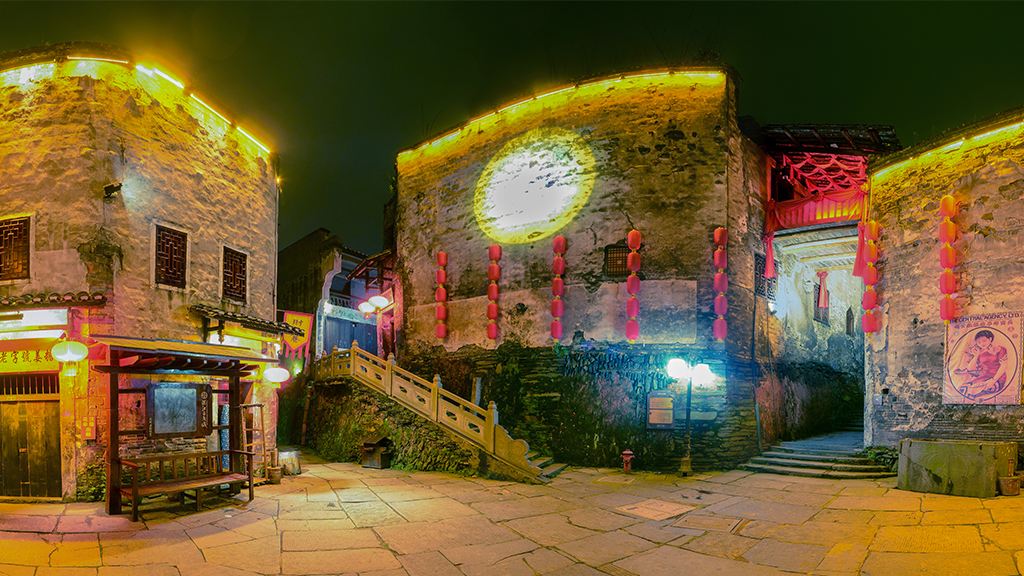
Qianyang Ancient Town
Nestled in the upper reaches of Yuanshui, Qianyang Ancient Town is one of the well-preserved examples of ancient cities dating from the Ming and Qing Dynasties. The ancient city is surrounded by water on three sides. It is a frontier town in Xiang-Chu-Miao Region and also known as the “gateway to Yunnan and Guizhou”. Of the original five city gates, four still remain to this day. The West Gate is also known as Zhongzheng Gate. The gate and the building are incredibly well preserved with the words “Zhong Zheng Men” still inscribed on the gate, written by Dai Li, dating back from the days of the Warlord Era. The well-preserved fishbone-shape road layout is formed by the two main streets in the north and south. It was called Nine Streets and Eighteen Lanes in ancient times and there are a variety of ancient buildings on both sides of the street such as the county government, academies, temples, inns and theaters.HongJiang · 2.7 km from downtown

Hongjiang Ancient Commercial Town
Hongjiang Ancient Commercial Town was built along the two rivers of Yuan and Wu. It took shape in the late Yuan Dynasty and early Ming Dynasty. Until now, the atmosphere of this important ancient commercial town can still be experienced. The architectural style of Hongjiang Ancient City is typical of the Ming and Qing Dynasties and the south of the Yangtze River. At the same time, it has significant characteristics of Yuanxiang. Every house in the city feels harmonious. Workers used only bricks, wood, and stone as materials, with no nails. They created solid, practical, and artistic buildings. The exquisite window frames, lattice fans, door carvings and delicate railings reflect the ingenuity of ancient Chinese architectural art.HongJiang · 19.6 km from downtown

Furong Tower, Qianyang Ancient Town
The Furong House is situated in Qiancheng Town, at the confluence of the Yuan and Wu rivers. It is a perfect example of classical garden architecture. The Furong House is exquisite and well-ordered. According to legend, In the 7th year of the reign of the Tianbao Emperor of Tang (748 AD), Wang Changling was degraded as the Governor of Longbiao (now Qianyang County). During his reign he built the Furong House, for drinking, poetry, reception and farewell guests. In the 20th year of the reign of the Jiaqing Emperor of the Qing Dynasty (1815 AD), the local people rebuilt the Furong House at Xianglubi in the western part of the city to commemorate the famous poet. The currently extant building was constructed in the 19th year of the Daoguang Emperor of the Qing Dynasty (1839 AD).HongJiang · 2.8 km from downtown

Xuefeng Mountain National Forest Park
Xuefeng Mountain National Forest Parkis distributed from south to north along the middle section of the main ridge of Xuefeng Mountain, forming a long, narrow strip. The highest peak within the park, Laoli Mountain, has an elevation of 1,541m, and the lowest point, Chanziping, is at an elevation of 764m. Xuefeng Mountain gets its name from the snow that covers its peaks year-round. The park was personally named by Academician Yuan Longping, the "Father of Hybrid Rice". The park is rich in water resources, with layered peaks and lush forests, and babbling mountain streams that flow all year round. The scenic area features attractions such as the Xuefeng Mountain Resort, War Memorial Park, Xuefeng Mountain Hunting Park, Xuefeng Mountain Botanical Garden, Xuefeng Mountain Mountaineering Base, and Li Zicheng Memorial Park. The terrain is characterized by high mountains, steep slopes, complex topography, varied undulations, layered peaks, winding mountain ranges, and crisscrossing valleys. Alpine wetlands such as Tianchi and Yaochi are scattered throughout the area, with as many as 16 streams that are crystal clear and sound like tinkling jade. Xuefeng Mountain is world-renowned for its "natural defenses". It was the main battlefield of the Battle of Xuefeng Mountain, where Chinese forces successfully repelled the Japanese offensive by leveraging the mountain's natural defenses, achieving a victory in the frontal counterattack. Today, military defense bunkers, trenches, and hidden caves remain within the scenic area. The park has distinct seasons and pleasant scenery, where you can enjoy flowers in spring, escape the heat in summer, taste fruits in fall, and view snow in winter. Climb to Maozi Ridge, where the 6902 TV relay station is located at the top of the park, to take in the sea of clouds, auspicious snow, rime, sunrise, and sunset glow.HongJiang · 57.9 km from downtown

Longjin Wind and Rain Bridge
Longjin Wind and Rain Bridge spans the Wu River in Zhijiang, Huaihua. First built in the 19th year of the Wanli reign of the Ming Dynasty, it was damaged and rebuilt several times over the past 400-plus years, remaining a vital crossing point for travelers and merchants between Hunan and Guizhou. The current bridge structure dates back to a large-scale reconstruction in the late 1990s, which still utilizes traditional Dong wooden construction techniques. The entire bridge is over 200 m long and more than 10 m wide, resting on 16 boat-shaped stone piers with pointed ends facing the current, bonded with a mortar of sticky rice and tung oil. The wooden structure on the bridge is entirely joined by mortise and tenon, without the use of a single nail or rivet. The name "Longjin" is said to be derived from the sight of the boat-shaped piers "spitting water" as they cut through the waves. A long corridor with triple-eaved roofs connects the two banks, interspersed with seven five-story pavilions. With their deep blue glazed tiles and upturned eaves, they look like a long dragon lying on the river from a distance. Nearly 100 stall-style shops line both sides of the bridge, filled with local snacks like pickled radish and Zhijiang duck, as well as Dong silver jewelry and daily goods. The scent of tea drifts from teahouses where locals often sit and relax, making a walk across the bridge feel more like strolling through an old street built over the river. Climbing up to the pavilions in the middle of the bridge offers a bird's-eye view of the stilt houses along both banks of the Wu River, with the nearby Zhijiang Tianhou Temple complementing the bridge. The bronze rhinoceros statue at the bridgehead, covered in Dong patterns, embodies prayers for flood control and peace.Zhijiang · 29.4 km from HongJiang

Tianmen Mountain National Forest Park
Tianmen Mountain National Forest Park is named after the natural wonder "Tianmen Mountain National Forest Park - Tianmen Cave." When visiting the attraction, you can enjoy a bird's-eye view of the winding Heaven-Linking Avenue and the stunning mountain scenery from the cable car. The brave can also walk along the cliff-hugging glass skywalk for an exhilarating aerial experience. Tianmen Mountain National Forest Park is located close to Zhangjiajie city. The Tianmen Cave in the park is a natural karst cave, and locals believe it leads directly to heaven. For ordinary travelers, Tianmen Cave is not open year-round. During winter each year, due to snow and icy roads, both Tianmen Cave and the Avenue toward Heaven (a winding mountain road with 99 turns) leading to it are closed. The lower station of the attraction's cableway is located in Guanliping, Yongding District, and the upper station isTianmen MountainTop. In 2020, the attraction opened the express cableway. The lower station of the express cableway is near the entrance to Tianmen Mountain, and the upper station is atTianmen CaveNear the parking lot. Tianmen Mountain National Forest Park is filled with ancient towering trees and intertwined vines. The attraction is divided into several main areas, including Tianmen Mountain National Forest Park - Tianmen Cave, central route, eastern route and western route. Travelers can choose different routes and areas to explore based on their preferences and physical condition. The core attraction along the central route is Tianmen Mountain Temple. Nearby lies the "Child-seeking cave," where folk legends claim Guanyin, the child-giving bodhisattva, manifested her divine power—devout prayers here are believed to grant offspring. The western route's highlight is a 60 m-long glass walkway clinging to sheer cliffs, with fully transparent flooring that induces both vertigo and exhilaration as visitors tread above abysses. Currently, the eastern route and Panlong Cliff each feature their own approx. 60 m glass walkways. No stay is allowed in the attraction, so it can only be visited within one day. There is a "Cherry Bay Restaurant" near Tianmen Mountain Temple, which offers snacks and fast food. Near the lower station of Tianmen Mountain cableway, there is transportation to the "Grand Canyon Theater", where you can watch the live show and magical musical "Tianmen Fox Fairy". Adapted from the mythological tale "Liu Hai cuts firewood", it tells a touching love story between a human and a fox. With live music, lighting effects, and captivating scenes like a giant moon, fox spirit transformations, snowflakes filling the sky, and high-altitude flying bridges, this legendary romance is vividly brought to life.China · Zhangjiajie

Zhangjiajie National Forest Park
Zhangjiajie National Forest Park is where Zhangjiajie tourism originates. "Everyone knows Zhangjiajie, but who recognizes Wulingyuan?" Many visitors are confused about the relationship between Zhangjiajie and Wulingyuan. Generally, Zhangjiajie refers to both Zhangjiajie City and the Zhangjiajie attraction. The Zhangjiajie attraction specifically means Zhangjiajie National Forest Park, which—together with Tianzi Mountain, Suoxi Valley, and Yangjiajie—forms the Wulingyuan scenic area. Since Zhangjiajie National Forest Park was developed earlier and gained greater fame, even Zhangjiajie City was renamed after it. As a result, people commonly use "Zhangjiajie National Forest Park" or "Zhangjiajie attraction" to refer to the Wulingyuan scenic area. "Three thousand spectacular peaks and eight hundred beautiful waters." The three thousand spectacular peaks, in particular, are world-renowned. Wulingyuan's mountains stand apart from famous peaks around the world. Across its 398-square-kilometer area, over 3,000 densely packed sandstone pillars rise dramatically, with 243 exceeding 1,000 meters in height. When sea of clouds roll in, these pillars appear to float without foundation, soaring straight into the sky. Alongside North America's redwood forests and Greenland's glaciers, they form one of Earth's four great geological wonders. Located at low altitudes in the subtropical zone, Wulingyuan thrives with lush forests and abundant water sources, supporting numerous endangered plant and animal species. Each pillar teems with life. The natural pillars, bridges, canyons, waterfalls, streams, pools, caves, and dense broadleaf forests often shroud in mist and clouds, enhancing their breathtaking beauty. This unique landscape creates a spectacular scene described as "majestic mountains, elegant waters, peculiar peaks, secluded gorges, and exquisite caves," earning its reputation as "an enlarged bonsai and a miniature fairyland." On December 14, 1992, the UNESCO World Heritage Committee unanimously voted to include Wulingyuan on the World Heritage List, filling China's gap of having no World Natural Heritage sites. Its recognized outstanding universal value lies in its exceptionally rare quartz sandstone peak forest landform, which possesses extremely high aesthetic value. UNESCO states: "Wulingyuan's scenery can be compared to several national parks and monuments in the United States, such as the Grand Canyon, as well as the sandstone peaks of Western Australia's Purnululu region. However, due to Wulingyuan's lower elevation and subtropical location, it boasts lush forests, abundant water sources, and numerous towering peaks that display more vertical profiles than the heritage sites in the U.S. and Australia." The visually stunning Pandora planet in the globally popular 2009 movie "Avatar" captivated countless viewers, with its floating mountains inspired by Wulingyuan. Additionally, Wulingyuan served as the filming location for Chinese literary classics like "Dream of the Red Chamber" and "Journey to the West," as well as movies such as "Zhong Kui: Snow Girl and the Dark Crystal" and "Monster Hunt." In 2010, Wulingyuan's unique landform was officially named the "Zhangjiajie landform," becoming a globally recognized term and one of the few landform types in the world named after a specific region. Attraction highlights Yuanjiajie: Step into Pandora from Avatar Yuanjiajie served as the filming location for the "Hallelujah Mountains" in the movie Avatar. Here, you can explore the magical world of floating peaks scattered like stars across the landscape. If you're lucky enough to visit during a light rain or just after the rain clears, you'll witness the breathtaking scenery of mist-shrouded, layered mountain peaks. Mihun Terrace is the ideal vantage point, offering panoramic views of hundreds of towering stone peaks that create a majestic atmosphere. You can also see the renowned "World's First Bridge," a natural wonder spanning two mountains with a vertical drop of 357 meters. Tianzi Mountain: Where the Emperor's Return Makes Other Mountains Pale in Comparison Exploring Tianzi Mountain, you'll encounter extraordinary geological formations and peculiar peaks like the Imperial Writing Brush, Fairy Presenting Flowers, Commander's Platform, Sky-High Farmland, and Immortal Bridge. Don't focus too much on how closely these natural shapes resemble their names - the true charm lies in the mountain's "primordial natural beauty." The misty atmosphere after rainfall creates an ethereal fairyland experience, while winter transforms the landscape into an even more enchanting silver wonderland. Huangshi Village: Reach the summit for breathtaking mountain views "Without ascending Huangshi Village, your trip to Zhangjiajie is incomplete." Huangshi Village is a scenic viewpoint within Zhangjiajie National Forest Park, surrounded by sheer cliffs and lush greenery, with its summit often shrouded in mist. Reaching the top of Huangshi Village offers panoramic views that let you experience the majestic feeling of "seeing all other mountains appear small." Yangjiajie: Thrills Amidst the Peaks Yangjiajie is primarily known for its pristine natural beauty, featuring towering mountains and narrow paths that make it famous for its "perilous" reputation, beloved by backpackers and adventurers. Within the attraction, Black Dragon Village is one of Zhangjiajie's most magical spots. Once inhabited by bandits from western Hunan, it was later renamed after the TV series "The Suppression of Bandits in Black Dragon Mountain." The village is built along the mountainside, with only one path leading up and down—requiring visitors to use both hands and feet to climb to the summit. Suoxi Valley: Nature's Ink Wash Masterpiece Suoxi Valley, also known as Suoxi, gets its name from the rope-like shape of its winding streams. Unlike the more rugged areas of the forest park, this mist-shrouded valley features crystal-clear streams that flow year-round, surrounded by graceful peaks at every turn. The Ten Mile Gallery stands as the crown jewel of Suoxi Valley—a 5km-long canyon filled with fragrant wildflowers and extraordinary rock formations. Walking through this landscape feels like stepping into a living Chinese landscape painting. Golden Whip Stream: Filming Location of "Journey to the West" Golden Whip Stream Canyon is the earliest developed area in the attraction, where a crystal-clear stream flows through the valley flanked by towering peaks and lush greenery. This location served as one of the filming sites for the classic TV series "Journey to the West," allowing fans to visit iconic scenes like the Water Curtain Cave and the Mountain-Splitting Rescue.China · Zhangjiajie

Fanjing Mountain
Fanjing Mountain is located in Tongren, northeastern Guizhou province, with an elevation of 2,572 m. As the highest peak of the Wuling Mountains, it is a member of the UNESCO "Man and Biosphere" program, a World Natural Heritage site, and a national 5A-level tourist attraction. The Mount Fanjing Biosphere Reserve covers a total area of 428.63 km². The mountain is characterized by its pristine wilderness, majestic peaks, layered ridges, crisscrossing streams, and cascading waterfalls. Its iconic attractions include the Red Clouds Golden Summit, Yuejing Mountain, the 10,000-meter Sleeping Buddha, Mushroom Rock, the Ten Thousand Scrolls of Scriptures, Jiulong Pool, and Phoenix Mountain. Mount fanjing was originally named "three valleys", derived from "pure land of brahma". The buddhism here originated in the tang dynasty and flourished in the ming dynasty, making it a historic buddhist mountain. Additionally, mount fanjing boasts abundant wildlife resources, including rare species such as the guizhou golden monkey and dove tree. Mount Fanjing is the main peak of the Wuling mountain range, located at the junction of Jiangkou, Yinjiang, and Songtao counties. With its massive and majestic form reaching into the clouds, it was revered as the ancestor of famous mountains as early as the beginning of the Ming dynasty and is a renowned Buddhist sacred site. Additionally, Mount Fanjing boasts vast areas for viewing red leaves. Every fall, the layered forests are dyed in vibrant hues, with the red leaves complementing the mountain temples. Here, you can take a cable car to overlook the endless stretches of red foliage or stroll along the mountain paths, surrounded by fiery red leaves on both sides and above. The red cloud golden summit is the core of Foshan. The two temples standing majestically on the peak, with two buddhas presiding, create an infinite dharma realm. This masterpiece of the Southern Song Dynasty's White Lotus Society in constructing a "pure land on earth" is a miracle in the history of Buddhist development on famous mountains. Take the sightseeing bus from the attraction entrance to the cableway, then ride the cableway up and walk straight to the top to see the famous "mushroom stone." True to its name, it has a large top and a small base, resembling a mushroom, standing approx. 10 m tall and having been on the mountain for 1 billion years. To the left of the mountaintop is the red golden cloud summit, and to the right is the old golden summit, both incredibly spectacular.China · Jiangkou

Elephant Hill Scenic Area
The Elephant Hill Scenic Area is located in the heart of Guilin, at the confluence of the Li River and the Peach Blossom River. It derives its name from its resemblance to a giant elephant stretching its trunk to drink from the sweet waters of the Li River. In his work "Records of Elephant Hill," Shu Shu, a Qing Dynasty official from the Ministry of Works, wrote: "The marvels of Guangxi lie in its mountains; the marvels of Guangxi's mountains lie in their rocks, and the elephant-shaped hill facing the provincial capital is the most marvelous of all." With its lifelike form, the attraction captivates visitors and stands as a quintessential representation of Guilin's landscape. In 1995, it was designated as the city emblem of Guilin. The main attractions in the scenic area include: Elephant Hill and Water Moon, Puxian Pagoda, Elephant Hill Scenic Area and Guilin Sanhua Liquor, Elephant Hill Scenic Area - Love Island, and Elephant Hill Scenic Area - Yunfeng Temple Taiping Heavenly Kingdom Exhibition Hall. Elephant trunk hill and water moon cave "Elephant trunk hill and water moon" is a spectacular wonder here, as described in the poem by Ji Bei Hermit of the Song Dynasty.Harmony of water, moon and caveThe poem reads: "The moon is beneath the water, the moon floats upon the water. The water flows but the moon stays, the moon departs yet the water still flows." On a moonlit night, visiting the Water Moon Cave at the Elephant Trunk Hill attraction presents a magical scene where the moon in the sky, the cave, and the water reflect each other beautifully. Inside the cave, you can find the "Poem and Preface of the Morning Sun Pavilion" by Zhang Xiaoxiang from the Song Dynasty and works by Fan Chengda.Inscription on the water and moon caveAnd over 50 precious cliff carvings including Lu You's poetry manuscripts. Xiangshan scenic area - Puxian pagoda Winding up along the rocky cliffs, you can see the Puxian pagoda standing tall amidst the greenery from afar. Built during the Ming dynasty, this 13.6m-high solid brick lama-style pagoda has a history of over 400 years. On the northern side of the pagoda, there is a line-engraved bluestone statue of a bodhisattva, with the mantra "Namo Puxian Bodhisattva" inscribed above it, hence the name Puxian pagoda in the Xiangshan attraction. Buddhist scriptures record that Puxian bodhisattva's mount is a six-tusked white elephant, making the pagoda's location atop Xiangshan mountain a perfect embodiment of this scripture. Elephant Hill Scenic Area and Guilin Sanhua liquor This is a natural wine cellar, with two-thirds of the mountain being hollow. It stays warm in winter and cool in summer, maintaining a constant temperature of 19°C and humidity above 90% year-round. Since the Song Dynasty, it has served as an official cellar for storing Sanhua wine. Sanhua wine is colorless and transparent, with a fragrant yet spicy taste. It drawsLi RiverWith the essence of the mountains and the soul of the Li River, it has become a representative of China's rice-aroma liquor. The cellar liquor was designated as a tribute to the imperial court as early as the Northern Song Dynasty and is one of the three treasures of Guilin. To date, nearly a thousand tons of liquor are stored in the caves. Love island Love island is located on the north side of the attraction, adjacent toLi RiverIt is another scenic viewpoint for distant viewing. The island boasts a beautiful environment and lush vegetation, making it a popular dating spot for locals in the 1970s, hence the name "love island". Today, it serves as an outdoor photography base for wedding celebrations against the backdrop of Guilin's landscape, where couples make their vows of love under the witness of the elephant trunk hill and the moon reflected in the water.China · Guilin

Xijiang Qianhu Miao Village
Xijiang Qianhu Miao Village is a collection of over ten natural villages built along the mountainside, inhabited by the "Xi" clan of the Miao people. The village features layers of wooden stilt houses on the slopes, with coffee-colored old houses nestled against lush green mountains. The Baishui River divides the village in two. The side of the river (to the left after entering the Xiaobei Gate for travelers) is mainly a commercial pedestrian street, while the opposite side (to the right after entering the Xiaobei Gate for travelers) is primarily the viewing platform overlooking the village. Upon arriving at Xijiang Qianhu Miao Village, you'll see a gate with the plaque "Xijiang Qianhu Miao Village" after getting off at the parking lot. From this gate to the village is a 1.5 km walk, which you can cover either by electric bikes or on foot. After this 1.5 km stretch, you'll encounter another gate similar to the one at the parking lot, also bearing the "Xijiang Qianhu Miao Village" plaque—this marks the true entrance to the village. First drink the welcoming wine, then enter the village. The first thing you see is the commercial pedestrian street, selling a dazzling array of Miao ethnic specialty products. The most eye-catching are the Miao silver ornaments. Kongbai in Xijiang town of Leishan near the Miao village is a well-known silversmith village, where almost all the men master the silver ornament making techniques, and the craftsmanship of Miao silver is exquisite. The performance venue in the pedestrian street area offers Miao ethnic song and dance shows. You can also visit the Xijiang Miao Ethnic Museum and the Drum Head's House (the Miao king's residence, where a bronze drum is enshrined). Alternatively, take a stroll along the Baishui River to see the wind-and-rain bridges with roofed eaves sheltering from the elements, or the low, narrow wooden plank bridges. At the end of the village lies a pastoral landscape, where even during peak season few visitors come. Across the river is a station for electric bikes to the viewing platform, but walking there isn't far, and several spots along the way offer excellent views. Upon reaching the viewing platform, wait for nightfall—the grand spectacle of Xijiang is just beginning. Thousands of lights illuminate from beneath the eaves of wooden stilt houses, dotted like stars to outline the entire Miao village in the shape of an ox head. It's hard to imagine such a brilliantly lit scene in a mountain village. Returning to the viewing platform at dawn, the Miao village is shrouded in mist as the first sunlight gilds the wooden houses golden. Smoke curls up from chimneys, marking the start of a new day. In Miao villages, you can often see Miao women with their hair buns coiled on top of their heads and adorned with large flowers. Just looking isn't enough—you can also rent a few sets of Miao costumes to dress up as a Miao woman yourself. It's especially beautiful and very popular among young women. Xijiang Qianhu Miao Village has mature tourism development, with no worries about food and accommodation. For dining, the famous option is the long-table banquet. Restaurants in the village will often ask if you'd like to try it—simply joining tables to make them longer counts as a long-table banquet, serving as a fun experience. The authentic long-table banquet is held outdoors, with dozens of tables connected end-to-end, sometimes so long that you can't see from one end to the other. These are set up during important festivals or when significant group tours visit, so don't miss the chance if you encounter one. The cuisine of southeastern Guizhou tends to be sour, and the village's specialty dishes include sour fish soup, pickled vegetables, and cured meat.China · Leishan
Experiences you can't miss in HongJiang
Featured Day tours in HongJiang
View all Day tours


Free cancellation
Instant confirmation
FromAED 233.33

Free cancellation
Instant confirmation
FromAED 313.18

Free cancellation
Instant confirmation
Book now for tomorrow
FromAED 315.52
Free cancellation
Book now for tomorrow
FromAED 76.00

Free cancellation
Instant confirmation
FromAED 286.36

More ways to travel from HongJiang
Free things to do in HongJiang
Qianyang Ancient Town
HongJiang · 2.7 km from downtownBook now for tomorrow, Cancel anytimeHongjiang Ancient Commercial Town
HongJiang · 19.6 km from downtownFurong Tower, Qianyang Ancient Town
HongJiang · 2.8 km from downtownXuefeng Mountain National Forest Park
HongJiang · 57.9 km from downtownLongjin Wind and Rain Bridge
Zhijiang · 29.4 km from HongJiangTianmen Mountain National Forest Park
China · ZhangjiajieBook now for tomorrowZhangjiajie National Forest Park
China · ZhangjiajieBook now for tomorrowFanjing Mountain
China · JiangkouBook now for tomorrowElephant Hill Scenic Area
China · GuilinImmediate access, Book now for today, Cancel anytimeXijiang Qianhu Miao Village
China · LeishanImmediate access, Book now for today, Cancel anytime
What travelers say about HongJiang

dl69066 July 2026
5.0
The ancient town is quaint and not overly commercialized, with a beautiful and comfortable surrounding environment, situated by the river. It's relatively quiet, with many shops closed and virtually no restaurants, but this adds to its tranquility.
Qianyang Ancient Town

110***1729 July 2025
5.0
Compared to Qianxi Ancient Town, I personally prefer Hongjiang Ancient Town, located 25 kilometers away. Originating in the Spring and Autumn Period, it took shape during the Tang Dynasty and reached its peak during the Ming and Qing Dynasties. It was the most prosperous commercial center in Southwest China after the reign of Emperor Kangxi of the Qing Dynasty. Its architectural style blends elements of Xiangxi, Huizhou, and Western architecture, making it more majestic than the 2,200-year-old Qianyang Ancient Town, which features more folk architecture. The ancient town is home to numerous chambers of commerce from various regions. The saying, "With just a bag and an umbrella, one comes to Hongjiang to become a boss," was a common troupe of entrepreneurs in ancient times (see Figure 1). Figure 2 shows the home of Chen Rongxin, the local tycoon. While the frontage may seem small, the courtyard is quite spacious. Figures 4 and 5 show money shops of the time, Figure 6 shows the Lijin Bureau (now the Tax Bureau), and Figures 7 and 8 show opium dens and brothels. Numerous docks surround the ancient town, demonstrating its vibrant commercial life. In terms of current ancient town management, I personally believe Hongjiang Ancient Town is more effectively managed than Qianyang (with a single ticket system), making it more convenient for visitors.
Hongjiang Ancient Commercial Town

西格玛 1234 June 2025
5.0
黔阳古城位于湖南省西部的洪江市黔城镇。是一座有着2200多年历史的文化名城,保存完好,拥有🤓10 多处全国重点文物保护单位。古城三面环水,河畔有“楚南第一楼”芙蓉楼,游客不多,站在楼上大声朗诵王昌龄的千古佳局《芙蓉楼送辛渐》,“寒雨连江夜入吴,平明送客楚山孤。洛阳亲友如相问,一片冰心在玉壶”,看着眼前沅舞流清、胜景如画,非常惬意。
Furong Tower, Qianyang Ancient Town

睡恣@M丶4 September 2021
4.0
Xuefeng Mountain National Forest Park is located in Subaoding, the main peak of Xuefeng Mountain Range in the east of Hongjiang. It is 40 kilometers long from north to south and 8 kilometers wide from east to west, in the shape of a narrow strip. The park is dotted with peaks, winding mountains, crisscrossing valleys, and alpine wetlands such as Tianchi and Yaochi. The highest peak is 1,934 meters above sea level, with an average altitude of 1,150 meters. The forest coverage rate exceeds 90%, and it was rated as the first of the "Top Ten Winter Climate Tourism Destinations in Hunan Province" in 2018.
Xuefeng Mountain National Forest Park

tzy7987983 May 2025
5.0
Longjin Wind and Rain Bridge is located in Zhijiang Dong Autonomous County, Huaihua City, Hunan Province. It is a Dong wind and rain bridge that integrates trade, tourism and leisure.
The following is a detailed introduction for you:
Historical Origin
Longjin Wind and Rain Bridge was first built in the 19th year of Wanli in the Ming Dynasty (1591). It was donated by the famous monk Kuanyun. Because the bridge piers and flowing water are shaped like a dragon's mouth spraying water, it is named "Longjin Wind and Rain Bridge". The bridge has been damaged and repaired many times in history. It has always been a traffic fortress on the Hunan-Guizhou Highway, and it is also the most prosperous place for merchants and tourists to travel. It is known as the "No. 1 Bridge in the Southwest of the Three Chus". In early 1999, Longjin Bridge was rebuilt again and completed on November 7 of the same year.
Architectural features
The bridge is 246.7 meters long and 12.3 meters wide, with a sidewalk width of 5.8 meters. It is a mortise and tenon hollow wooden structure covered bridge. The highest point of the covered bridge is 17.99 meters. There are 7 exquisite bridge pavilions in between. The main building pavilion in the middle is an octagonal five-story bridge pavilion. There are 94 wing-style shops on both sides of the corridor. The architectural style has strong Dong ethnic characteristics. The corridor-style building of the bridge can shelter pedestrians from wind and rain, and the bridge pavilion is a place for people to rest. The entire wind and rain bridge is a full wooden structure without a single nail or rivet, reflecting the contemporary Dong ethnic garden architectural style.
Cultural value
Longjin Wind and Rain Bridge is a cultural relic protection unit in Hunan Province. It was included in the Shanghai Guinness World Records in December 2000 and is the world's largest wind and rain bridge. It is a perfect fusion of historical monuments and architectural art, and has become a rare cultural landscape in China.
Longjin Wind and Rain Bridge

Let’s begin our voyage through V333 journey!19 October 2026
5.0
Beautifullounrain and stairs climb ever. On good weather we managed to climb up the 999 stairs and achieved the longer stairs climb. Wonderful day and very beautiful scenery.
Tianmen Mountain National Forest Park

Daniel Triana19 October 2026
5.0
This place is awesome but as expected quite crowded. It highly depends on the weather but still the views are simply stunning. Everything is clearly organised and smooth from chill to a more adventurous day.
Zhangjiajie National Forest Park

Anonymous user18 October 2026
5.0
It was all thick fog, getting thicker and thicker, and you couldn't see anything. Climbing was practically pointless. But overall, I was still very happy. It's okay to have flaws and regrets on a journey, and to be tolerant of life's imperfections.
Fanjing Mountain

M45***4825 September 2026
5.0
When visiting Guilin, a must-see is Elephant Trunk Hill, the city's iconic landmark. It truly lives up to its reputation as the face of Guilin's landscape; only by seeing it in person can one truly appreciate the wonders of nature. The entire mountain sits on the banks of the Li River, resembling a giant elephant bowing to drink from the water. The Water Moon Cave cuts through the mountain, its reflection shimmering in the water, creating the famous Elephant Trunk Hill and Water Moon spectacle—a flowing ink painting.
The scenic area is clean and comfortable, with walking paths built along the Li River, shaded by lush trees, making for a delightful stroll. You can climb the mountain for panoramic views of Guilin, or find classic vantage points along the riverbank to capture stunning, atmospheric photos. Boat trips are also available, offering a different and breathtaking perspective of Elephant Trunk Hill from the river.
The scenic area is conveniently located in the city center, with excellent transportation and comprehensive facilities. Every step reveals a new vista, allowing you to truly experience the unparalleled beauty of Guilin's landscape. Don't miss it when traveling to Guilin; it's definitely worth a visit.
Elephant Hill Scenic Area

程程for18 October 2026
4.0
I recommend hiring a guide if you're visiting Xijiang Miao Village. They can take you to see the actual locals and help you learn about the village's history and culture. Otherwise, it'll just feel like you're visiting a commercial street. This way, you'll have a much better experience, and the scenery is beautiful.
Xijiang Qianhu Miao Village


