
Things to do in Huantai
Explore top experiences
Top 10 attractions in Huantai


Zibo Ceramic and Glass Museum
Located in Zibo City, Shandong Province, the China Ceramics and Colored Glass Museum is a professional museum that showcases Chinese ceramics and colored glass art. The museum has a rich collection of exhibits, covering ceramics and colored glass works from ancient times to the present, showing the long history and exquisite craftsmanship of Zibo as the ceramic capital of China. The exhibition hall is divided into several theme areas, including ancient ceramics, modern ceramics, colored glass art, etc. Visitors can learn about the development of ceramics and colored glass and their application in daily life through these exhibits. The museum building itself is also quite distinctive, integrating traditional and modern design elements, with a simple and elegant appearance. There is an interactive experience area in the museum, where visitors can make simple ceramic works by themselves, which increases the fun and sense of participation in the visit. The museum provides Chinese and English guided tours to facilitate international tourists to understand the exhibits. The surrounding transportation is convenient, not far from the center of Zibo City, and there are other cultural attractions nearby, such as the Zibo Museum, which is suitable for arranging a one-day cultural tour.Zibo · 17.7 km from Huantai

Haidai Pavilion
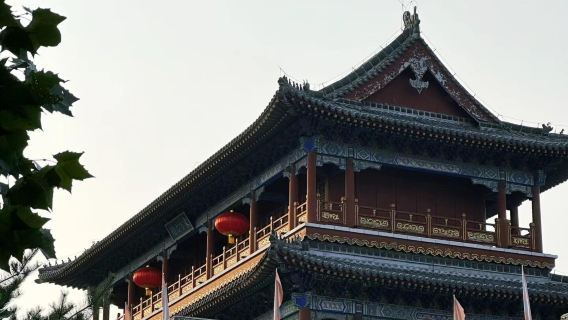
Haidai Pavilion is located west of Beijing Road and south of Zhongrun Avenue in Zhangdian District, Zibo City, Shandong Province. Haidai Tower is built on Qisheng Lake in Qisheng Lake Park. It is a pavilion building with books as its theme and a landmark building integrating culture and sightseeing. Its design was inspired by Qilu culture and has a unique architectural style. After climbing to the top, you can overlook the panoramic view of Zibo City. Especially on sunny days, the view is wide and refreshing. There are many exhibition halls in the building, displaying the history, culture and natural scenery of Zibo. Visitors can gain an in-depth understanding of the local cultural heritage through the rich exhibits. Haidai Tower has a superior geographical location and is accessible by many bus routes in the city, making it convenient for tourists to visit. There are also many dining and shopping places nearby to meet the diverse needs of tourists. It is recommended that tourists go there in the evening to enjoy the sunset and feel the unique charm of Zibo.Zibo · 16.4 km from Huantai

Qishenghu Park
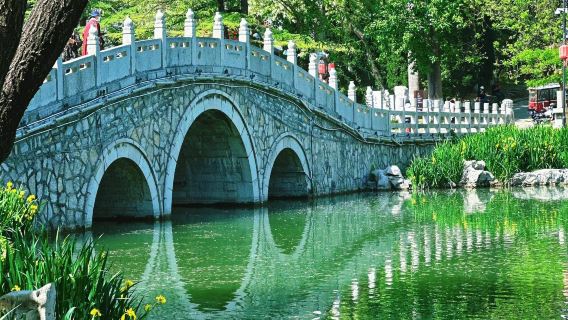
Qishenghu Park is a large comprehensive urban park renowned for its waterscapes and landscaping. It covers an area of over 1,000 mu, featuring an expansive lake and lush greenery, offering pleasant scenery. Traces of Qi culture can be found throughout the park, with streetlights shaped like the character "Qi," reliefs of Qi roof tiles, and patterns of Qi knife coins adorning the area. The northeastern part of the park features several small activity areas, including table tennis courts, basketball courts, and a children's playground. An open-air theater is located in the southwest corner, and a boat dock is situated on the west bank of the lake. Stroll along the tree-lined paths in the park and look out from the wooden boardwalk to see the shimmering lake and long pavilions stretching over the water; look east from North Mountain to see a waterfall behind you, with long pavilions, ancient lamps, rocks, and pine trees in front; walk up the steps along the mountain path and climb to Yunshan Pavilion to take in the panoramic views of the park.Zibo · 16.3 km from Huantai

Zhoucun Ancient Town
Zhoucun Ancient City is located in the western urban area of Zhoucun. It is a handicraft industry and commercial city established during the economic transformation in late feudal times and remains well-preserved after hundreds of difficult years. The ancient city crosses through the surrounding city. Full of shops and possessing a wildly different architectural style, the ancient city has been called “China's living architectural museum of ancient commerce.” Zhoucun is famous for its handicrafts, auxiliary agricultural products, and silk-weaving industries. It developed into an important commercial center in north China during the Ming and Qing dynasties (1368-1912).Zibo · 29 km from Huantai

Zibo Qicai Lantern City
Yudai Lake Ecological Rural Manor is 6 kilometers away from the east suburb of Zibo City, in the north of National Highway 309. The manor has a collection of functions on entertainment, modern recreation, agricultural tourism and catering services. The manor is divided into the east and west areas. It boasts Leken Plantation, Zibo Zoo and the Picking Garden in the east one. There is the catering area, skiing field, Huiyuan Temple and the leisure center for the elderly in the west one.Zibo · 17.8 km from Huantai

Ancient Town of Qingzhou
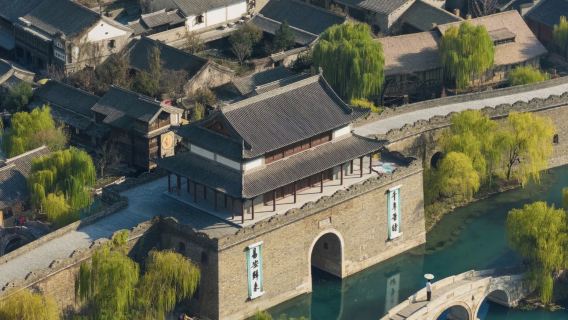
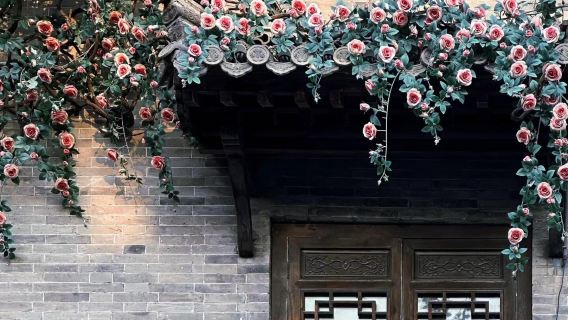
Qingzhou is one of the ancient nine provinces of China. Since the early Western Han Dynasty, six cities—Guang County, Guanggu City, Dongyang City, Nanyang City, Dongguan Weizi City, and Qicheng—were successively built on this land, with a continuous urban history spanning over two thousand years. Today, the Ancient Town of Qingzhou has been comprehensively protected and restored, forming three major districts: the Beiguan ancient block in Dongyang City, the Ouyuan historical and cultural block and the South Gate block in Nanyang City, and the Zhaode ancient block in Dongguan Weizi City. Government buildings, traditional residences, and classical gardens are scattered across hundreds of ancient streets and alleys, such as North Gate Street and East Gate Street, with their blue bricks and dark tiles showcasing distinct Ming and Qing architectural styles. Unlike many entirely reconstructed ancient towns, this is a "living ancient town," where original residents still live in the old streets and alleys, and intangible cultural heritage items like the cuoqin are passed down on the streets, blending the vibrancy of daily life with ancient charm. A visit can begin by ascending the Fucai Gate Tower at the south gate of ancient Nanyang City for a panoramic view of the town's sea of dark tiles. Ouyuan is a preserved classical garden within the town, originally the eastern garden of the Ming Dynasty's Prince of Heng's residence and later the private garden of Feng Pu, a grand secretary during the Qing Kangxi era. Its three-peak rockery embodies the grandeur of northern landscapes. Figures like Fan Zhongyan and Ouyang Xiu once served as officials here, and Li Qingzhao lived in Qingzhou for over a decade, composing numerous ci poems. Historical relics like the Qingzhou Prefecture Examination Hall are also scattered throughout the streets, where traces of this cultural legacy can often be encountered. The main street is densely lined with shops, but to avoid crowds, one can turn into the side alleys or head straight to Zhaode Ancient Street—where rows of Ming and Qing-era houses remain, with wooden doors, stone steps, and flagstone paths offering a glimpse of old Qingzhou's daily life.Qingzhou · 46 km from Huantai

Zibo Museum
Zibo Museum is a national first-class comprehensive and geographical museum. The current building was built and put into use in 1992, covering an area of 42 mu and a building area of 13,000 square meters. The museum currently has a rich collection of cultural relics, with a total of 25,199 pieces (sets), covering jade, bronze, ceramics, modern and contemporary cultural relics, etc. Among them, there are 50 pieces (sets) of national first-class cultural relics, 99 pieces (sets) of national second-class cultural relics, and 540 pieces (sets) of national third-class cultural relics. Important collections include jade swords, bronze daggers engraved with "Shusun's daggers", Jun glaze dishes, and Comrade Ma Yaonan's diary in 1922. In terms of exhibitions, the museum currently has four basic exhibitions. The "Exhibition of the Burial Pit of the Tomb of the King of Qi in the Western Han Dynasty" fully displays the cultural relics unearthed from the burial pit of the tomb of the King of Qi, providing rich physical materials for the archaeology of the Han Dynasty and the history of the State of Qi in the early Han Dynasty. The "Exhibition of Fine Cultural Relics in the Collection" selects more than 100 cultural relics in the collection, allowing the audience to feel the charm of Chinese traditional culture and Zibo regional culture. The "Zibo City Intangible Cultural Heritage Protection Achievements Exhibition" comprehensively displays the representative works of Zibo City that have been selected into the national and provincial intangible cultural heritage lists. The "Ancient Zibo Exhibition" takes the historical development process as the context, and through a large number of cultural relics, pictures and explanatory texts, it shows the development of the Zibo area from ancient times to the Ming and Qing dynasties. In addition, the museum often holds various special displays and temporary exhibitions, such as "Red Zibo-Zibo Museum Collection Revolutionary Relics Exhibition" and "Shandong Province Collection Cultural Relics Tour-Ming and Qing Painting and Calligraphy Exhibition", which enrich the audience's visiting experience.Zibo · 18.2 km from Huantai

Qi Heritage Museum
The Qi Culture Museum is a key cultural project in Zibo City, with the Qi Cultural Museum as its core. It's a comprehensive museum that integrates the collection, protection, research, education and leisure functions of cultural relics. Primarily displayed here are special cultural relics from the Qi Kingdom and the research, protection and development of intangible cultural heritage from the Qi Kingdom. Also displayed are development achievements and economic and social development planning prospects of Linyi District.Zibo · 28.8 km from Huantai

Qingzhou Museum
The Qingzhou Museum is located in the northwest corner of the beautiful Qingzhou City, adjacent to Fangong Pavilion Park. The Qingzhou Museum is a seat-enclosed antique building with an elegant appearance. Although the museum is not large, it contains rare cultural relics such as Zhao Bingzhong's champion paper in the Ming Dynasty, large stone statues in the Eastern Han Dynasty, and the unique Buddhist statues of Longxing Temple in Qingzhou. The collections are rich and rare, making it a well-known county museum.Qingzhou · 44.4 km from Huantai

Daming Lake Scenic Area
Daming Lake Scenic Area is located in the northeast of downtown Jinan, the northern part of the Old Town. It is a park that integrates bodies of water, garden landscape, and ancient architecture. Daming Lake is in the center of the park. Or one could say that the park is built along the lake. Daming Lake is a natural lake. The water source comes from many springs in the city. It has a long history, dating back to the Northern Wei Dynasty. In the park, you can visit the Lao She Memorial. In summer, you can enjoy the lotus blossoms in the garden.China · Jinan
Experiences you can't miss in Huantai
Featured Cultural experiences in Huantai
View all Cultural experiences
FromAED 625.00
FromAED 625.00

FromAED 625.00
FromAED 750.00
FromAED 962.50
Featured Day tours in Huantai
View all Day tours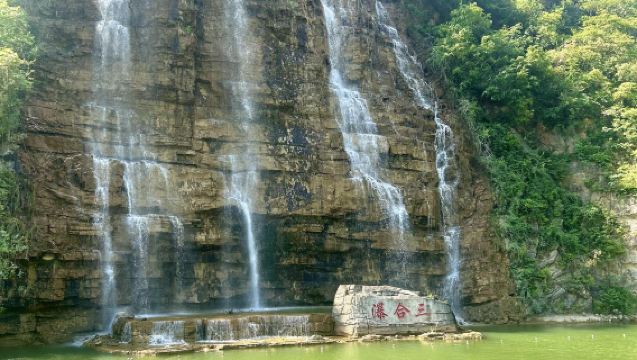
5.0/5
· 1 reviewBook now for tomorrow
FromAED 625.00
Free cancellation
Book now for tomorrow
FromAED 750.00
5.0/5
· 1 reviewBook now for tomorrow
FromAED 625.00
Featured Food & drink in Huantai
View all Food & drink

5.0/5
· 3 reviews· 30 bookedFree cancellation
Instant confirmation
Book now for tomorrow
FromAED 77.00
Free cancellation
Instant confirmation
Book now for tomorrow
FromAED 109.45
Free cancellation
Instant confirmation
Book now for tomorrow
FromAED 92.40
Free cancellation
Instant confirmation
Book now for tomorrow
FromAED 525.80
Free things to do in Huantai
Zibo Ceramic and Glass Museum
Zibo · 17.7 km from HuantaiHaidai Pavilion
Zibo · 16.4 km from HuantaiQishenghu Park
Zibo · 16.3 km from HuantaiZhoucun Ancient Town
Zibo · 29 km from HuantaiZibo Qicai Lantern City
Zibo · 17.8 km from HuantaiAncient Town of Qingzhou
Qingzhou · 46 km from HuantaiImmediate access, Book now for today, Cancel anytimeZibo Museum
Zibo · 18.2 km from HuantaiQi Heritage Museum
Zibo · 28.8 km from HuantaiImmediate access, Book now for today, Cancel anytimeQingzhou Museum
Qingzhou · 44.4 km from HuantaiDaming Lake Scenic Area
China · Jinan
What travelers say about Huantai

树懒的旅途12 October 2026
5.0
A stunningly high-quality museum, filled with history and beautiful artifacts, the national porcelain display is particularly unique! The porcelain used at state banquets is truly extraordinary; seeing set after set is simply dazzling and overwhelming.
Zibo Ceramic and Glass Museum

可怕的小小可儿25 March 2025
5.0
海岱楼位于山东省淄博市张店区北京路以西,中润大道以南。【景色】【趣味】建于齐盛湖公园的齐盛湖上,是一个以图书为主题的楼阁建筑,同时齐盛湖公园也是一个免费的市内水上公园。
Haidai Pavilion

与你左右灬便是世界3 December 2024
5.0
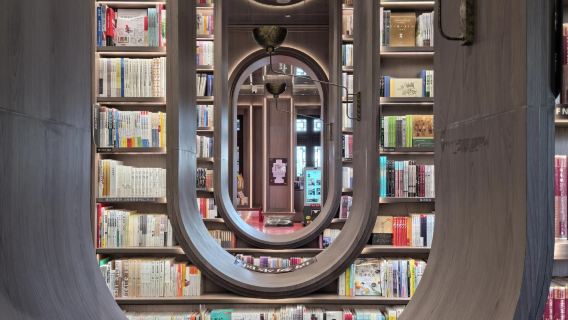
The overall scenery is very good. It was November when I went there. It was a little bleak in late autumn, but the fallen leaves 🍂 were also very beautiful. Those with children can go to the second floor of Zhongshuge. There is a popular photo spot on the first floor, which is a balcony-style corridor that extends slightly.
Qishenghu Park

爱旅游的金子20267 October 2026
5.0
This is a relatively famous tourist attraction in Zibo. Because it was the National Day Golden Week, it was packed with tourists, making the already narrow streets even more congested. The streets are lined with a dazzling array of small shops, and there are also several venues to visit.
Zhoucun Ancient Town

M49***482 May 2026
5.0
The Lantern Festival City was truly beautiful, the environment was clean, and there were various snacks available, which was very convenient; we ate while waiting for the performance. The performers were all very dedicated and professional, and their performance was excellent. After the show, they even stayed to take photos with the audience. The iron flower display was absolutely spectacular.
Zibo Qicai Lantern City

268***267 October 2026
5.0
When visiting Qingzhou Ancient City, the Fucai Gate Tower is a must-see, considered the heart of the ancient city. There aren't many other attractions within the ancient city, but the tower has a great location, with convenient access via sightseeing electric carts. There are also plenty of food stalls to explore nearby.
Ancient Town of Qingzhou

开心胖嘟嘟大玩家20 July 2021
5.0
I checked in at the Zibo Museum on the weekend and was really amazed. I was lucky enough to see the legendary Hou Yang Inkstone, which confirmed that the Peach Blossom Fan written by Mr. Kong Shangren was based on facts. This inkstone witnessed the sincere friendship and lovesickness and separation of the protagonists Hou Chaozong, Yang Youlong and Li Xiangjun. The story behind the return of this stone to the Zibo Museum is even more tortuous and bizarre. I suggest that friends who have read the story of Peach Blossom Fan take the elevator directly to the fifth floor of the museum to learn about this legendary and tortuous story.
Zibo Museum

YoYo_D1l9r9b11 October 2026
5.0
The Qi Culture Museum, located in Linzi, is a comprehensive museum dedicated to the systematic display of Qi culture. Its collection is complete, encompassing various ritual objects, daily utensils, and handicrafts from the Western Zhou to the Han dynasties, comprehensively connecting the 800-year historical development of the Qi region.
Qi Heritage Museum

夜殇璃21 October 2026
5.0
I made a special trip to the Qingzhou Museum, intending to visit it on the way, but the special exhibition of Famen Temple treasures moved me far beyond my expectations. Before this, my knowledge of the Famen Temple underground palace was limited to books and short videos; I always felt the Tang Dynasty was distant and ethereal. It wasn't until I stood before the display cases, facing these artifacts from over a thousand years ago through glass, that I truly grasped the profound weight of the Tang Dynasty.
The exhibition hall was dimly lit, with spotlights focused entirely on the artifacts. The first thing that caught my eye was the gilded silver incense burner. This small, spherical silver object was decorated with intricate floral patterns on its exterior. Gently rotating the model, the incense burner inside remained level. It's hard to imagine that Tang Dynasty artisans, without modern mechanics, created such an ingenious structure resembling a gyroscope. A thousand years ago, nobles would hang it inside their tents and wear it on their person; the ash wouldn't spill, and the fragrance would slowly diffuse. Staring at it for a long time, my mind was no longer filled with cold, textbook-like terms, but rather I could vaguely imagine a wisp of fragrance moving about in the night in Chang'an.
The celadon plate was the quietest and most moving piece in the entire exhibition. I had always heard people say, "Celadon is like holding clear water," but only after seeing it with my own eyes did I truly understand the meaning of that phrase. The glaze was warm and restrained, a bluish-gray hue. Placed on the display stand, the light and shadow falling on the center of the plate truly resembled a shallow pool of still water. It wasn't the kind of flamboyant, dazzling beauty, but rather the restraint unique to royal celadon. In the Tang Dynasty, celadon was exclusively for the imperial court, rarely seen by ordinary people. The firing technique was gradually lost until it was unearthed in the underground palace of Famen Temple, finally matching historical records.
Next to it was a set of Tang Dynasty gold and silver tea utensils, with a tea grinder and tea sieve arranged in order. The tea-brewing method we are familiar with today is completely different from the Tang Dynasty's method of brewing tea. This set of gilded utensils was intricately decorated, with every flowing cloud pattern meticulously crafted. In the Tang Dynasty, tea drinking was a solemn and complete ritual, not merely for quenching thirst, but a refined pursuit in life. Also on display are glass artifacts with exotic styles, their translucent texture reminiscent of West Asian objects, evidence of trade along the Silk Road. The Tang Dynasty's confidence never stemmed from isolation, but from its openness to the world, integrating exotic aesthetics into its daily life.
The exhibition also displays four layers of reliquary boxes, each layer engraved with Buddhist images and patterns, the containers once used to house Buddha relics. The solemn and intricate craftsmanship reflects the devout faith of the Tang Dynasty imperial family. On one side are the pinnacle of human craftsmanship—gold, silver, and porcelain—and on the other, reverence for Buddhism; worldly prosperity and spiritual sustenance, sealed together in the underground palace, have been quietly buried for over a thousand years.
Interestingly, Qingzhou itself has the Longxing Temple Buddhist statues, famous for their gentle "Qingzhou smile." Northern Dynasties sculptures are slender and understated, while these Tang Dynasty artifacts from Famen Temple are full and opulent. One from the Northern Dynasties, the other from the prosperous Tang Dynasty; one from the Haidai region, the other from the underground palace—their encounter in a single museum is like a dialogue across eras. Haidai Qilu (Shandong) and Guanzhong Chang'an (Xi'an), separated by thousands of miles, meet through these artifacts. A long queue formed at the VR experience area in the corner of the exhibition hall, where you could simulate walking into the Famen Temple underground palace. But I preferred quietly observing the actual artifacts. No matter how realistic the images, they can't replace the feeling of gazing upon a real ancient object.
Overall, I found the experience of seeing such a feast of cultural relics truly enjoyable.
Qingzhou Museum

Bolton Chen19 October 2026
4.0
Daming Lake holds the story of Emperor Qianlong and Xia Yuhe's "epic, tragic love" 😂 "Your Majesty, do you still remember Xia Yuhe by Daming Lake?"—When Emperor Qianlong toured the south, he encountered Xia Yuhe playing the zither in the Yuhe Hall, fell in love at first sight, wrote a poem and presented her with a fan, vowing that "a true friend is hard to find." However, after more than a decade apart, Yuhe fell ill with longing and died with her zither in her arms 😢 However, there is no historical record of this person; it's purely a romantic fiction by Qiong Yao. The lake shimmers, lotus flowers fill the pond, and the saying "lotuses on all four sides, willows on three" is truly fitting. The illuminated Chaoran Tower is even more breathtaking.
Daming Lake Scenic Area


