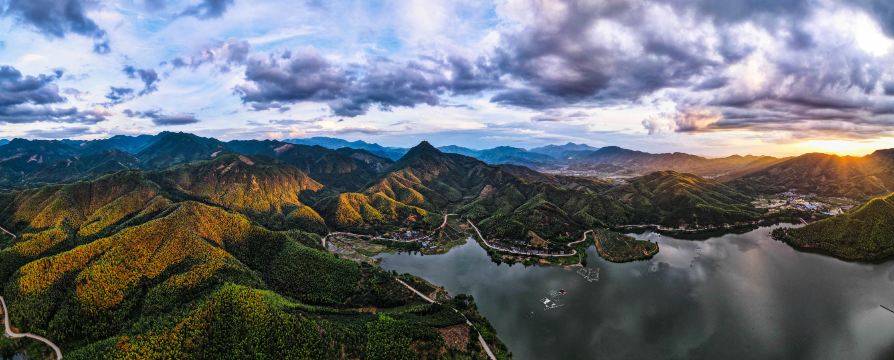
Things to do in Jian'ou
Explore top experiences
Top 10 attractions in Jian'ou

Jian'ou Tongxian Gate
Jian'ou · 2.8 km from downtown

Jian'ou Confucian Temple
Jian'ou · 3 km from downtown


Wuyishan National Park
Wuyishan National Park is located in the northern section of the Wuyishan mountain range in northwestern Fujian, stretching across the border area between Fujian and Jiangxi provinces. It is one of China's first established national parks, and Wuyishan itself was inscribed as a UNESCO World Heritage Site for both culture and nature as early as 1999. The park was formed by integrating the former Wuyishan National Nature Reserve and Wuyishan Scenic Area: the Tongmu area in the north focuses on ecological conservation and scientific research, preserving a rare intact mid-subtropical forest ecosystem at this latitude. The main peak of the Wuyishan range, Mount Huanggang, is also located here, and this core area does not offer regular tourism activities. Sightseeing activities are concentrated in the scenic areas along both banks of the Nine-bend Stream, namely the four major sections: Tianyou Peak to Taoyuan Cave, Nine-bend Stream to Wuyi Palace, One-line Sky to Tiger Roaring Rock, and Dahongpao to Water Curtain Cave. The attractions in the scenic area are relatively scattered with considerable distance between them. A leisurely visit typically requires two to three days. If you only have one day, start by ascending Tianyou Peak for a panoramic view of the emerald waters and crimson mountains along the Nine-bend Stream, then take a bamboo raft downstream from Xingcun Wharf. Along the way, you'll pass landmarks like Jade Maiden Peak, Great King Peak, cliff inscriptions, and suspended boat coffins. The rafting journey ends at Wuyi Palace, making it an ideal classic route. Tea enthusiasts may prefer spending time on the leisurely Rock Bone Floral Trail between Dahongpao and Water Curtain Cave. This gentle path connects core Wuyi rock tea production areas like Liuxiangjian and Huiyuankeng, offering a uniquely fragrant experience. With two days, you can cover all four major sections. For more time, consider visiting the ancient tea merchants' residences in Xiamei Village, the starting point of the ancient Tea Horse Road, or exploring the ruins of the Minyue King's City near Chengcun Village—the latter also being part of Wuyishan's world heritage site. Bamboo rafting is very popular, so please make arrangements in advance during peak season. To get close to the ecological heart of the park, you can take the Wuyishan National Park No. 1 scenic route. Places like Moon Bay and Qinglong Waterfall are suitable for self-drive or private charter. As for food, street snacks like flat meat dumplings and Vietnamese noodles are common, while Langu smoked goose and local dishes cooked with alpine bamboo shoots and mushrooms are also worth trying.Wuyishan · 78.3 km from Jian'ou

Wangxian Valley
Vagoo is located in Wangxian Township, Guangxin District, Shangrao City, Jiangxi Province. It is a national AAAA-level scenic spot. It belongs to the Lingshan Mountains, just at the foot of the seventy-two peaks of Lingshan. The valley is remote and quiet, the stream is jubilant, and the pebbles are flying waterfalls. There are rammed earth walls, bluestone roads, yellow walls and black tiles, and original village houses unique to Jiangxi folk houses; there are also pines and bamboo seas and the unique Ganjia market. In the Vagoo, you can enjoy the folk customs, landscape and humanities of the Gan family, experience the long farming culture of our country, taste delicious food, and live a slow life for a few days. It is a good place for leisure, vacation, and parent-child study.China · Shangrao

Wuyuan Huangling Scenic Area
Huangling Ancient Village is a typical mountain village, Souvenir by thousands of ancient trees and tens of thousands of acres of terraced fields, creating a idyllic mountain life like a paradise. It has a beautiful natural environment and rich history and culture. It is a famous historical and cultural village in ancient Huizhou. The ancient village of Huangling hangs on the cliff, and the ground is not flat for three feet. For hundreds of years, the villagers have been accustomed to "communicating" with the rugged terrain with a peaceful mentality, painting a picture of "people drying their crops in the sun in autumn". In March, rapeflowers are in full bloom on tens of thousands of acres of terraced fields in Huangling, dotted with pink peach blossoms and snow-white pear blossoms, forming a beautiful ink painting. Here, you can become one with nature and have close contact with the sea of flowers. At the end of March, the second phase of Huangrapeling Gaoling Terraced Fields Flower Sea came online. Due to the large altitude difference, low temperature, and late-maturing rapeseed varieties, the flowering period is relatively late, and the second phase of the flower sea can last until mid-April. Come to Huangling in summer and start a wonderful summer night trip. Take a look at the night view of the ancient village, feel the sunset glow of Huangling, the lights of thousands of houses, walk on the country road with the dancing and circling 100-meter-long dragon, stroll in the quaint streets with a lantern, feel the romance of the magic forest, watch a retro old movie at the entrance of the village, and visit the cool market in the countryside. As soon as the beginning of autumn arrives, the ancient village of Huangling becomes a drying field. Come to the people who dry autumn leaves to admire the red maple leaves, enjoy the autumn leaves drying on the roof, the maple forest is dyed red, experience the folk customs, hand-cranked windmills, pumpkin traps, etc., and feel the nostalgic charm of the people who dry autumn leaves. In winter, every household in Huangling is busy drying and processing traditional local specialties for New Year's goods. The roofs are full of preserved meat customs, "drying" folk customs and "celebrating" the harvest, which means a bumper harvest in the New Year. With the arrival of the Winter Solstice, the Huangling Folk Culture Festival begins and lasts until the Lantern Festival next year. Here, you can listen to operas, visit the market, taste food, and taste the folk customs of the New Year; bask in the warm sun, cook tea around the stove, enjoy the elegant winter things, invite family and friends to take a health-preserving warm soup, and enjoy a winter-limited snow scene. In Huangling, you can enjoy the beautiful rural scenery and experience the modern urban life. You can see the exquisite and simple Huizhou century-old houses as well as the fashion and elegance of star-rated hotels. In Huangling, tourists can not only taste authentic folk snacks such as steamed cakes, Qingming fruit, gray juice fruit, etc., but also participate in the whole process of making folk snacks and handicrafts.China · Wuyuan

Yunji Mountain Park
Jian'ou · 2.1 km from downtown

Kulangsu
Kulangsu is located in the southwest of Xiamen, Fujian province, China, facing Xiamen island across the Lujiang strait. With an area of approx. 1.88 km², it is a "sea garden, piano island and international architectural exposition" blending nature and culture. In 2017, it was inscribed as "Kulangsu: A historic international settlement".UNESCO World Heritage ListIt is a national 5A tourist attraction and a national scenic area. Kulangsu is a bedrock island with a winding coastline featuring numerous natural harbors and reefs. The terrain is predominantly hilly, with its highest peak, Sunlight Rock, standing at an elevation of 92.7 m.Subtropical maritime monsoon climateWith its warm, humid climate and spring-like weather all year round, the average annual temperature is 20.9°C, making it suitable for visiting any season. The entire island is car-free, free from the hustle and bustle of traffic, accompanied only by birdsong, floral scents, and the sound of waves. Kulangsu preserves historical buildings dating from the late 19th century to the mid-20th century.Over 1000 buildingsIt encompasses various architectural styles including Gothic, Victorian, Baroque, Nanyang shophouses, and Minnan ancient dwellings, earning the reputation as the "Expo of international architectureIt is a living specimen of an internationalized community in modern East Asia. Representative buildings: Bagua building (organ museum), Shuzhuang garden, Haoyue garden, former HSBC building, Trinity church, Lin Yutang's former residence, etc. Kulangsu boasts a profound musical heritage, with western music introduced through missionary schools from the late Qing dynasty. By the mid-20th century, the island had the highest piano density in China, nurturing renowned musicians like Yin Chengzong and Xu Feiping, earning it the title of "Piano islandKnown as the "island of music". Cultural landmark:Piano museum(Houses century-old pianos),Organ museum(Home to a giant pipe organ), the sound of music often fills the streets, and the tradition of family concerts continues to this day. Core attractions of Kulangsu: Sunlight rockThe highest point of Kulangsu, offering a 360° panoramic view of the entire island, Xiamen and the Taiwan strait. There's a saying: "A visit to Xiamen isn't complete without climbing Sunlight Rock." Shuzhuang gardenThe private residence of Taiwanese tycoon Lin Erjia, where "the sea is hidden in the garden and the mountains are embraced as views," blends Jiangnan-style gardens with coastal landscapes. The piano museum within the garden is renowned far and wide. Haoyue gardenAdjacent to the Zheng Chenggong memorial hall stands a 15.7 m tall granite statue of Zheng Chenggong, facing the sea with majestic grandeur, built to commemorate the national hero's recovery of Taiwan. Bagua building (organ museum)A landmark building on Kulangsu, blending Chinese and Western architectural aesthetics, housing hundreds of antique organs and regularly hosting organ concerts. Kulangsu bagua building Yuyuan garden, Gulang stone, Yanweishan ecological parkThe cultural and natural views scattered across the island weave together the century-old charm and poetic beauty of Kulangsu's mountains and sea. Tour tips Island access: Requires taking a ferry from Xiamen main island ferry terminal, no general admission ticket, core attractions require separate tickets or combo tickets. Transportation: Explore the entire island on foot or by sightseeing electric cart (for a fee). Motor vehicles are prohibited. Recommended season: Suitable all year round, with comfortable weather in spring and fall (April-May, October-November) when bougainvillea blooms and the scenery is particularly beautiful.China · Xiamen

Sanqingshan Mount Scenic Area
Located in the northeastern part of Shangrao City, Sanqingshan Scenic Area is a national-level geological park and a world natural heritage. Sanqingshan Scenic Area is a famous Taoist mountain. It is known as the “Little Huangshan Mountain” and includes three peaks: Yujing, Yuxu and Yuhua. Their shapes resemble three Taoist gods, Yuqing, Shangqing and Taiqing, sitting on top of the mountain. In Sanqingshan, you can watch the beautiful sunrise amid the sea of clouds, admire the peculiar stones in the mountains, and walk the high-altitude plank path. The scenery is even more beautiful when the azaleas are in bloom during May and June.China · Yushan

Taoyangli Historical and Cultural District
Taoyangli Historical and Cultural District is located in the heart of Jingdezhen's old town, a historic neighborhood that grew around the ruins of the imperial kiln from the Ming and Qing dynasties. The old saying "Taoyang thirteen li, with tens of thousands of households" refers to this area. The imperial porcelain used by the royal families of the Ming and Qing dynasties was exclusively produced by the imperial kiln here, while rejected tribute items were shattered and buried on-site. The layers of underground porcelain fragments share the same origin as the collections in the Palace Museum, making this place often referred to as the key to understanding the porcelain capital. The core attractions of the district are concentrated around the ruins of the Taoyangli Historical and Cultural District and the imperial kiln museum. The ruins of the Taoyangli Historical and Cultural District have now been transformed into an archaeological site park, preserving relics such as kilns and workshops. The Longzhu pavilion, perched atop Zhushan hill, has been the iconic structure of the imperial kiln since the Ming dynasty and later became the symbol of Jingdezhen. The Zhushan hill beneath it was formed by layers of discarded porcelain fragments from imperial kilns throughout history. Nearby, the imperial kiln museum draws inspiration from traditional egg-shaped wood-fired kilns, featuring multiple brick arches arranged in a staggered layout. Many exhibits in the museum are restored from porcelain fragments unearthed at the site, including the Ming dynasty blue-and-white dragon jar—a signature exhibit pieced together from tons of discarded dragon jar fragments. Adjacent to the museum, the Xu family kiln, an old wood-fired kiln, still operates periodic firings. During kiln openings, the gate is wide open, allowing visitors to watch artisans retrieve freshly fired porcelain from saggars. The district also features winding alleyways lined with kiln-brick residences, guild halls, porcelain shops, and remnants of modern ceramic industry. The restored South goods street and Red shop street now host old teahouses, taverns, music bars, and craft workshops where you can observe traditional processes like clay throwing and porcelain painting, with some workshops offering hands-on experiences. It's recommended to set aside half a day for the visit—start with the kiln site and museum, then meander through the streets around Zhongshan north road and Longgang lane, where many historic courtyard houses hidden in deep alleys await patient discovery.China · Jingdezhen

Pingtan Island
Pingtan Island, also known as Haitan Island, is located in Pingtan County, Fuzhou. As China's fifth largest island, it's often shrouded in mist from the east, earning it the nickname "Eastern Mist." The island boasts a winding coastline stretching over 400 km with pristine sandy beaches. Notable attractions include Thirty-Six Feet Lake, Shipaiyang Reef, Immortal Well, Yipianwa, and the Keqiutou Site. Leisure facilities like Longfengtou Resort and Tannanwan Beach make it an ideal coastal getaway. Pingtan Island boasts three stunning beaches—Changjiang'ao to the north, Haitan Bay to the east, and Tannan Bay to the south—featuring powdery white sand and crystal-clear azure waters. These interconnected shores are backed by lush windbreak forests and dotted with picturesque islets and rock formations, creating an exceptionally scenic coastal landscape.China · Pingtan County
Experiences you can't miss in Jian'ou
Featured Cultural experiences in Jian'ou
View all Cultural experiences
5.0/5
· 5 reviews· 48 bookedInstant confirmation
From€30.31
5.0/5
· 1 review· 22 bookedFree cancellation
From€31.74

From€25.07

4.0/5
· 1 reviewFree cancellation
Instant confirmation
From€25.07

22 booked
Instant confirmation
From€30.31

From€186.40
Free things to do in Jian'ou
Jian'ou Tongxian Gate
Jian'ou · 2.8 km from downtownJian'ou Confucian Temple
Jian'ou · 3 km from downtownWuyishan National Park
Wuyishan · 78.3 km from Jian'ouBook now for tomorrow, Cancel anytimeWangxian Valley
China · ShangraoBook now for tomorrow, Cancel anytimeWuyuan Huangling Scenic Area
China · WuyuanBook now for tomorrow, Cancel anytimeYunji Mountain Park
Jian'ou · 2.1 km from downtownKulangsu
China · XiamenSanqingshan Mount Scenic Area
China · YushanBook now for tomorrow, Cancel anytimeTaoyangli Historical and Cultural District
China · JingdezhenBook now for tomorrow, Cancel anytimePingtan Island
China · Pingtan County
What travelers say about Jian'ou

涟峥16 October 2025
5.0
[Scenery] A truly photogenic spot, especially at dusk when combined with sunset, it's even more stunning.
Tongxian Gate, located on Cangchang Road in Jian'an Subdistrict, Jian'ou City, is one of Jian'ou's five remaining ancient city gates. Its walls are 8.5 meters high, and its archway is 4 meters high, 24 meters deep, and 5 meters wide.
It has three main attractions:
First, Tongxian Gate embodies the ancient city's advanced offensive and defensive techniques.
Second, Tongxian Gate is the largest and highest-quality surviving ancient city gate in Fujian Province. Its archway is four times deeper than the largest gate in Pucheng and three times deeper than the largest gate in Shaowu.
Third, the three characters "Tongxian Gate" are inscribed in regular script above the gate, dating from the Renzi year of the Qianlong Emperor's reign. The gate also boasts the only remaining tower, whose beam structure and elephant-trunk brackets retain the typical Qing Dynasty architectural style. A statue of the Taibao deity is enshrined on the tower, earning it the nickname "Taibao Tower."
[Value for money] This is a free attraction.
Please note: it's currently under renovation and not yet open to the public.
Jian'ou Tongxian Gate

我还是me25 February 2026
4.0
We even have to rest for two hours at noon; the six caisson ceilings are beautiful.
Jian'ou Confucian Temple

沈墨凡13 October 2026
5.0
There's no excessive commercialization, and the bamboo raft boatmen are quite interesting and don't charge extra. A special shout-out to the "One Line Sky"! Having climbed countless "One Line Skys" across the country, only this one is truly authentic!! A place where you can calmly focus on the scenery, a truly peaceful and beautiful landscape.
Wuyishan National Park

M33***6520 October 2026
5.0
The lights of the stilted houses on the cliff face illuminate the mountainside, and the reflections in the stream create a truly immersive fantasy atmosphere. The best spots for taking photos are the Moon-Viewing Bridge, the Hundred-Goose Bridge, and the Cliff Library.
Wangxian Valley

Anonymous user21 October 2026
5.0
The scenery was beautiful, and the flower street was lovely, but the weather was wrong when we went; it was too hot, and climbing stairs outdoors for so long made us worry about heatstroke. There weren't many interactive activities, and the aunties doing the interactive activities sounded a bit harsh, perhaps due to their dialect 😂, which somewhat spoiled the experience. Also, in summer, only one cable car operates, so you have to go back the same way to take it after reaching the end of the attraction – it was exhausting.
Wuyuan Huangling Scenic Area

Koipro23 November 2024
5.0
Climb Yunji Mountain, experience the glass plank road, and overlook Jianou, a treasure town where mountains and rivers coexist. Climbing Yunji Mountain does not consume too much physical strength, and you can reach the top in about half an hour. The top of the mountain is the glass plank road of Yunji Mountain. Friendly reminder, the glass plank road here is free to experience, but you must pay attention to the opening hours of the plank road every day to avoid missing it.
Yunji Mountain Park
Anonymous user21 October 2026
5.0
We took the ferry to the island at 9:10 AM and departed at 5:40 PM, spending the whole day eating, drinking, and exploring. Climbing to the highest point of Sunlight Rock offered exceptionally beautiful views, truly showcasing Gulangyu's location surrounded by the sea. Shuzhuang Garden was also lovely, its ingenious design and the owner's wealth truly impressive. The island also boasts cultural facilities such as a piano museum, organ museum, calligraphy art museum, and a Palace Museum, allowing visitors to immerse themselves in art while enjoying the scenery.
Kulangsu

685***0021 October 2026
5.0
Although it was drizzling and visibility was low when we went up the mountain today, so the scenery we could see was very limited, we treated it as a long-distance hike, but the price was a bit high, as it took us nearly 7 hours to complete. We felt that the scenic area was well managed and the suspended walkway was amazing. We left with some regrets, but it's worth coming back for next time!
Sanqingshan Mount Scenic Area

yangyang,20 October 2026
4.0
The hotel is nice and very close to Taoyangli Scenic Area. The front desk staff are very welcoming. There are also many places to eat nearby. There are buses to the high-speed rail station right outside the hotel. Very convenient.
Taoyangli Historical and Cultural District

_We***2318 October 2026
5.0
Pingtan Fairy Well (East China Sea Wonderland) is truly a masterpiece of nature! Millions of waves eroded it, forming a giant natural vertical well over forty meters deep, with an opening at the bottom leading directly to the sea. At high tide, giant waves crash into the well, creating a thunderous roar—the famous "Fairy Well Roaring Waves"—a truly awe-inspiring sight. The scenic area also features Fairy Valley, where black rock walls contrast beautifully with the blue sea, creating a stunning atmosphere perfect for photos. The area remains relatively uncommercialized, preserving its pristine coastal scenery. The trails are easy to walk, making it a must-visit in Pingtan!
Pingtan Island


