Korla

Things to do in Korla

Search attractions or local attractions & tours
Search

Explore top experiences

Top 10 attractions in Korla
View all Attractions
Kongque River
No. 20 of Night Attractions in Xinjiang

Kongque River

5
4.8/5
501 reviews

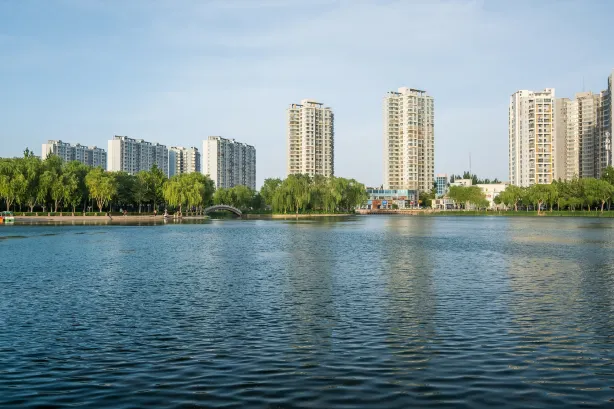
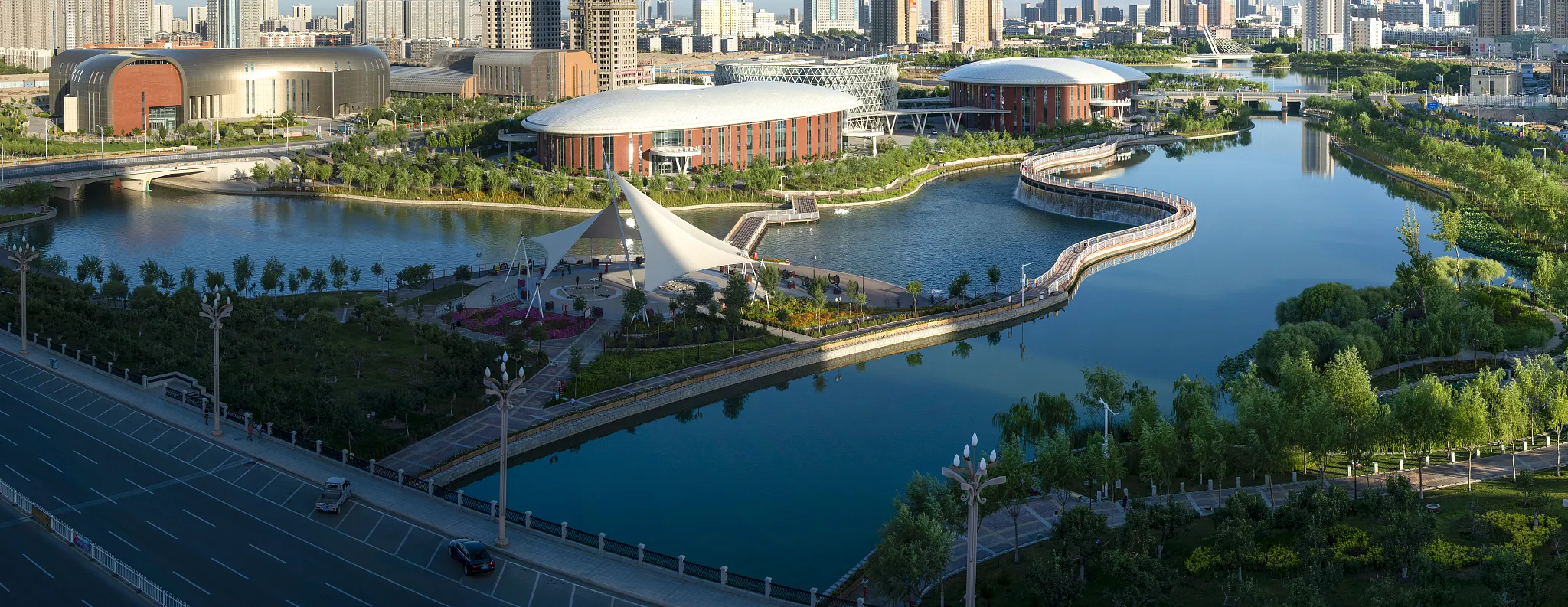
Kongque River originates from Bosten Lake, flows out from the western part of the lake, passes through the Iron Gate Pass canyon, travels east through Korla and Yuli County, and historically ended at Lop Nor. It is a rare river with almost no tributaries, nourishing the oasis of Korla and regarded by locals as their mother river. The origin of the river's name is quite interesting: legend has it that the famous Eastern Han general Ban Chao once watered his horses here, hence it is also known as the "Yinma River"; the name "Kongque" comes from a Uyghur transliteration, originally meaning "tanner," as it is said that tanners used to wash leather in the river in the past. The section flowing through the urban area of Korla has undergone years of renovation, and today it features open waters and tree-lined banks. Since 2000, a scenic tourist belt stretching about 10 km has been built along the river, with stone embankments connecting green spaces like Kongque Park and Lixiang Park, as well as several bridges with unique designs. Every April, the pear blossoms in Lixiang Park by the river are in full bloom, with the flowers reflecting in the clear water, living up to Korla's name as the "Pear City." Another aspect of this river's scenery awaits in winter: starting every fall and winter, flocks of swans fly to the Kongque River to overwinter. This phenomenon has continued for many years, and Korla is therefore known as the "City of Swans."

Korla · 14.3 km from downtown
Free attraction
Iron Gate Pass
No. 2 of Fall Viewing Attractions in Korla

Iron Gate Pass

5
4.5/5
208 reviews

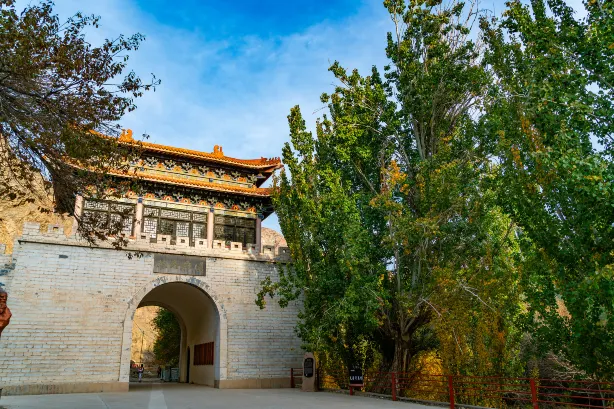
Iron Gate Pass is located in the northern suburbs of Korla City, nestled in the canyon between the Huola Mountains and the Kuruk Mountains, with the Kongque River winding through the valley. It was once the only passage for transportation between northern and southern Xinjiang, and the ancient Silk Road passed through here. A pass was established here during the Jin Dynasty, and it was named Iron Gate due to its strategic and impregnable nature. The canyon was historically known as the Iron Gate Pass Valley, also called Zheliu Valley, and has been a strategic military location since ancient times. The four characters "Jin Shan Dai He" (meaning "embraced by mountains and girded by the river") are carved into the cliff beside the pass. Tang Dynasty frontier poet Cen Shen passed through here on his way to the frontier and wrote the poem "Inscribed at Iron Gate Pass": "Iron Gate Pass is at the western edge of the sky, where few travelers are seen. A minor official at the pass gate faces the stone wall all day long. The bridge spans a thousand fathoms of danger, and the road winds narrowly between two cliffs. I try to climb the western tower to look out, and one glance turns my hair white." The scene of the steep pass and sparse travelers depicted in the poem can still be felt today in the canyon terrain flanked by the two mountains. On Princess Peak, located on the east bank of the Kongque River north of the pass, lies a princess's tomb. Legend has it that it is related to the love story in the classic Uyghur narrative poem "Tahir and Zohra"—Princess Zohra and the shepherd Tahir fell in love but were obstructed by the royal family; they fell into the canyon and died while trying to escape. This legend is widely circulated in southern Xinjiang and adds a touch of romance to this thousand-year-old pass. The gate tower seen today was rebuilt by later generations. Walking past the gate tower, one can see the hydroelectric station built on the Kongque River. The canyon walls rise sheer on both sides, and the river flows through the valley. Standing on the gate tower and looking out, one can still experience the steepness described by Cen Shen: "The bridge spans a thousand fathoms of danger, and the road winds narrowly between two cliffs."

Korla · 10.3 km from downtown
Free attraction
Museum of Bayinguoleng Mongol Autonomous Prefecture

Museum of Bayinguoleng Mongol Autonomous Prefecture

4.8
4.2/5
40 reviews

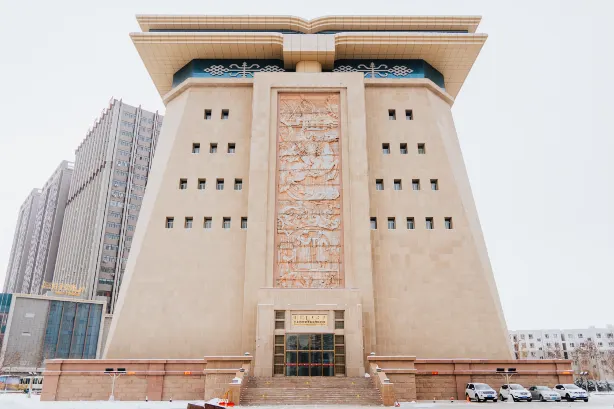
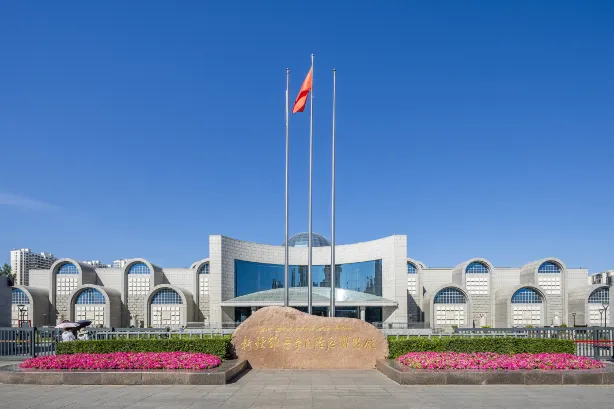
Museum of Bayinguoleng Mongol Autonomous Prefecture is a comprehensive museum in the Bayinguoleng Mongol Autonomous Prefecture, housing over 10,000 cultural relics, including wool textiles, documents, pottery, stone tools, bronze and iron artifacts, jade, and mummies. The main building is inspired by the beacon towers of the Great Wall, with the base designed after a Mongolian Vajra stupa, giving it a highly distinctive appearance. The museum features three permanent exhibitions: the Bayinguoleng History and Culture Exhibition, the Loulan History and Culture Exhibition, and the Eastward Return History and Culture Exhibition, which progressively showcase the history of the region from ancient times to the modern era. The Loulan Ancient City history and culture exhibition is the museum's most unique gallery, displaying precious artifacts such as mummies, painted wooden coffins, and silk garments unearthed from the Loulan Ancient City cemetery, the Xiaohe Cemetery, and the Zaghunluq Cemetery, dating back approximately 3,000 years. The exhibition hall features life-size reconstructions of the Loulan Ancient City gates, streets, houses, and the Xiaohe Cemetery, with oar-shaped and multi-faceted wooden pillars standing on the sand, creating an immersive atmosphere that makes visitors feel as if they are in the Loulan Ancient City of a thousand years ago. Among the exhibits, the lion-pattern carpet, unearthed from the Yingpan Cemetery dating to the Wei and Jin dynasties, is one of the museum's most notable artifacts. The Eastward Return History and Culture Exhibition tells the story of the 1771 historical event in which Ubashi, leader of the Torghut Mongols, led his people to break free from Tsarist Russian oppression and return to their motherland. The gallery features a massive painting approximately 15 meters long depicting the arduous journey of over a hundred people across the vast snowfields, along with a life-size reconstruction area that recreates the tragic and heroic journey of the eastward return. The Bayinguoleng History and Culture Exhibition follows a chronological timeline, presenting the cultural changes in the Bayinguoleng region from prehistoric times to the modern era, with key exhibits including pleated woolen trousers, wooden mummies from the Xiaohe Cemetery, and silver bowls with ostrich patterns.

Korla · 846m from downtown
Free attraction
Swan River Scenic Area
No. 2 of Night Attractions in Korla

Swan River Scenic Area

4.1
4.2/5
20 reviews

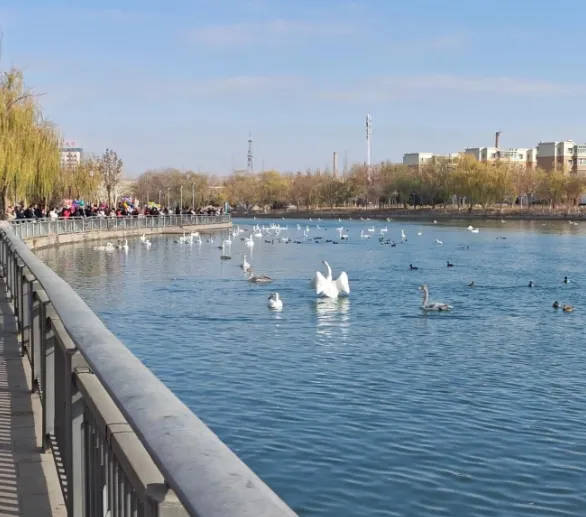
The Swan River Scenic Area is a waterfront landscape belt in downtown Korla, consisting of the Kongque River section, the Swan River Scenic Area section, and the Hongyan River section, acting like a water ribbon connecting the Kongque River and the Dujuan River. Stretching from Lixiang Lake in the south to Shiziqiao in the north, the river winds for over 10 km, with more than 20 arched bridges of various styles distributed along the way. Green islands, piers, and riverside walkways are interspersed throughout, giving this desert border city a touch of the charm found in Jiangnan water towns. By day, it serves as a green corridor for citizens to walk and exercise, while at night, it transforms into a scenic belt illuminated along the river. A night cruise is the signature experience here: after the lights on both banks are lit, the arched bridges and buildings are reflected on the water. You can take a painted boat from Lixiang Lake Pier and travel along the river to the Dream Music Fountain area near Tianyuan Bridge. When the music starts, the water jets can shoot up to 100 meters high, reminiscent of the night cruises on the Qinhuai River. Along the route, you can also see cultural attractions such as the Fragrant Pear sculpture, the Ban Chao sculpture, the Cen Shen sculpture, and the Hetu Luoshu Square. The lotus pond and the 100-meter waterfall are also worth stopping by during the summer and fall. Swans in winter are the city's calling card: every late fall, swans from the Bayanbulak Wetland arrive in Korla one after another to spend the winter in urban river sections such as the Kongque River and the Swan River Scenic Area. You can see flocks of swans swimming and playing from the opposite bank, and they stay until the following spring before leaving. This phenomenon has continued for over 20 years.

Korla · 3.2 km from downtown
Free attraction

More things to do

Private Tours in Korla

View More Private Tours in Korla
Group Tours in Korla

View More Group Tours in Korla

Korla Today's weatherOvercast -2-10℃
Korla weather for the next 2 days11/30: -2-9℃, 12/1: 0-9℃

Free things to do in Korla

What travelers say about Korla

user-avatar
YoYo_9H7U5N1A2 September 2026
5.0
The Peacock River flows gently through the city of Korla, its banks lush with greenery and illuminated by dazzling lights at night. The river's gentle flow makes it perfect for an evening stroll, and while it boasts a rich natural and historical heritage, it lacks grand, breathtaking landscapes typical of urban areas.

Kongque River

user-avatar
风雨大漠客196910 October 2026
5.0
Korla boasts rare scenic spots rich in historical and cultural significance. The Tang Dynasty poet Ling Can wrote a poem there, and modern General Wang Zhen produced calligraphy. Many other literati and artists have also contributed. The dividing line between northern and southern Xinjiang is also quite interesting, offering a tangible visual experience.

Iron Gate Pass

user-avatar
Anonymous user1 October 2025
5.0
The scenic area has a good scenery and the big lawn is very beautiful. The Loulan Inn suddenly made me dream back to a thousand years. I saw three rooms, pagodas, and a video introducing Loulan. It is worth a visit.

Korla Sports Park

user-avatar
whlyh11 July 2025
5.0
[Scenery] If you come to Bayinguolengzi Island, you should visit the museum. The museum has three basic exhibition halls with more than ten kinds of precious national cultural relics, including bronzes, ceramics, textiles, mummies, gold and silver wares, jades, murals, etc., including 14 first-class cultural relics, 82 second-class cultural relics, and 558 third-class cultural relics. It is a comprehensive museum integrating historical relics and tourism. [Fun] Experience the culture of the Western Regions of China [Cost-effectiveness] No reservation is required, just bring your ID card

Museum of Bayinguoleng Mongol Autonomous Prefecture

user-avatar
didiann200112 June 2025
4.0
The Swan River Scenic Area is quite large, including the Peacock River and the Azalea River. The Azalea River is relatively small, but the Peacock River is still nice. The riverside is lined with green trees and the river is rushing. It is very pleasant to take a walk along the river!

Swan River Scenic Area

user-avatar
爱睡觉的猪015 November 2021
5.0
The night view of Korle in Hongyuan Square is still very beautiful. When the sun sets, Sun Road is there, giving people a feeling of a quiet atmosphere. All the flowers in my village have been picked, leaving only this beautiful river, which is very good.

Hongyan Square

user-avatar
我是有毒的猹3 July 2024
3.0
Hidden in a corner, the area is no more than 50 square meters. It's nice to see. It takes 5 minutes to walk to the end. The main problem. It's difficult to get a taxi on the way back.

Iron Gate Pass - General Tower

Trip Moments in Korla

Popular cities near Korla

Frequently asked questions

How can I contact Trip.com customer support?

Get help anytime, anywhere within 30 secondsContact customer support

Change and cancellation policies vary by attractions and tours. Please check the product details page for more information.

Ticket prices may vary between weekdays and weekends, as well as during peak and off-peak seasons. When booking with Trip.com, you can also use Trip Coins to get extra savings. For more tips on booking discounted tickets, please visit Trip.com for the latest information.