
Things to do in Wutai County
Explore top experiences
Top 10 attractions in Wutai County

Guangji Temple (Dongmishi Street)
Wutai County · 682m from downtown

Xuxiangqian Former Residence
Wutai County · 13.2 km from downtown


Xinzhou Ancient City
Xinzhou was called Xiurong in ancient times. It is located between Taiyuan and Mount Wutai. It is the seat of Xinzhou Administrative Office and Prefectural Committee. In the Spring and Autumn Period, Xinzhou belonged to Jin State. In the Warring States Period, it belonged to Zhao State. In the Qin and Han Dynasties, it belonged to Taiyuan County, Yanmen County, and Taiping County. In the Sui Dynasty, it was Xinxingdu and Yanmen. During the Tang, Five Dynasties and Song dynasties, it was called Dingxiang Prefecture of Xinzhou. During the Jin, Yuan, Ming and Qing dynasties, it was called Xinzhou, Daizhou and Baodezhou. During the Anti-Japanese War and the War of Liberation, most of the area belonged to Jinchaji, and the area to the west belonged to Jinsui. In 1949, Xinzhou Prefecture was established. The cultural relics and historical sites in Xinzhou City include: Xinzhou North Gate Tower. Located in Xinzhou City, on the Gongchen Gate of the old north city wall. The North Gate Tower was built in the 24th year of Wanli in the Ming Dynasty. The tower is located on the 12-meter-high city wall, which makes it more majestic and magnificent. The city wall stands tall and is painted red on the outside. There is a Voucher doorway below, with a very high top and a bottom width of more than 3 meters.Xinzhou · 57.4 km from Wutai County

Zunsheng Temple
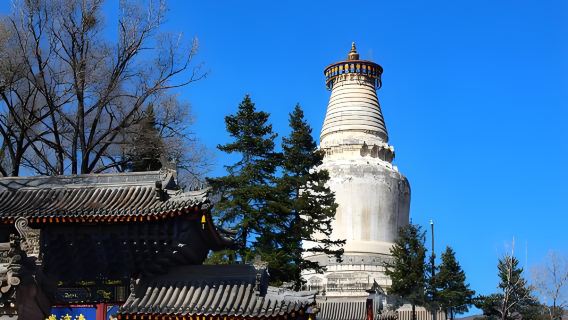
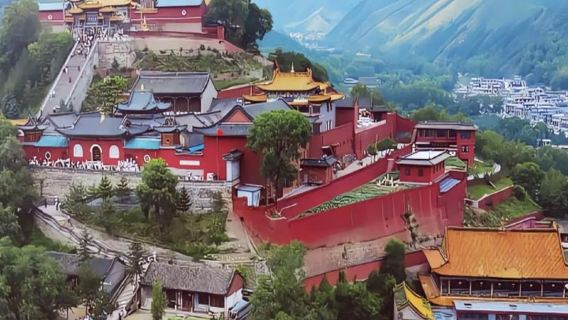
Zunsheng Temple was built in the Sui Dynasty and has a history of more than 1,300 years. Because it is located in the place where Wutai Mountain must pass in ancient times, it is called Wufeng Throat. In the first year of Yifeng in the Tang Dynasty, the Buddha Glass of India went to the stage (traditionally called Chaotai to worship Mount Wutai) so far to see Manjushri Bodhisattva in person, so he returned to the Western Regions and asked the Buddha to the top of the Holy Dharani Sutra, and translated it into Chinese. The monastery was built here. Zunsheng Temple is the second largest Buddhist jungle in Mount Wutai. There are a total of 350 halls, five Jade Buddhas, five Zhangmu Buddhas, and more than 390 painted Buddha statues. Zunsheng Temple is regarded as the ancestral hall of "Zunsheng Dharma Gate" by the whole world because of the Buddha's top Zunsheng Dharani Sutra. There is a Song Dynasty scripture building inscribed with the Buddha's top Zunsheng Dharani scripture in the temple, which has a history of nearly a thousand years. The brick carvings on the building of Zunsheng Temple are fine and the craftsmanship is high. The monastery sits from north to south. On the east and west sides of the temple, there is a building hole with a lower brick coupon hole and an upper wooden building. On the east side between the two-floor caves, there is a brick archway with three doors and three floors. The entrance and facade of the monument are decorated with intricate brick carvings. After passing the Stele Building, there are Guanjian Hall, Tibetan Scripture Building, Pilu Hall and Wuwenshu Hall on the south side of Lingwa Passage. The Sutra Building is a two-story building with twelve-pointed pavilions symmetrically built on the left and right sides. The platform base is also twelve-pointed, the upper part is a double eaves and a spire, and the outside is surrounded by a circle of pillars. Its architectural style has two floors on the outside, gorgeous and exquisite, but it is a room inside. The east is called Wanyuan Pavilion, and the west is called Sanbaolou. On the west side of the Sanshi Hall, there is also a hall building with a brick cave on the lower floor and a wooden building on the upper floor, called the Sanxing Building. Behind the hall of Qijin, there is a brick tower with a dense eaves structure, twelve corners around the tower, nine floors up and down, 39 meters high, and a brick coupon hole under it, which surrounds the tower for a week, like an apron. There are 33 caves in total, and there were originally 33 guardian deities. Looking at the Wanzang Brick Pagoda from a distance, the ridges stand, the eaves are stacked, and the blue sky is backed, which is very beautiful.Wutai County · 13.2 km from downtown

Temple at Beitaiding Peak
Fanshi · 47.9 km from Wutai County

Yingxian Wooden Pagoda
The full name of Yingxian Wooden Tower is Sakyamuni Pagoda of Fogong Temple. It is in the Fogong Temple in the northwest of Yingxian County. The octagonal wooden pagoda has five stories. Except for the high-end stone foundation of the first floor, the rest of the pagoda is made of wood using the traditional craftsmanship of Sunmao. Each layer of the wooden tower is equipped with wind chimes for a pleasant sound when the wind blows.Ying County · 93.7 km from Wutai County

Shanxi Museum
"Five thousand years of history can be seen in Shanxi." Located on Binhe West Road in Taiyuan, the Shanxi Museum showcases the essence of Shanxi's cultural relics. The museum consists of a main building and four corner annexes, with the main building resembling both a dipper and a ding vessel, serving as the primary venue for travelers to view the collection. The main building has four floors. The first-floor lobby features a general service desk, while the second and third floors host thematic exhibitions on history and culture. The fourth floor showcases art-themed exhibitions, which together form the permanent displays of the Shanxi Museum. After entering the first-floor lobby, proceed to the second floor via the stairs to begin the historical journey themed "Soul of Jin." The cultural and historical thematic exhibition showcases the highlights of Shanxi's five-thousand-year civilization through numerous precious artifacts, ranging from ancient human relics to the rise and fall of Shanxi merchants during the Ming and Qing dynasties over five centuries. During your visit, several exquisite artifacts are not to be missed. The bird zun, a bronze ritual vessel from the Western Zhou period, was used in the ancestral temple sacrifices of the Jin marquis. The bird zun features an exquisitely crafted design with a phoenix as its main form. On the phoenix's back rests a small bird, serving as the handle for the vessel's lid. At the tail of the phoenix, an elephant is depicted, with its long trunk perfectly balancing the phoenix's two legs to form a stable tripod base. This artifact is a representative piece among the bronze collections in the museum. In addition, you can also admire: the Houma covenant texts, which are oath documents from the Spring and Autumn period used by the ministers of the Jin state; the lacquered wooden panel paintings, a painted screen from the Northern Wei dynasty depicting colorful stories from the "Biographies of Exemplary Women"; the white marble sarcophagus, a relic from the Sui dynasty, belonging to a tomb occupant who was a member of the Central Asian Yu people, with intricate carvings both inside and outside the sarcophagus, featuring figures with deep-set eyes, high noses, and black hair, characteristic of the Mediterranean Caucasian race. In the cultural thematic exhibition, you can also learn about the origins and development of Buddhism and traditional opera in Shanxi. The fourth floor of the main hall features an art thematic exhibition area. Among them, the "Timber and earth splendor" - ancient architectural art thematic exhibition showcases Shanxi's status as a province rich in cultural relics and ancient structures. "For above-ground relics, look to Shanxi" - Shanxi is renowned as the "treasure trove of ancient Chinese architecture," boasting over half of China's above-ground ancient structures with comprehensive categories, especially in the quantity of religious buildings. If you're a fan of ancient architecture, this is a must-visit. The Shanxi Museum also hosts temporary exhibitions periodically. At the first-floor lobby service desk, services such as hiring on-site guides (Chinese and English) and renting audio guides are available. The main building also houses a restaurant and a tea house for visitors.China · Taiyuan

Datong Ancient City
Datong Ancient City is the historic core of Datong, Shanxi. It served as the capital Pingcheng during the Northern Wei dynasty, the western auxiliary capital during the Liao and Jin dynasties, and a strategic frontier stronghold in the Ming dynasty, earning it the enduring title "northern key." Over its 2,000-year history spanning dynastic changes, the city's location remained largely unchanged, preserving its chessboard-style street grid centered on Sipailou to this day. The 2008 conservation and restoration project reunited the city walls, reconnected the moat, and gradually revived ancient architecture and old streets, layering the grandeur of an ancient capital with modern life within the same walled city. The ancient town offers an exceptionally dense concentration of noteworthy sights: in Huayan Temple's Liao- and Jin-dynasty halls, the graceful "clasped-hands, smiling" Liao-dynasty bodhisattva statue in the Scripture Depository Hall has long been hailed as the "Oriental Venus"; Shanhua Temple preserves a complete complex of Liao- and Jin-era wooden architecture. The Nine-dragon Wall, originally a glazed screen wall before the Ming-dynasty Dai Prince's residence (destroyed in war), survives with its nine coiling dragons still radiant—older and larger than its counterparts in Beijing's Forbidden City and Beihai Park. Climbing the reconstructed Ming-style city walls reveals a bird's-eye view of the square town's crisscrossing four main streets and orderly rooftops. An evening wait for sunset on the ramparts, followed by the illuminated outlines of walls and watchtowers after dark, makes for one of the town's most enchanting moments. Walking is recommended for touring: the attractions inside the city walls are spaced closely, allowing Huayan Temple, Shanhua Temple, the Nine-dragon Wall, and the drum tower to form a connected route. When tired, you may turn into the area around East Drum Tower Street, where time-honored shops and snack stores are concentrated, making it ideal for resting and replenishing. The ancient town covers a considerable area, so allocate at least half a day and wear comfortable shoes to leisurely appreciate the layered historical depth of this ancient capital.China · Datong

Guangfu Ancient City
Guangfu Ancient Cityis located in Guangfu town, Yongnian district, Handan city, Hebei province. It is a national 5A-level attraction, a famous historical and cultural town in China, and a wetland park with profound historical heritage. Featuring beautiful northern water town scenery and a long-standing tai chi culture, it is China's unique ancient town, water town and tai chi town. The ancient town. Guangfu ancient town has a history of over 2,600 years, with its city walls stretching 4.5 km in circumference and covering an area of 1.5 square kilometers. The town boasts numerous historical relics, including two national-level protected sites - Guangfu ancient town itself and Hongji bridge, along with over 20 provincial and municipal protected sites such as the former residences of Yang Luchan, Wu Yuxiang and Wu Ruqing. The water town. Guangfu ancient town is located in the Yongnian depression covering an area of 46,000 mu. Surrounding the town walls is a 5 km moat that's 100 m wide, with wetlands beyond it. This "town between two waters" forms a unique view of Guangfu. The depression has perennial water accumulation with lush reeds, thriving fish and shrimp, lotus ponds, and migratory birds, earning it the reputation of "little Jiangnan in the north". The city of taiji. Guangfu ancient town is the birthplace of Yang-style and Wu-style taijiquan, where the founders of the two major schools, Yang Luchan and Wu Yuxiang, were born. It is a renowned hometown of taiji, from which taijiquan spread across China and the world.China · Handan

Taiyuan Ancient County
The ancient county seat of Taiyuan is located in Jinyuan District, covering an area of about 0.8 square kilometers. There are many relics of historical buildings in the city, the pattern of cross streets is clear, and the texture of streets and alleys is perfect. It follows the ancient architectural pattern of Jinyang ancient city "Phoenix Flying in the City", just like a phoenix with its head north and tail south. It has the reputation of "Phoenix City" since ancient times. It is the continuation of the 2500-year-old Jinyang ancient city. There are 79 existing cultural relics buildings in the city, and 49 historical buildings listed for protection by the Taiyuan Municipal Government. Among them, the Confucian Temple is listed as a national key cultural relics protection unit.China · Taiyuan
Experiences you can't miss in Wutai County
Featured Day tours in Wutai County
View all Day tours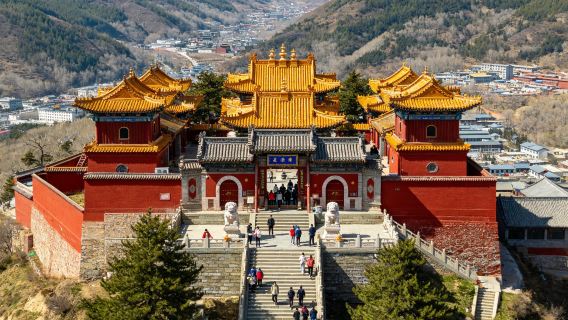
Free cancellation
Instant confirmation
Book now for tomorrow
Save AED 12.34
FromAED 234.57AED 246.91
Free cancellation
Instant confirmation
Save AED 1.88
FromAED 185.17AED 187.05
Free cancellation
Instant confirmation
FromAED 987.61
5.0/5
· 1 reviewFree cancellation
Instant confirmation
Book now for tomorrow
56 travelers saved
FromAED 2,304.41

Free cancellation
Instant confirmation
FromAED 748.19
FromAED 1,549.37
5% off
Limited-time sale
FromAED 710.78AED 748.19

5% off
Limited-time sale
FromAED 888.46AED 935.23
Free things to do in Wutai County
Guangji Temple (Dongmishi Street)
Wutai County · 682m from downtownXuxiangqian Former Residence
Wutai County · 13.2 km from downtownXinzhou Ancient City
Xinzhou · 57.4 km from Wutai CountyZunsheng Temple
Wutai County · 13.2 km from downtownTemple at Beitaiding Peak
Fanshi · 47.9 km from Wutai CountyYingxian Wooden Pagoda
Ying County · 93.7 km from Wutai CountyImmediate access, Book now for today, Cancel anytimeShanxi Museum
China · TaiyuanDatong Ancient City
China · DatongGuangfu Ancient City
China · HandanTaiyuan Ancient County
China · Taiyuan
More ways to travel from Wutai County
Private Tours in Wutai County
View More Private Tours in Wutai County


Group Tours in Wutai County
View More Group Tours in Wutai County



What travelers say about Wutai County

睡恣@M丶7 July 2021
4.0
Guangji Temple in Wutai County is commonly known as the West Temple. It is located on West Street in the county town. It was founded during the Yuan Zhizheng period and was partially repaired during the Ming and Qing dynasties. The temple gate is close to the main street. The east and west side halls in the courtyard enshrine Guanyin and Ksitigarbha Bodhisattvas. The Amitabha Hall is in the middle, and the five-bay Main Hall is at the end. The statues in the hall are well preserved. The hall has only two golden pillars and is a five-bay hanging mountain style with an unusually wide space. The statues include Buddha, disciples, Bodhisattvas, Vajra, etc., and the Eighteen Arhats are on both sides.
Guangji Temple (Dongmishi Street)

姥家屋后有条河1 March 2023
5.0
Xu Xiangqian's former residence is located in Yong'an Village, Dongye Town, Wutai County, Shanxi Province. It was built in the early years of the Qing Dynasty. Xu Xiangqian was one of the ten marshals of the Chinese People's Liberation Army. Marshal Xu Xiangqian was born here in 1901. Due to years of disrepair, the former residence has long been dilapidated. After Xu Xiangqian's death, local departments at all levels jointly raised funds to restore the original appearance of the former residence.
Xuxiangqian Former Residence

Anonymous user17 September 2026
5.0
This is the most spectacular iron flower display I've ever seen! The program was diverse and engaging, the host was witty, the audience interaction was lively, the iron flower workers were incredibly skilled, and the iron flowers were dazzling and colorful – the effect was absolutely stunning! Thumbs up! 👍👍👍
Xinzhou Ancient City

东篱游记6 April 2025
5.0
非常值得一看的地方。这地方的亮点在文中都谈到了,现在补充一点:尊胜寺在过去是南麓通往五台山的必经之路,具有重要的地位,被称为五峰咽喉。现在在尊胜寺门前可以看到这条通往五台山的古道。路上道路斑驳,有些路上的铺路石已经磨的没有了,有的还残存,这条道上穿过关洞,整个五台山尽收眼底,美丽而壮观。建议来参观的朋友要走一走这条古道。我们是自由行,寺庙里面没有任何的收费和变相收费 。如果是跟旅行社的话,就要长个心眼了 。
Zunsheng Temple

亮点liangpoint3 September 2022
4.0
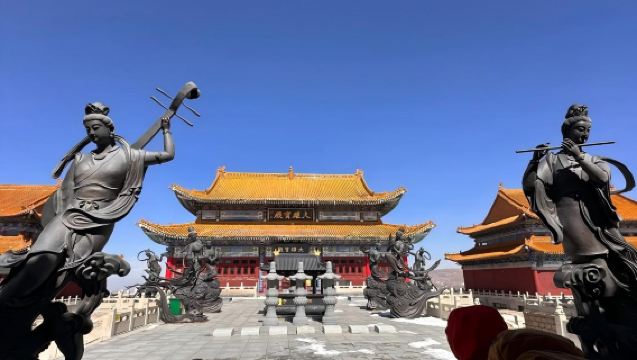
Beitai Lingying Temple was founded in the Sui Dynasty, and the temple enshrines the "Pure Manjusri Bodhisattva". In 2001, Lingying Temple was expanded and repaired. The Manjusri Hall built with white marble is five bays wide, with a single-eaved hip roof, arched doors and windows, a front corridor, and the left and right side halls are gable roofs. The column heads between the corridors are decorated with stone brackets. The overall facilities are simple, bright, stable and generous.
Temple at Beitaiding Peak

hanhan-200115 October 2026
5.0
The Yingxian Wooden Pagoda is the pinnacle of ancient architecture in Shanxi. Unlike the "Liao and Jin art" of Huayan Temple, it is a "wooden miracle" that will shock you purely with its mechanics and structure.
Yingxian Wooden Pagoda
Anonymous user7 October 2026
5.0
The tour guide was attentive and incredibly friendly, covering everything he needed to, and explaining things in considerable detail. With so many people during the National Day holiday, his experience helped us squeeze in every possible moment, and surprisingly, the trip wasn't crowded at all. The Yungang Buddha and the VR tour of Wutai Mountain were definitely worthwhile, and the Yanmen Pass Great Wall and Wang Family Courtyard were also very enjoyable. The driver was fantastic, incredibly experienced, and knew many shortcuts to Xiaoxitian, taking us directly to the scenic area entrance and saving us a lot of walking. The small group size meant it wasn't crowded, and the hotel arrangements were quite reasonable. The Yingxian Wooden Pagoda, the Yanmen Sunset, and the Wang Family Brick Carvings were all breathtakingly beautiful. The local tour guide was completely transparent and honest. I highly recommend this Shanxi tour; if you want to see ancient architecture but are afraid of doing research, book this tour without hesitation.
Shanxi Museum

悠闲溜达的猫🐱13 October 2026
4.0
The ancient city is beautiful at night with the lights on, and all the attractions are within walking distance. There are many restaurants and popular eateries, but expect to wait over an hour during peak hours. Supermarkets are scarce within the ancient city; delivery is the only option if you need food.
Datong Ancient City
Anonymous user3 October 2026
4.0
The hometown of Tai Chi has well-preserved ancient city walls and many performance programs, but it is still quite commercialized. During the National Day holiday, there are a lot of tourists, especially at night, which causes serious traffic jams.
Guangfu Ancient City

楚云霁月21 August 2026
4.0
The old town was rather deserted. The art exhibition was quite nice, though a bit over the top. But the park at the exit was absolutely gorgeous. Winding paths led to secluded spots, and unexpected beauty unfolded.
Taiyuan Ancient County


