Shijiazhuang

Things to do in Shijiazhuang

Search attractions or local attractions & tours
Search

Explore top experiences

Top 10 attractions in Shijiazhuang
View all Attractions
Zhengding Ancient City
No. 2 of Night Attractions in Hebei

Zhengding Ancient City

7.6
4.7/5
590 reviews

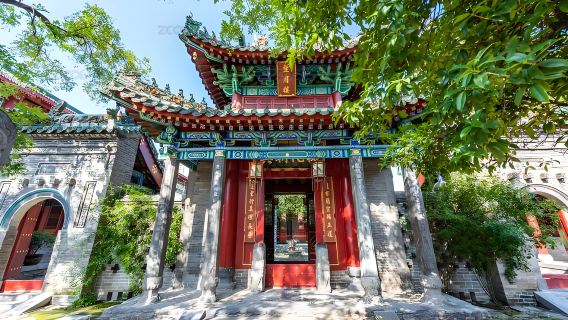
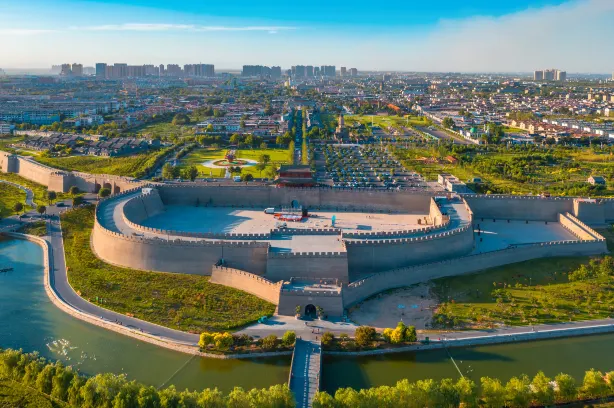
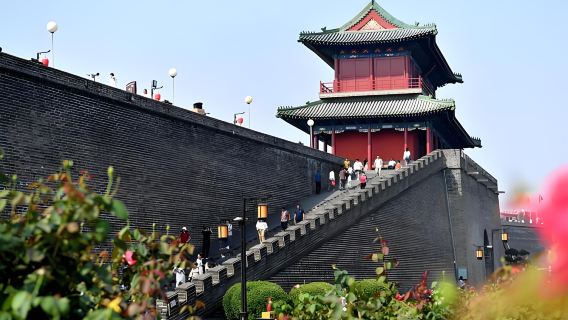
Zhengding Ancient City has a history of more than 1,600 years. The existing city wall is a relic of the Ming Dynasty. It was first built with earth in the Eastern Jin Dynasty and expanded into a brick city in the Ming Dynasty. Historically, it was known together with Baoding and Beijing as one of the "three great towns of the north." The south city gate still bears a stone plaque inscribed with "three passes great town." This is also the hometown of Zhao Zilong, a famous general of the Three Kingdoms period. The city has a dense concentration of historical sites, and Longxing Temple is a representative ancient temple. First built in the sixth year of the Kaihuang era of the Sui Dynasty (586), it was expanded by imperial order of Zhao Kuangyin, Emperor Taizu of Song, and was praised by the architectural historian Liang Sicheng as "the foremost famous temple outside the capital." The temple has many highlights: the Mani Hall has a cruciform plan and is a typical surviving example of Song Dynasty construction techniques; the reclining Guanyin wall sculpture behind the hall was called the "Beauty of the East" by Lu Xun; the revolving sutra repository in the Zhuanlunzang Pavilion is one of China's earliest surviving revolving sutra repositories; the Longzang Temple Stele, whose script evolved from Han clerical script to Tang regular script, was praised by Kang Youwei as "the finest Sui stele"; and the bronze Thousand-Handed and Thousand-Eyed Guanyin enshrined in the pavilion is one of China's earliest surviving large bronze Buddha statues. The ancient city is also home to four distinctive ancient pagodas: the Lingxiao Pagoda of Tianning Temple is a pavilion-style pagoda with a mixed brick-and-wood structure; the Hua Pagoda of Guanghui Temple combines the architectural features of both a vajra-throne pagoda and a flower pagoda; the Xumi Pagoda of Kaiyuan Temple and the Tang Dynasty Bell Tower are arranged symmetrically, reflecting the evolution of Buddhist temple layouts from tower-centered to hall-centered; and the Chengling Pagoda of Linji Temple is the robe-and-bowl relic pagoda of Master Yixuan, founder of the Linji School. The Rongguo Mansion inside the city was built according to the descriptions in "Dream of the Red Chamber," and most scenes of the TV series "Dream of the Red Chamber" were filmed here. The "Ningrong Street" beside the mansion recreates the street scene of the Qing Dynasty. When touring, it is recommended to connect the main attractions along the central axis of the ancient city. Longxing Temple is rich in content, and the architectural structures of the Mani Hall and the Zhuanlunzang Pavilion are worth a closer look; the four pagodas are distributed in different directions within the city and are suitable for visiting one by one on foot; the south city gate is relatively well preserved, and climbing the wall offers a panoramic view of the overall layout of the ancient city.

Zhengding · 414m from downtown
Hebei Museum
No. 5 of Family-friendly Attractions in Hebei

Hebei Museum

7.3
4.8/5
1.5k reviews

The Hebei Museum, formerly known as the Hebei Provincial Museum, was established in 1953. It is a provincial-level comprehensive museum of Hebei Province, a national patriotism education demonstration base, and a key museum jointly built by the central and local governments. The Hebei Museum consists of four parts: the main campus, Jianhua campus, Yucai campus, and West Street campus. The main campus is located at the Cultural Plaza in Shijiazhuang and is divided into the south and north areas. The north area was built in 1968, and the south area is a newly expanded area. The buildings of the two areas are harmonious and unified, majestic and magnificent, and constitute a landmark cultural view of Shijiazhuang. The Jianhua campus and Yucai campus serve as cultural relic warehouses, with a total collection of more than 340,000 items. Leveraging the advantages of the cultural relic collections of provincial-level cultural and museum institutions, Hebei Museum selects highlights from Hebei's history and presents 10 permanent exhibitions: "Hebei in the Stone Age," "Shang Dynasty Civilization in Hebei," "Songs of Generosity and Sorrow — Stories of Yan and Zhao," "The Majestic Spirit of the Warring States — Ancient Zhongshan State," "The Swan Song of the Great Han — Mancheng Han Tombs," "Quyang Stone Carvings," "Murals of the Northern Dynasties," "Famous Kilns and Fine Porcelain," "Flames of Resistance — Heroic Hebei," and "'Enjoy Hebei' Intangible Cultural Heritage Reception Hall — Exhibition of Hebei Province's Intangible Cultural Heritage Protection Achievements." Through more than 5,000 exquisite cultural relics (sets) and modern display methods, it chronicles the continuous history of human development in Hebei over the past 2 million years. Hebei Museum also holds numerous temporary exhibitions each year on topics such as history, art, nature, science and technology, current affairs, and folk customs, greatly enriching people's spiritual and cultural life. Over the years, Hebei Museum has made positive contributions in the collection, protection, research, exhibition, publicity and education of cultural relics, as well as domestic and international exchanges. Hebei Museum was rated as a "National Civilized Unit" in 2015 and won the title of "National Innovative Museum" in 2018. With its profound historical and cultural heritage, modern exhibitions, and a clean and comfortable open environment, Hebei Museum warmly welcomes visitors from all directions.

Shijiazhuang · 711m from downtown
Longxing Temple
No. 11 of Best Things to Do in Hebei

Longxing Temple

7.1
4.8/5
4.4k reviews

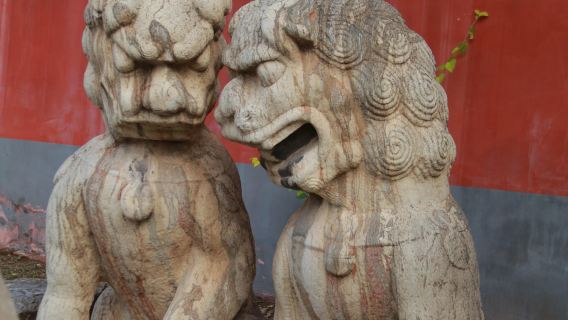
Longxing Temple, also known as the Great Buddha Temple, is one of China's most historically significant Buddhist monasteries with extensive architectural scale and remarkable preservation. This ancient architectural complex holds outstanding historical and cultural value as a monumental religious site. Longxing Temple traces its origins back to 586 AD during the Sui Dynasty, initially named Longcang Temple before being renamed during the Tang Dynasty. In 971 AD under Emperor Taizu of the Northern Song Dynasty, an imperial decree commissioned the casting of a magnificent 42-arm bronze statue of the Thousand-Hand Guanyin Bodhisattva within the temple, accompanied by the construction of the Great Mercy Pavilion. Subsequent expansions formed a Song Dynasty architectural complex centered around this pavilion. The temple underwent repairs and additions during the Jin, Yuan, and Ming Dynasties. Major renovations ordered during the reigns of Kangxi and Qianlong in the Qing Dynasty established its final layout: monastic living quarters in the east, Buddhist ceremonial spaces in the center, and imperial lodging in the west. In 1710, Emperor Kangxi personally inscribed the "Longxing Temple" plaque as a mark of reverence. From the late Qing through the Republic era, social upheaval and warfare led to the temple's decline. After the founding of New China, systematic restoration and preservation efforts by the government gradually restored the temple to its former grandeur. Longxing Temple boasts an expansive scale and diverse architectural styles, stretching approximately 600 meters from north to south and 200 meters from east to west. Its main structures are symmetrically arranged along a central axis, featuring key buildings such as the Heavenly King Hall, Mani Hall, Ordination Platform, Great Mercy Pavilion, Amitabha Hall, Vairocana Hall, and Dragon Soaring Garden from south to north. Visitors can explore along the central axis, with a complete tour typically taking 2–3 hrs. The temple is also known as the "Great Buddha Temple," a name derived from its enshrined 21.3-meter-tall Thousand-Armed and Thousand-Eyed Guanyin statue in the Great Mercy Pavilion. This majestic bronze statue, commissioned by Emperor Zhao Kuangyin during the Northern Song Dynasty, stands as one of China's most monumental ancient copper-cast Buddhist sculptures, earning the temple its nickname and making it a must-see attraction. The Mani Hall is another must-see highlight, featuring a vividly colored seated Avalokitesvara statue on its northern wall. This unique statue combines lifelike realism with divine beauty in its posture and vibrant hues. Lu Xun once praised it as "personifying divinity," earning it the title "Goddess of Eastern Beauty." The hall itself boasts distinct Song Dynasty architecture, with its original structure preserved. Its particularly special bracket set design was hailed by renowned architect Liang Sicheng as a "singular example" of Song-era construction, making it an architectural masterpiece of immense artistic and research value. Beyond these two main attractions, the temple houses other equally precious artifacts and structures. These include the Longxing Temple Ordination Platform in the Ordination Hall, the Northern Song Dynasty revolving sutra cabinet in the Revolving Sutra Cabinet Hall, the 7.4-meter-tall Northern Song wooden Maitreya statue in the Cishi Pavilion, imperial stele inscriptions by Emperors Kangxi and Qianlong in the Imperial Stele Pavilion, and the Sui Dynasty Longcang Temple Stele revered as the "origin of regular script"—all rare historical treasures worth admiring in detail. Additionally, the Dajue Liushi Hall ruins and Longteng Garden offer unique experiences, making them highly recommended stops for visitors.

Zhengding · 1 km from downtown
Rong Mansion Scenic Spot
No. 10 of Family-friendly Attractions in Hebei

Rong Mansion Scenic Spot

6.8
4.4/5
3.3k reviews

Rong Mansion Scenic Spot in Zhengding was China's first film and television shooting base, built for the 1987 TV series "Dream of the Red Chamber." This ancient-style architectural complex features Ming and Qing dynasty designs, consisting of a mansion and street section. Construction began in December 1984 and opened to the public in July 1986. In 1983, China Central Television (CCTV) planned to produce the grand TV series "Dream of the Red Chamber" and sought local government cooperation to build a temporary outdoor set for Rongguo Mansion. The then Party Secretary of Zhengding County keenly recognized the business opportunity, contacted CCTV, and quickly reached an agreement where Zhengding would provide the land free of charge to construct the full-scale Rongguo Mansion set. In July 1986, after 1 year and 8 months of construction, the Rongguo Mansion attraction was completed, covering 55 acres with an investment exceeding CNY 3.5 million. The completion of Rongguo Mansion significantly boosted Zhengding's tourism industry, pioneering a national model that became known as "China's tourism, the Zhengding model." The Rongguo Mansion is designed and constructed based on the "Rongguo Mansion" depicted in the Chinese classical masterpiece "Dream of the Red Chamber." The main attractions include the Rongguo Mansion scenic area, Ningrong Street scenic area, and the Cao Xueqin Memorial Hall. Covering an area of 37,000 square meters with a building area of 6,400 square meters, the mansion features 212 rooms and 102 corridors. The entire estate is divided into eastern, central, and western sections, each designed as a five-courtyard quadrangle in Ming and Qing architectural styles. The central section serves as Jia Zheng's official courtyard, adorned with solemn imperial-style paintings, while the eastern and western sections are inner residential courtyards featuring vibrant Suzhou-style paintings. The interiors boast elegant floor-standing floral partitions and exquisite Ming and Qing-style furniture. With 23 scenes, 88 character figures, and over 1,600 antiques and calligraphy pieces, the mansion vividly recreates the grandeur of a "household of lavish feasts and a family steeped in poetry and literature." After Rongguo Mansion was completed, the 36-episode TV series "Dream of the Red Chamber" was filmed here for nearly two months, capturing over 2,000 scenes. Key sequences like "Yuanchun's Home Visit" and "Qin Keqing's Funeral" were shot on location. Since then, it has served as the filming site for 200 productions including "The Kangxi Dynasty," "Who Will Dominate," "Hai Tang Yi Jiu," and the child actor version of "Dream of the Red Chamber." Today, it has evolved into a premier attraction integrating film production, tourism, and the promotion of Red Chamber culture.

Zhengding · 718m from downtown
Zhaozhou Bridge
No. 5 of Best Things to Do in Shijiazhuang

Zhaozhou Bridge

6.4
4.1/5
1.8k reviews

Zhaozhou Bridge, also known as Anji Bridge, is locally called the Great Stone Bridge. Built between the late Kaihuang period and early Daye period of the Sui Dynasty (595–605 AD), it has a history of over 1,400 years. Designed and constructed by Sui Dynasty craftsman Li Chun, it was bestowed the name "Anji" by Emperor Zhezong during his northern inspection tour in the Northern Song Dynasty. The Zhaozhou Bridge is a large single-span open-spandrel stone arch bridge with a segmental arch. The main arch consists of 28 parallel arch rings arranged longitudinally. The bridge has a total length of 64.4m, a deck width of 9m, and a width of 9.6m at the springing lines on both sides. The main arch, constructed with 28 parallel arch rings, has a clear span of 37.02m and a rise (vertical distance from the crown to the springing line) of 7.23m. The two smaller arches near the abutments at each end of the main arch have clear spans of 3.81m, while the two smaller arches closer to the center of the bridge have spans of 2.85m. Zhaozhou Bridge is an ancient stone arch bridge renowned for its exceptional scientific sophistication and artistic beauty. It holds a significant position in the history of world architecture and has been celebrated since ancient times as a "marvel of the world." In 1961, it was designated by the State Council as one of China's first batch of major national cultural heritage sites. In September 1991, the American Society of Civil Engineers selected it as the 12th "International Historic Civil Engineering Landmark," commemorating the honor with a plaque and monument.

Zhao County · 3.8 km from downtown
Mt Cangyan Scenic Area
No. 19 of Night Attractions in Hebei

Mt Cangyan Scenic Area

5.7
4.5/5
597 reviews

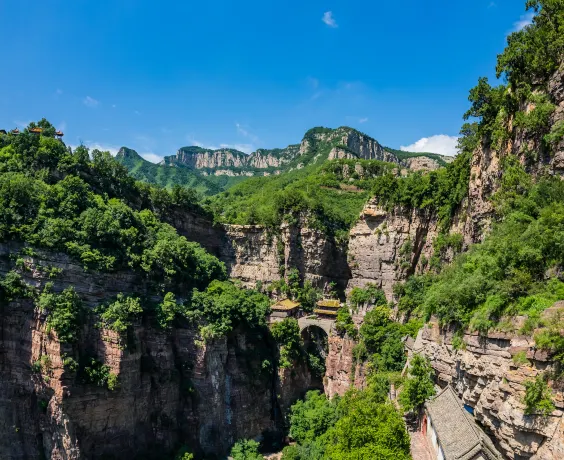
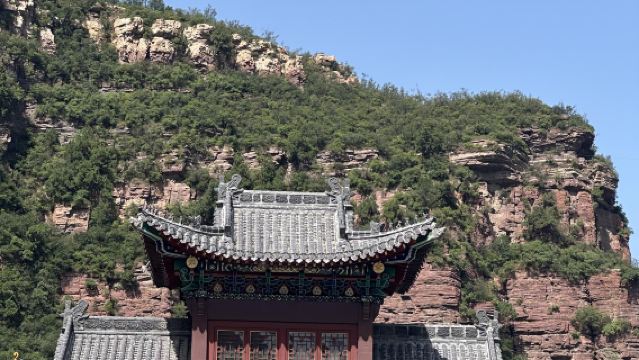
Mt Cangyan Scenic Area covers a total area of 63 km², with a height of 1,039.6m and an elevation of over 1,000m. As a branch of the Taihang Mountains, it boasts breathtaking scenery with lush vegetation. Every step reveals stunning views, each with unique wonders and historical significance. Since ancient times, it has been celebrated as "the epitome of the Five Great Mountains' splendor and the crown jewel of the Taihang range." The area features ancient towering trees, layered verdant peaks, and extraordinary natural landscapes, including its famous "Sixteen Scenic Wonders" such as Emerald Stream Sacred Sandalwoods, Cliffside Stone Milk, Precipice-Embedded Pearls, Sunset Glow on Furnace Peak, Waist-Hugging Cypress, and Cave-Revealing New Perspectives. Among these peaks are scattered numerous meditation halls, ancient temples, pavilions, and stone tablets, mostly relics from the Ming and Qing dynasties. These structures, either perched on steep cliffs or nestled beneath sheer precipices, feature intricately carved beams and painted rafters, exuding an antique charm. The main attractions include Fuqing Temple, the Academy, Wanxian Hall, Yuhuang Peak, Princess Shrine, Qiaolou Hall, Fenghui Pavilion, and the Scripture Depository. The Bridge Tower Hall is a famous architectural marvel in Cangyan Mountain. Perched between two sheer cliffs, three single-arch stone bridges span the chasm, crowned with pavilions. Viewed from below, the suspended bridge and tower appear to soar through the clouds, creating an illusion of flight. This hall ranks among China's top three cliffside temples and stands as a masterpiece of ancient Chinese architecture.

Jingxing County · 22.1 km from downtown
Xibaipo Scenic Area
No. 9 of Best Things to Do in Shijiazhuang

Xibaipo Scenic Area

5.3
4.5/5
206 reviews

Xibaipo Scenic Area is located in Xibaipo Town, Pingshan County, northwest of Shijiazhuang City, about 85 kilometers away from downtown Shijiazhuang. Today, Xibaipo is a nationally famous red tourism destination where tourists can visit the former living and working sites of many revolutionary martyrs, learn about the struggle history of the Communist Party of China to achieve national liberation in the exhibition hall, commemorate the martyrs, and understand the great contributions made by predecessors to the construction of New China.The scenic area is now open to the public free of charge, but you need to get a free ticket at the visitor center at the entrance before entering. The scenic area is very large, and a circle is about 2-3 kilometers, which takes about half a day to visit. At present, small and medium-sized vehicles with less than 30 seats can enter the scenic area (vehicles with more than 30 seats can only park in the parking lot at the gate). There are parking lots next to the main attractions, but the scenic area recommends that vehicles park in one place after entering and walk around, and try not to drive around in the scenic area to facilitate other tourists to walk.There are many scenic spots in the scenic area, including the former site of the CPC Central Committee, the National Security Education Hall, the Sculpture Park, the Xibaipo Monument, the Youth Civilization Park, the Xibaipo Memorial Hall, the Integrity Education Hall, and the Stele Forest. The scenic area faces the Gangnan Reservoir. In summer, the water is blue, the climate is cool, and the scenery is very good. Among the many scenic spots, the former site of the CPC Central Committee and the Xibaipo Memorial Hall are the two places that need to be visited.The former site of the CPC Central Committee is located on the right hand side after entering the scenic area, and is a key area in the scenic area. In fact, this is not the original place where the martyrs worked, as the original place was submerged when the reservoir was built. However, the houses in the village have been moved here in their original state, and the layout and display are the same as at that time, so you can still understand the living and working environment of the leaders and learn the spirit of the predecessors.The Xibaipo Memorial Hall is located in the center of the scenic area and is also an important place to visit. The museum systematically displays the situation and strategy of the Chinese Communist Party's national liberation through a large number of pictures and text descriptions. There are also many revolutionary relics such as original telegrams, which are worth visiting.It is recommended to hire a tour guide to help you understand the connotations behind the cultural relics. There are four scenic spots in the scenic area that can be explained by tour guides, including the former site of the CPC Central Committee, the Xibaipo Memorial Hall, the National Security Education Hall, and the Integrity Education Hall. Each explanation is charged separately. Depending on the level of the tour guide, the fees for each scenic spot range from about 50 to 120 yuan. In addition, there are restaurants, hotels and souvenir shops in the scenic area, but the prices are relatively high, so it is not recommended to eat or stay here.

Pingshan · 24.7 km from downtown

Experiences you can't miss in Shijiazhuang

Featured Day tours in Shijiazhuang

View all Day tours
One-day tour of Zhengding Ancient City + Longxing Temple + Rongguo Mansion + Zhaozhou Bridge in Shijiazhuang, Hebei: Chartered car + admission
󱌍
FromAED 141.70
One-day private tour of Zhengding Ancient City + Longxing Temple + Rongguo Mansion + Zhaozhou Bridge in Shijiazhuang, Hebei
󱌍
Duration: 3.8 hrs
English
Free cancellation
Instant confirmation
Book now for tomorrow
FromAED 261.86
Shijiazhuang Today's weatherFoggy 5-10℃
Shijiazhuang weather for the next 2 days11/8: 2-8℃, 11/9: 3-15℃

Free things to do in Shijiazhuang

What travelers say about Shijiazhuang

user-avatar
Anonymous user5 October 2026
5.0
This is a Buddhist holy site well worth visiting. The Thousand-Handed and Thousand-Eyed Buddha and the mural of the Reclining Guanyin are historical and artistic treasures that have been preserved intact for future generations to appreciate and understand history! An even greater gain was visiting the memorial hall of Mr. Liang Sicheng, where I learned about the contributions he and Lin Huiyin made to the preservation of historical sites in my country and their transmission in education, so that we, the later generations, can appreciate these historical sites!

Zhengding Ancient City

user-avatar
望雁18 October 2026
5.0
The Hebei Provincial Museum is definitely worth a visit. It boasts a rich and diverse collection of exhibits, arranged scientifically and logically. It also offers a wide variety of cultural and creative products and activities. It's not only suitable for teenagers but also for children.

Hebei Museum

user-avatar
Milky-way24 October 2026
5.0
The tour guide's two-hour lecture vividly and engagingly recounted the six wonders of Longxing Temple interwoven with historical stories, filling this trip to Zhengding Ancient City with reverence for cultural relics and historical sites. In particular, the ancient wooden architecture, which embodies the wisdom of the Chinese working people, sparked my keen interest in mortise and tenon joints.

Longxing Temple

user-avatar
未未来来7 November 2026
5.0
Rongguo Mansion was our first stop in Zhengding. It presented a different interpretation of *Dream of the Red Chamber*, featuring Cao Xueqin, Jia Baoyu, Wang Xifeng, and Lin Daiyu. The format was simple, but for children, it offered a close interaction and a unique experience. The entire process was essentially a series of performances of the garden.

Rong Mansion Scenic Spot

user-avatar
M52***9331 October 2026
5.0
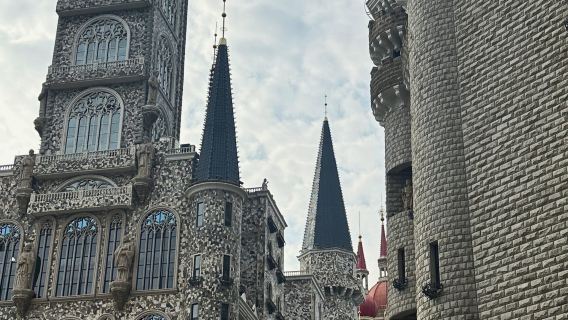
The experience at Longquan Ancient Town exceeded my expectations! The ancient buildings are arranged in a charming, staggered pattern, with the Yingyue River flowing through the town, giving it a distinctly Jiangnan water town feel. There are numerous live performances and NPC interactions throughout the day, creating a fantastic atmosphere. As night falls and the lights come on, a boat trip at night is incredibly photogenic. The town offers a wide variety of snacks, a comfortable pace of exploration, and a single ticket that allows you to see various shows—great value for money! It's a perfect weekend getaway for family and friends.

Longquan Ancient Town · Drama Illusion City
user-avatar
难 得糊 涂19 September 2026
5.0
The Zhaozhou Bridge Scenic Area, also known as Anji Bridge, was built over 1400 years ago under the supervision of the Sui Dynasty craftsman Li Chun. It is the world's oldest and best-preserved open-spandrel stone arch bridge, often referred to as the "Number One Bridge Under Heaven." It is a 4A-level scenic area and a national key cultural relics protection unit. The Zhaozhou Bridge itself spans the Xiao River, featuring a single-arch design with four smaller arches added to the shoulders—a groundbreaking innovation in bridge construction. This not only reduced the bridge's weight but also helped divert floodwaters during the rainy season. The bridge's bluestone railings are carved with lifelike dragons and mythical beasts. Currently, climbing the bridge is prohibited, but visitors can admire and photograph it up close from the banks. The Ancient Bridge Exhibition Hall introduces the bridge's construction principles and historical evolution, showcasing old photographs and models to help visitors understand the engineering wisdom of the ancients. The Li Chun Statue stands at the entrance of the scenic area, commemorating the designer of this famous bridge. The riverside gardens along the Xiao River offer excellent views of the bridge's reflection in the water.

Zhaozhou Bridge

user-avatar
夏🌸🌸🌸8 October 2026
5.0
It's truly the best value zoo ever—large, inexpensive, and with rare animals. The aquarium is also very affordable, much cheaper than where we live. The entire zoo is huge, requiring a full day. We ran out of time later, not even having time to visit the predator enclosure. Next time I go to Shijiazhuang, it will probably only be for this zoo. It's really great!

Shijiazhuang Zoo

user-avatar
_WB***5911 August 2026
5.0
The cable car ride up and down was quite easy; walking around the top wasn't tiring at all. From the cable car station, I noticed the stairs looked incredibly long if you wanted to climb up yourself. Also, the middle station (the entrance to the slide) and the end station are on two different mountain peaks, requiring you to go up and down the stairs. The scenery at the summit was fantastic, with cliffs and precipices typical of the Taihang Mountains. To get to Wanfo Cave, you need to climb a short, rather steep staircase. The descent isn't far, but the drop is significant; some steps are as high as my calf. Wanfo Cave was cool and shrouded in mist. There are some shops on and at the foot of the mountain; bottled water is 2 yuan, very affordable. However, the KFC at the foot of the mountain wasn't open.

Baodu Scenic Spot

user-avatar
等待热的茶6 July 2026
5.0
Worth it! My son and I went up the mountain from Qiaoloudian and down from Dongtianmen, taking less than two and a half hours in total. The natural scenery and ancient relics along the way were aesthetically pleasing. I recommend taking the Dongtianmen route down; there are several excellent spots for photographing Qiaoloudian. I deducted one point for the aesthetics at the summit—those guesthouses were so ugly it made me want to curse. The scenic area is great from the foot of the mountain to the middle, but it gets incredibly noisy at the top. When it comes to attractions, quality over quantity is key! Finally, let me talk about the night view. I arrived at night and went for a stroll after dinner at the hotel. I was amazed to find that the scenic area had a night view; the aesthetics were quite good, probably designed by professionals. A small suggestion: the lighting on the mountain was poorly chosen. The green light was completely invisible, and the red light was okay but a bit eerie. Could you try using blue light instead?

Mt Cangyan Scenic Area

user-avatar
爱吃鱼的兔纸鹤5 September 2025
5.0
Xibaipo is a revolutionary sanctuary, home to the older generation, the cradle of the People's Republic of China, and the seat of the CPC Central Committee during the latter stages of the Liberation War. Today, let us journey into this glorious era, experience the revolutionary spirit, and etch it into our hearts!

Xibaipo Scenic Area

Popular cities near Shijiazhuang

Frequently asked questions

As of 8 November 2026, the reference price for day tours and activities in Shijiazhuang is around AED 141.7 – AED 717.43. Rates vary by duration, group size, transportation, tickets, meals, and any special admission requirements. Before you book, please confirm the billing currency and whether the price is quoted per person or per group.

Get help anytime, anywhere within 30 secondsContact customer support

Change and cancellation policies vary by attractions and tours. Please check the product details page for more information.

Ticket prices may vary between weekdays and weekends, as well as during peak and off-peak seasons. When booking with Trip.com, you can also use Trip Coins to get extra savings. For more tips on booking discounted tickets, please visit Trip.com for the latest information.