
Things to do in Dingzhou
Explore top experiences
Top 10 attractions in Dingzhou


The Kaiyuan Temple Pagoda
The Kaiyuan Temple Pagoda is an octagonal pavilion building with a height of 83.7 meters. There is a corridor in the outer wall of each layer of the tower body, and the whole tower body is like a big tower holding a small tower. Inside the tower are preserved murals of Song Dynasty, brick-carved bucket arches, and painted ceilings. On the two walls of the cloister, there are more than 30 inscriptions of Buddhist niches and inscriptions of famous people of the past dynasties. Xuanshen here, makes people seem to enter the Buddhist holy land filled with incense. The appearance of Dingzhou Tower is tall, straight and handsome, majestic and magnificent. In the Song Dynasty, Dingzhou was an important military town adjacent to the Liao Dynasty. You could climb the tower to observe the enemy's situation, so the tower was also called "the tower of the enemy".Dingzhou · 1.2 km from downtown

Dingzhou Examination Hall
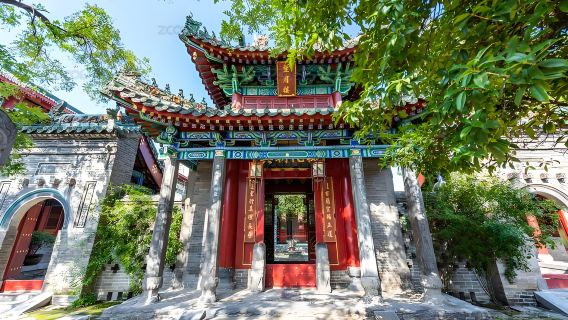
Dingzhou Gongyuan is located in Caochang Hutong, East Street, Dingzhou City, Hebei Province. It is a well-preserved imperial examination site of the Qing Dynasty in China. First built in the third year of the Qianlong reign of the Qing Dynasty, the site was expanded and reconstructed in the twelfth year of the Daoguang reign through public donations, gradually forming a large-scale standard examination venue. The overall layout of Dingzhou Gongyuan is square. Its core buildings consist of two major parts, the examination houses and the Kui Pavilion. The examination houses face south, while the Kui Pavilion stands to their south. It features a central pointed roof with layered lowered eaves on both sides, creating a unique and distinctive architectural appearance that serves as the iconic feature of Dingzhou Gongyuan. The two-story attic of the Kui Pavilion is dedicated to the worship of the God Kui Xing.Adjacent to the northern side of the main hall is the lobby, where candidates submitted their examination papers and invigilators completed sealing procedures. The rear building was used by examiners to watch martial arts examinations and also served as their accommodation.Boasting grand architectural scale and a solemn demeanor, Dingzhou Gongyuan fully presents the architectural features of the Qing Dynasty while incorporating flexible local architectural styles.Dingzhou · 1.5 km from downtown

Dingzhou Confucian Temple
Dingzhou Confucian Temple, also known as the "Temple of Confucius," is a site dedicated to honoring Confucius. Originally built in the late Tang Dynasty around 859 AD, it has hosted ceremonial activities for over a thousand years. Historically referred to as the "Prefectural School," "State School," or "Academy," it earned the reputation of "Zhongshan's temple school surpassing all under heaven." The temple underwent multiple expansions and renovations during the Tang, Song, Yuan, and Ming dynasties, achieving grand scale before being reduced to ashes during late Ming military conflicts. Restored in the Qing Dynasty, it largely retained its pre-Ming architectural layout. Covering an area of 15,685 square meters, the temple complex now consists of three adjacent northern courtyards and a southern courtyard. The southern courtyard features a quadrangle-style Jiexiao Shrine, while the eastern courtyard houses the Chong Sheng Shrine and Kuixing Pavilion. The western courtyard includes the Minglun Hall, ceremonial gate, and main gate, while the central courtyard boasts the Dacheng Hall, east and west side halls, halberd gate, east and west official halls, as well as shrines for distinguished officials and local sages, along with the Lingxing Gate. The majestic ancient architecture, lush and ancient cypress trees, the vibrant "Scholar Tree Embracing the Toon," and the celestial "Falling Star Stone" create an elegant environment, making it a leisure-friendly tourist attraction. With its long history and well-preserved layout, Dingzhou Confucian Temple stands as one of Hebei Province's most intact Confucian temple complexes and was designated a National Key Cultural Relic Protection Unit in 2013.Dingzhou · 978m from downtown

Dingzhou Ancient City
Dingzhou Ancient City is located 50 km southwest of Baoding and is renowned for its long history and splendid culture. Since the Shang and Zhou dynasties, Dingzhou has been a political, economic, military, and cultural center in the north, leaving behind a rich cultural heritage for future generations.Dingzhou · 1.3 km from downtown

Jade Emperor Palace, Dadao Temple
Dadao Temple is a Taoist temple from the Yuan Dynasty. According to the "Ding County Annals," it was built during the Zhizheng era of the Yuan Dynasty. Originally, it featured a central-axis complex layout, with structures arranged from south to north: a screen wall, Guan Di Hall, Er Shen Hall, Yun Shen Hall, Jade Emperor Hall, and Lao Jun Hall, covering an area of 18 mu. Currently, the Jade Emperor Hall remains, serving as a place for Taoist worship of the Jade Emperor. The hall measures seven bays wide and four bays deep, with dimensions of 16.55 meters in length, 15.3 meters in width, and 9.53 meters in height, covering a floor area of 253.98 square meters. The architectural style features a hip-and-gable roof with glazed tile edges, a front porch, and arched rafters. The glazed tiles are primarily yellow and green, adorned with carvings of dragons, phoenixes, peonies, and other motifs. Typically, hip-and-gable roofs and overhanging gable roofs do not include gable-end walls (chitou), which are more common in flush gable roofs. However, this hall uniquely combines a hip-and-gable roof with gable-end walls, breaking conventional norms while achieving a harmonious and complementary effect. This distinctive design is one of the hall's most remarkable features. The hall's four walls preserve the magnificent gold-painted Ming Dynasty mural "Assembly of the Divine Beings" from the Wanli era (1573–1620). Measuring 37.82m in length, 2.78m in width, and covering 105.14m², this masterpiece depicts over 200 celestial figures with remarkable vitality. The north wall features the Supreme Emperor and Holy Mother flanked by four jade maidens on each side, while deities on the eastern and western walls all face northward in reverent postures. The entire composition swirls with ethereal clouds, creating a resplendent golden panorama of majestic scale. Artistically comparable to the renowned murals of Shanxi's Yongle Palace and Quyang's Beiyue Temple, this work demonstrates the Taoist painters' extraordinary compositional skills. Inscriptions on the north and south walls date the murals to "the 7th year of Wanli (1579)" and "the 8th day of the 12th month in the 55th year of Qianlong (1790)" respectively. Designated as a National Key Cultural Relic Protection Unit in 2006, the mural holds immense historical, scientific, and artistic significance.Dingzhou · 872m from downtown

The Palace Museum
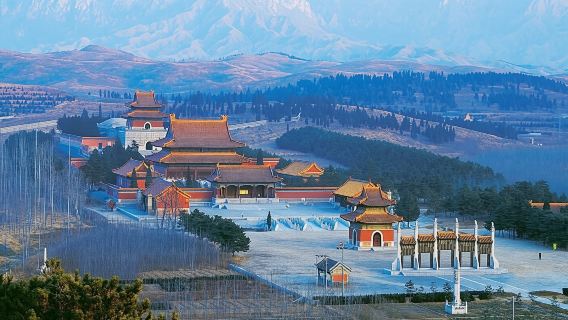
The Forbidden City, also known as the Imperial Palace, was the imperial palace of the Ming and Qing dynasties, and is also the symbol of ancient China. When you are in the majestic and orderly high walls and deep courtyards, you can truly feel its former glory. ▲The long history has left behind large-scale precious buildings and countless cultural relics, which have also become the main attraction of visiting the Forbidden City today. ▲Classic attractions: The Forbidden City Corner Tower is a polygonal building with a convex plane on all four sides. It is located in Dongcheng District, Beijing. The roof has three layers. The upper layer is a hip roof with vertical and horizontal intersections. It is composed of a gable roof with flowing water on two slopes and a hip roof with four slopes. Because there are nine main ridges on this roof, it is called the Nine-ridge Hall. ▲Sundials are divided into two types according to their installation principle: equatorial and horizontal. The sundial installed using the equatorial principle is called an equatorial sundial. The key points of its production are that it must have a time plate, a latitude arc and a gnomon. When operating, the time plate must be parallel to the equatorial plane of the earth, the gnomon must be in the same direction as the earth's axis, and the shadow cast by the gnomon on the gnomon is the desired time. ▲The Treasure House is located in the Ningshou Palace area. It has a rich collection of treasures, including Buddhist supplies, ornaments, daily utensils, and treasures for appreciation. Among them, the red coral lion about 14 cm high, the Dongzhu court beads about 130 cm long, and the gold "Fengtianzhibao" seal are all rare treasures. ▲The Clock and Watch Museum is located in the Fengxian Hall in the palace. Most of the clocks on display are British products, but there are also clocks from other countries such as France and Switzerland. In addition to the timing function, these clocks are decorated with figures, birds, beasts, flowers, etc., which can also make various different movements. They are very delicately made. Among them, the copper-plated gilded writing clock, the copper-plated gilded enamel gourd-top fishing and woodcutting farming clock, and the copper-plated gilded rotating flower running man rhinoceros carrying clock are very rare.China · Beijing

Universal Beijing Resort
Beijing Universal Studios is a highly anticipated theme park destination, including Universal Theme Park, Beijing Universal CityWalk, and two resort hotels. It features brand new selected Attraction and includes popular entertainment facilities and attractions from Universal Theme Parks around the world. ▲Universal Studios Beijing: Blending Chinese cultural elements to create a unique experience, it has seven theme Attraction, 37 rides and entertainment facilities and landmark attractions, 24 performances, 80 Dining and 30 retail stores. ▲Minion Land: It is a colorful world full of joy! At this moment, these naughty Minions are walking around the streets, ports and city centers, having fun all over the world without restraint! At the same time, Gru is also recruiting soldiers for the Minions Army, so hurry up and sign up at Gru's house! ▲The Wizarding World of Harry Potter™: Here you can leave the ordinary world behind and experience the wonderful rides and endless magical adventures, which will lead you step by step into a thrilling and interesting magical world! ▲Transformers Metrobase: This is a Cybertron-style base, which is transformed by Transformers the size of a city. If you are ready to become an agent, then accept Optimus Prime's recruitment, join the Beijing Nest Force, fight side by side with the Autobots, and fight against the Decepticons to protect the earth! ▲Kung Fu Panda Land of Awesomeness: This is an ancient place like a paradise, and also a legendary place that combines the beauty of nature and craftsmanship. Come here to explore your own Kung Fu! There's also Jurassic World Isla Nublar, Hollywood, and Waterworld waiting for you to explore! ▲The Universal Studios Grand Hotel The Universal Studios Grand Hotel is located at the entrance of Universal Studios Beijing and offers Hollywood-themed accommodation and the privilege of Early Park Admission via the Universal Studios Beijing VIP Experience entrance; NUO Resort Hotel is a 5-minute walk from the entrance. Guests can enjoy a well-equipped fitness center, indoor swimming pool, and spa center (NUO SPA). Guests can also enjoy Early Park Admission via the Universal Studios Beijing VIP Experience entrance. Both hotels combine themed features with high-end facilities to create an immersive vacation experience.China · Beijing

Badaling Great Wall
The Badaling Great Wall is renowned as one of the Nine Strategic Passes under heaven, combining majestic cliffs with picturesque greenery to form the most spectacular section of the Ming Dynasty fortifications. Living up to the Chinese saying "He who has never been to the Great Wall is not a true hero," this remains the premier choice for most Chinese visitors to experience the Wall. The fortress gate exhibits a trapezoidal shape, narrower on the east and wider on the west, featuring two gate towers. The eastern arch bears the inscription "Juyong Waizhen" (Frontier Town of Juyong), while the western gate displays "Beimen Suoyue" (Key to the Northern Gate). North of the fortress stretches the 12-tower Northern Wall section, while to the south lies the less crowded Southern Wall with 7 watchtowers. If time permits, we recommend exploring the Southern Wall first before tackling the more popular Northern section. ▲Walk Through Six Centuries of Golden History: A Visual Feast of Vermilion Foliage Blanketing the Great Wall ▲ As night descends, the Badaling Great Wall transforms into a gilded dragon winding through shadowed peaks, its illuminated battlements whispering tales of millennia - where imperial splendor meets enduring mystery beneath constellations of golden light. ▲Cloaked in winter's crystalline mantle, the Badaling Great Wall becomes a silver serpent coiled between snow-draped peaks, its ancient stones gilded by dawn's golden raysChina · Beijing

Yungang Grottoes
Yungang Grottoes Scenic Area is divided into a landscape zone and the grottoes. It is one of the three largest grottoes in China. The sculpture combines Chinese and Western art. Here you can experience the artistic charms of Northern Wei Dynasty. Yungang Grottoes not only embodies traditional Chinese art style but also integrates art styles of ethnic groups from ancient India, countries west of China and China's central plains. It is a famous historical site in Datong City.China · Datong

Zhengding Ancient City
Zhengding Ancient City is located 15 km north of Shijiazhuang, the capital of Hebei Province. Built according to traditional Chinese planning concepts and architectural styles, it embodies China's historical and cultural characteristics from the 5th to 19th centuries, showcasing the wisdom and perseverance of ancient laborers. Historically known as one of the "Three Northern Strongholds" alongside Baoding and Beijing, its southern gate still bears a stone inscription reading "Stronghold of Three Passes." Zhengding is also the hometown of Zhao Zilong, a renowned general from the Three Kingdoms period. The long and rich history has endowed Zhengding Ancient City with magnificent and uniquely styled cultural relics and historic sites, renowned for its "Three Invisible Mountains, Nine Non-Flowing Bridges, Nine Towers, Four Pagodas, and Eight Great Temples, along with Twenty-Four Exquisite Memorial Archways." "Three Invisible Mountains" refers to the fact that Zhengding was historically the administrative center of the Zhongshan State, Hengshan Commandery, and Changshan Commandery, yet the area itself has no mountains. "Nine Non-Flowing Bridges" describes a single-arched three-path stone bridge in front of the Longxing Temple, as well as the pan bridges (ancient pan bridges typically featured three parallel bridges) in front of the Prefectural Confucian Temple and the Zhengding County Confucian Temple—none of which have flowing water. "Nine Towers, Four Pagodas, and Eight Great Temples" refers to the original four gate towers, four corner towers, and the Yanghe Tower within the city; the four pagodas are the Tianning Temple Pagoda, Huata Pagoda of Guanghui Temple, Xumi Pagoda, and Chengling Pagoda of Linji Temple; the eight great temples include Longxing Temple, Guanghui Temple, Linji Temple, Kaiyuan Temple in Zhengding Ancient City, Tianning Temple, Hongji Temple, Sheli Temple, and Chongyin Temple—the latter three of which have been destroyed. Zhengding once boasted 24 magnificent memorial archways, including the Xu Family Archway, Liang Family Archway, Ancient Changshan County, Supreme Virtue Reaching Heaven, Virtue Matching Heaven and Earth, and Wooden Bell for All Affairs. However, due to historical changes, weathering, and especially the destruction during the decade-long Cultural Revolution, many precious cultural relics were damaged. Yet with 9 nationally protected relics, 6 provincially protected relics, and over 10 county-level protected relics, Zhengding still retains the grandeur of a renowned historical and cultural city. The ancient city of Zhengding was designated as a provincial-level historical and cultural city in 1990 and recognized as a national historical and cultural city in 1994. Zhengding's tourism features a unique blend of "modern and ancient," "elegant and folk" characteristics. Among its historical sites, the Longxing Temple, originally built in 586 AD during the Sui Dynasty and expanded under the decree of Emperor Zhao Kuangyin, the founding emperor of the Song Dynasty, stands majestic and well-preserved. It enjoys high acclaim both domestically and internationally, praised by renowned architect Liang Sicheng as "the foremost temple beyond the capital." The temple's "Reclining Guanyin" mural sculpture was hailed by Lu Xun as "the Goddess of Eastern Beauty."Revolving Sutra LibraryDubbed by physicists as a prime example of Newton's laws in action, along with China's scripture cabinets. The Sui Dynasty Longzang Temple Stele is one of the country's renowned ancient stone inscriptions, showcasing the evolution from Han clerical script to Tang regular script, praised by Kang Youwei as "the finest Sui stele." Standing 22 meters tall, the grand Buddha statue is among China's earliest and tallest surviving bronze standing Buddhas. The cross-shaped Mani Hall exemplifies classic Song Dynasty architectural techniques. Zhengding's vicinity also boasts four famous pagodas, including Huagong Pagoda at Guanghui Temple—a brilliant fusion of diamond throne and floral pagoda styles. Tianning Temple's...Lingxiao PagodaIt is the foremost wooden pavilion tower in China. The symmetrical arrangement of the Tang Dynasty bell tower and ancient pagoda at Kaiyuan Temple in Zhengding Ancient City exemplifies the transition in Chinese Buddhist temple architecture from pagoda-centered to hall-centered layouts. The Chengling Pagoda at Linji Temple serves as the reliquary pagoda for Master Yixuan, founder of the Linji school of Buddhism, and has become a symbol of Sino-Japanese friendship. Located within Zhengding, the Zhengding Rongguo Mansion was meticulously designed and constructed according to descriptions in Cao Xueqin's literary masterpiece "Dream of the Red Chamber" while strictly adhering to China's "Great Qing Code", making it the country's first architectural complex replicating Ming-Qing architectural styles. Most scenes from the TV series adaptation of "Dream of the Red Chamber" were filmed here. The Qing Dynasty-style Ningrong Street by Rongguo Mansion's west gate stretches over 200 meters, where pivotal scenes like "Imperial Consort Yuan's Homecoming" and "Qin Keqing's Funeral" were shot. With over 1,600 years of history, Zhengding Ancient City's walls were originally earthen fortifications during the Eastern Jin Dynasty, rebuilt in stone during the Northern Zhou Dynasty, expanded into earthen walls during the Tang Dynasty, and finally reconstructed as 24-li (approximately 12 km) brick walls during the Ming Dynasty. The surviving 8,106-meter Ming-era walls feature four magnificent gates: Yingxu (later renamed Huancui) to the east, Changle to the south, Zhenyuan to the west, and Yong'an to the north. While time has eroded the western and northern gates, the eastern gate was entirely buried under 1960s military fortifications. In 2001, the southern gate tower and 50-meter flanking walls were restored through public donations of original bricks and a CNY 3.99 million investment.Zhengding · 55.1 km from Dingzhou
Experiences you can't miss in Dingzhou
Featured Day tours in Dingzhou
View all Day tours
Free cancellation
Instant confirmation
Book now for tomorrow
FromAED 141.43
Free cancellation
Instant confirmation
Book now for tomorrow
Save AED 2.61
FromAED 258.77AED 261.38
Free cancellation
Instant confirmation
Book now for tomorrow
FromAED 988.20
Free things to do in Dingzhou
The Kaiyuan Temple Pagoda
Dingzhou · 1.2 km from downtownDingzhou Examination Hall
Dingzhou · 1.5 km from downtownDingzhou Confucian Temple
Dingzhou · 978m from downtownDingzhou Ancient City
Dingzhou · 1.3 km from downtownJade Emperor Palace, Dadao Temple
Dingzhou · 872m from downtownThe Palace Museum
China · BeijingUniversal Beijing Resort
China · BeijingBook now for tomorrowBadaling Great Wall
China · BeijingBook now for tomorrowYungang Grottoes
China · DatongBook now for tomorrow, Cancel anytimeZhengding Ancient City
Zhengding · 55.1 km from Dingzhou
What travelers say about Dingzhou

_We***0811 October 2026
5.0
When visiting Dingzhou Ancient City, Kaiyuan Temple Pagoda is an absolute must-see! It is the famous "First Pagoda of China" mentioned in the old saying "Cangzhou Lion, Dingzhou Pagoda, and the Great Bodhisattva of Zhen Ding Prefecture". It took 55 years to complete in the Northern Song Dynasty and is 83.7 meters high. Standing at the foot of the pagoda and looking up, the visual impact is really strong.
The Kaiyuan Temple Pagoda

燕知归处16 April 2026
5.0
The Dingzhou Examination Hall, actually the Dingzhou Examination Hall, was where the Qing Dynasty's preliminary examinations were held. The Lansheng Tower, also known as the Rear Tower, served as the offices and lodgings for the examiners. The statue of Kui Xing, the god of literature, is enshrined in the Kui Pavilion. Kui Xing is depicted with one leg raised backward, holding a dipper in one hand and a writing brush in the other, pointing to the successful candidate. This is the legendary "Kui Xing Pointing at the Dipper." The Qianlong Twin Locust Trees are located between the two main gates. Legend has it that Emperor Qianlong planted these two locust trees himself during his six trips to the south and five visits to Dingzhou.
Dingzhou Examination Hall

龙行天下之飞龙在天5 December 2025
5.0
Dingzhou Confucian Temple (also known as Dingzhou Confucius Temple) is one of the oldest and largest existing Confucian temple complexes in northern China. Its specific information is as follows:
I. Construction Date: Dingzhou Confucian Temple was first built in the second year of the Dazhong era of the Tang Dynasty (848 AD). It has been rebuilt and expanded many times throughout history. The existing buildings are mainly from the Ming and Qing dynasties, preserving the typical layout of an ancient Confucian temple.
II. Architectural Style: The temple is built in the official architectural style of northern China, following the symmetrical layout of traditional Chinese ritual architecture. The architectural form is solemn and rigorous, reflecting the sense of order in Confucian culture and the solemnity of sacrificial architecture. Its architectural details (such as brackets, beams, and roof forms) have the characteristics of northern architecture in the Ming and Qing dynasties, while also incorporating local craftsmanship.
III. Building Area and Layout:
* Area: The temple covers an area of approximately 12,600 square meters, with a building area of approximately 3,000 square meters. It is a large-scale complex with progressively tiered courtyards.
• Layout: Adopting a typical Confucian temple layout, the main structures along the north-south central axis are as follows:
• Front Section: The towering palace wall (screen wall), the Lingxing Gate, the Pan Pool, and the Ji Gate.
• Core Section: The Dacheng Hall (main hall, enshrining Confucius), and the east and west wings (for secondary shrines to sages and scholars).
• Rear Section: The Minglun Hall (lecture hall), and the Chongsheng Shrine (for worshipping Confucius and his ancestors).
IV. Main Features
1. Outstanding Historical Value: As a Confucian temple originally built in the Tang Dynasty and rebuilt in the Ming and Qing Dynasties, it is a physical testament to the development history of Confucian temples in North China and was listed as a National Key Cultural Relics Protection Unit in 2006.
2. Well-Preserved Architecture: The axis is clear, and the main buildings, such as the Dacheng Hall and the Lingxing Gate, are well-preserved, showcasing the craftsmanship and form of official Ming and Qing architecture. 3. Unique Cultural Fusion: The Dingzhou Confucian Temple houses the Dingzhou Museum (originally the Minglun Hall and its rear courtyard), combining ancient architecture with local cultural relics displays, serving multiple functions including worship, education, and exhibition.
4. Ancient Tree Remains: Several ancient cypress trees remain within the temple grounds, the most famous being the "Dongpo Twin Locust Trees" (two locust trees in the north courtyard), said to have been planted by Su Shi himself. Although not originally planted during the Tang Dynasty, they add to the cultural significance.
5. Regional Representativeness: It is an important site for studying ancient ritual architecture, imperial examination education, and the dissemination of Confucian culture in Hebei Province and even northern China.
At one point, the Confucian Temple also served as a museum, exhibiting and preserving cultural relics unearthed in Dingzhou over the years: jade burial suits with gold and silver threads, as well as porcelain from the Ding kiln.
Historically, the Dingzhou Confucian Temple was adjacent to the Dingzhou Examination Hall (ancient examination hall), together forming a local cultural and educational center. Today, as an important part of the Dingzhou Ancient City cultural district, it is open to the public, serving both cultural relic protection and cultural education functions.
Dingzhou Confucian Temple

中山阳明2 January 2026
4.0
Dingzhou is a county-level city under Baoding. Although small, it boasts a treasure museum and a famous ancient pagoda. The ancient city of Dingzhou is situated around the pagoda, with a grand city gate and quiet alleyways surrounding it. The antique-style street is relatively quiet during the day, with few shops, but it might become more lively at night.
Dingzhou Ancient City

M15***2826 March 2026
5.0
What a pleasant surprise! The original Yuan Dynasty structure is truly remarkable; the brackets and beams are unlike anything from other contemporary or later dynasties. I almost didn't go after reading online reviews, but I'm so glad I did! The information about the Jade Emperor Hall and the immortals in the underground area was also quite good.
Jade Emperor Palace, Dadao Temple

_TI***6417 October 2026
4.0
We booked last minute and they were able to accommodate us. There was heavy rain but still very crowded but really worth the visit. History and architecture is incredible. Cora was our guide and she explained well in English and knew about many details about the construction of the palace and the history. A great experience (unlucky for the rain). Cora also waited for us as we were late and was very helpful throughout so thank you! Very good instructions on meeting point sent one day before the visit and very responsive customer service. Highly recommended.
The Palace Museum

Mina美美18 October 2026
5.0
I tried out a few popular attractions, and the heavy rain made for a refreshing experience. I thought the Decepticons wouldn't be running because of the rain, but there was a surprise tonight! Halloween is awesome!
Universal Beijing Resort

MinkNara16 October 2026
5.0
จองกับ trip.com สะดวกสบายไม่ต้องพะวงเรื่องการหาซื้อตั๋วว่าอยู่ตรงไหน สามารถไปต่อคิวขึ้นกระเช้าได้เลย คิวรอขึ้นกระเช้าที่นี่ยาวรอนานช่วงเช้า บนกระเช้าใช้เวลาขึ้นไม่นานประหยัดเวลาได้เยอะ ขาลงเดินใกลใช้เวลาพอสมควรแต่ได้ชมวิว ผ่านพิพิธภัณท์ ต้องเผื่อเวลา ถ้าเวลาน้อยแนะนำขึ้นลงกระเช้า
Badaling Great Wall

M27***7717 October 2026
5.0
This group tour was an excellent experience, and I must give a huge thumbs up to our tour guide, Song Lijuan. Throughout the entire trip, she was patient and meticulous. Knowing that there were several elderly people in the group, she deliberately slowed down the pace, never rushing anyone, and allowing ample rest and buffer time at each section of the route.
Her explanations were exceptionally detailed. She not only explained the historical anecdotes of the scenic spots in a vivid and easy-to-understand way, but she would also stop to let the elderly catch up before continuing. She would also proactively offer assistance to elderly members with mobility issues, taking care of their needs at every turn. It was a truly heartwarming and reliable experience, making it a very comfortable trip.
Yungang Grottoes

Anonymous user5 October 2026
5.0
This is a Buddhist holy site well worth visiting. The Thousand-Handed and Thousand-Eyed Buddha and the mural of the Reclining Guanyin are historical and artistic treasures that have been preserved intact for future generations to appreciate and understand history! An even greater gain was visiting the memorial hall of Mr. Liang Sicheng, where I learned about the contributions he and Lin Huiyin made to the preservation of historical sites in my country and their transmission in education, so that we, the later generations, can appreciate these historical sites!
Zhengding Ancient City


