
Things to do in Qufu
Explore top experiences
Top 10 attractions in Qufu


Qufu's Temple and Cemetery of Confucius and Kong Family Mansion
The Temple of Confucius, Kong Family Mansion, and Cemetery of Confucius represent holy land memorialized throughout the history of China. The Temple of Confucius was built from the remains of Confucius's old residence and is a famous place for making offerings to the scholar. The scale of the Kong Family Mansion is second in China only to the Forbidden City, and it served for hundreds of years as the long-term residence of Confucius's descendants. The Cemetery of Confucius is the burial site of Confucius and his descendants.Qufu · 1.5 km from downtown

Nishan Cultural Tourism Resort
The Nishan cultural tourism resort is located approx. 25 km southeast of Qufu city, Jining, Shandong province, China, built around the birthplace of Confucius.NishanA cultural tourism complex built with attractions including Nishan holy land,Luyuan villageNishan Confucian temple. The attraction features "etiquette and landscape" as its highlights, serving as an important destination to explore the roots of Confucian culture. It is suitable for culture enthusiasts, families, and study visitors. 1. Core attraction highlights: 1. Birthplace of Confucius:NishanIt is the place of birth of Confucius, the founder of Confucianism (551 BC), known as the "cradle of Confucian culture". The attraction preserves historical sites such as the Confucius Cave (legendary birthplace of Confucius) and the Nishan Confucian Temple. 2. Nishan holy land: The core cultural experience area includes: Nishan sacred land - Confucius statue: A 72 m tall giant bronze statue of Confucius, symbolizing the "72 disciples". University hall: An immersive exhibition space blending architectural aesthetics with Confucian culture, featuring five thematic halls dedicated to benevolence, righteousness, propriety, wisdom and trustworthiness. "Jinsheng Yuzhen" performance: A grand ritual music show showcasing the Confucian "enlightened lifestyle of rites". 3. Integration of nature and culture: Surrounded by Nishan Reservoir (Confucius Lake), the landscape blends ecological harmony with poetic charm. 2. Main attractions: 1Nishan Confucian temple and academyOriginally built during the Northern Wei dynasty and renovated through successive dynasties, it serves as an important site for Confucius worship. 2. Fuzi cave: A natural stone cave where Confucius was allegedly abandoned after birth but later retrieved and raised due to miraculous signs. 3Nishan night tourNightlife: Light shows, drone performances and other modern technologies showcasing traditional culture.Qufu · 21.9 km from downtown

Nishan Sacred Land
Nishan Holy Land: Located in Nishan, Qufu, the birthplace of Confucius, adjacent to the Nishan Confucian Temple, the overall planning covers an area of 44.78 square kilometers, with the overall idea of "Confucius' world, the world's Confucius" as the overall idea, with "cultural virtuous resort" and " World-class cultural tourism destination" is the overall positioning, integrating cultural exchange, cultural experience, learning and enlightenment, eco-tourism, leisure vacation, education and training, and is known as "another frontier window for the world to know Shandong and China." . There are statues of Confucius, the Great Hall, the Hall of Seventy-two Sages, five halls of benevolence, righteousness, propriety, wisdom and faith, and the performance of "Sound of Gold and Jade Vibration". Scenic tours are divided into night tours and day tours. The outdoor activities mainly include: Nishan Shengxiu + UAV performances (night activities)-shocking light and shadow composed of light, shadow, water curtain, fountain, fireworks, and drones Water show performances, Ren Shan Zhi Shui experience the joy of the sacred landscape landscape. Respecting the ancestors activities (matine session)--respecting the ancestor Confucius, ascending the steps to pray for blessings, and gaining insight into the wisdom of saints. Indoor activities mainly include: The Way of the University, hand-reading the Analects of Confucius, drums and sheng, Mingli Small Theater, Tianxia Guiren Lighting Show, Qipan Dance, Qingge Mandance, Paper Fan Welcome Dance and other activities.Qufu · 19.8 km from downtown

Confucius Temple
The Confucius Temple is located in Qufu, a large-scale temple dedicated to Confucius, built on the site of his former residence. It is a UNESCO World Heritage Site and one of China's four great ancient architectural complexes, alongside the Palace Museum, the Chengde Mountain Resort, and the Dai Temple. The architectural complex here is grand and vast, preserving many historical relics and stories. Travel notice On-site guides are available at the visitor service hall and Confucius Temple square. It is recommended to hire a guide to better understand the historical anecdotes of the relics here. If you come in the morning, you can watch the city gate opening ceremony at 8 am outside the south gate of the attraction, featuring performers in ancient costumes. At 5 pm (5:30 pm during peak season), there is a city gate closing ceremony. However, performances are usually suspended during the Spring Festival (please check the attraction's official website for specific announcements). Another thing to note is that the localPrice gougingIt is quite common, and many travelers have encountered taxi drivers, tricycle riders, or guides who trick them into visiting overpriced and obscure man-made attractions or restaurants. Do not easily believe their promotions. Also, try to avoid eating around the attraction, as many nearby restaurants overcharge customers severely. Travel guide Here there are nine courtyards in total, with over a hundred buildings symmetrically arranged on both sides of the central axis. After entering the first memorial gate, "Confucius Temple - Lingxing Gate," and looking inward, one sees gateways layered deep beyond sight. Next, you will pass through the Confucius Temple - Shengshi Gate, Confucius Temple - Hongdao Gate, Dazhong Gate, and Tongwen Gate in sequence, with lush courtyards between each gate. Among them, there is a corner tower on each side near the corners of the Dazhong Gate, while the Tongwen Gate has two large stone steles on each side, which are the famous four imperial steles from the Ming Dynasty. Beyond the Tongwen Gate stands the towering Kuixing Pavilion, a library building originally constructed during the Song Dynasty. Past the Kuixing Pavilion, you'll find thirteen stele pavilions housing over fifty stone inscriptions from various dynasties, primarily recording imperial temple renovations and sacrificial ceremonies. Further ahead lies the Dacheng Gate, whose name plaque bears the calligraphy of Emperor Yongzheng from the Qing Dynasty. The architectural highlight here is the interlocking flying eaves between the Dacheng Gate and adjacent stele pavilions. Beyond the Dacheng Gate stands a pavilion named "Confucius Temple - Apricot Altar," built by Confucius' descendants to commemorate his teaching. Further ahead lies the majestic Confucius Temple - Dacheng Hall, with its twenty-eight stone columns adorned with cloud-and-dragon relief carvings. Inside the hall hang inscribed plaques, including Emperor Kangxi's calligraphy "Model teacher for all ages" and Emperor Guangxu's "The essence of culture resides here." Confucius Temple - Dacheng Hall is the main hall and iconic building of the attraction. It is known as one of the "three great halls of the East" along with the Hall of Supreme Harmony in the Palace Museum and the Tiankuang Hall in Dai Temple. The hall enshrines a statue of Confucius in the center, flanked by statues of his 72 disciples and other Confucian sages. Major Confucius worship activities by emperors throughout history were held here. Today, many visitors come here daily, among whom areDacheng HallIt used to be quite popular for incense offerings. Dacheng HallThe rear hall enshrines Confucius' wife Qiguan Shi, while the hall of sacred traces contains stone-carved comic strips depicting Confucius' deeds. Additionally,Dacheng HallThe western path features structures for worshipping Confucius's parents, while the eastern path includes Confucius's former residence and the Lu Wall. The "Lu Wall" is a short section of low wall where, according to legend, Confucius's descendants hid his bamboo scrolls during the Qin Shi Huang's "burning of books and burying of scholars" era. During Emperor Wu of Han's reign, bamboo slips such as the "Analects" and the "Classic of Filial Piety" were discovered here. Attraction activities Throughout dynasties, it has been a place for worshipping Confucius, and the Confucius worship activity continues to this day. In recent years, the grand Confucius memorial ceremony is usually held between September 26 and October 10 annually, featuring large-scale temple music and dance activities. You can see many participants wearing Hanfu and traditional hats, along with people from all walks of life coming to pay homage to the sage Confucius.Qufu · 1.5 km from downtown

Kong Family Mansion
The Kong Family Mansion lies to the east of the Temple of Confucius. It was the historical residence of the direct descendants of Confucius and is a typical example of architecture from Chinese feudal society. The building contains official spaces and residential quarters. The enormous mansion has nine courtyards and over 400 rooms. There are a large number of historical relics on display.Qufu · 1.5 km from downtown

Nishan Luyuan Village Scenic Area
Luyuan Town is themed around "Confucius' World," guiding visitors toward a lifestyle of enlightenment and etiquette while embarking on a journey of understanding, learning, and practicing traditional rites. With a focus on study tours and immersive experiences, this modern cultural attraction adopts a scenario-based approach. By synergizing with neighboring sites like Nishan Sacred Land and Fuzi Cave (Nishan Confucius Temple), it creates a dynamic new platform for cultural tourism development centered on "enlightened etiquette." The town aims to shape a grand vision for cultural tourism by establishing distinct zones for cultural landmarks, cultural industries, and interactive cultural experiences.Qufu · 20.6 km from downtown

Confucius Forest
Located north of Qufu, the Cemetery of Confucius is also known as "Zhisheng Forest," where Confucius and his descendants were buried. Since Confucius was buried here in 479 BC, his descendants were also buried here, and there are about 100,000 tombs so far. The Cemetery of Confucius is a very large, long-standing and well-preserved complex of tombs and artificial gardens.Qufu · 4.4 km from downtown

Liaohe Ancient Street • Lanterns in Liaohe
"A boat enters the holy land, a river crosses a thousand years." Tourists take a cruise on the ancient boat, allowing the cultural journey to travel through modern light and shadow technology, immersing themselves in the long river of Chinese civilization and feeling the endless majestic power of China's excellent traditional culture. Take an ancient boat to cruise on the Liaohe River at night~ It is divided into four chapters: the origin of civilization, the country of etiquette, the eternal beacon, and the oriental holy city. Through 3 large-scale water curtain shows, 4 special bridge designs, 12 3D architectural projections and 15 micro-performance nodes, a face-to-face dialogue between tourists and sages across thousands of years is constructed. The omnipresent Confucian style and Lu rhyme on this land, and the ubiquitous millennium cultural context, seem to converge on the Liaohe River at the same time. The highlight of the night tour is the unique "water curtain holographic projection". With the Liaohe River fountain as the screen, the advanced projection technology is used to present the life story of Confucius and the essence of Lu culture to tourists. As the image changes, the scene of Confucius traveling around the countries and lecturing on the doctrine appears above the Liaohe River, making tourists seem to have traveled back to that era full of wisdom and philosophy. Liaohe Ancient Street·Liaoheli with Lights is a "cultural, commercial and tourism complex" and an "immersive ancient-style market" that integrates "eating, accommodation, transportation, sightseeing, shopping, entertainment and performances"; the "Boat Tour of the Sacred Land of Liaohe" section uses digital light and shadow media to showcase the cultural sacred land of "a boat entering the sacred land and a river crossing a thousand years" through 4 water curtain shows, 12 3D light and shadow shows and 15 micro performances, creating a "national documentary scene-based immersive cultural night tour". In this land full of rich cultural atmosphere, a night tour feast is quietly taking place. This feast takes the wisdom and ingenuity of Confucius and Lu Ban as its soul, creating a new scene of night tour of Shili Liaohe River with Lu characteristics, so that every tourist can appreciate the unique charm of Lu culture under the night. The Liaohe Ancient Street and the Lights of Liaoheli, built with Confucius and Lu Ban as cultural elements, not only let tourists appreciate the unique charm of Lu culture, but also let tourists feel the wisdom and feelings of the ancients in their own experience. This night tour feast is not only a visual feast, but also a spiritual baptism.Qufu · 3.4 km from downtown

Ming Ancient City
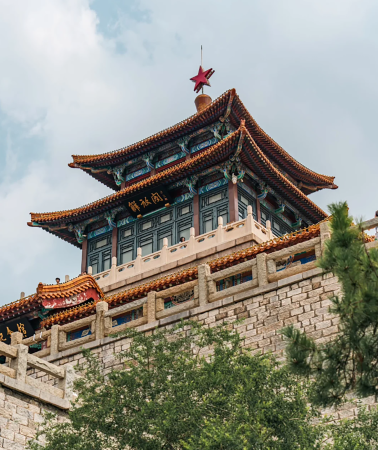
Ming Ancient City is located in Jining, Shandong Province, and is one of the three holiest cities in the world. It covers a vast area with a long history. The attraction featuresConfucian Temple,Confucius Mansion,Confucius ForestFamous attractions like the Qufu Ming Ancient City walls. As an important relic from the Ming Dynasty, this site preserves numerous ancient structures and wall remnants, showcasing the grandeur and sophistication of Ming architecture. Visitors can immerse themselves in the rich historical atmosphere, as if traveling back to the glorious era centuries ago. The attraction features multiple areas worth exploring, where visitors can stroll along ancient streets and admire traditional architectural styles with exquisite carvings. Every brick and stone carries memories of history, inspiring awe for the wisdom and craftsmanship of ancient people.Qufu · 1.3 km from downtown

Temple of Yan Hui
In the Analects, Confucius praises Yan Hui everywhere, and Yan Hui is also famous for his virtue. Therefore, when later generations worship Confucius, they also constantly raise the honorific title for Yan Hui. During the Yuan Dynasty, Yan Hui was given the title of "Fusheng Gong" and honored as "Fusheng". The Yan Temple is also called "Fusheng Temple". The Yan Temple is divided into five courtyards, with 159 halls, pavilions, storehouses, and gatehouses. The main buildings in the temple include Fusheng Gate, Guiren Gate, Yangsheng Gate, Louxiangjing, Leting, Fusheng Hall, and stele pavilions. It is a rare and large ancient building complex. There is a Louxiang Well inside the Fusheng Gate and an octagonal open-air pavilion outside. To the north of the well is a stone tablet of "Louxiang Well" erected in the Ming Dynasty to commemorate Yan Hui's frugal character of "living in a humble alley with only a bowl of rice and a jug of water". The Fusheng Hall is the main hall. There are also tablets of Yan family celebrities such as Yan Zhitui, Yan Shigu, Yan Zhenqing, and Yan Gaoqing in the east and west wings.Qufu · 2.2 km from downtown
Experiences you can't miss in Qufu
Featured Day tours in Qufu
View all Day tours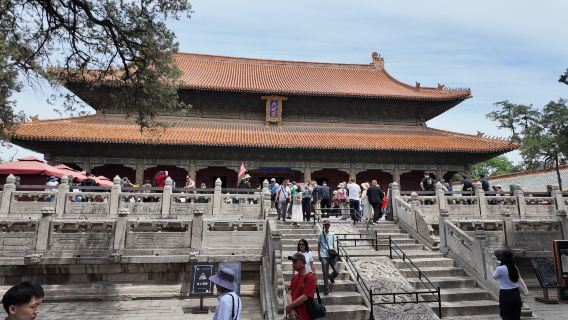
5% off
Limited-time sale
From€169.63€178.56
Free cancellation
Instant confirmation
Book now for tomorrow
Save €0.78
From€76.75€77.53
Free cancellation
Book now for tomorrow
5% off
Limited-time sale
From€169.63€178.56
1.0/5
· 1 reviewFree cancellation
Book now for tomorrow
5% off
Limited-time sale
From€98.95€104.16
5% off
Limited-time sale
From€254.43€267.83

5.0/5
· 1 reviewBook now for tomorrow
5% off
Limited-time sale
From€155.49€163.68
5% off
Limited-time sale
From€169.63€178.56
Free things to do in Qufu

Confucius Museum
Qufu · 2.9 km from downtownMing Ancient City
Qufu · 1.3 km from downtownTemple of Yan Hui
Qufu · 2.2 km from downtownImmediate access, Book now for today, Cancel anytime
Zhougong Temple
Qufu · 2.9 km from downtown
Nishan Sacred Land - Confucius Statue
Qufu · 22.5 km from downtown
Temple of Confucius - Dacheng Hall
Qufu · 1.8 km from downtown
Song Du Huangcheng Cultural Tourism Resort
China · Kaifeng
Daming Lake Scenic Area
China · Jinan
Ancient Town of Qingzhou
China · QingzhouImmediate access, Book now for today, Cancel anytime
The Best Spring In The World
China · Jinan
More ways to travel from Qufu
Private Tours in Qufu
View More Private Tours in Qufu


Group Tours in Qufu
View More Group Tours in Qufu



What travelers say about Qufu

M11***5622 September 2026
4.0
A guided tour is necessary to understand the Confucius Temple and Confucius Mansion, which preserve many historical sites and ancient trees, making them worthwhile for history enthusiasts. The Confucius Cemetery is the burial ground of the Confucius family; those who are not interested can skip it.
Qufu's Temple and Cemetery of Confucius and Kong Family Mansion

Guilberto Chaplin Savedra Junior23 August 2026
4.0
Amazing experience for adults seeking to learn more about the Confucianism. The only cons is that I wouldn’t recommend it for kids aged from 2 to 5 years old, as the place lacks of playground areas.
Nishan Cultural Tourism Resort

320***1221 September 2026
4.0
We arrived a bit early this morning; it doesn't open until 9:30. We arrived at 9:00 and forgot to check the opening time. Overall, only the University Hall area is worth seeing. There are various performances in the evening, so it's probably better to visit in the evening.
Nishan Sacred Land

_We***541 September 2026
5.0
The official guide, Mr. Li, was excellent and definitely a plus for our experience at the Confucius Temple! Because it was past the summer holidays, there weren't many tourists, which made it a really pleasant experience. Mr. Li spoke softly and gently, making the explanations very comfortable, and the content was rich and interactive. Highly recommended!
Confucius Temple

Anonymous user28 August 2026
5.0
Stepping into the Three Confucian Sites of Qufu, one truly understands the meaning of "A thousand years of rites and music returning to Eastern Lu." The Confucius Temple boasts towering ancient cypress trees, solemn red walls, and a series of interconnected gates, including the Lingxing Gate and the Dacheng Hall, with numerous steles standing tall, ensuring the unbroken lineage of venerating the sage for millennia. Passing through the Hongdao Gate leads to the Confucius Mansion, its halls and pavilions reflecting the life of the Duke Yansheng, with the scholarly atmosphere and family traditions permeating every courtyard. Finally, arriving at the Confucius Cemetery, the Everlasting Spring Archway stands serenely, ancient trees surrounding the sage's final resting place, creating an exceptionally tranquil atmosphere.
There is no noisy extravagance, only the profound Confucian heritage spanning over two thousand years. Walking through it is not merely visiting historical sites, but a dialogue with the sages across time. Every wall and tree exudes scholarly spirit; this trip is not just sightseeing, but a profound cultural immersion.
Kong Family Mansion

M50***1230 August 2026
4.0
We stayed at a hotel within the scenic area, which is like a Chinese-style version of Aranya, or an ancient version of Disneyland—something like that. The scenery is beautiful, there are many activities, and there are performances that are supposedly worth seeing, but the queues are too long, so we didn't get to see either the "One-Shot Show" or the "Celebrating the Harvest" show. Overall, it's worth the price and a very nice scenic area. The only downside is that it gets a bit dark at night, and I couldn't find the hotel. My child and I searched for ages like on an adventure until we found a young man driving a sightseeing vehicle. He provided excellent service and took us back to the hotel.
Going in the late afternoon is best, before sunset. Excluding performances, interactions with NPCs, and meals, two hours is enough for just sightseeing. At night, with the lights on, it's like a bustling flower market in an ancient capital. It must be said, Confucius left behind a wealth of knowledge for posterity.
Nishan Luyuan Village Scenic Area

M27***0624 July 2025
4.0
Konglin, also known as the Forest of the Most Holy, is located on Gulou North Street, Qufu City, Shandong Province. It was built in the 16th year of Duke Ai of Lu in the Eastern Zhou Dynasty (479 BC) and is the family cemetery of Confucius and his descendants.
Konglin covers an area of nearly 2 million square meters, with more than 100,000 tombs and a sacred road connected to the city gate. Confucius' tomb is located in the middle of Konglin, with a burial mound in the shape of a reclining axe. In the Han Dynasty, an altar was built and a sacred gate was built. In the Song Dynasty, stone rituals were carved. In the Yuan Dynasty, a stele was erected, a wall was built, and a double gate was built. In the Ming Dynasty, the tomb gate of the Xiangdian was rebuilt, and the Zhushui Bridge Archway and the Eternal Spring Archway were added. The rich ground cultural relics in Konglin are of great value for studying the evolution of China's burial system and ancient politics, economy, culture, customs, calligraphy, and art.
On March 4, 1961, Konglin was announced by the State Council of the People's Republic of China as the first batch of national key cultural relics protection units4
. In December 1994, Konglin was announced as a World Heritage Site by UNESCO.
.
Confucius Forest

M43***6711 November 2024
5.0
The light show at night is a highlight. The colorful lights decorate the bridge and the river bank so beautifully that people can't help but stop and admire them. The boat trip is very interesting, and the water curtain show and micro performances are very good.
Liaohe Ancient Street • Lanterns in Liaohe

Geographer10 October 2020
5.0
When I first arrived in Qufu, I was surprised to see that Qufu also had a city wall. When I went to the scenic area and passed by the city wall, I realized that it was the Ming City of Qufu. The Confucius Mansion and Temple are inside the Ming City. The Ming City Wall has also undergone many renovations and is very magnificent!
Ming Ancient City

风雨做的梦想曲会差9 February 2026
4.0
The Yan Temple was built to commemorate Yan Hui and is a free attraction. It's a ten-minute walk from the east gate of the Confucius Temple. The archway at the entrance dates back to the Ming Dynasty, while the Louxiang Well is even older. Although the Leting Pavilion and Fusheng Hall are reconstructions, they are very well-preserved. My middle school student had just studied a classical Chinese essay about Yan Hui last semester, so the experience was excellent. Overall, it's worth a visit.
Temple of Yan Hui


