
Things to do in Hua County
Explore top experiences
Top 10 attractions in Hua County


Xunxian Ancient City Scenic Area
Jun County is located in the northern part of Henan Province and is under the jurisdiction of Hebi City, Henan Province. It is a national historical and cultural city in China and a hometown of Chinese folk culture and art. The Jun County Ancient City Attraction is a Attraction that combines the ancient city wall, the hereditary Hanlin Mansion, the Guansheng Temple, the Ming and Qing courtyards, the county government, and the Confucian Temple, focusing on reflecting the thousand-year cultural heritage of Jun County.Xun County · 10.5 km from Hua County

Daokou Ancient Town
Daokou Town is located in the northwest of Huaxian County, Anyang, and was once known as "Little Tianjin Guardian" in history. During the Jin Dynasty, it was a ferry of the Jindi River, a tributary of the Yellow River, with a history of nearly a thousand years. After the completion of the Daoqing Railway, Daokou has become a famous flood and drought wharf where merchants gather, vehicles and ships converge. Daokou Town has the famous Wagang Mountain ruins. Friends who like "The Legend of the Heroes of the Sui and Tang Dynasties" must be familiar with this place. In addition to Wagang Mountain, there are Mingfu Temple Pagoda, Ouyang Xiu Academy, Weiwangcheng Ruins, etc. The Huaxian section of the Grand Canal in the Sui and Tang Dynasties is located in Daokou Town, and Shunhe Street along the canal is a famous trade street in the Qing Dynasty. Shunhe Street is named after the Wei River. This narrow street is built along the river and is full of ancient charm. There are more than 1,000 old shops and buildings from the Ming and Qing Dynasties here, including the silk and satin shop, the Guo Family Courtyard, and the old "Yixing Zhang" roast chicken shop. These stores have similarities with Tianjin's stores in terms of external decoration, internal settings and service models.Hua County · 1 km from downtown

Song Du Huangcheng Cultural Tourism Resort
Song Du Huangcheng Cultural Tourism Resort is located in the northern part of the old city of Kaifeng, precisely on the site of the imperial palace of the Northern Song Dynasty's Dongjing city. The millennium-old central axis of Kaifeng runs through this area, making it the core zone of the royal culture of the Song Dynasty. Here, you can find the Song-style imperial architecture of the Longting attraction, the tales of the Yang Family Generals at Tianbo Yang's residence, and the calligraphic steles of Han Yuan Stele Forest. The Shuanglong Lane historical and cultural block, 960 Cultural and Creative Park, and Qisheng Corner have transformed old streets and courtyards into Song-style blocks perfect for leisurely exploration. The resort also connects a series of Song culture attractions: Wansui Mountain Great Song Martial Arts City stages year-round martial arts live shows and intangible cultural heritage iron fireworks, while historic sites like the Iron Pagoda, Kaifeng city wall, Zhouqiao and Bian River ruins, Shanshangan Guild Hall, Yanqing Taoist Temple, and Fan Pagoda are scattered across the old city, along with niche spots like the underground wartime grain storage. These places are hard to cover in one day, so we recommend focusing on two or three key sites. After dark, a different experience awaits as the attractions light up in unison. Boarding a painted pleasure boat on the Great Song Imperial River to watch the illuminated pavilions and towers sway with the rippling water is a popular nightlife option here.Kaifeng · 87.3 km from Hua County

Luoyang Museum
The Luoyang Museum was established in 1958 and fully opened to the public on April 16, 2011. It is a comprehensive museum integrating cultural relic collection, exhibition display, and social education. Its collections span the long history of Luoyang as an ancient capital of thirteen dynasties. The main building stands like a giant ding (ritual vessel), symbolizing the "establishment of the capital in Luoyang." Its solemn and majestic facade itself serves as a popular photo backdrop. The large-scale permanent exhibition "Heluo civilization" unfolds along the timeline of prehistoric times, the Xia, Shang, and Zhou dynasties, the Han and Wei dynasties, the Sui and Tang dynasties, and the Five Dynasties and Northern Song period, connecting thousands of years of Luoyang's capital history into a complete viewing experience. The treasure hall on the second floor rotates displays of representative artifacts from the collection, including the Cao Wei white jade cup, the Northern Wei clay Buddha face sculpture, and the vividly expressive Northern Wei painted pottery figurine of two women holding hands, affectionately called the "best friends figurine" by visitors, all worth pausing to admire. In the Tang tri-color ceramics hall, the rare and majestic black-glazed tri-color horse and the massive Eastern Han stone artifacts are equally popular. The palace artifacts hall displays Qing Dynasty imperial artifacts transferred from the Forbidden City, including a golden nanmu wood tower carved from a single log and adorned with gilded miniature Buddhas, exuding royal grandeur. The stone carving hall is rustic and imposing, while the Wang Xiu peony art exhibition brings Luoyang peonies into paintings, each showcasing a unique blend of strength and delicacy. You can start your visit from the "Heluo civilization" exhibition and stone carving hall on the first floor, then proceed to the second floor to explore the treasure hall, Tang tri-color glazed pottery hall, and imperial artifacts hall in detail. The treasure hall features rotating exhibitions, and the specific exhibits are subject to the on-site display. A thorough visit typically takes two to three hours, so it is recommended to allocate sufficient time. Luoyang Museum consistently organizes flexible and diverse temporary exhibitions, continuously providing the public with new cultural offerings. It has introduced exotic-themed exhibitions such as "Civilizations of Qin-Han and Rome," "Norwegian style painting exhibition," "African cultural relics and art exhibition," as well as independently curated large-scale temporary exhibitions like "The starting point of the Silk Road - the Silk Road and Luoyang" and "The hub of the Grand Canal - the Grand Canal and Luoyang," enriching the exhibition content and ensuring visitors always find something new. Adhering to its mission of reaching out, Luoyang Museum has independently or collaboratively held cultural relic exchange exhibitions in over 20 countries and regions, including the United States, France, Japan, South Korea, Italy, Belgium, Sweden, and Australia, generating positive impacts both domestically and internationally. Luoyang Museum adheres to the organic integration of collection preservation, scientific research, and social education for balanced development. Practicing a people-oriented service philosophy, it enhances integration and interaction with society while excelling in exhibition reception and educational promotion. The museum actively recruits volunteers passionate about museum education, establishes cooperative units, and extends its reach to communities, schools, rural areas, and military camps to expand its coverage and influence. Additionally, it hosts monthly traditional culture lectures to disseminate heritage knowledge and cultivate museum audiences, achieving remarkable results. Luoyang Museum boasts a team of professionals with high academic standards. It has published numerous works and collections, with over 1,000 papers and representative publications including: "Han tombs at Shaogou in Luoyang," "Luoyang tri-colored glazed pottery of the Tang dynasty," "Bronze mirrors unearthed in Luoyang," "Han dynasty murals in Luoyang," "A collection of essays commemorating the 40th anniversary of Luoyang Museum," "Cultural treasures of Luoyang," "The charm of Luoyang—highlights of archaeological achievements in the Heluo region," "A history of the ancient capital Luoyang," "Research on Western Zhou bronze ware," "Heluo civilization," and more, all widely recognized by society and academia. In the era of promoting cultural development and prosperity, Luoyang Museum is bound to play an even greater role in the construction of socialist spiritual civilization.China · Luoyang

Daming Lake Scenic Area
Daming Lake Scenic Area is located in the northeast of downtown Jinan, the northern part of the Old Town. It is a park that integrates bodies of water, garden landscape, and ancient architecture. Daming Lake is in the center of the park. Or one could say that the park is built along the lake. Daming Lake is a natural lake. The water source comes from many springs in the city. It has a long history, dating back to the Northern Wei Dynasty. In the park, you can visit the Lao She Memorial. In summer, you can enjoy the lotus blossoms in the garden.China · Jinan

Henan Museum
Located in the city of Zhengzhou, Henan Museum has a rich collection of exhibits displaying Henan's 5,000-year history and offering a window into traditional Henanese culture. The museum has eight exhibition halls that can be visited in chronological order. The collection includes several national treasures, including the lotus crane vase, cloud copper chest, Saohao vase, Jiahu bone flute, Wushu copper plate and more. Be sure to visit them all.China · Zhengzhou

The Best Spring In The World
The Best Spring In The World is located in downtown Jinan, featuring "one river (the moat), one lake (Daming Lake), three springs (the Baotu Spring, Heihu Spring, and Wulongtan spring clusters), and four parks (Baotu Spring Park, Huancheng Park, Wulongtan Park, and Daming Lake Park)." The attraction centers around Baotu Spring, renowned as the "No. 1 Spring Under Heaven." Its waters flow into rivers and converge into lakes, harmoniously blending with the ancient Mingfu City. To the north lies Wulongtan (Five Dragon Pool), while to the east stretches Jinan's Huancheng Park (home to the Black Tiger Spring and other springs), both highly celebrated in Jinan. These springs boast exceptional water quality. Daming Lake, a natural lake formed by the convergence of numerous springs, receives water from its southern shore. When full, the water flows out through the Northern Water Gate, built during the Song Dynasty on the lake's north shore. The lakebed consists of impermeable igneous rock, preventing flooding during heavy rains or drought. Often described as "a confluence of springs merging to embrace the Jiluo region," it's hailed as the "Pearl of the Spring City." Similarly, the moat formed by spring waters encircles the ancient city like a jade belt, offering scenic cruise rides along its course. The attraction boasts stunning natural scenery and rich cultural heritage, featuring not only springs, rivers, and lakes but also numerous historical landmarks. Highlights include the Chaoran Tower dating back to the Yuan Dynasty and the Luoyuan Hall originally built during the Northern Wei Dynasty (now a Ming-era structure). Historical sites include the Luoshang Terrace, the former residence site of Qin Qiong, and the Beishui Gate. Notable former residences include the Nanfeng Ancestral Hall, Jiaxuan Ancestral Hall, Li Qingzhao Memorial Hall and Yi'an Old Residence, Tiegong Ancestral Hall, and Lao She Memorial Hall. Red tourism sites include the Jinan Massacre Memorial and the former site of the Shandong Provincial Committee of the Communist Party of China.China · Jinan

Kaifeng Museum
The Kaifeng Museum is a comprehensive museum integrating cultural relic collection, preservation, research, exhibition, and social education. It houses over 80,000 cultural relics, covering various categories such as pottery, porcelain, bronze ware, calligraphy and painting, stone carving, jade ware, and lacquerware. The museum was first established on Sansheng street in 1962, on the former site left after the Henan museum moved to Zhengzhou. The old museum by Baogong lake opened in 1988, and in March 2018, it relocated to its current new site. The new museum's layout draws inspiration from the triple-city design of Kaifeng during the Northern Song dynasty, consisting of an outer perimeter, a circular inner courtyard, and a central main structure. Following the principle of "classical exterior, modern interior," lower surrounding buildings embrace the towering central pavilion. From a distance, it appears as a Song-style architectural complex, immersing visitors in the essence of Song culture even before entering. The Kaifeng museum was established in March 1962. Its original site was located on Sansheng street, built on the former site of the Henan museum after it moved to Zhengzhou. In 1986, a new museum was expanded by the scenic Baogong lake and opened to the public in September 1988, becoming a major cultural event in Kaifeng. In recent years, to promote the continued development and prosperity of Kaifeng's museum industry and the construction of Kaifeng as an international cultural tourism city, the new Kaifeng museum officially began construction in March 2014 and opened to the public in March 2018. The new Kaifeng museum is located on the north side of Zhengkai avenue between the fifth and sixth streets in the Kaifeng new district, adjacent to Zhongyi lake to the east, with a total construction area of 54,286 m². The overall architectural design highlights the triple-city layout characteristic of Kaifeng during the Northern Song dynasty, consisting of an outer perimeter, a circular inner courtyard, and a central main structure. The design follows the principle of "classical exterior, modern interior," with lower surrounding buildings embracing the towering central pavilion, reflecting the architectural features of Song dynasty building complexes. The first floor of the Kaifeng museum's Zhongyi lake section consists of a public service area, exhibition area, and cultural relic restoration area. The public service area includes: a visitor center, an academic lecture hall, an educational experience zone, a cultural and creative display center, a 4D cinema, and a VIP reception room. The exhibition area features six thematic exhibition halls—"New year paintings of Zhuxian town in Kaifeng: Artistic charm of woodblock prints," "Kaifeng's modern and contemporary calligraphy and painting masterpieces: Elegance of ink and color," "Millennium imprints: A selection of stone carvings from the collection," "Imperial splendor: Royal artifacts of the Ming and Qing dynasties," "The premier prefecture: A special exhibition on the Northern Song Kaifeng government office," and "Science and technology of the Song dynasty"—along with two temporary exhibition halls, covering a total area of 5000 m². The second floor consists of a basic exhibition area, meeting rooms, and office space. The total exhibition area on the second floor is 7355 m², featuring 8 exhibition halls, including "Kaifeng ancient history and culture exhibition: A millennium capital of eight dynasties," "Kaifeng memories: Modern and contemporary social life exhibition," and the Dasheng music and dance performance hall. Among these, the "Kaifeng ancient history and culture exhibition: A millennium capital of eight dynasties" covers an area of 4840 m², highlighting the history of the Northern Song Dynasty as the capital. Within this section, approx. 700 m² is dedicated to a special exhibition hall for the Riverside Scene at Qingming Festival, displaying various versions, creative forms, and materials of artifacts and historical materials related to the painting across different periods.Kaifeng · 89.1 km from Hua County

Guangfu Ancient City
Guangfu Ancient Cityis located in Guangfu town, Yongnian district, Handan city, Hebei province. It is a national 5A-level attraction, a famous historical and cultural town in China, and a wetland park with profound historical heritage. Featuring beautiful northern water town scenery and a long-standing tai chi culture, it is China's unique ancient town, water town and tai chi town. The ancient town. Guangfu ancient town has a history of over 2,600 years, with its city walls stretching 4.5 km in circumference and covering an area of 1.5 square kilometers. The town boasts numerous historical relics, including two national-level protected sites - Guangfu ancient town itself and Hongji bridge, along with over 20 provincial and municipal protected sites such as the former residences of Yang Luchan, Wu Yuxiang and Wu Ruqing. The water town. Guangfu ancient town is located in the Yongnian depression covering an area of 46,000 mu. Surrounding the town walls is a 5 km moat that's 100 m wide, with wetlands beyond it. This "town between two waters" forms a unique view of Guangfu. The depression has perennial water accumulation with lush reeds, thriving fish and shrimp, lotus ponds, and migratory birds, earning it the reputation of "little Jiangnan in the north". The city of taiji. Guangfu ancient town is the birthplace of Yang-style and Wu-style taijiquan, where the founders of the two major schools, Yang Luchan and Wu Yuxiang, were born. It is a renowned hometown of taiji, from which taijiquan spread across China and the world.China · Handan

Qi River
Qi River, known in ancient times as Qishui, originates from Qizi Mountain in Lingchuan, Shanxi, flows through Qi County, Hebi, Henan, and is an important tributary of the Wei River in the Haihe River Basin. It is also the mother river of the ancient land of Zhaoge and is known as the "Poetry River of China." The section flowing through Qi County is nestled against the foothills of the Taihang Mountains on its west bank, with a river valley that alternates between narrow and wide, featuring both canyon cliffs and gentle mudflats. The banks retain numerous historical imprints from the Yin-Shang and Wei State periods, with ancient ferry crossings and stone bridges scattered along the riverside, witnessing the past of the ancient capital of Zhaoge. Following ecological restoration, riverside walkways and wetland view belts have been built along the banks. Reeds and weeping willows spread along the river, and the water area has become a habitat for water birds such as egrets and herons. The scenery has its own charm in every season: lush vegetation in spring and summer, and colorful forests along the banks in autumn. It preserves the poetic charm found in ancient poetry while also witnessing the contemporary changes in river and lake ecology. When you come to Qi County and stroll along the banks of the Qi River, you can feel the clear river view beneath the Taihang Mountains and understand the ancient Central Plains culture flowing within the river water.Qi County · 20.9 km from Hua County
Experiences you can't miss in Hua County
Featured Cultural experiences in Hua County
View all Cultural experiences
5% off
Limited-time sale
FromAU$258.78AU$272.4
Free cancellation
Instant confirmation
10% off
Limited-time sale
FromAU$128.43AU$142.7


FromAU$159.00
Featured Day tours in Hua County
View all Day tours
Instant confirmation
Book now for tomorrow
FromAU$79.25
Free cancellation
Instant confirmation
Book now for tomorrow
FromAU$141.25
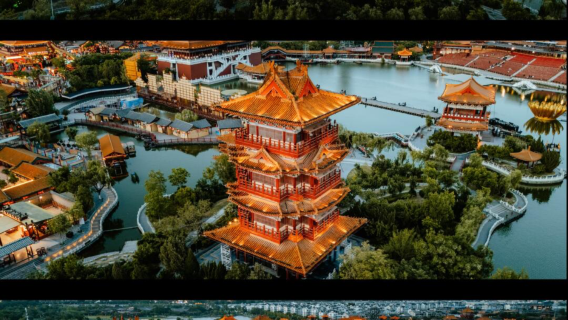
![One-Day Private Small Group Tour: Only Henan Drama Fantasy City [Complimentary Door-to-Door Pickup & Drop-off + Full-Time Tour Guide Service Included]](https://ak-d.tripcdn.com/images/0356q12000t4uw47cC0AE_C_568_320.jpg?_fr=wc)
Free cancellation
Instant confirmation
Book now for tomorrow
FromAU$271.66
Free cancellation
Instant confirmation
Book now for tomorrow
10% off
Limited-time sale
FromAU$128.43AU$142.7
5% off
Limited-time sale
FromAU$258.78AU$272.4
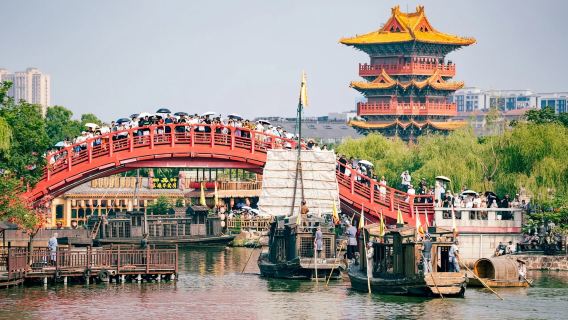
![[Departing from Zhengzhou] Henan Baoquan Tourist Area grand canyon · Yatianxia Scenic Area one-day tour (emerald waters and countless waterfalls hidden in the secluded gorge)](https://ak-d.tripcdn.com/images/0353g12000u5s6gxx74D2_C_568_320.jpg?_fr=wc)
Free cancellation
Instant confirmation
Book now for tomorrow
FromAU$74.29
Free cancellation
Book now for tomorrow
FromAU$147.84
Featured Food & drink in Hua County
View all Food & drink

5.0/5
· 1 reviewFree cancellation
Book now for tomorrow
FromAU$93.72
5.0/5
· 1 review· 85 bookedBook now for tomorrow
61 travelers saved
FromAU$93.72

Free things to do in Hua County
Xunxian Ancient City Scenic Area
Xun County · 10.5 km from Hua CountyDaokou Ancient Town
Hua County · 1 km from downtownSong Du Huangcheng Cultural Tourism Resort
Kaifeng · 87.3 km from Hua CountyLuoyang Museum
China · LuoyangDaming Lake Scenic Area
China · JinanHenan Museum
China · ZhengzhouThe Best Spring In The World
China · JinanKaifeng Museum
Kaifeng · 89.1 km from Hua CountyGuangfu Ancient City
China · HandanQi River
Qi County · 20.9 km from Hua County
What travelers say about Hua County

ZZJ思由跋1 August 2025
4.0
This underrated little city in Henan is truly amazing! ‼️
🌸I recently visited the ancient city of Junxian in Hebi, Henan Province, with friends. As Henan Province's only county-level National Historic and Cultural City, it was truly amazing! It was like a real-life costume drama filming location. 📸
📖 Tour Route:
Junxian Ancient City Wall - Wenzhi Pavilion - Junxian County Government Office - Guansheng Temple - Hereditary Hanlin Mansion - Ancient City Night Market
⭐ Highlights:
🏮 Ancient City Features:
A complete Ming Dynasty-era ancient city layout
Evening light and shadow shows in the ancient city
It's like stepping back in time to the Han and Tang dynasties
Rich in intangible cultural heritage: Daping Opera, shadow puppetry, community performances
And even adorable clay cuckoos
🍜 Foodie Paradise:
Liyangzi steamed buns, Junxian Eight Great Bowls, Wu Erguo peanuts—each one is a surprise!
🎪 Cultural Experience:
If you visit during the Lunar New Year, you must experience North China's first ancient temple fair!
💰 Cost:
Admission to the ancient city itself is free.
Combined ticket (including 4 attractions) is 60 yuan.
🚗Transportation Guide:
Take bus No. 808 from Hebi East Station to Junxian Bus Station, then transfer to Junxian bus No. 5 to the ancient city.
✏️Tips: I highly recommend this hidden gem of an ancient city. It's not crowded, so you can take photos and create stunning photos. 🤳 It's also a great combination with a visit to Daokou Ancient Town in nearby Hua County!
Xunxian Ancient City Scenic Area

岱山香橙14 December 2024
5.0
Daokou Ancient Town is very delicately decorated, the streets are not big, and there are many scenery for taking pictures. I arrived at Daokou Ancient Town at about 18:00. The shops in the ancient town were closed and it was quite deserted. I asked the owner of the roast chicken shop, and he said that it would be more lively during the Chinese New Year.
Daokou Ancient Town

M55***2018 August 2026
5.0
It's very worthwhile, but it's also very crowded, which might slightly detract from the overall experience. However, the people are incredibly welcoming, and there are many beautiful spots for taking photos. The food is also affordable and inexpensive, which kids enjoy. I'll definitely go back when it's less crowded.
Song Du Huangcheng Cultural Tourism Resort

薛薛13 October 2026
5.0
Our guide at the Luobo Museum, Mr. Pei, was excellent. He was considerate of the artifact display cases, reminding the children in our group and others to keep a safe distance to avoid obstructing photos or leaving handprints. His explanations were engaging and detailed, although latecomers sometimes interrupted him. Overall, it was a good experience, and we saw all the museum's treasures and popular artifacts within the limited time – definitely worth it.
Luoyang Museum

Matthew 7528 September 2026
5.0
A beautiful place to visit, lots of photos opportunities and welcoming people.
Daming Lake Scenic Area

口口木南.17 October 2026
5.0
I love Henan so much! It helped me understand and get to know Henan. The young lady who gave me the tour was very professional, and I really liked her. In short, this trip to Henan was definitely worth it!
Henan Museum

M35***807 October 2026
5.0
This was my first time visiting Baotu Spring. I went in the afternoon to avoid the crowds, so the experience wasn't too bad. The three springs were bubbling away, and the water was crystal clear. No wonder it's called the City of Springs! 👍
The Best Spring In The World

Anonymous user2 October 2026
5.0
Kaifeng City Museum is located on Zhengkai Avenue, Sixth Street, Kaifeng City, Henan Province, east of Zhongyi Lake. It is a comprehensive local museum integrating cultural relic collection, preservation, scientific research, exhibitions, and public education. It is a unit under the Kaifeng Municipal Bureau of Culture, Radio, Television and Tourism.
The museum is a national first-class museum. Admission is free on weekdays. It is open Tuesday through Sunday from 9:00 AM to 5:00 PM, and closed on Mondays (the schedule may be adjusted for public holidays). It is recommended to make a reservation in advance via the official WeChat account or mini-program using your real name. Entry is by presenting the reservation code and your ID card.
Kaifeng Museum
Anonymous user3 October 2026
4.0
The hometown of Tai Chi has well-preserved ancient city walls and many performance programs, but it is still quite commercialized. During the National Day holiday, there are a lot of tourists, especially at night, which causes serious traffic jams.
Guangfu Ancient City

Sigma 王子🤴27 July 2025
5.0
🌿 Qi River·China's Poetic River | Strolling through the secret landscape of the Book of Songs
🌊 1. The beauty of water quality: a rare "ecological miracle" in the north
- Clear as glass, touch like silk: The river water is extremely transparent. When rowing, you can see "water plants like dense forests, sand and stones moving with the waves", and you can see fish and small stones directly. The water is refreshing and refreshing. Some swimmers even praise it as "smooth as silk, sweet as spring water", and jokingly call it "entering the water like a fish".
- Pure ecology, rare creatures live: As one of the few unpolluted rivers in North China, the Qi River breeds the "giant panda in the water" peach blossom jellyfish, and is also famous for the "three treasures of the Qi River" (carp, silk-wrapped duck eggs, and seedless dates). The water quality has created unique products.
🏞️ 2. Scenery: From poetic and picturesque countryside to internet celebrity landmark
- Classical poetry: willows on the river bank, blue waves reflecting the mountains, "like a fairyland" when the morning mist is lingering, "waves like diamonds falling on jade belts" on sunny days, and "big and small pearls falling on jade plates" after the rain. The ancients' artistic conception of "Qi River gurgling, cypress oars and pine boats" can still be felt today.
- Modern vitality:
- Sangyuan Town: Blue brick and gray tile houses in northern Henan blend with food streets and cultural and art markets, the water under the bridge falls into a natural water park, and the summer crowds surge.
- Qi River Valley: 5D glass plank road is suspended above the "Little Jiuzhai", and the 2,380-meter high mountain glass drifting is winding and swirling, suitable for both movement and stillness.
- Wetland Park: a national ecological demonstration area, with reeds and water birds, hot springs that do not freeze in winter, and the scenery of "green mirror reflecting the sky" can be enjoyed in all seasons.
📜 3. The depth of cultural context: a river of poetry that has flowed for thousands of years
- The mother river of "The Book of Songs": 39 ancient poems sing the scenery of the Qi River. "Looking at the Qi River, the green bamboos are lush" in "Wei Feng" outlines the earliest landscape painting, and Li Bai, Wang Wei and others have left their footprints.
- Symphony of seclusion and life: old people can still be seen fishing on the shore like sculptures, and chess games are played under the shade of trees. It coexists with folk performances and outdoor classes in Sangyuan Town, and ancient and modern life resonates here.
⚠️ 4. Hidden worries and protection: fragile purity
- The double-edged sword of tourism development: the surge in tourists has led to a decrease in wetland birds, and some sections of the river have too many artificial traces (such as dense puddles), and the lack of facilities such as toilets has been criticized.
- Conservation actions: Local authorities have designated protected areas, nurtured wetlands, and built them with the concept of "sponge cities" (sunken green spaces, planted grass ditches, etc.), striving to balance ecology and tourism.
📝 V. Travelers say: Practical tips
- Best experience:
- Summer water-friendly: Swimming in Heilongtan, playing in the water under Sangyuan Bridge, and feeling the "cool" river bath.
- Autumn poetry: Cycling along the river or strolling along the wetland plank road, watching the golden elm and the clear water.
💎 Summary: Why is it worth a visit?
> The beauty of the Qi River lies in the "clear and clean" water, the leisure of "half a day of floating life", and the thickness of "a stream of poetic soul". It is not as magnificent as the Li River, but with its gentle and jade-like northern temperament, it has become a "paradise" within reach of urban people. It is better to go there early while its purity has not faded - after all, the promise of "green water and green mountains" needs you and me to witness together.
Qi River


